
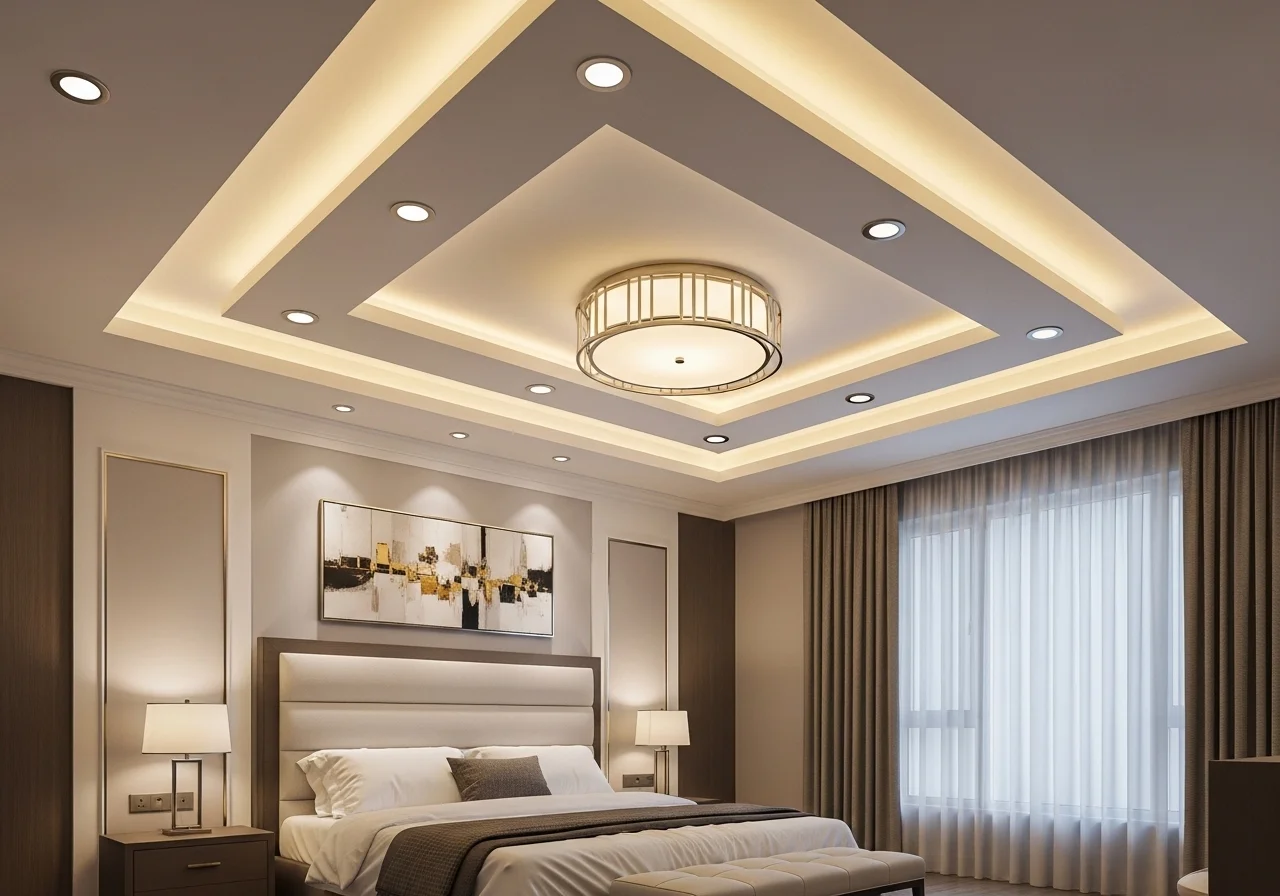
Good lighting can completely change your bedroom. It sets the mood, adds comfort, and makes your space feel alive. Many people overlook bedroom lighting when decorating. But the right light makes a huge difference. You can create a cozy retreat or a clean modern space. All you need are smart bedroom lighting ideas. Small changes bring big results. Start with one layer of light and build from there. Your bedroom deserves a setup that works for you.
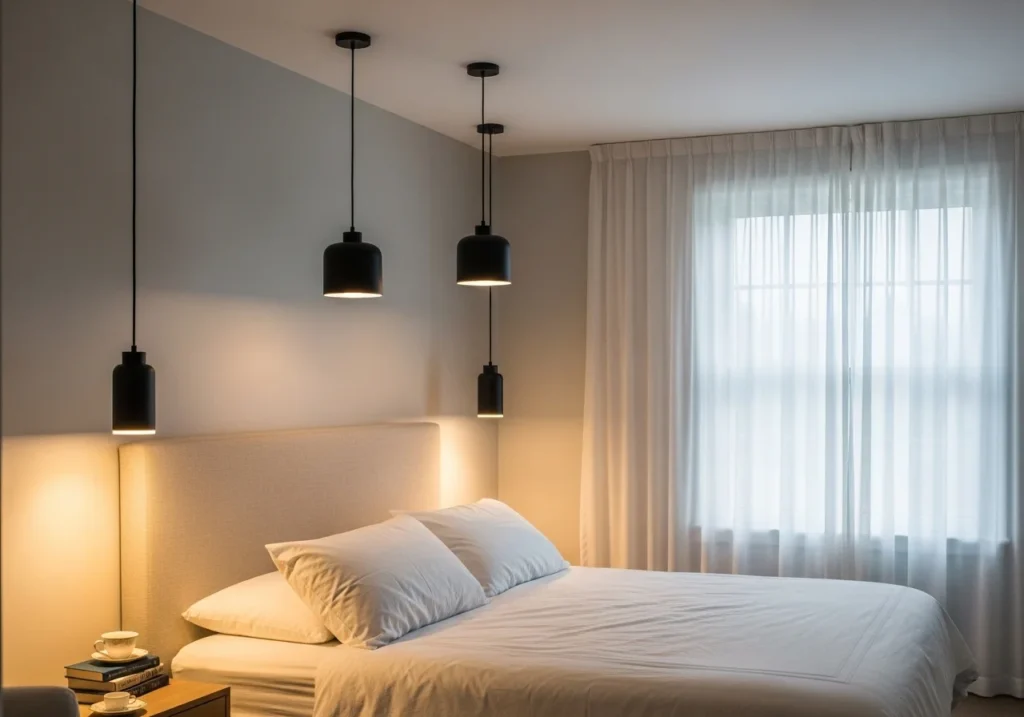
Why Bedroom Lighting Matters
Lighting does more than help you see. It shapes how your bedroom feels every single day.
It sets the mood. Soft, warm light feels relaxing and calm. Bright cool light feels sharp and energizing. The right mood light helps you wind down at night and wake up better in the morning.
It improves comfort. Harsh lighting causes eye strain and stress. Soft lighting creates a gentle, restful space. Good bedroom light design supports both rest and daily tasks.
It supports your daily routine. You need bright light to get dressed in the morning. You need dim light to read before sleep. Layered lighting lets you adjust based on what you need.
Types of Bedroom Lighting
Every good bedroom uses three types of lighting. Each one plays a different role.
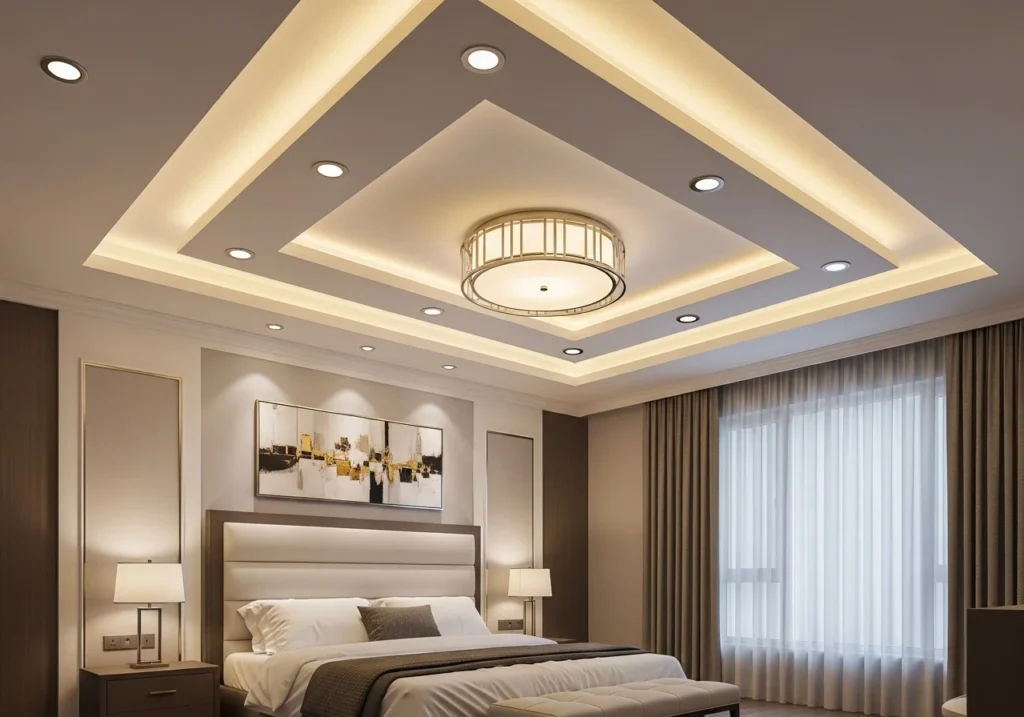
Ambient lighting is your main light source. It fills the entire room with general light. Ceiling lights for bedroom use are the most common form of ambient light. They provide overall brightness without harsh shadows.
Task lighting focuses on one specific area. Bedside lighting ideas fall into this category. You use task lights for reading, working, or applying makeup. They need to be bright but not blinding.
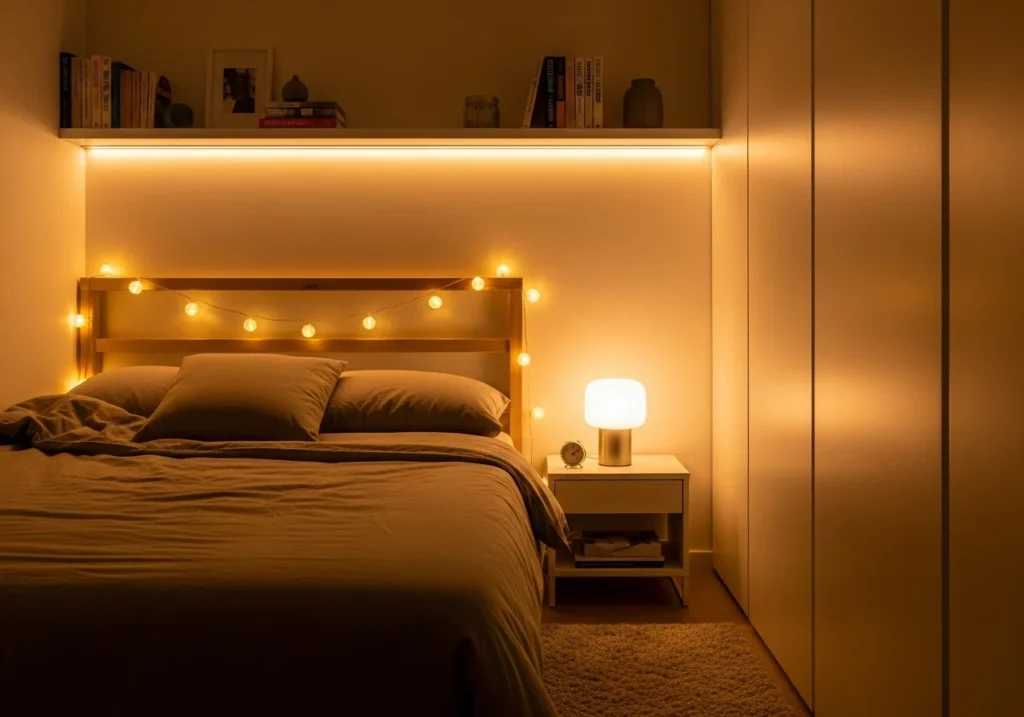
Accent lighting adds style and visual interest. LED lights for bedroom decor are a popular accent choice. Fairy lights and wall sconces are other examples. Accent lights highlight textures, artwork, or architectural details.
Modern Bedroom Lighting Ideas
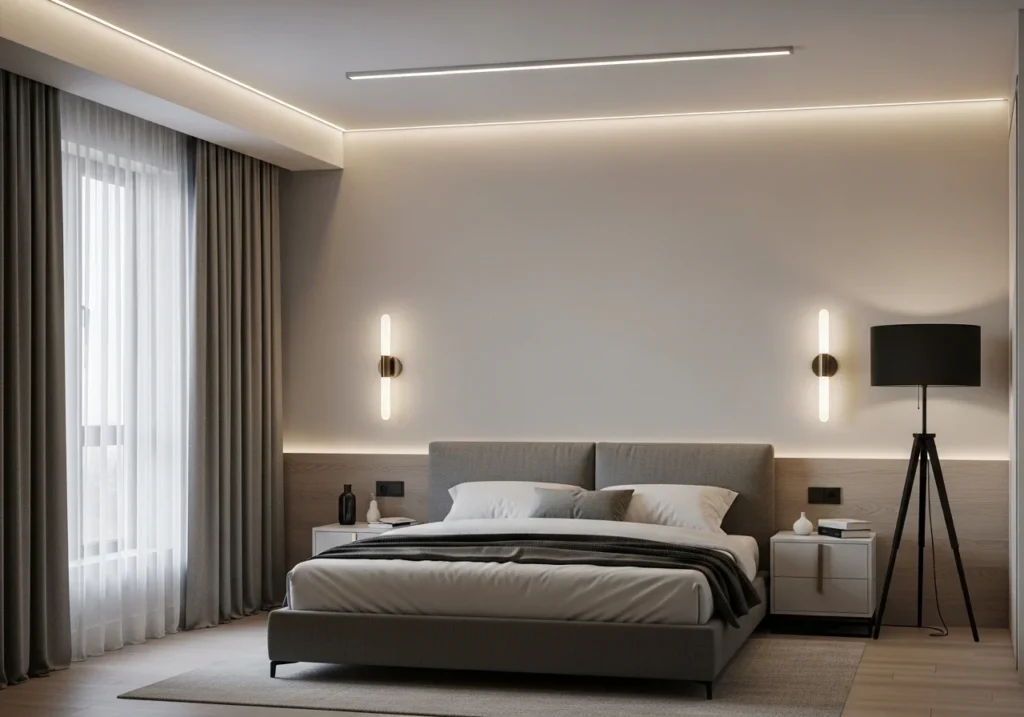
Modern bedroom lighting focuses on clean lines, smart technology, and minimal clutter.
LED strip lights run along headboards, under beds, or along ceiling edges. They add depth and a soft glow without taking up space. You can control the color and brightness with a remote or phone app. LED lights for bedroom use are energy-efficient and long-lasting.
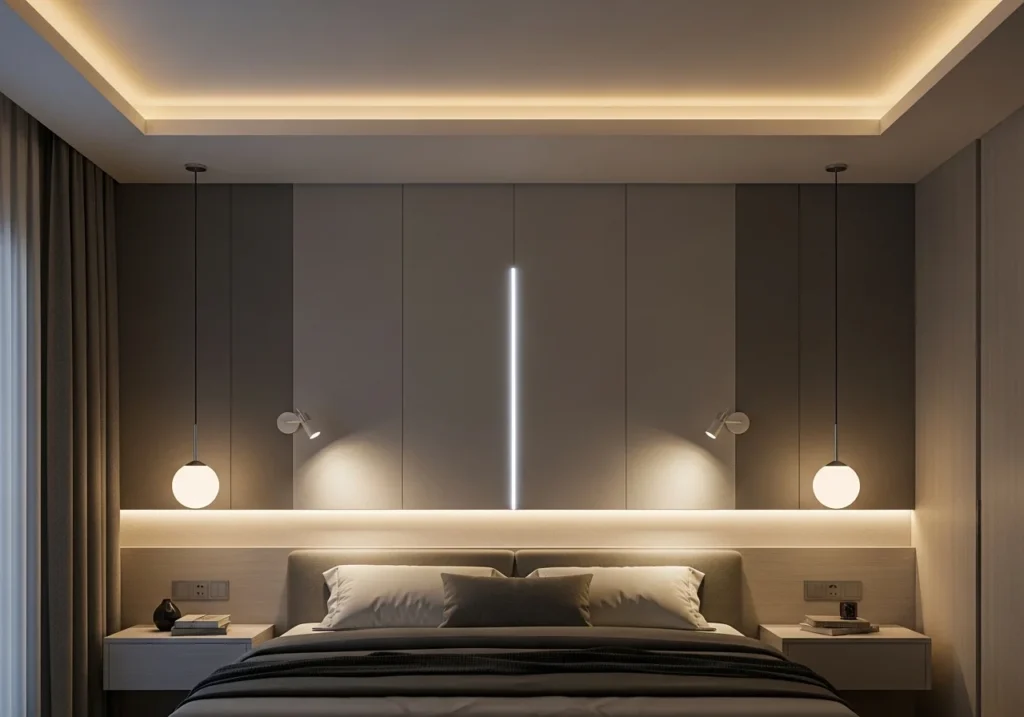
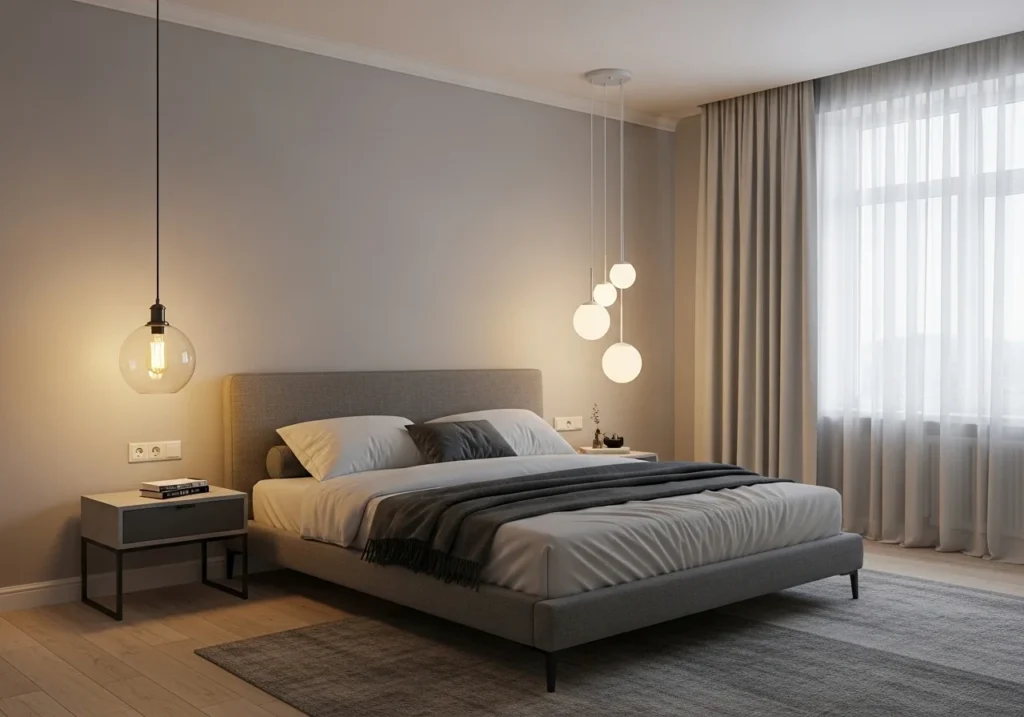
Pendant lights hang from the ceiling and replace bulky bedside lamps. A single pendant on each side of the bed looks clean and modern. Choose simple shapes in matte black, brass, or white. Pendant lights free up space on your nightstand.
Minimal ceiling lights keep the room clean and uncluttered. A flush-mount or semi-flush ceiling light works well in most rooms. Choose a fixture that complements your decor style. Avoid overly decorative designs if your goal is a modern look.
Smart lighting setup lets you control everything from your phone or voice assistant. You can set schedules, dim lights, and switch color temperatures. Smart bulbs work in existing fixtures. They make your bedroom lighting ideas easy to adjust any time.
Cozy Bedroom Lighting Ideas
Soft lighting ideas create a warm, inviting atmosphere. These choices make your bedroom feel like a true retreat.
Warm light bulbs are the easiest upgrade. Replace cool white bulbs with warm white ones. Look for bulbs with a color temperature between 2700K and 3000K. This range mimics candlelight and feels naturally cozy.
Soft bedside lamps add a gentle glow near your bed. Choose lamps with fabric shades that diffuse light evenly. Avoid bare bulbs that cause harsh brightness. Bedside lighting ideas like this improve your reading experience too.
Fairy lights bring a magical, soft quality to any room. Drape them along the headboard, behind curtains, or in a glass jar. They create ambient lighting bedroom effects without any installation. Fairy lights come in warm white and many color options.
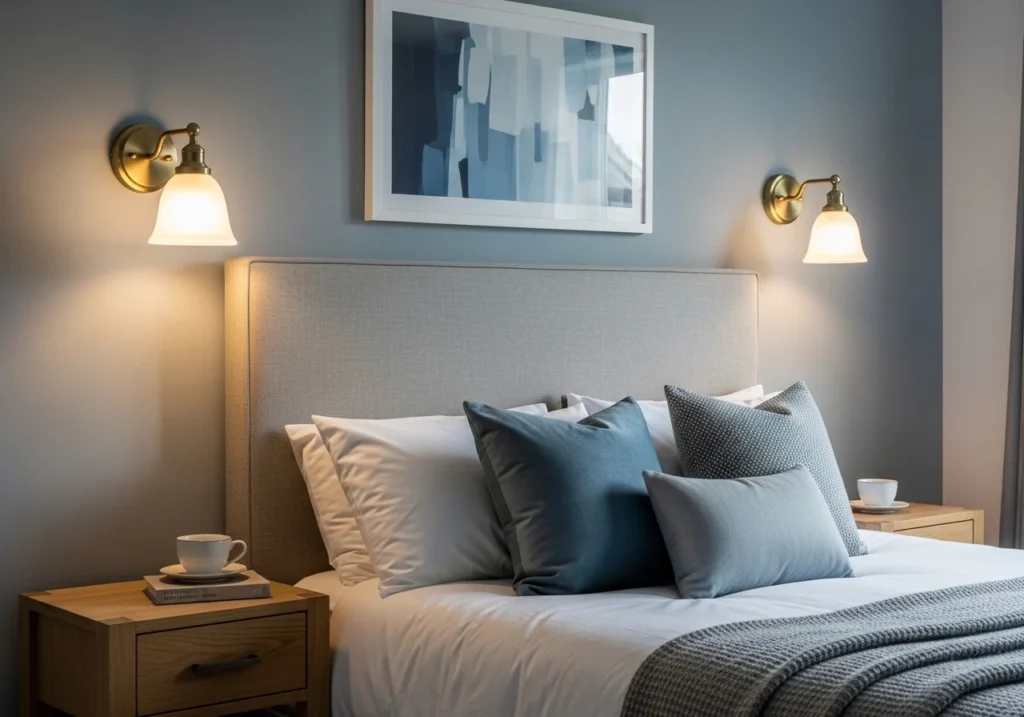
Wall sconces sit flush against the wall and save floor space. They provide soft, directional light near the bed. Sconces work well as bedside lighting alternatives. Choose warm-toned shades for a cozy bedroom look.
Bedroom Lighting Ideas for Small Rooms
Small bedroom lighting ideas focus on maximizing light without adding visual clutter.
Use light colors on walls and ceilings. Light reflects better off pale surfaces. White, cream, or soft gray walls make the room feel larger and brighter. This works with any type of bedroom decor lighting.
Add mirrors near light sources. A mirror opposite a window or lamp reflects light across the room. This doubles the effect of your lighting without adding more fixtures. It also creates a sense of depth.
Keep lights minimal and intentional. One ceiling light and two bedside lamps are enough for most small rooms. Avoid too many fixtures. They make the space feel crowded and overwhelming.
Use wall lighting instead of floor or table lamps. Wall sconces and mounted reading lights save floor and surface space. They keep your layout open and airy. This is one of the best small bedroom lighting ideas for tight spaces.
Best Lighting Placement Tips
Where you place your lights matters as much as which lights you choose.
Bedside lighting position. Place lamps at shoulder height when sitting in bed. This prevents glare in your eyes while reading. Pendant lights should hang about 18 to 24 inches above the nightstand surface.
Ceiling light placement. Center the ceiling light in the room for balanced ambient light. In smaller rooms, a single central fixture works well. In larger rooms, use multiple recessed lights spread evenly.
Corner lighting. A floor lamp or uplighter in the corner adds depth to the room. It removes dark shadows and creates a layered look. Corner lights are great accent lighting options.
Layer your lighting setup. Never rely on one source of light. Combine ambient, task, and accent lighting for a complete setup. Use dimmers to control intensity in each layer. Layered lighting gives you full control over mood and function.
How to Choose the Right Light Color
Light color, also called color temperature, affects how your room looks and feels.
Warm light for comfort. Warm white light (2700K–3000K) feels soft and relaxing. It makes colors look richer and skin tones warmer. This is the best choice for ambient lighting bedroom settings.
Cool light for focus. Cool white light (4000K–5000K) feels crisp and alerting. Use it in areas where you need concentration. A vanity mirror light or reading lamp benefits from cooler tones.
Soft tones for night. At night, dim warm light signals your brain to prepare for sleep. Avoid bright blue-toned light in the evening. It disrupts your sleep cycle and keeps you awake longer. Warm lighting bedroom setups are best for your health.
Common Lighting Mistakes to Avoid
Even great decor fails with poor lighting choices. Watch out for these common errors.
Using harsh white lights. Bright, cool overhead lights feel clinical and unwelcoming. They strip away the cozy feeling from any bedroom. Replace them with warm or dimmable alternatives.
Poor placement of fixtures. A light placed directly above the bed creates unflattering shadows on the face. Side lighting from bedside lamps is always more flattering and functional.
Relying on one light source only. A single overhead light leaves corners dark and the room feeling flat. Layer your lights for a complete and balanced look.
Ignoring room size. A large chandelier overwhelms a small room. A tiny lamp barely lights a large bedroom. Match the scale of your lighting to the size of your space.
Conclusion
Good bedroom lighting ideas come down to three things: comfort, balance, and purpose. Layer your lights for the best results. Choose warm tones for a cozy atmosphere. Match your fixtures to your room size and style. Start with one change a new lamp, a dimmer switch, or LED strips. Build from there. The right bedroom light design does not have to cost a lot. It just needs to work for you. A well-lit bedroom improves your mood, your sleep, and your entire daily routine.
Frequently Asked Questions
1. Which lighting is best for a bedroom? A layered approach works best. Combine a ceiling light for overall brightness, bedside lamps for reading, and accent lights for atmosphere. Warm white bulbs around 2700K to 3000K are ideal for most bedrooms.
2. How do I make bedroom lighting cozy? Switch to warm white bulbs and add soft bedside lamps. Include fairy lights or wall sconces for extra warmth. Dim your lights in the evening to create a relaxing environment.
3. Are LED lights good for bedroom use? Yes. LED lights for bedroom use are energy-efficient and long-lasting. Choose warm-toned LED bulbs for a cozy feel. LED strip lights work well as accent lighting behind headboards or under furniture.
4. What color light is best for sleep? Warm, dim light is best for sleep. Look for bulbs with a color temperature of 2700K or lower. Avoid cool blue light in the evening. It disrupts melatonin production and delays sleep.
5. How many lights should a bedroom have? Most bedrooms need at least three light sources. One ambient ceiling light, two bedside lights, and one accent light create a balanced setup. Small bedrooms can work with fewer fixtures.
6. Can I mix different light types in one bedroom? Yes. Mixing ambient, task, and accent lighting is the recommended approach. Each type serves a different purpose. Together, they create a layered, functional, and attractive bedroom lighting setup.
