
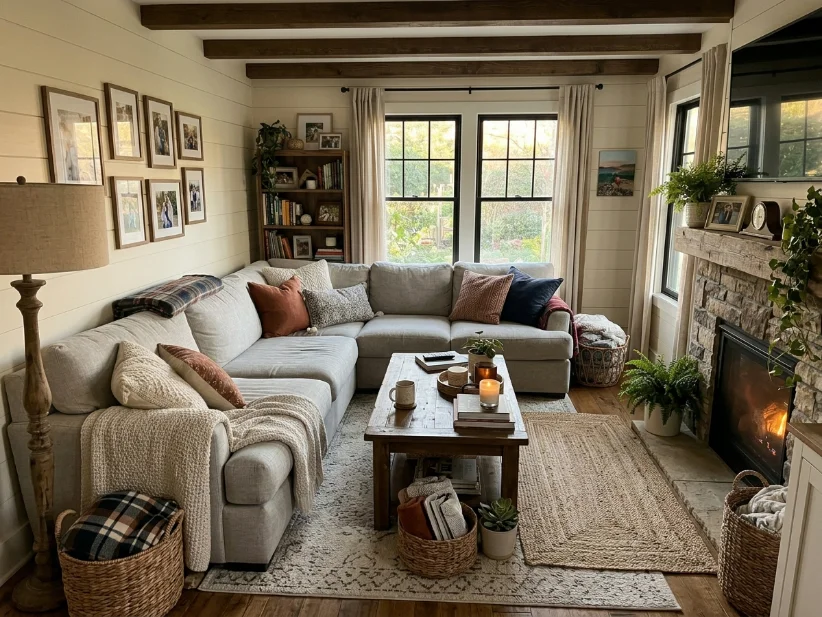
If your living room feels cramped no matter how many times you rearrange it, you’re not alone. Small living rooms can be challenging to layout, especially when every inch of space matters. In this guide, I’ll share practical furniture arrangement tips, common mistakes to avoid, and simple ways to make a small living room feel more spacious, comfortable, and functional.
What You’ll Need
- A tape measure (non-negotiable do not skip this)
- Graph paper or a free app like RoomSketcher or Magicplan
- Painter’s tape (for mocking up furniture footprints on the floor)
- Your current furniture dimensions, or the product pages if you’re buying new
- A realistic sense of how many people actually sit in this room on a regular basis
Step 1: Measure Everything Before You Move Anything
This sounds obvious. I skipped it anyway, and I paid for it with a thrown-out back and a three-hour furniture shuffle that accomplished nothing.
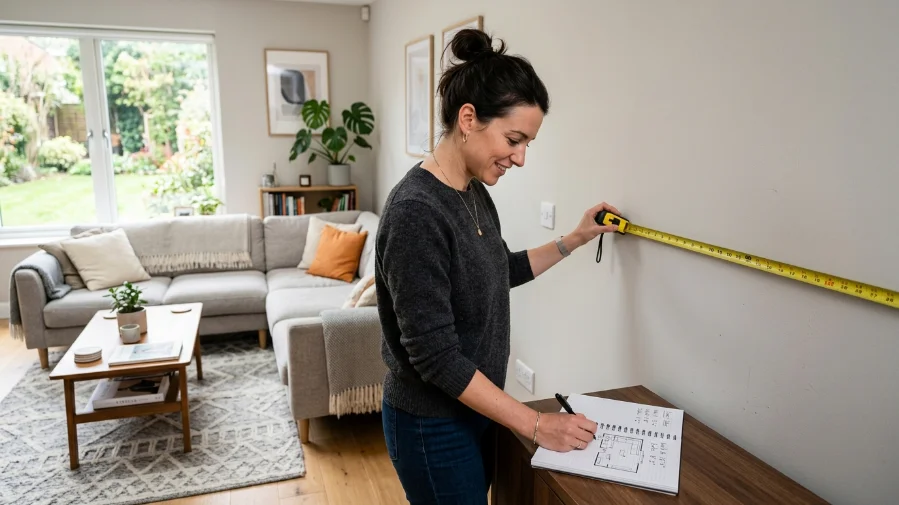
Measure the room’s full dimensions, then note every obstacle: door swings, window sills, vents on the floor or ceiling, cable or outlet locations, and any architectural quirks. Our late-90s builder home has a weird half-wall between the living room and hallway that I kept designing around incorrectly because I hadn’t measured it properly.
Sketch It Out First
Graph paper with a 1:12 scale (one square = one foot) works great, or use a free app. Draw the room footprint, then cut out paper rectangles scaled to your furniture. Move the paper around before you touch a single piece of furniture. Sounds tedious. It saved me from attempting to fit a 96-inch sofa into a 90-inch wall gap which I absolutely would have tried.
Budget note: RoomSketcher has a free tier that’s more than enough for a basic living room layout. No need to pay for the premium version unless you want 3D renders.
Step 2: Ditch the “Everything Against the Wall” Instinct
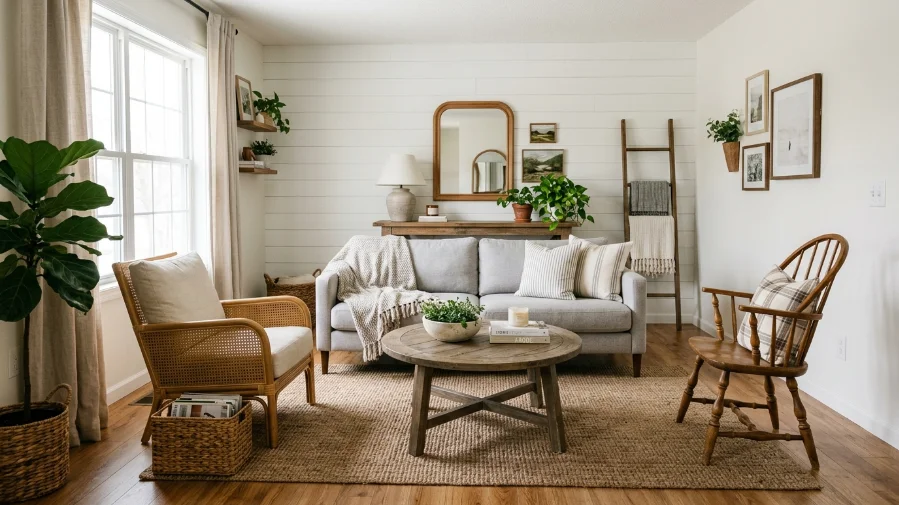
Floating furniture toward the center of the room even just a few inches almost always makes a small space feel bigger. I know it sounds counterintuitive. Pulling the sofa 8 to 10 inches off the back wall opens up the sightline when you walk in and makes the seating area feel intentional instead of crammed.
In our living room, I floated the sofa about a foot from the wall behind it and angled the two accent chairs very slightly inward. That small shift created a conversation zone that actually looks designed, and it gave Biscuit a little path behind the couch he’s very committed to using.
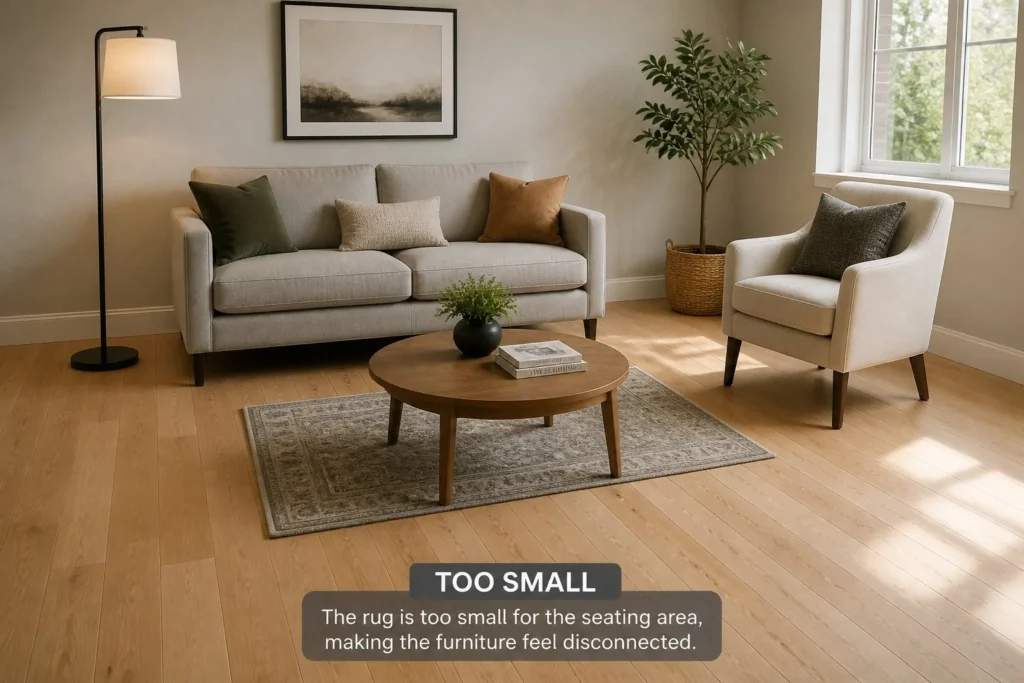
The trade-off is that a floating layout makes your rug choice critical. A rug that’s too small will make the furniture look like it’s floating randomly. We use a 8×10 in our 14×16 room, and all four legs of the sofa and chairs sit on it. If budget is tight, At Home often carries large rugs in the $80–140 range that hold up decently that’s where we got our current one.
Step 3: Right-Size Your Sofa (This Is Usually the Problem)
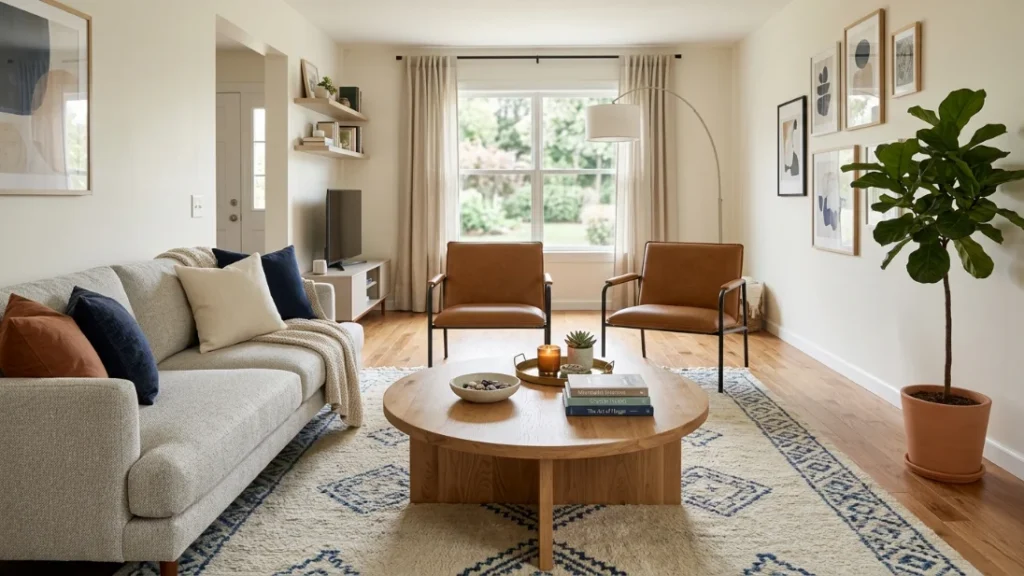
For a small living room, a sofa in the 72–84 inch range is almost always the right call. Anything over 90 inches and you’re fighting the room. I loved the look of a deep, oversized sectional I really did but after trying one on the floor plan app, it was obvious it would take up two-thirds of the usable space.
We landed on a 78-inch sofa from Article (the Timber in a warm gray fabric, around $900 at the time) and paired it with two smaller accent chairs instead of a loveseat. That combination gave us seating for five without blocking any traffic flow.
When You Can’t Afford New
If you’re working with what you have, try removing one piece entirely. Seriously. Sometimes a two-sofa setup in a small room just needs one of the sofas gone. A single sofa plus two chairs almost always flows better than two sofas facing each other in a tight space. Sell the extra piece on Facebook Marketplace we’ve sold several things that way and usually get 40–60% of original retail.
Step 4: Choose a Coffee Table That Doesn’t Block the Room
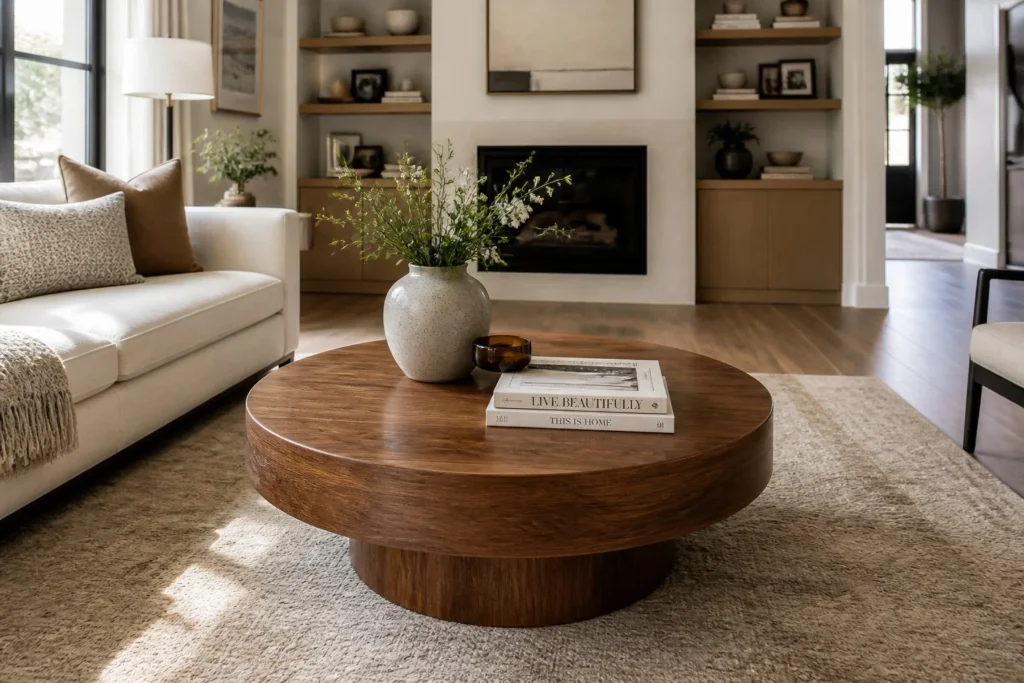
Standard rectangular coffee tables in small living rooms become obstacle courses. We went through two before landing on a round one, and that switch made an immediate difference. No sharp corners to bash your shins on, and the curved shape leaves more visual breathing room.
Look for a coffee table under 18 inches in height and no wider than two-thirds the length of your sofa. Ours is a 36-inch round in a light natural wood finish found a near-identical one to what I wanted at HomeGoods for $94, which was significantly less than the West Elm version I’d been eyeing at $349.
If space is extremely tight, consider a pair of nesting tables or two small ottomans in place of a traditional coffee table. The ottomans do double duty for extra seating and can push against the sofa when you need floor space.
Step 5: Think Vertical to Reclaim Floor Space
In a small living room, your walls are storage and your floor is precious. Anything that can go up should go up.
We mounted our TV on the wall instead of using a media console, which freed up about 18 inches of floor depth along that entire wall. The wall mount ran us $34 on Amazon and Mark installed it in about an hour though he had to make a second trip to Home Depot when the lag bolts we had weren’t long enough for our particular wall construction. Classic.
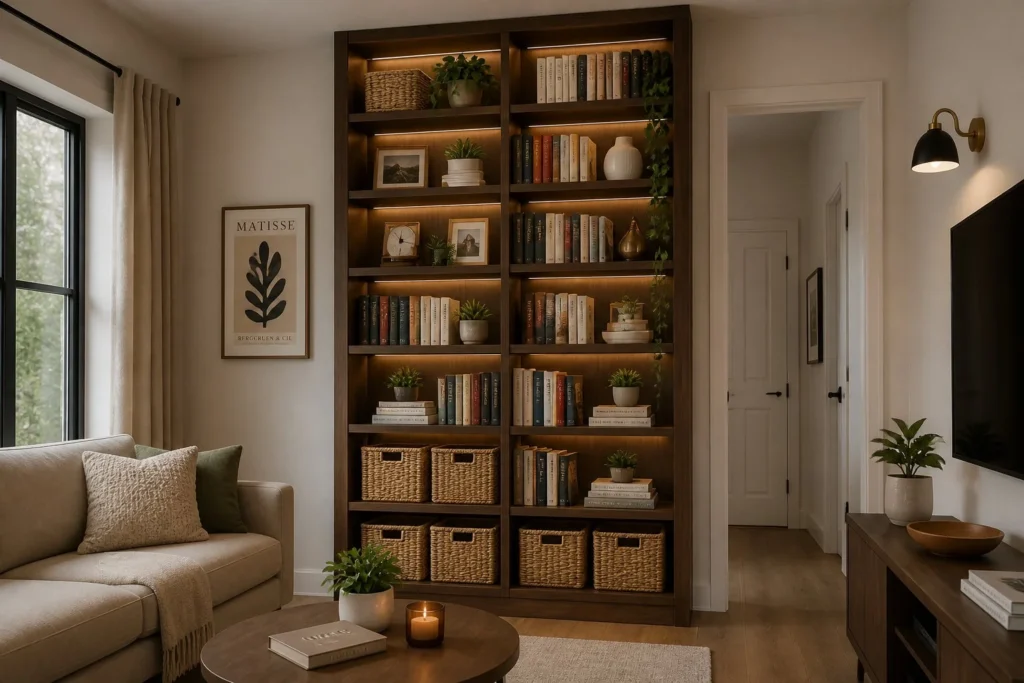
For storage, a tall, narrow bookcase pulls less floor space than a wide credenza while giving you more vertical storage. IKEA’s BILLY bookcases run around $60–80 depending on height and work well in almost any small living room. Style them with a mix of books, small baskets (great for hiding remotes and the kids’ random small toys), and a few larger objects so they don’t look like a library return desk.
What went wrong for us: I bought a media console first, before deciding to mount the TV, and then had to sell it. Measure, decide on your TV plan, and buy furniture in the right order. Learn from my mistake.
Step 6: Light the Room in Layers
A single overhead light fixture in a small living room makes the space feel flat and smaller than it is. Once we added a floor lamp in the corner behind one accent chair and a table lamp on the bookcase, the room felt about 30% warmer and more dimensional which tricks the eye into reading it as larger.
We specifically use 2700K bulbs throughout the living room. That warm tone works well with our modern farmhouse style and doesn’t give the room the harsh, clinical feeling that 4000K or 5000K does. The difference in how the space feels at 7 p.m. is pretty significant.
Budget option: Target’s threshold lamp collection regularly has decent floor lamps in the $45–75 range. I’ve bought two from there and both have held up fine through multiple rearrangements and one incident involving Biscuit and a wagging tail.
Common Pitfalls
Buying furniture without testing the layout first. Painter’s tape on the floor to outline the furniture footprint takes ten minutes and will save you a return shipping headache. Wayfair’s return policy has gotten stricter, and large furniture returns can cost $50–100 in fees.
Undersizing the rug to “save space.” A small rug in a small room makes everything look smaller, not bigger. Go larger than feels comfortable on paper it’ll look right in person.
Overcrowding with accent pieces. In a small room, five throw pillows and four blankets and a floor plant and a basket full of magazines and a tray full of candles is too much. Pick fewer things and let them breathe. I cleared two full shelves of stuff I’d been keeping out of habit and the room immediately looked less chaotic.
Ignoring traffic flow. There should be at least 30–36 inches of clear walking path through the main routes. Less than that and the room will feel congested no matter how well the furniture is arranged.
Final Thoughts
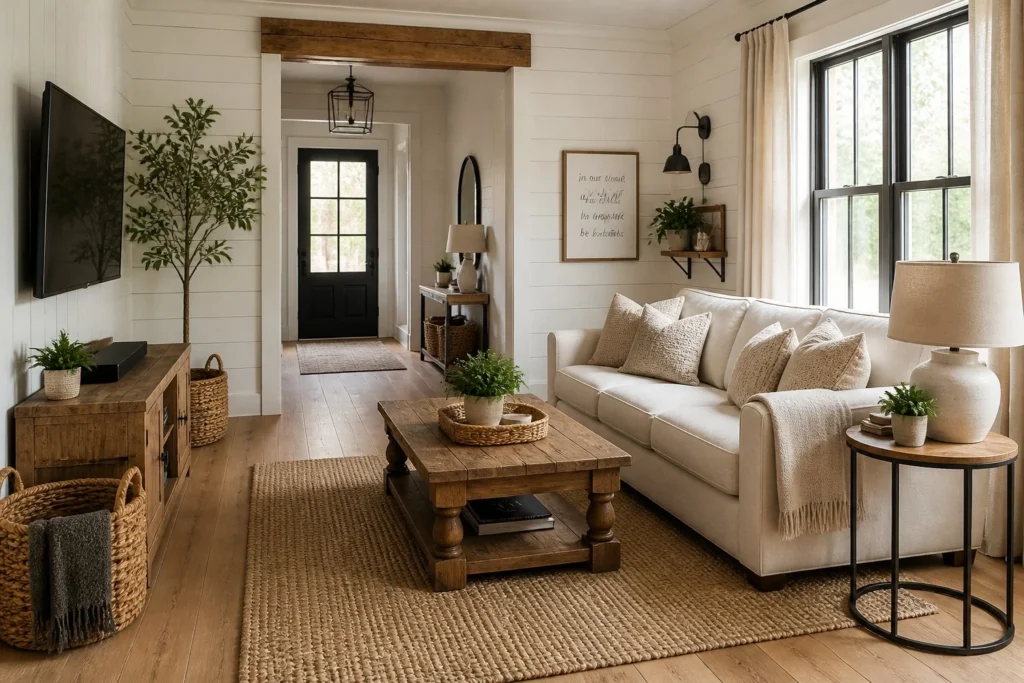
Learning how to arrange furniture in a small living room isn’t about fitting more furniture into the space. It’s about creating a layout that feels comfortable, functional, and easy to live with every day.
Measure carefully, choose appropriately sized furniture, prioritize clear walking paths, and don’t be afraid to remove pieces that aren’t serving a purpose. In many cases, a simpler layout creates a room that feels larger, more welcoming, and far more enjoyable to use.
Sometimes the best thing you can do for a small living room is not add something new but remove something that’s getting in the way.
