
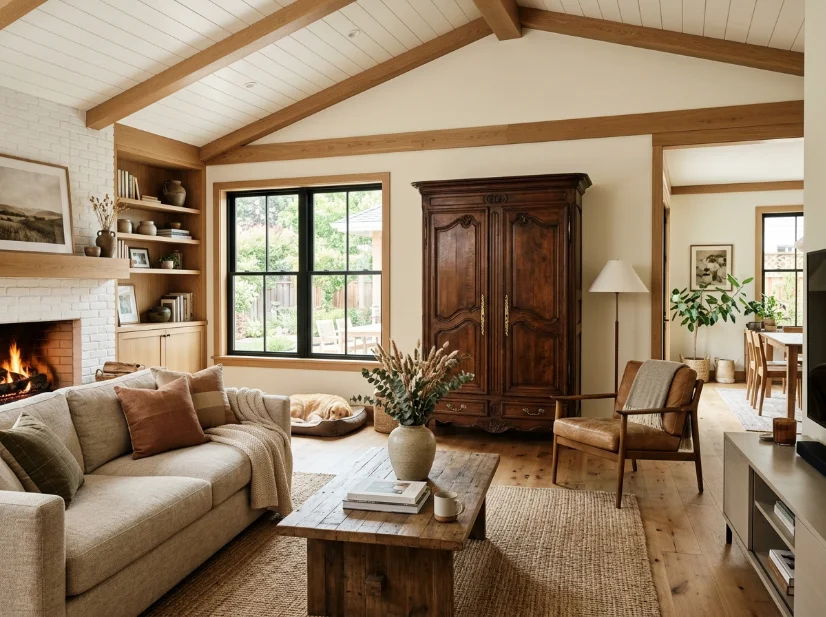
Antique furniture can make a room feel warm, collected, and full of personality, but styling it isn’t always as easy as bringing an old piece home and finding an empty corner. I’ve learned that the wrong placement, too many vintage pieces, or an unnecessary makeover can quickly make a room feel cluttered or dated. In this post, I’m sharing the seven lessons that finally helped me make antique furniture work in our everyday home. You’ll learn how I choose a statement piece, mix old and new furniture, decide when to refinish, use antiques in practical ways, protect older wood, and know when it’s better to let a piece go.
1. Pick One Antique Piece to Anchor a Room, Not Five
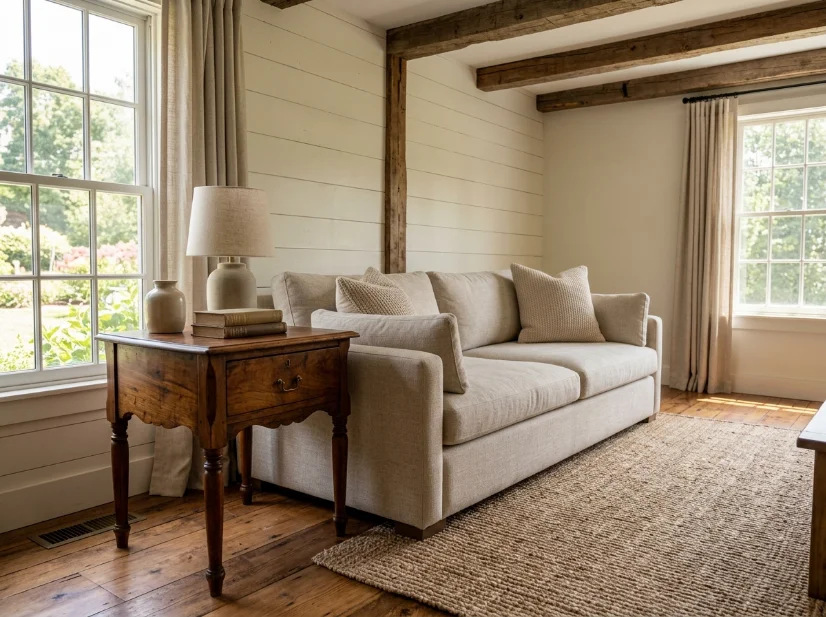
My biggest mistake was putting three antique pieces in our living room at the same time. Instead of looking collected, the room started to feel like a small museum. Nobody asked for that. These days, I follow a simple one-anchor rule. I choose one standout antique for a room and surround it with newer, simpler pieces.
In our living room, that piece is a walnut side table I found on Facebook Marketplace for $45. The sofa, rug, and other furniture are simple and contemporary. That contrast gives the antique room to breathe and makes its wood, shape, and details much easier to notice.
If you’ve inherited several antique pieces, you don’t have to display them all together. Spread them throughout the house instead. One strong piece can make a room feel intentional. Several large antique pieces competing for attention can make the space feel crowded.
2. Mix Eras Instead of Matching Them
I used to believe antique furniture needed antique furniture around it. I’ve completely changed my mind. Mixing different eras usually creates a more relaxed and current look than trying to make every piece match.
A Victorian-style chair can work beautifully with a simple modern lamp. A mid-century credenza can look great beneath an ornate vintage mirror. The goal isn’t to recreate one historical period. It’s to let older pieces add character to a room that still feels like your home today.
Why This Works Better Than Matching
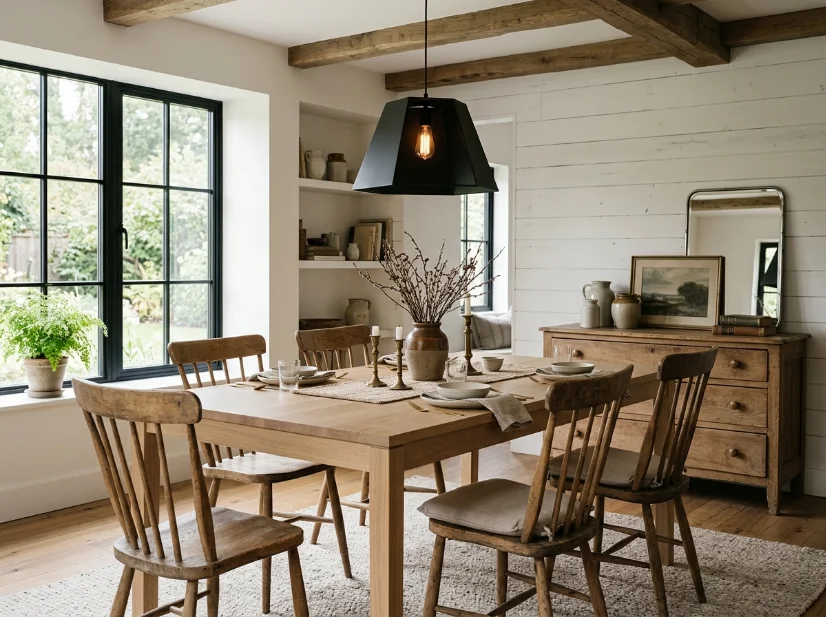
When everything in a room comes from the same era, the result can sometimes feel more like a stage set than a lived-in home. Mixing a worn wood piece with clean-lined furniture keeps the room from feeling overly themed.
You don’t need expensive designer furniture to create that contrast, either. Simple pieces from places like IKEA or Target can work surprisingly well beside an antique. In our dining room, we have thrifted farmhouse chairs around a newer World Market table. That combination gets more compliments than any perfectly matched furniture set I’ve owned.
3. Refinish Sparingly, Not Automatically
One of my biggest antique furniture lessons came from a mistake. I sanded down an oak side table because I thought the finish looked dated. Once I got through the finish, I realized the wood underneath had beautiful grain and character. I had spent an entire weekend removing something I should have left alone.
Now I always clean an antique before deciding whether it needs a makeover. Sometimes years of dust and grime make an old finish look worse than it actually is. A gentle cleaning followed by an appropriate furniture wax can make a surprising difference.
I save stripping and repainting for pieces that are genuinely damaged, heavily stained, or finished in a way that doesn’t work with the rest of the room. If the original finish is still in good shape, keeping it can preserve some of the character that made the piece worth buying in the first place.
If you do decide to paint an antique piece, test your products on a hidden area first. Older finishes can react differently to modern paints and primers. Shellac, for example, can cause problems such as bleed-through if the surface isn’t properly sealed before painting.
4. Let Function Decide Placement
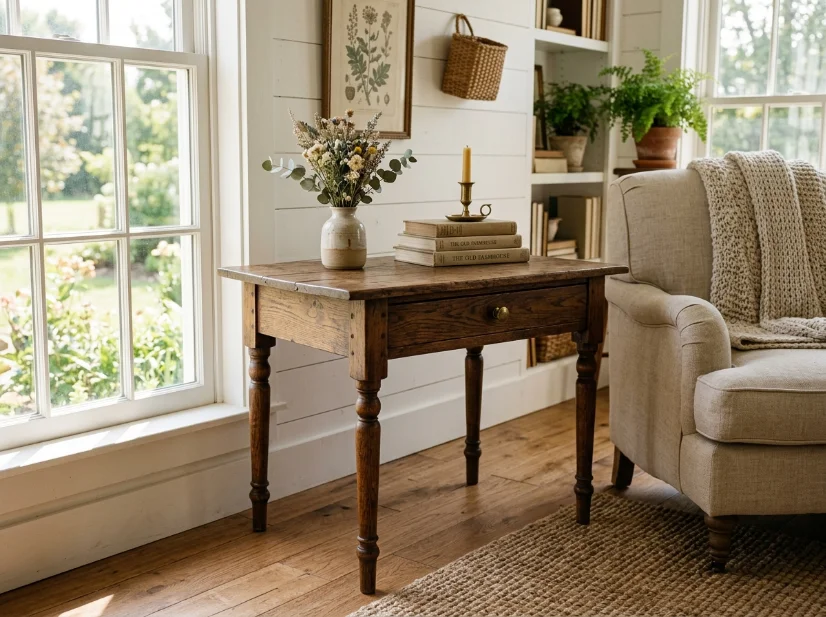
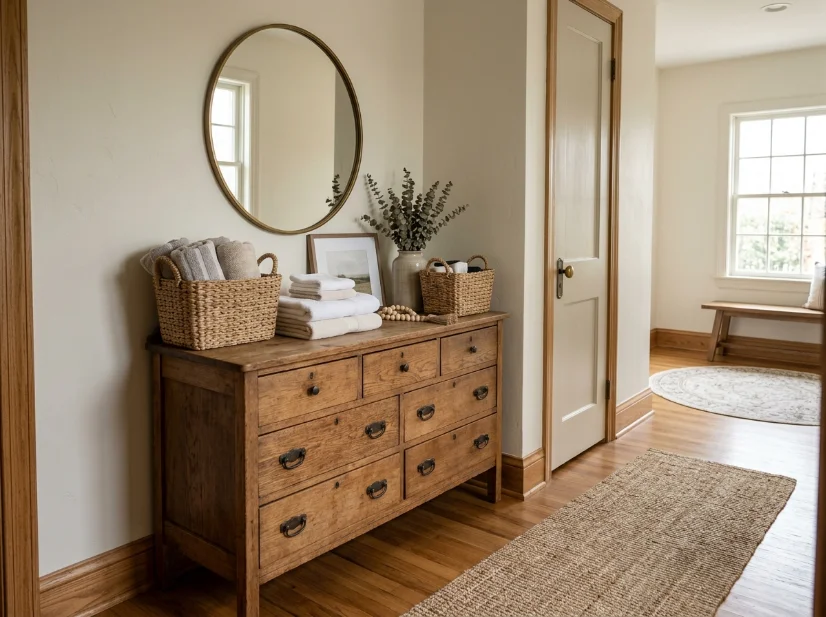
An antique dresser doesn’t have to stay in a bedroom. Ours lives in the hallway and stores folded towels because our linen closet is embarrassingly small. That’s one of those builder-grade problems that comes with plenty of late-90s houses like mine.
An old dry sink can become a bathroom vanity. A vintage trunk can work as a coffee table while hiding toys underneath. With a 5-year-old in our house, hidden storage isn’t just a nice bonus. It’s useful every single day.
Instead of asking where a piece is traditionally supposed to go, start by asking what your household needs. Once you know how you’ll use the furniture, finding the right location becomes much easier.
- Dresser → entryway storage or linen storage
- Trunk → coffee table with hidden storage
- Dry sink or washstand → bathroom vanity or bar cart base
- Vintage desk → kids’ homework station
5. Balance Ornate Details With Plain Textiles
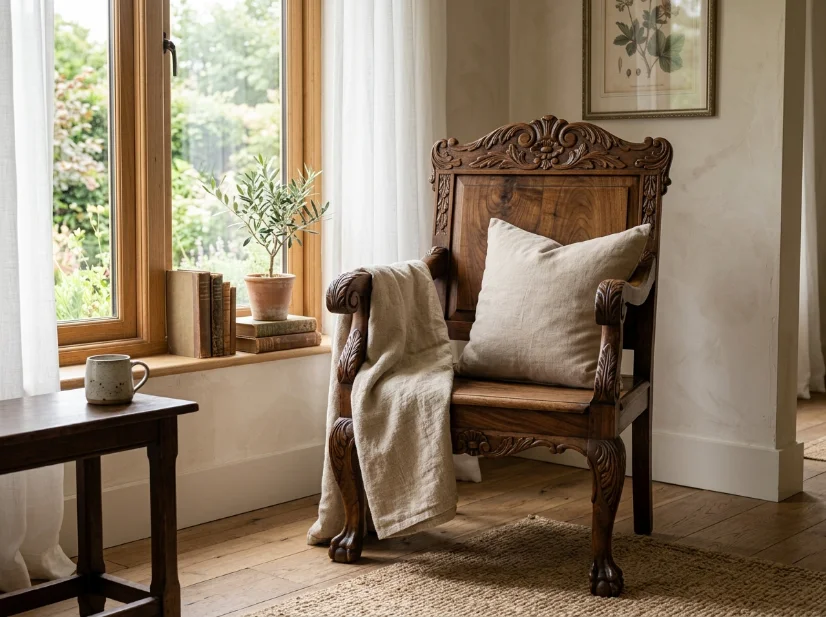
Antique furniture often has plenty of visual interest already. Carved wood, decorative hardware, curved legs, inlay, and aged finishes can all draw attention without needing much help.
That’s why I try to keep nearby textiles simple when a piece is especially ornate. I learned this after pairing a floral wingback chair with a striped throw. The combination looked chaotic in person and somehow looked even busier in photos.
Now I use plain linen, solid cotton, or another simple fabric around heavily detailed antique pieces. If I want to add a pattern, I use it somewhere else in the room where it isn’t competing directly with the furniture.
The idea isn’t to make the room boring. It’s to give the eye somewhere to rest. When the furniture has plenty of personality, a quieter textile can actually make that personality easier to appreciate.
6. Protect Real Wood From NC Humidity
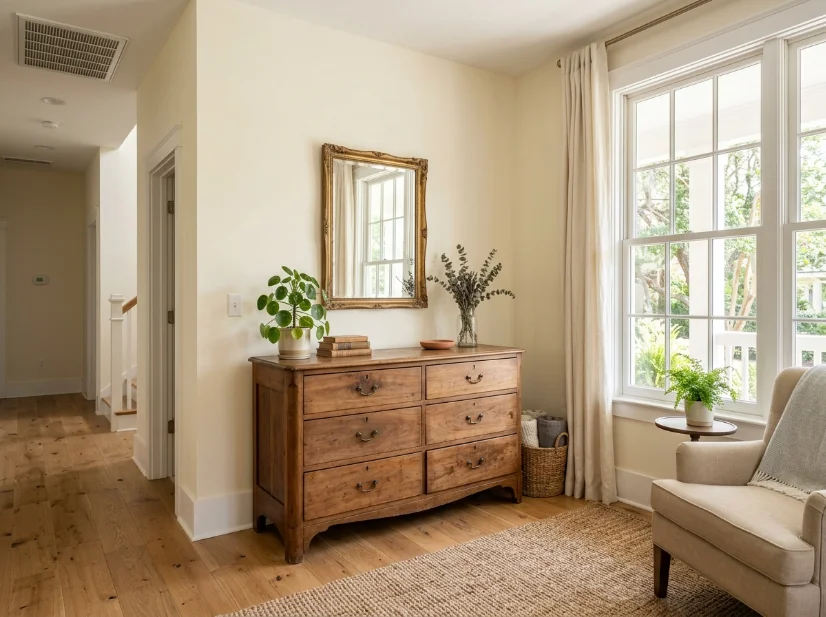
Living in North Carolina taught me that humidity and old wood aren’t always the best combination. Southern summers can be especially tough on antique furniture. Drawers can stick, doors can swell, and some finishes can become cloudy when exposed to too much moisture.
I try to keep antique wood furniture away from direct AC vents and areas that regularly become steamy. I also avoid placing delicate pieces directly beside bathroom doors where they may be exposed to repeated changes in humidity.
For routine care, I follow the manufacturer’s or furniture-care specialist’s recommendations rather than constantly applying products. If a wooden drawer starts sticking during humid weather, don’t force it. A small amount of appropriate wax on the runners may help, but older or valuable furniture may be better handled by a professional.
One important safety note: if an older piece has flaking paint and you’re unsure when it was made, don’t start sanding or scraping it. Furniture made before 1978 may contain lead-based paint. If you’re concerned about an old painted piece, have it assessed and follow current safety guidance before disturbing the finish.
7. Accept That Some Pieces Won’t Work, and Let Them Go
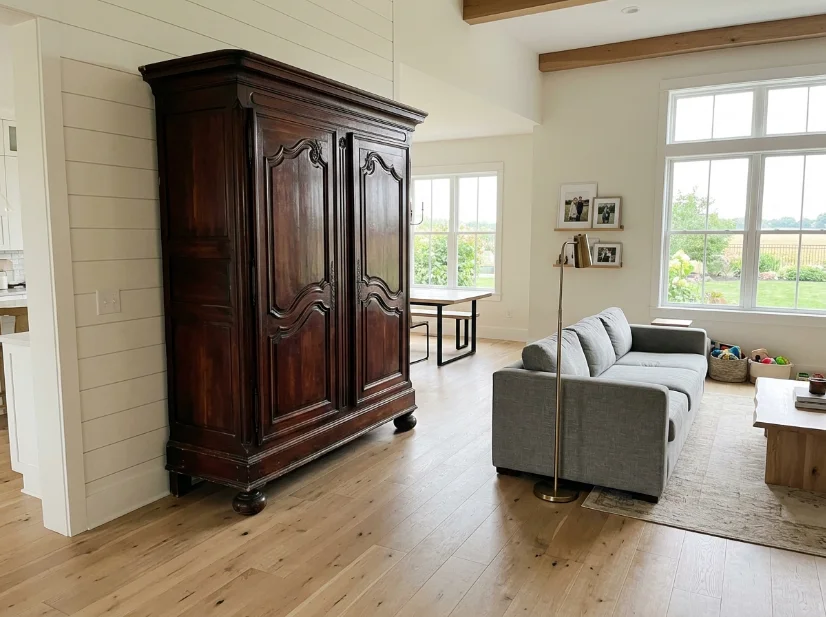
Not every antique find deserves a permanent place in your home. I learned that after keeping a heavy mahogany armoire for two years simply because I felt guilty about the $60 I had spent on it.
The armoire never worked in our space. It was too large, too heavy, and never really suited our style. Eventually, I listed it on Facebook Marketplace and sold it for $75. Instead of feeling disappointed, I felt relieved.
That’s when I realized that keeping something out of guilt isn’t the same as styling it well. If you’ve tried moving a piece around, changing its surroundings, and giving it a fair chance but it still doesn’t work, letting it go is completely reasonable.
You can resell it, donate it, or pass it along to someone who has the right space for it. The goal isn’t to own the most antiques. The goal is to create a home where the pieces you keep actually make sense.
What I’d Do Differently
Looking back, I would have started with fewer and better antique pieces instead of buying every bargain that caught my eye. A low price doesn’t automatically make something a good addition to your home.
I also would have left that oak side table alone instead of refinishing it. Some of the best character in antique furniture comes from the finish that has already aged naturally over time.
Most importantly, I wish I had asked more questions at estate sales and flea markets before buying. A wobbly leg, hidden water damage, stuck drawer, or previous repair can become a much bigger project once you get the piece home.
Now I try to slow down before buying. I look at the condition, measure the space, think about how I’ll use the furniture, and ask myself whether I actually love the piece. That extra bit of patience has saved me from bringing home plenty of “great deals” that weren’t great for our house.
Antique furniture doesn’t have to make your home feel formal or old-fashioned. The right piece can add warmth, history, texture, and personality to an otherwise simple room. The trick is giving it enough space to stand out, pairing it with things that feel like you, and remembering that your home still needs to work for real life.
If you have an antique piece you’re struggling to style, I’d love to hear what you’re working with. Tell me about it in the comments, or save this guide to Pinterest so you can come back to these ideas when you’re rearranging your space.
