
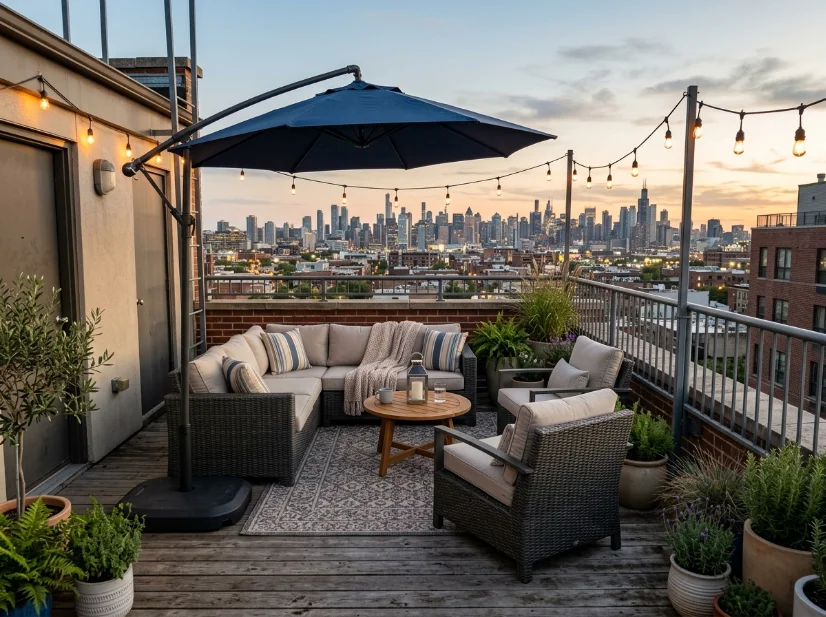
Apartment rooftop decks look amazing, but decorating one is very different from decorating a backyard patio. You have to think about wind, weight limits, intense sun, rain, building rules, and even how you’re going to get large furniture through the door. In this guide, I’m sharing 7 practical apartment rooftop deck ideas that make a small outdoor space more comfortable without ignoring those real-life problems. You’ll learn what to check before buying furniture, how to choose pieces that can handle rooftop conditions, where to add shade and privacy, and how to finish the space with plants, rugs, and lighting.
1. Confirm Weight Limits Before You Buy a Single Thing
This is the boring step that many people skip. It is also the most important one. Rooftop decks can have specific weight limits. Heavy items can become a serious concern. Stone planters, water features, and fire tables can add hundreds of pounds. Before my friend bought anything, her building management provided the load rating for her section of the roof. If you rent, ask your leasing office about the rules. If you own the space, consider speaking with a structural professional before adding anything heavy. This is especially important for large planters, hot tubs, or bulky outdoor features. A few chairs may not seem like much. Soil, water, furniture, and containers can add up quickly.
2. Pick Furniture That Won’t End Up Two Floors Down
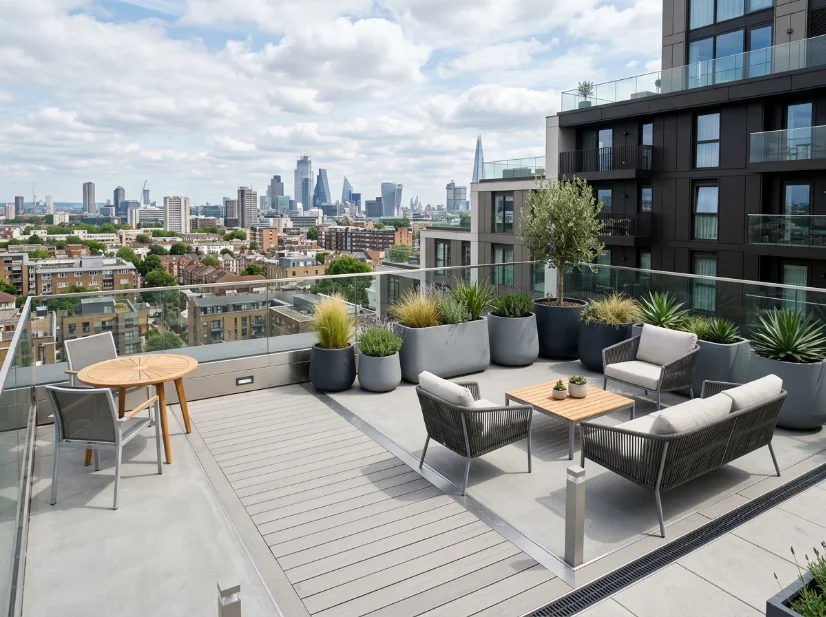
Wind behaves differently on a rooftop. There are fewer barriers to slow it down. My friend’s first set of $25 folding chairs from Target proved that point. A spring storm sent one of them flying onto a neighbor’s balcony. We learned our lesson quickly. Choose outdoor furniture with some weight to it. Low-profile pieces are usually a better choice for exposed rooftops. You can also look for furniture designed to be anchored. World Market and CB2 both have outdoor pieces with lower profiles that can work well. Smaller items may need extra protection during strong winds. Weighted furniture clips or other approved anchoring options can help. Always check your building’s rules before attaching anything to the roof or railing.
3. Layer Rugs and Textiles That Can Handle Getting Wet
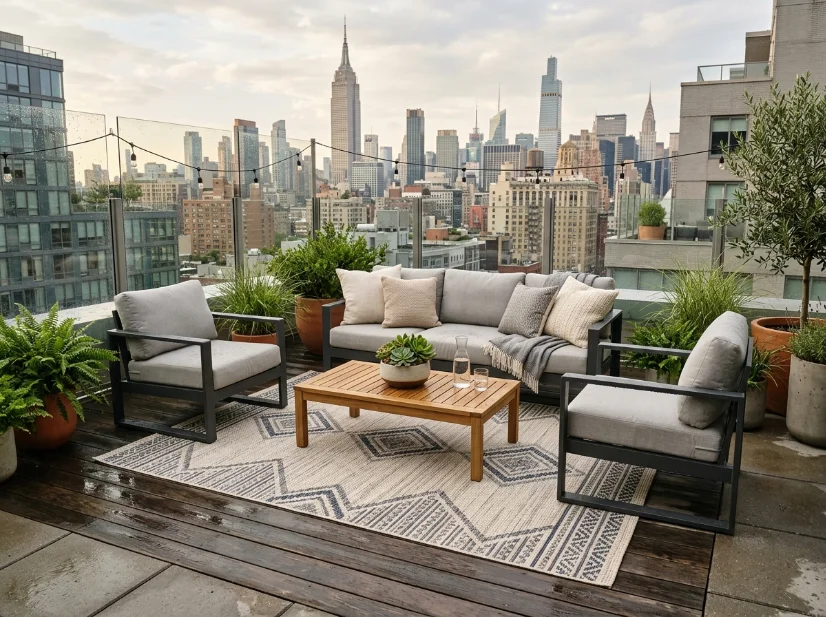
An outdoor rug does more than make a rooftop look pretty. It softens hard concrete and helps define different areas. It can also hide stains and everyday dirt. Choose a rug that is specifically made for outdoor use. Polypropylene is a practical option because it dries relatively quickly after rain. A 5×8 outdoor rug from stores such as Target or Home Depot can often cost around $60 to $90, depending on the design and current pricing. Pillows need a little more attention. Look for solution-dyed acrylic fabrics when possible. Sunbrella is one well-known option. These fabrics generally handle outdoor exposure better than inexpensive indoor pillows. They cost more at first, but they can be a better long-term choice.
4. Add Privacy Without Building a Wall
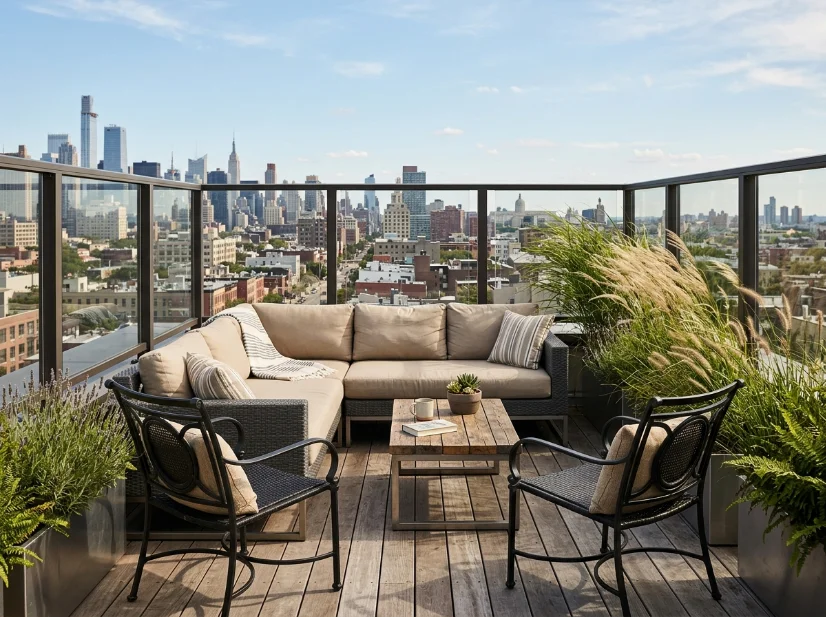
Rooftop decks can feel very exposed. That open feeling is part of the appeal, but it can also make the space uncomfortable. You may want some privacy without installing a permanent wall. Before adding anything, check your building or HOA rules. Many apartment buildings have strict rules about permanent structures and attachments. Tall planters can create a soft visual screen. Ornamental grasses can add movement and greenery at the same time. Freestanding lattice panels can also work if your building allows them. Another simple option is an outdoor curtain panel. It can create a little privacy around a seating area and can be removed quickly before bad weather. Avoid drilling into railings, walls, or roof surfaces unless you have written approval.
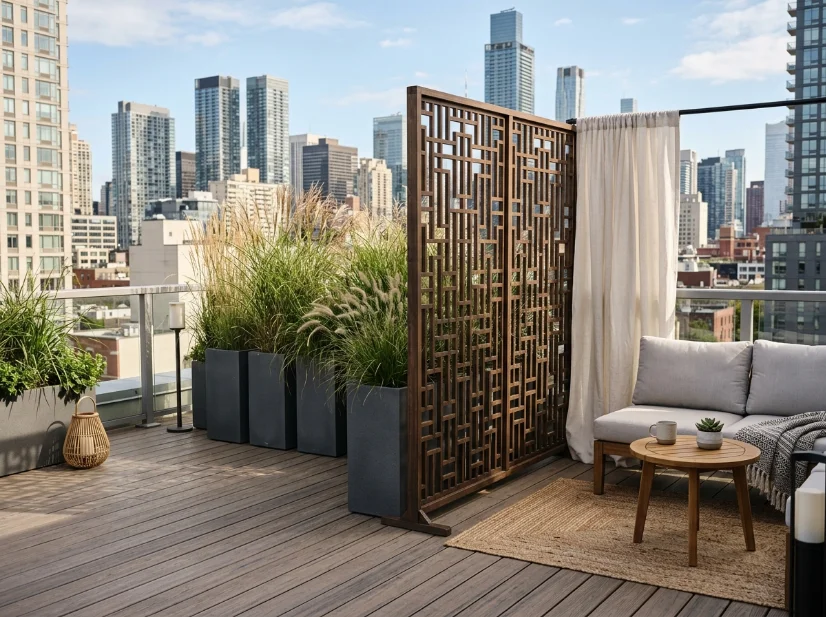
5. Plan Around Sun Exposure Before You Fall in Love With a Layout
Rooftops can get intense direct sunlight. There may be very little natural shade during the hottest part of the day. Plan your seating around the sun before buying furniture. A cantilever umbrella can cover a larger seating area without sitting directly in the middle of your table. Depending on the size and quality, these umbrellas can cost around $150 to $300. A retractable canopy is another option. It usually costs more, but it can be useful if you spend a lot of summer evenings outdoors.
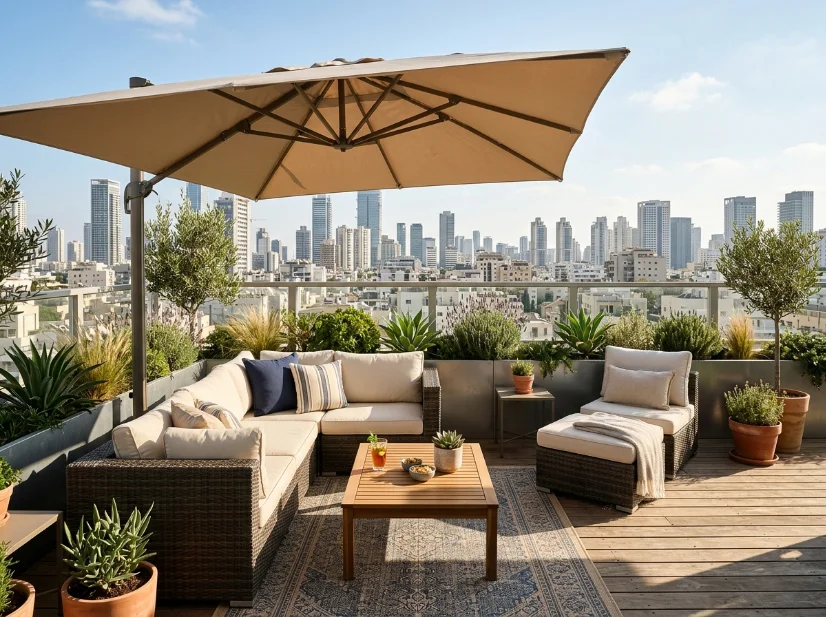
Cheaper Shade Alternatives
You don’t need an expensive shade system to make a rooftop more comfortable. A shade sail can cover a surprising amount of space when installed correctly. Smaller options may cost around $40 to $70. A traditional market umbrella is another simple choice. A small umbrella with a suitable weighted base can work well for a compact seating area. The important part is choosing a setup that is stable and approved for your rooftop. Strong wind can turn a poorly secured umbrella into a hazard.
6. Choose Container Gardening Instead of Fighting the Weight Limit
A full rooftop garden may not be practical. Containers are usually much easier to manage. Lightweight resin and fiberglass planters can give you the look of stone without the same amount of weight. They also come in many modern styles now. Choose plants that can handle your rooftop’s sunlight and weather. Herbs, succulents, and drought-tolerant plants can be good options for sunny spaces. Remember that plants still add weight. Wet soil is much heavier than dry soil. Check the weight allowance before filling large containers. Instead of scattering pots everywhere, group three or four planters together. Use different heights to create a more intentional arrangement. This gives you greenery without taking over the entire deck.
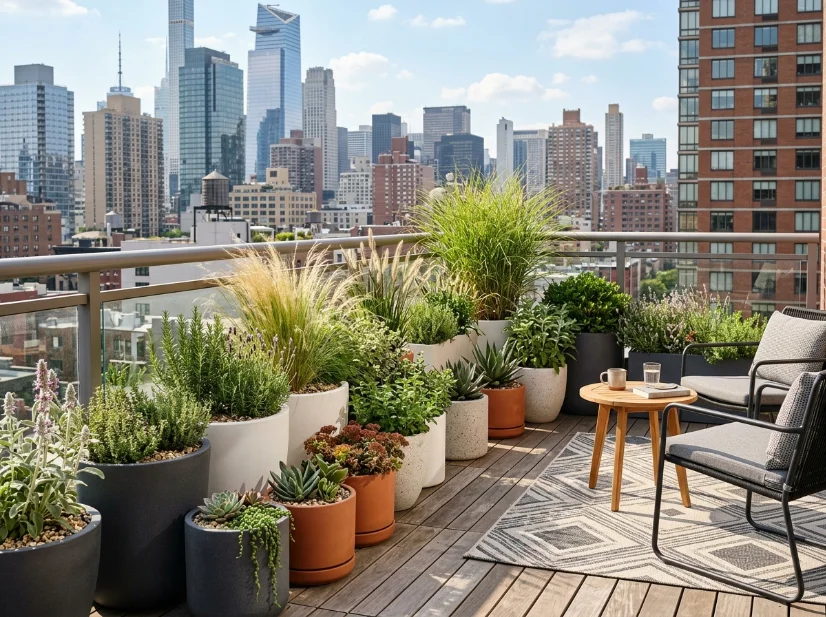
7. Get the Lighting Right for After Dark
A rooftop deck can feel completely different after sunset. Good lighting makes the space feel warmer and more inviting. String lights are one of the easiest options. A timer can also make them more convenient. Solar lights are another simple choice because they do not require electrical wiring. Small solar lights can work along approved railing areas or around seating zones. For anything that involves permanent electrical work, check with the building first. Shared rooftop spaces often have specific rules about electrical installations. You also want to make sure every outdoor light is rated for exterior use.
If you’re planning your own rooftop deck, start with the practical details before buying anything. Check the weight limits, measure the access route, and plan for wind and sun first. Then you can have fun with the rugs, plants, furniture, and lighting. If you try any of these ideas, I’d love to hear which one worked best for your space. And if you’re saving rooftop inspiration for later, pin this post so you can come back to it when you’re ready to decorate.
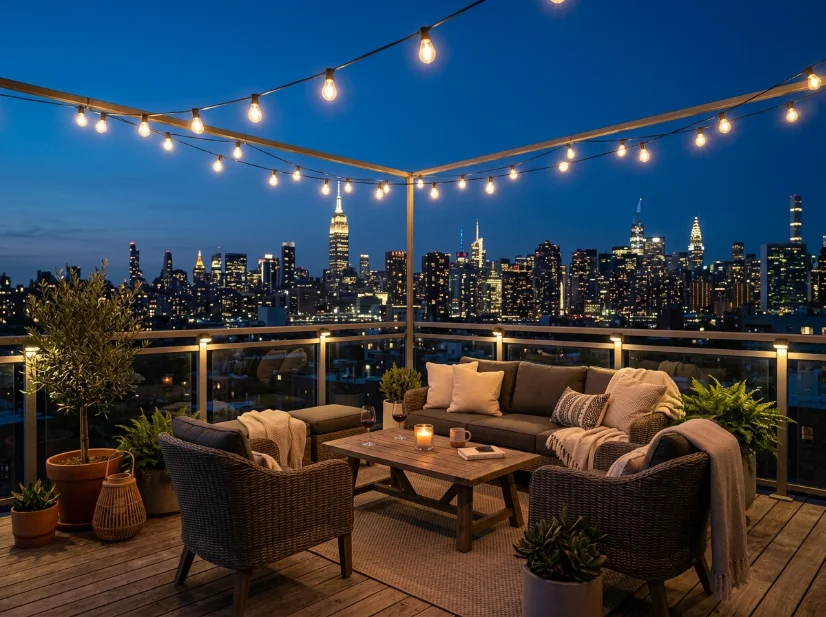
What I’d Do Differently: Mistakes and Lessons
Two things went wrong during my friend’s rooftop project. Both taught us useful lessons. First, she bought a large outdoor sectional before checking the access route. The sectional fit the rooftop perfectly. It did not fit through the stairwell door. It sat in the hallway for two weeks before she finally sold it secondhand at a loss. Measure the access route before buying large furniture. Check stairwells, elevators, doors, and tight corners. Floor measurements alone are not enough. The second mistake was skipping the rug. She thought the concrete looked fine without one. After a few weeks, it looked much dirtier than expected. Pollen and everyday grime showed up quickly. Adding the outdoor rug made the space feel finished instead of simply furnished. That was probably the easiest upgrade we made. The biggest lesson is simple. Start with safety and building rules before worrying about style. Once the weight limits, wind exposure, access route, sun, and weather are handled, the decorating part becomes much easier. A rooftop deck does not need dozens of expensive pieces to feel comfortable. A few smart choices can make a small space practical, inviting, and much easier to maintain.
