
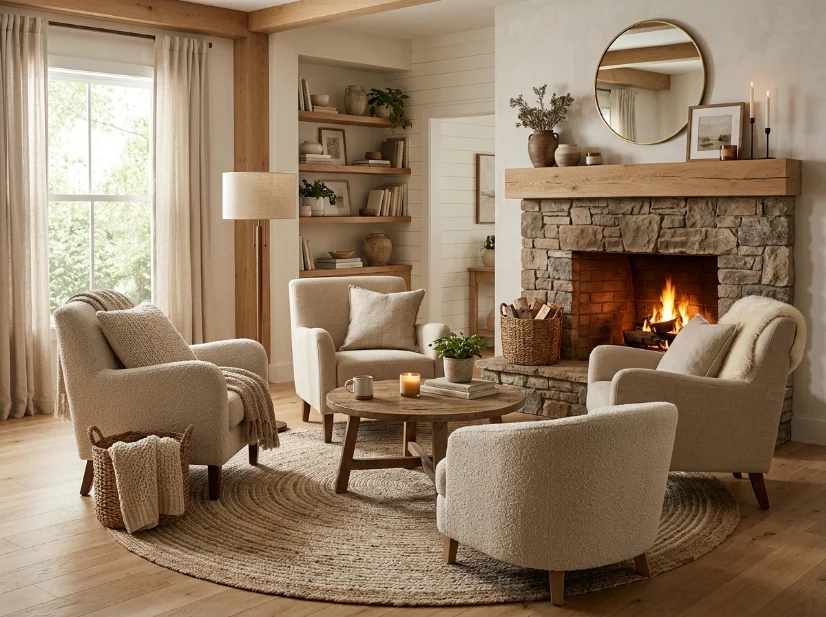
For the first year in this house, our living room rug was simply too small. I didn’t notice it at first. Then a friend pointed out that our furniture looked like it was floating on the hardwood. Most of the legs were sitting partly on the rug and partly on the floor. Once I saw it, I couldn’t unsee it. That comment sent me searching for extra large area rug ideas, and changing the rug completely changed how our living room felt.
If your living room feels disconnected, the rug might be part of the problem. This is especially true if you have an open floor plan, a large sectional, or a wide seating area. The right oversized rug can make the furniture feel connected and give the room a more finished look. After trying a few different approaches, these are the ideas that worked best for us.
1. Size Up More Than You Think You Need
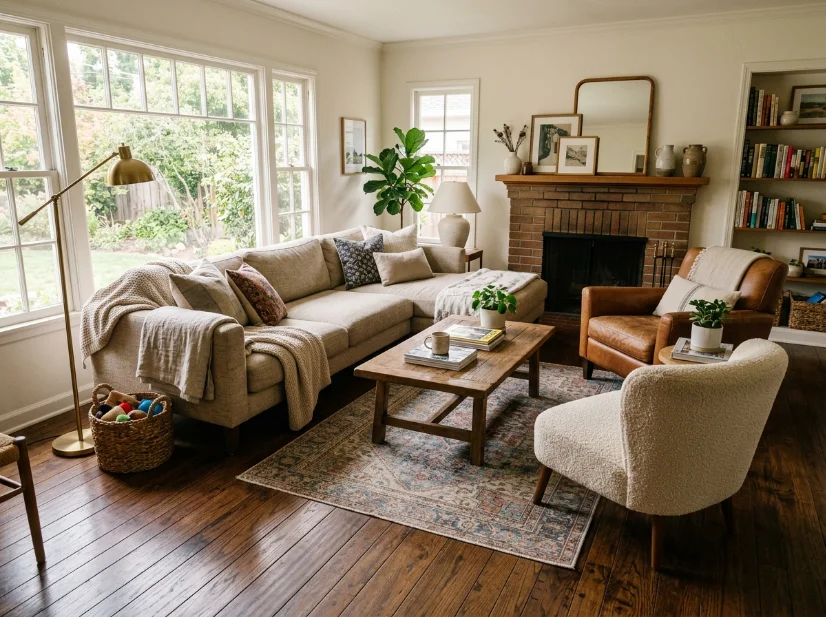
My biggest mistake was choosing a rug based on the size of the room. I should have focused on the furniture layout instead. A large rug needs to work with your seating area, not just fill an empty section of the floor.
I now try to place all four legs of the main furniture pieces on the rug. If that isn’t possible, at least the front legs should sit securely on it. This simple change can make a room feel much more connected.
Our living room is about 14×16 feet. We originally had an 8×10 rug, but it looked undersized. Moving up to a 9×12 made a noticeable difference. Looking back, a 10×14 would have worked even better.
Before shopping, measure your furniture arrangement first. Then choose the rug size. This is much easier than buying a rug and trying to make the furniture fit around it. Room visualizer tools from retailers like Wayfair and Rugs USA can also help you picture different sizes before ordering.
2. Layer a Jute Rug Underneath for Texture
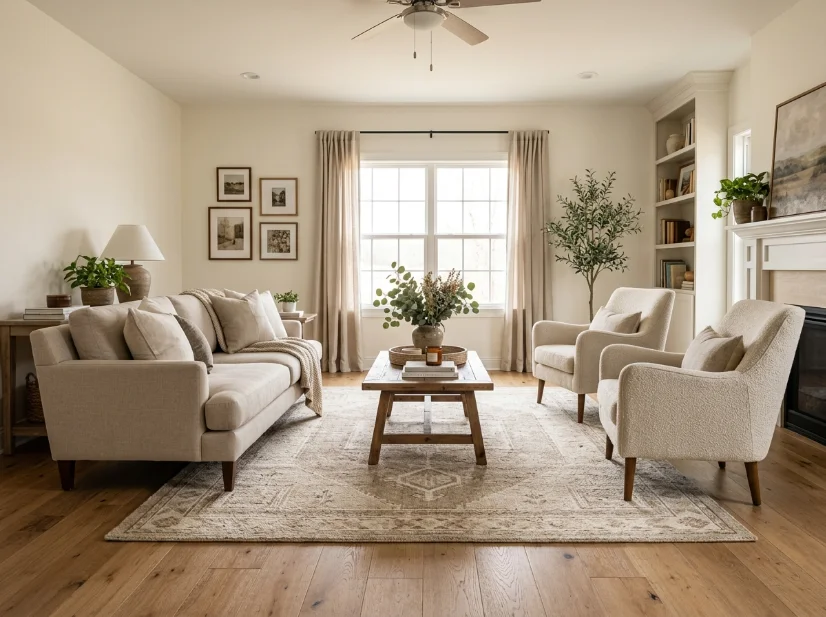
Large rugs can sometimes look a little flat in an open room. I noticed this with our first flat-woven rug. It covered the floor well, but the room still needed more texture.
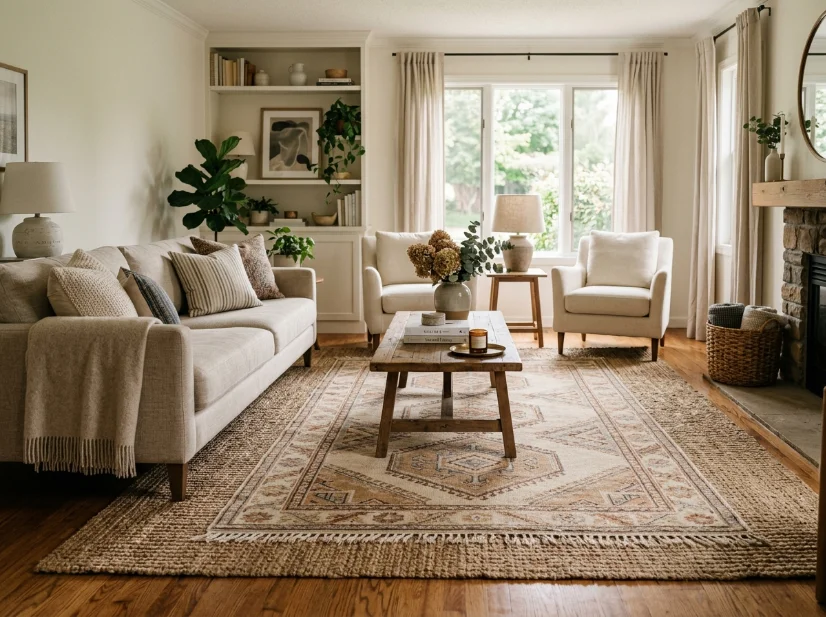
That’s when I tried layering a jute rug underneath a smaller patterned rug. The jute added warmth without making the room feel busy. It also gave the seating area more visual weight.
I used a budget-friendly jute rug underneath the top layer. This was much cheaper than buying one huge designer rug. It also gave me more flexibility with patterns and colors.
Layering works best when the bottom rug is simple. Natural jute, sisal, or another neutral texture can create a good foundation. The smaller rug can then add color or pattern without taking over the room.
A Word on Rug Pads
Don’t skip the rug pad, especially if you have hardwood floors. I learned this the hard way. Our first large rug moved every time the kids ran through the room. It even left a faint scuff on the floor finish.
A good felt-and-rubber pad fixed the problem. It kept the rug in place and made the rug feel more comfortable underfoot. It also added a little extra cushioning.
Make sure the pad is slightly smaller than the rug. That keeps it hidden while still providing support. For a large rug, spending a little more on a quality pad is worth it.
3. Go Neutral If You Have an Open Floor Plan
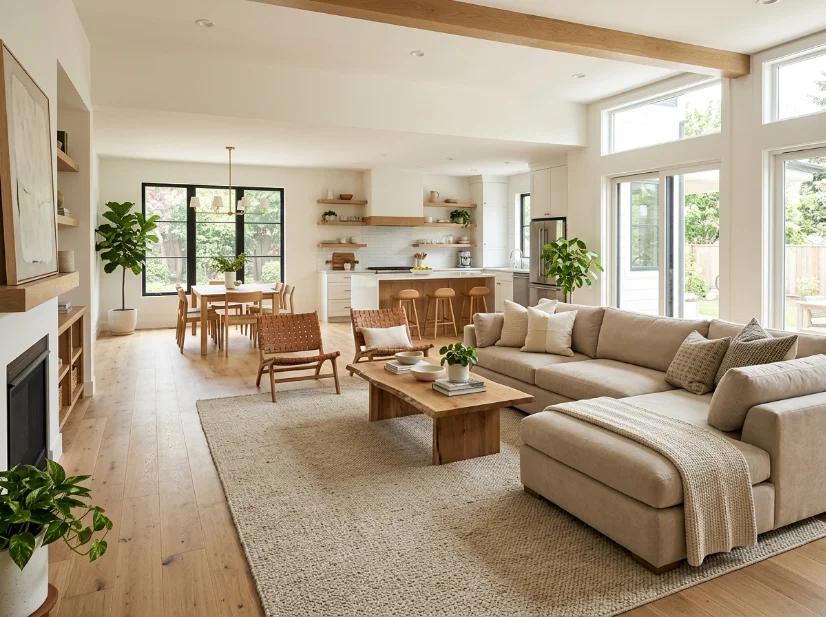
Our living room connects directly to the kitchen and dining area. Because of that, I found that a very bold rug made the entire space feel busy.
I eventually switched to a warm oatmeal-colored wool-blend rug. The difference was immediate. The living room felt calmer, and the different areas of the downstairs looked more connected.
A neutral rug doesn’t have to be boring. Look for subtle texture, soft geometric details, or a tone-on-tone pattern. These designs can add interest without creating another strong focal point.
If you love color, you can still bring it in through pillows, throws, artwork, or smaller accessories. Keeping the large rug quieter gives you more freedom with the rest of the room.
4. Consider a Vintage-Style Rug for Character
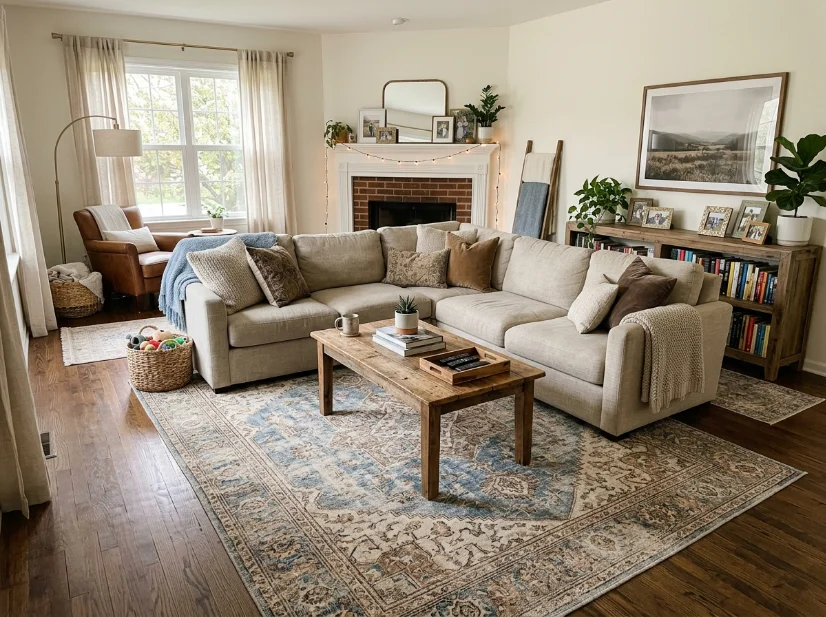
If you want pattern but don’t want the room to feel too formal, try a vintage-style rug. This was one of my favorite discoveries.
The faded pattern makes everyday messes less noticeable. That’s especially helpful in a busy family room. Biscuit has dragged his paws across ours more times than I can count, and the rug still looks intentional.
We’ve also dealt with a couple of spilled juice boxes. Thankfully, the distressed design doesn’t make every little mark stand out.
Vintage-style rugs come in many colors and patterns. Look for muted designs if you want a softer look. Warmer reds, faded blues, beige, and brown can all work well in a traditional or relaxed living room.
There are also washable options available. These can be useful if your living room gets heavy daily traffic. You don’t need an actual antique rug to get that collected, lived-in appearance.
5. Match the Rug Shape to Your Layout, Not Just the Room
For a long time, I assumed a rectangular rug was the only sensible choice. Then I created a round seating area near our fireplace.
A round rug worked much better than a rectangle in that space. The chairs were arranged in a loose circle, so the round rug reinforced the shape of the conversation area.
This taught me that the rug doesn’t always need to match the shape of the room. It should match the way you use the space.
Rectangular rugs are great for sofas and traditional seating arrangements. Round rugs can work well under circular conversation areas, small dining spaces, or furniture grouped around a fireplace.
The key is to think about the furniture first. If the layout has a strong shape, let the rug support that shape.
6. Try Two Smaller Rugs Instead of One Huge Rug
A single oversized rug can get expensive. A good 10×14 wool rug can easily cost hundreds of dollars. Depending on the material and brand, the price can go much higher.
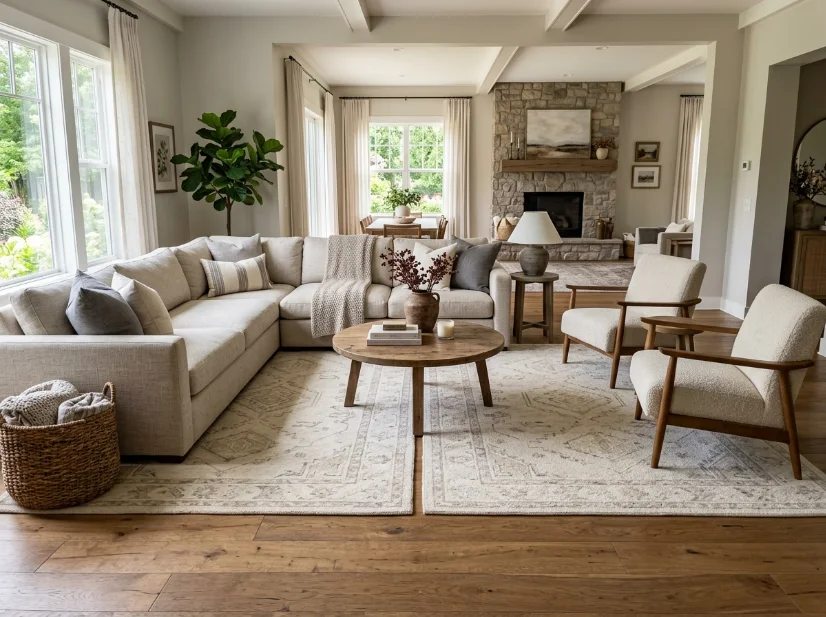
If your budget doesn’t stretch that far, consider using two smaller rugs. You can place them in adjoining areas to create a larger visual footprint.
A neighbor used two similar rugs to cover an awkward hallway-to-living-room transition. She had the seam professionally bound, and the result looked surprisingly neat from normal viewing distance.
The key is choosing rugs that work together. They don’t have to be identical, but they should share a similar color palette or pattern style.
This approach can also make future changes easier. You can move the rugs to different rooms instead of being stuck with one very large piece.
7. Reset Your Furniture Placement After the Rug Goes Down
One thing surprised me after we bought the larger rug. Our old furniture arrangement didn’t work anymore.
The furniture had been positioned around the smaller rug. Once the larger rug was in place, everything felt too crowded.
I moved the sofa and chairs about six inches farther apart. That small adjustment made a bigger difference than I expected. The rug had room to show around the furniture, and the seating area felt more balanced.
Don’t assume your old furniture arrangement will still work with a new rug. Give yourself time to experiment.
Move the sofa slightly. Shift the chairs. Pull the coffee table toward the center. Then step back and look at the whole room.
A large rug should help define the seating area. It shouldn’t disappear underneath every piece of furniture.
What I’d Do Differently
If I could start over, I’d buy the rug pad on day one. Waiting until the rug started moving was a mistake. I’d also choose a denser, slightly higher pile for our living room.
Our lower-pile rug looked beautiful in photos. It was also easy to vacuum. However, it showed wear faster than I expected because the room gets a lot of daily traffic.
I’d also order a sample before buying another large rug. Our first choice looked warmer online than it did in our north-facing living room. Seeing the actual color in our space would have saved us from that mistake.
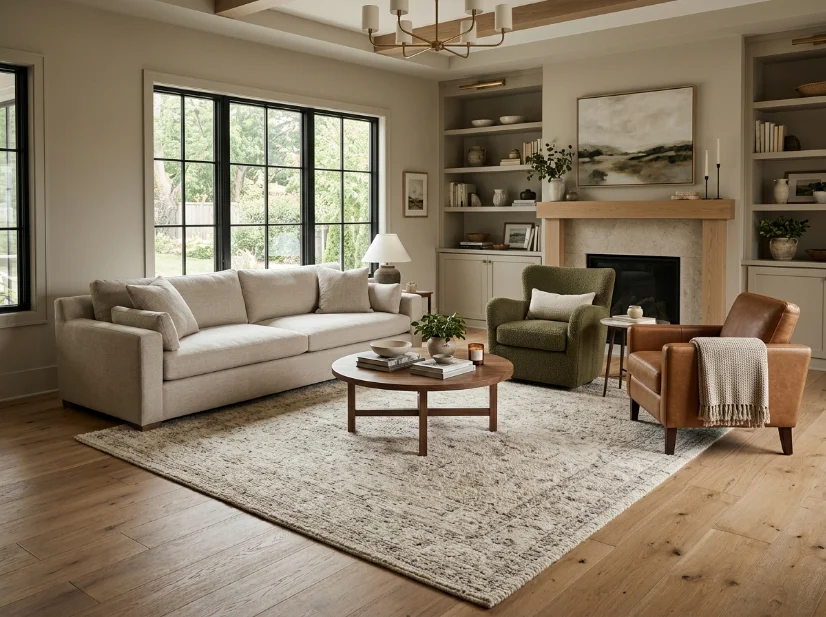
The biggest lesson is simple: choose the rug based on your furniture, traffic, and natural light. An oversized rug can completely change a living room, but size isn’t the only thing that matters. The right texture, color, shape, and placement can make the entire space feel more intentional.
If you’re considering a larger rug for your living room, start by measuring your seating area. Then think about how your family actually uses the space. Those two steps will make it much easier to find a rug that looks good and works for everyday life.
