
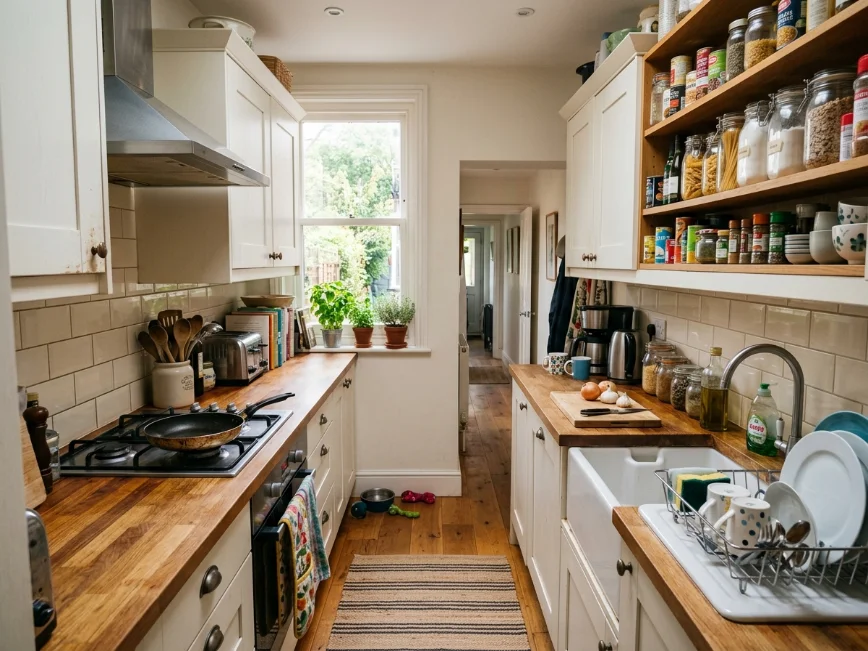
There is a version of kitchen organization that only exists on Instagram. In those kitchens, every spice jar matches perfectly, labeled in neat calligraphy and lined up in drawers that somehow never get messy. The pantry looks like a retail display, and the countertops stay completely clear except for one carefully placed lemon.
That is not the kind of kitchen organization I am talking about here.
Our kitchen is a small galley-style space in a house built in the early 2000s. We have limited cabinet storage, a pantry that feels more like a narrow closet, and two adults who cook almost every meal at home. Over the last few years, I have tested plenty of systems, including bins, lazy Susans, pegboards, drawer organizers, and label makers. Some of those ideas genuinely improved how our kitchen worked. Others created more hassle than help.
This guide focuses on the ideas that actually improved our day-to-day routine. These practical kitchen organization tips helped our kitchen feel calmer and function better without requiring a full renovation or a Pinterest-perfect makeover.
1. Start by Taking Everything Out First
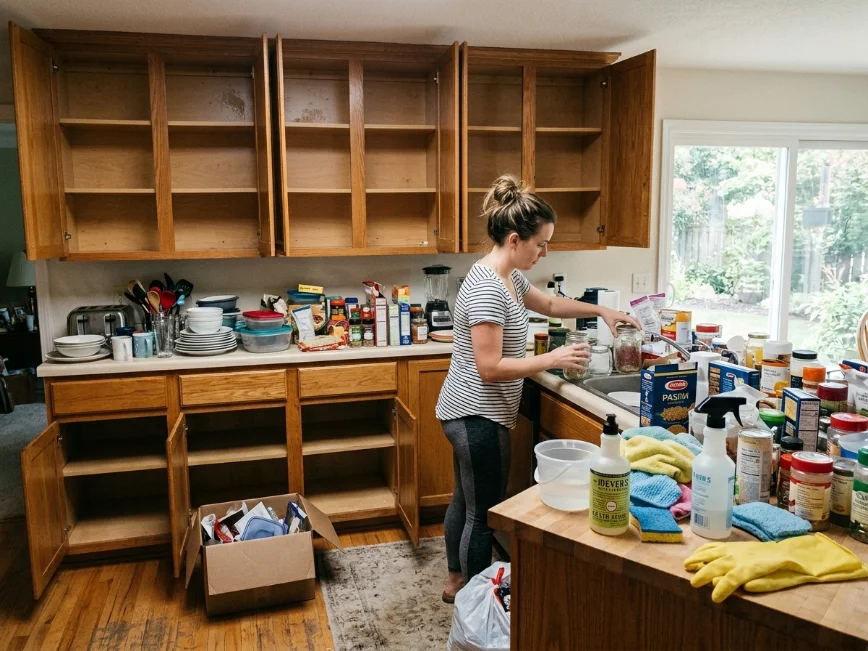
The most important kitchen organization tip I can give you is also the least glamorous one: empty every cabinet and drawer before buying organizers.
Most people try to organize around the existing mess. I did the same thing for years. I would move items to one side, wipe down a shelf, and place everything back in a slightly neater arrangement. Two weeks later, the mess always returned.
The only method that truly changed how our kitchen functioned involved pulling everything out and making intentional decisions about what deserved space in the kitchen.
The first time I tackled this process properly, I found three vegetable peelers, a forgotten set of ramekins, a pasta maker attachment we had never touched, and what felt like seventeen reusable grocery bags shoved into one cabinet. Once I removed the extra clutter, organizing the remaining items became much easier.
Take everything out. Clean every surface thoroughly. Then return only the items you genuinely use.
2. Organize by How You Actually Cook, Not by Category
Most people instinctively organize kitchens by category. They place all baking supplies together, all spices in one cabinet, and all pots in another. While that approach sounds logical, it often creates extra work during everyday cooking.
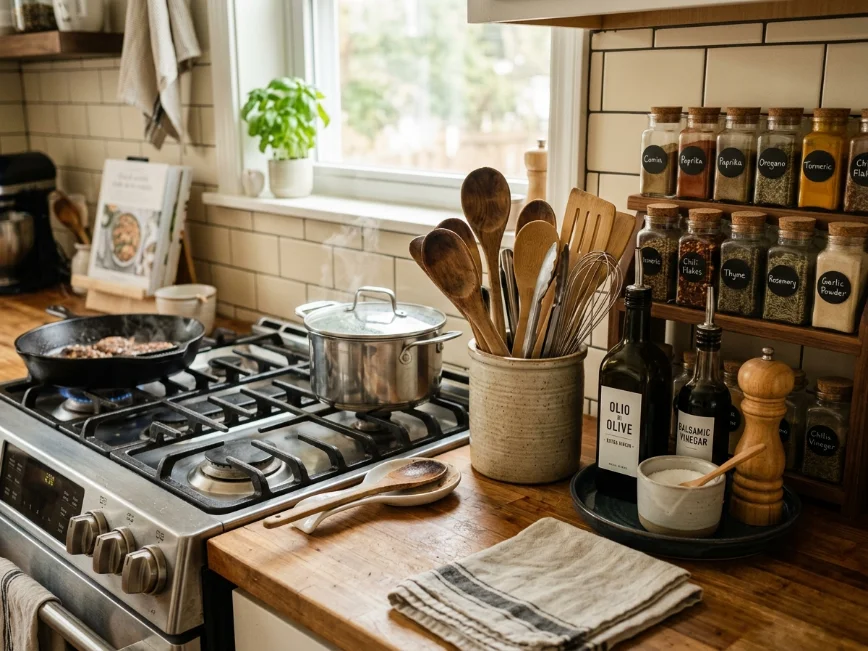
Instead, organize your kitchen around cooking tasks and activity zones. Pay attention to the items you regularly use together and store them close to each other.
In our kitchen, the cabinet beside the stove holds cooking oils, salt, frequently used spices, wooden spoons, and spatulas. Whenever I cook, everything I need stays within easy reach. I store baking supplies farther away because I only use them a few times each week.
This simple adjustment completely changed how our kitchen felt during busy evenings. I stopped crossing the room constantly to grab ingredients and tools, and cooking became noticeably less stressful.
Before buying storage bins or organizers, map out your cooking zones first. Those zones will show you exactly what kind of storage solutions your kitchen actually needs.
3. Cabinet Doors Are Wasted Space in Most Kitchens
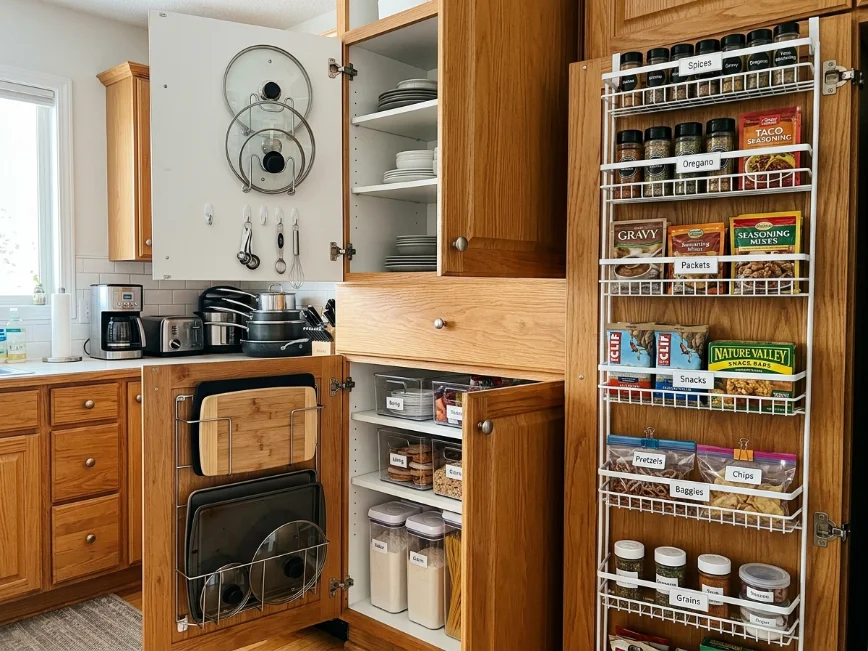
Most kitchens completely ignore the storage potential hidden inside cabinet doors.
We added an over-the-door organizer to our pantry door, and it now holds snacks, school lunch supplies, seasoning packets, and small sauce bottles. That single change freed up two full pantry shelves.
Inside our lower cabinets, I installed Command hooks to hold pot lids vertically. That stopped the constant avalanche of lids every time someone opened the cabinet. I also added a simple tension rod under the sink to keep spray bottles upright, which cleared valuable floor space inside the cabinet.
None of these upgrades cost much money. Most tension rods cost less than five dollars, and a pack of Command hooks usually costs under ten dollars. Our pantry organizer cost around twenty-two dollars and has survived years of daily use.
Before purchasing extra furniture or bulky storage containers, look carefully at the unused surfaces already available in your kitchen. Cabinet doors, refrigerator sides, walls between cabinets, and the space above the refrigerator can all provide valuable storage.
4. Decant Dry Goods, But Only the Ones You Use Often
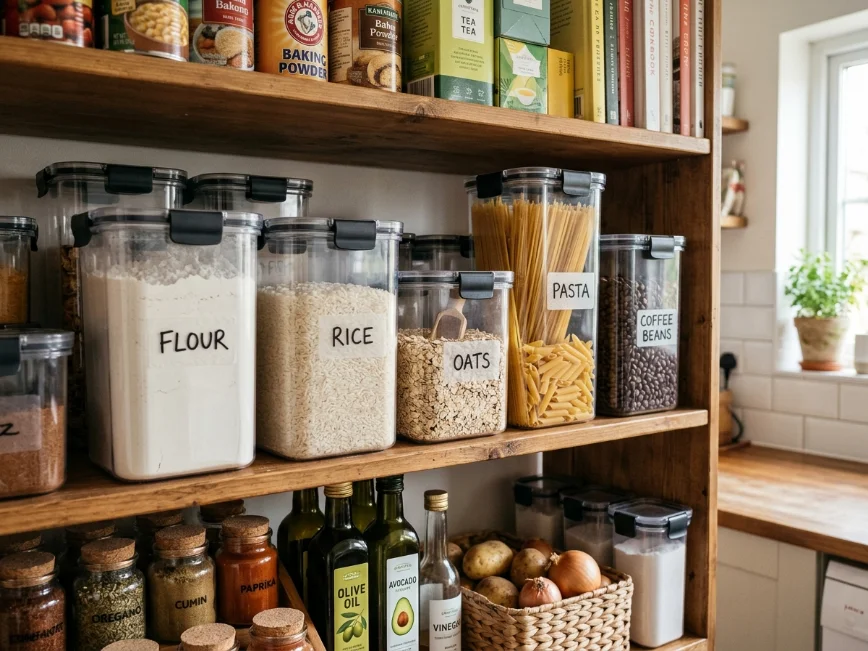
Decanting dry goods into clear containers can improve both the appearance and function of a pantry, but only when you do it selectively.
Clear airtight containers help you quickly see what needs restocking, keep ingredients fresher longer, and make pantry shelves feel less chaotic. For ingredients we use constantly, such as rice, flour, oats, sugar, coffee, and pasta, decanting genuinely improved our daily routine.
However, decanting every single pantry item quickly becomes exhausting. Rarely used flours, seasonal baking ingredients, and specialty spices do not need matching containers. Buying dozens of containers creates extra maintenance that most households eventually stop keeping up with.
Start small instead. Buy five or six good containers for the ingredients you use every day and test the system before expanding it.
The containers do not need to cost a fortune either. The IKEA 365 line works well, OXO POP containers stay popular for good reason, and thrift stores often carry glass jars with airtight lids for just a few dollars.
One lesson I learned quickly: always label every container. After a few weeks, flour and powdered sugar start looking surprisingly similar.
5. The Drawer Situation Needs Honest Attention
Kitchen drawers become chaotic faster than almost any other part of the house.
At first, most drawers look organized. Then random tools, batteries, rubber bands, takeout menus, and mystery objects slowly pile up until opening the drawer feels stressful.
For years, I blamed the problem on a lack of organizers. In reality, the bigger issue involved storing too many unrelated items in the same space.
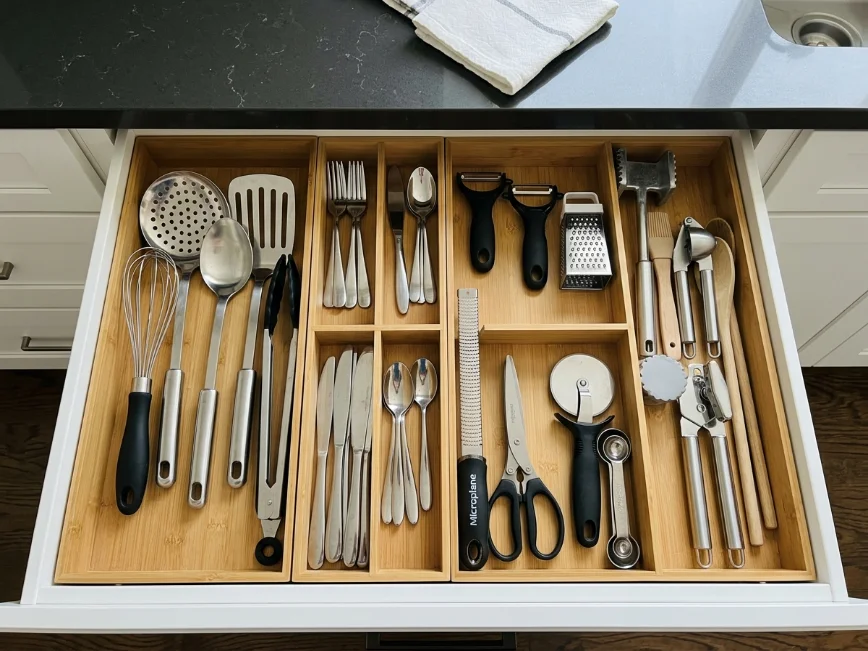
The biggest improvement came when I assigned one clear purpose to every drawer. One drawer now holds daily utensils. Another stores prep tools like graters, can openers, and peelers. We also keep one intentional junk drawer so random items stop spreading everywhere else.
Once every drawer had a clear role, maintaining organization became dramatically easier. When something landed in the wrong drawer, the mistake became obvious immediately.
After defining each drawer’s purpose, drawer dividers made a huge difference. Adjustable bamboo dividers worked much better than rigid plastic trays because I could reconfigure them whenever our storage needs changed.
6. Vertical Storage Changes Small Kitchens Completely
In small kitchens, vertical storage usually solves space problems better than cramming more items into crowded cabinets.
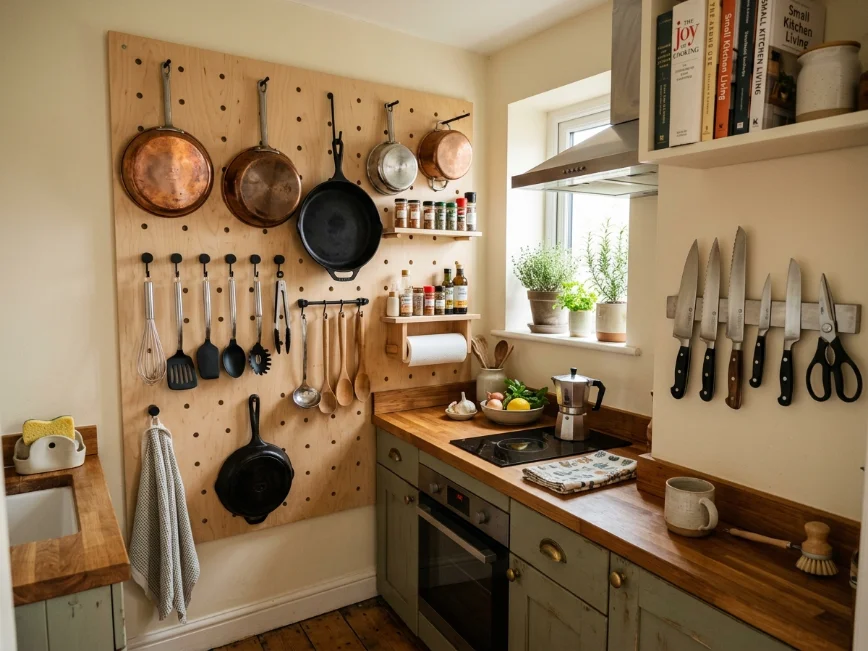
Installing a wall-mounted pot rack instantly frees an entire cabinet. Magnetic knife strips eliminate the need for bulky knife blocks or overstuffed drawers. Pegboards offer one of the most flexible storage systems available because you can rearrange hooks, shelves, and baskets anytime your needs change.
We mounted a small pegboard section beside our stove, roughly eighteen inches wide and twenty-four inches tall. It now holds our most-used pans, kitchen scissors, and frequently grabbed utensils. Before installing it, that wall space served absolutely no purpose.
Open shelving can also work well in some kitchens, especially on unused walls. However, open shelves require regular upkeep because everything stays visible. If open shelving sounds stressful instead of helpful, closed cabinets will probably serve your household better.
A functional kitchen matters far more than a trendy one.
7. The Refrigerator Is Also a Storage Problem Worth Solving
Most kitchen organization advice focuses on cabinets and pantries while completely ignoring the refrigerator.
A cluttered refrigerator creates the same problems as a messy pantry. Food gets buried behind containers, leftovers disappear into the back, and groceries expire before anyone remembers using them.
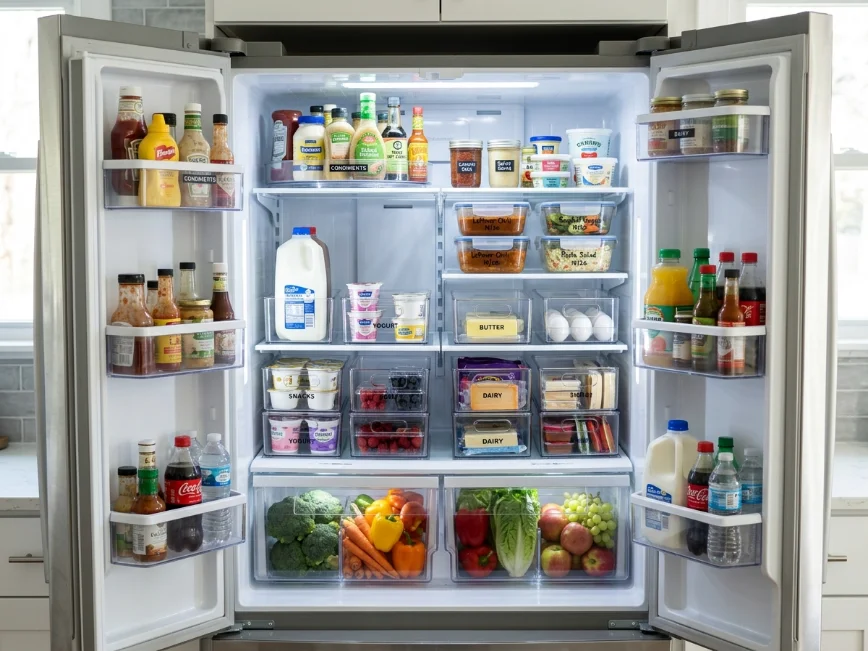
A few small changes made a noticeable difference in our fridge. We started storing leftovers in clear containers instead of leaving them in cooking pots. That simple shift made it much easier to see what food we already had.
We also created a dedicated “use first” section at eye level for ingredients nearing expiration. Since starting that habit, we waste far less food each week.
One of the best additions was a small lazy Susan for condiments and jars. Before adding it, sauce bottles constantly disappeared into the back corners of the refrigerator.
Inside the vegetable drawers, small dividers now separate produce and stop everything from collapsing into one forgotten pile. We also use bins on the refrigerator door shelves to group similar items together.
The refrigerator does not need to look perfect. It simply needs to help your household see, access, and use food efficiently.
8. Build in a Regular Reset, Not a Big Occasional Overhaul
Most kitchen organization systems fail because people rely on occasional deep-cleaning sessions instead of simple maintenance habits.
Many households wait for a massive seasonal reset before reorganizing the pantry or decluttering the counters. While those deep cleans can help, they rarely keep a kitchen organized long term.
What actually works is a small, consistent reset.
In our house, we spend about ten to fifteen minutes every Sunday checking the pantry, clearing the counters, and returning misplaced items to their proper spots before grocery shopping. We do not deep-clean the entire kitchen. We simply maintain the systems we already built.
That weekly reset has done more for our kitchen than any organizer or storage container we have purchased.
The specific day does not matter nearly as much as consistency. Pick a routine that realistically fits your schedule and stick with it.
What I Would Do Differently If Starting Over
If I organized our kitchen from scratch again, I would wait before buying organizers.
I would spend at least a week living with the cleared-out space first so I could observe how we naturally moved through the kitchen and which items we reached for most often. Buying storage containers too early usually leads to wasted money and poorly designed systems.
