
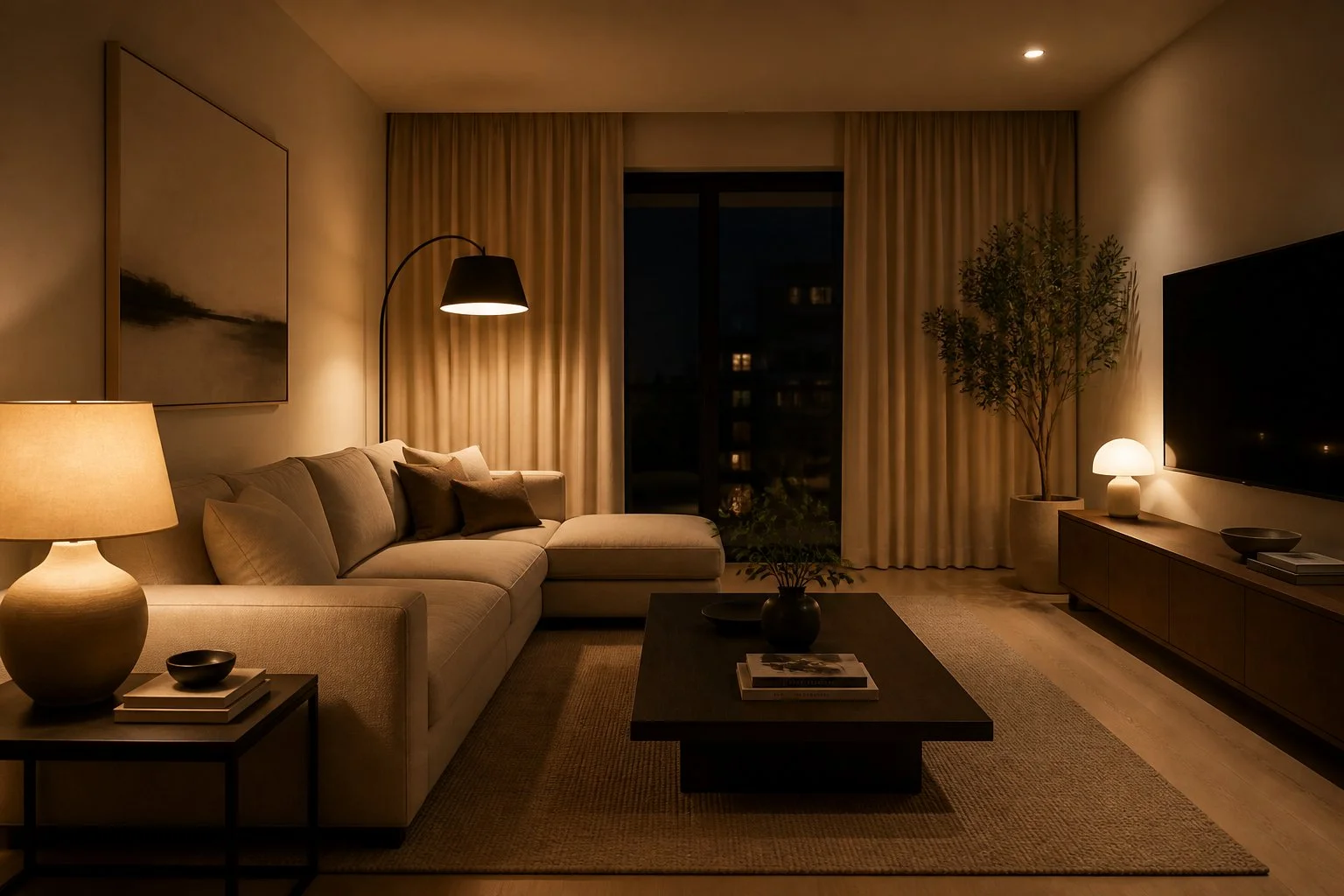
A few months after buying our house, I realized that adding more decor was not making it feel better. Instead of creating a beautiful space, I ended up with rooms that felt crowded and stressful. After several decorating mistakes, I learned that minimalist design is not about owning less but about making intentional choices. In this article, I’ll share seven practical lessons that helped me create a calmer, more organized, and more welcoming home.

1. Minimalist Doesn’t Mean Empty It Means Intentional
The biggest misconception I had about minimalism was that it would make our home feel cold or unfinished. We have kids, a dog, and plenty of daily activity, so I wanted our house to feel comfortable and lived in.
Minimalist decorating focuses on keeping items that serve a purpose or bring genuine value. That abstract print from a local art market stayed because we loved it. Decorative accessories bought simply to fill space did not.
One of the most effective exercises was removing everything from a surface and putting back only the items I would buy again today. After doing this in our living room, the space immediately felt larger and more organized.
The best part is that this step costs nothing. Editing your space often creates a bigger impact than buying something new.
2. Neutral Colors Need Texture to Feel Warm
When I first embraced minimalist design, I made everything beige, white, and simple. The room looked clean, but it lacked personality.
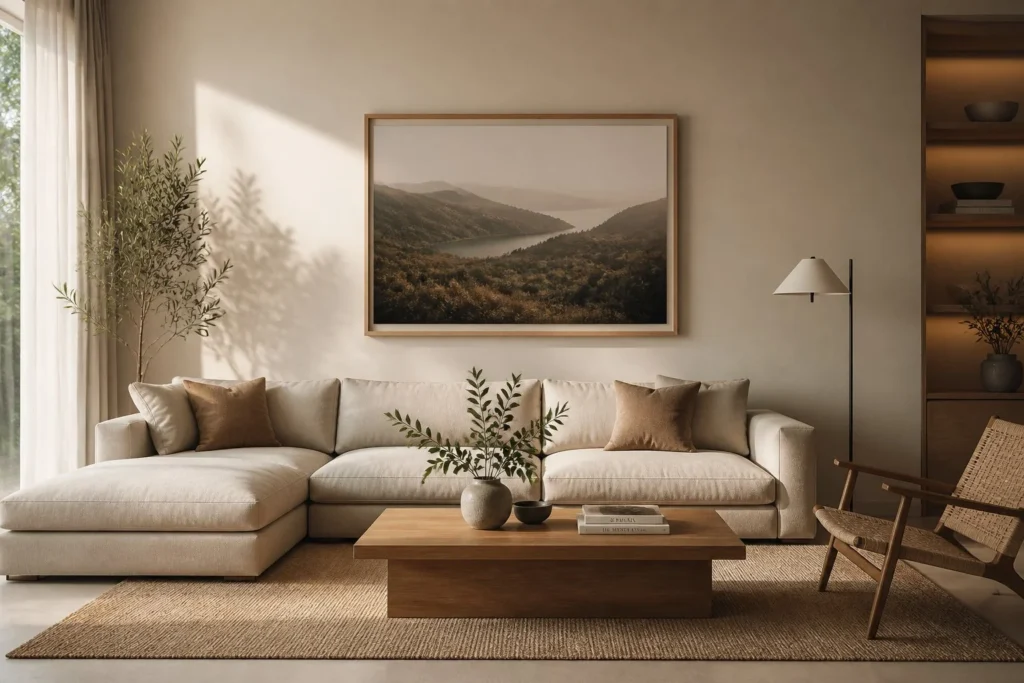
Texture solved that problem. Materials such as linen, woven grass, raw wood, chunky knits, and matte ceramics add warmth without creating visual clutter. A linen throw, woven basket, or textured rug can make a neutral room feel inviting.
What I Actually Bought
I kept costs reasonable while layering texture. An 8×10 jute rug from Wayfair cost about $110. Two linen-blend pillow covers from Target were around $18 each. A woven basket for dog toys from World Market cost $32.
For budget-friendly options, HomeGoods and T.J. Maxx are excellent places to find woven baskets, ceramic decor, and textured accessories for less than $15.
3. One Statement Piece Has More Impact Than Several Average Ones
For a long time, I bought furniture that was acceptable but never memorable. The room still felt unfinished.
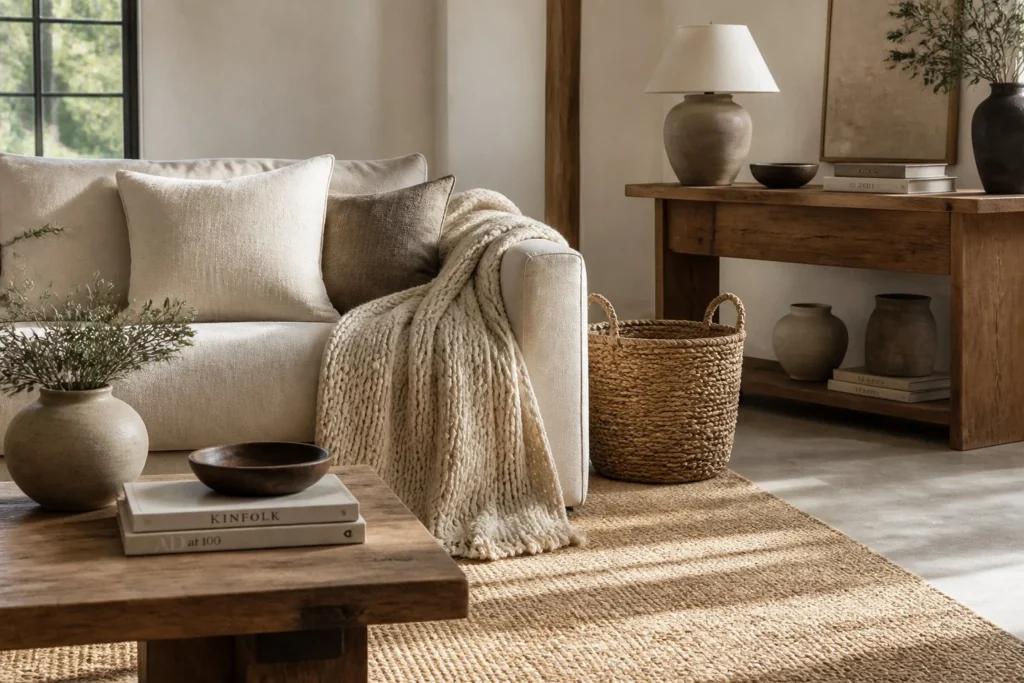
Everything changed when I stopped buying multiple smaller pieces and invested in one quality item. We returned two accent chairs and used the money toward a single upholstered chair in a warm oatmeal fabric.
That one piece transformed the entire corner of the room. It also made the surrounding furniture look more intentional.
Minimalist decorating works well because fewer items allow you to focus your budget on quality instead of quantity. One well-designed lamp often creates more impact than several inexpensive alternatives.
If a major purchase is not realistic, check Facebook Marketplace or OfferUp for secondhand furniture from quality brands. Patience often leads to excellent deals.
4. Lighting Creates Warmth Better Than Extra Decor
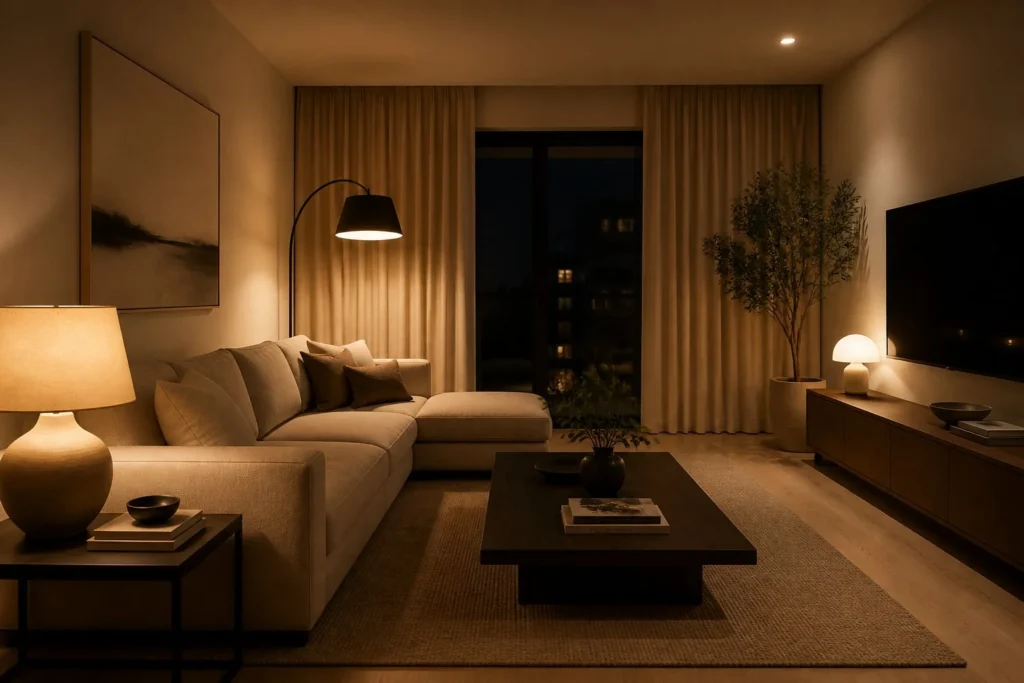
Lighting had a bigger impact on our home than any decorative accessory.
Our house came with builder-grade fixtures and cool-toned bulbs that made every room feel harsh. Replacing them with warm 2700K LED bulbs immediately improved the atmosphere.
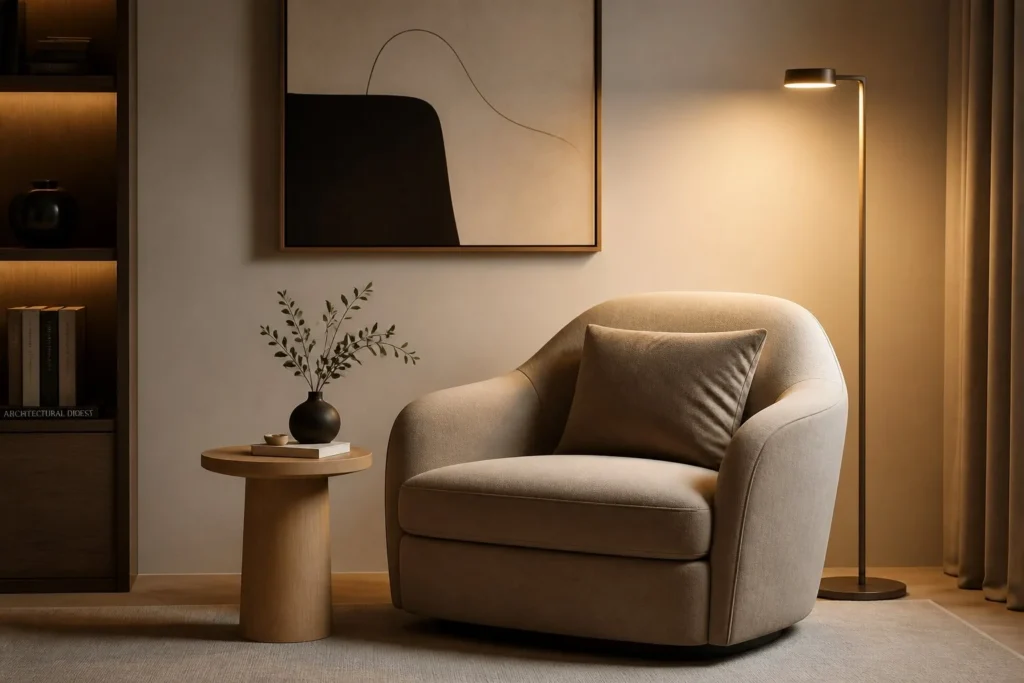
Next, I added a floor lamp to one corner of the living room. The space instantly felt more balanced and comfortable.
In minimalist interiors, lighting provides much of the warmth that people often try to create with extra decor. Combining overhead lighting, floor lamps, and table lamps creates depth without adding clutter.
LED bulbs are also a smart long-term investment because they last longer and use less energy.
5. Hidden Storage Is Essential for Families and Pets
Minimalist decorating becomes difficult when everyday items have nowhere to go.
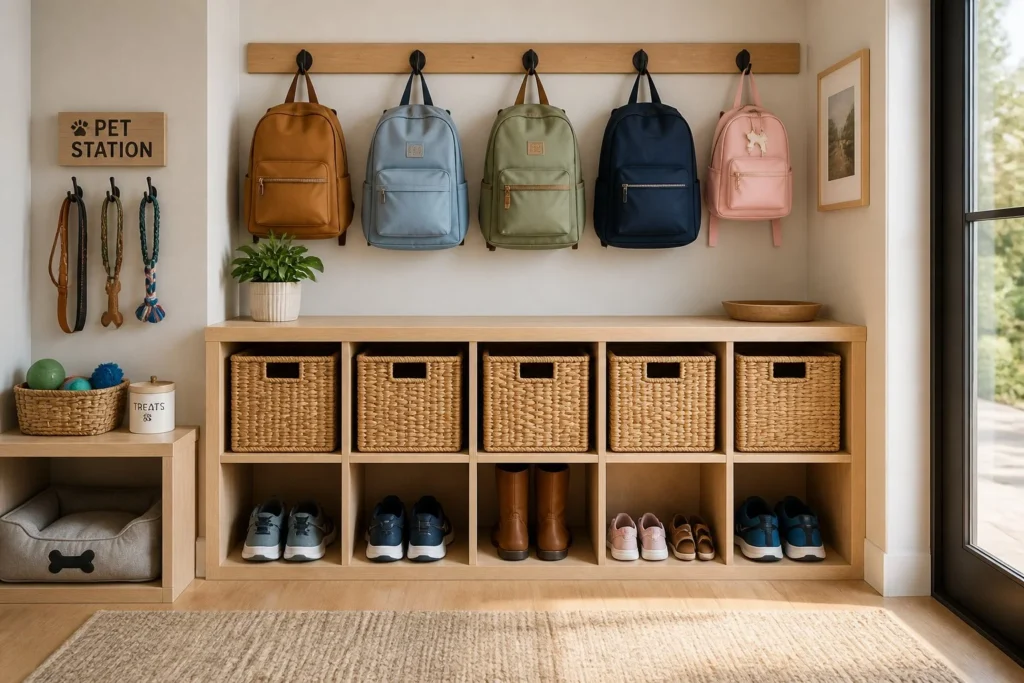
The biggest source of clutter in our home was not furniture or decor. It was the collection of everyday items that lacked proper storage. Shoes, backpacks, chargers, craft supplies, dog leashes, and library books quickly accumulated.
What Worked for Us
We added an IKEA KALLAX unit near the entryway and filled several cubbies with fabric baskets. Shoes, backpacks, and pet supplies finally had a designated place.
I also replaced an open TV stand with a media console that had doors. Hiding cords, remotes, and gaming accessories immediately made the living room feel cleaner.
A simple rule helped guide every storage decision: if something belongs in storage, it should stay out of sight whenever possible.
6. Test Paint Before Committing
One of my biggest decorating mistakes involved paint.
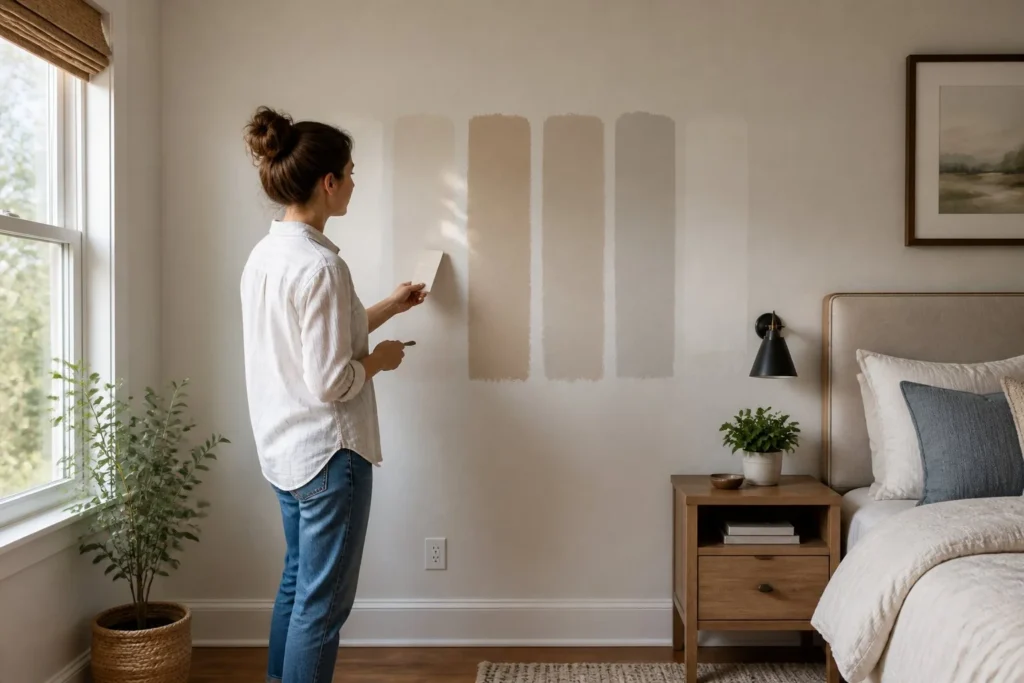
I assumed bright white walls would create a clean minimalist look. Instead, the color appeared cold and gray in our north-facing bedroom.
North-facing rooms receive cooler light, which often makes white paint look harsher than expected.
After repainting with a warmer neutral shade, the room finally felt comfortable and balanced.
The lesson was simple. Always test paint samples in the room where they will be used. View them during different times of day before making a final decision.
Spending a few dollars on sample paint can prevent costly mistakes later.
If your home was built before 1978, consult a qualified professional before disturbing older paint surfaces that may contain lead.
7. Rotate Decor Instead of Adding More
Seasonal decorating can quickly overwhelm a minimalist home.
For years, I added holiday decorations on top of my regular decor. By December, every shelf and surface felt overcrowded.
The better approach is to rotate items instead of accumulating them.
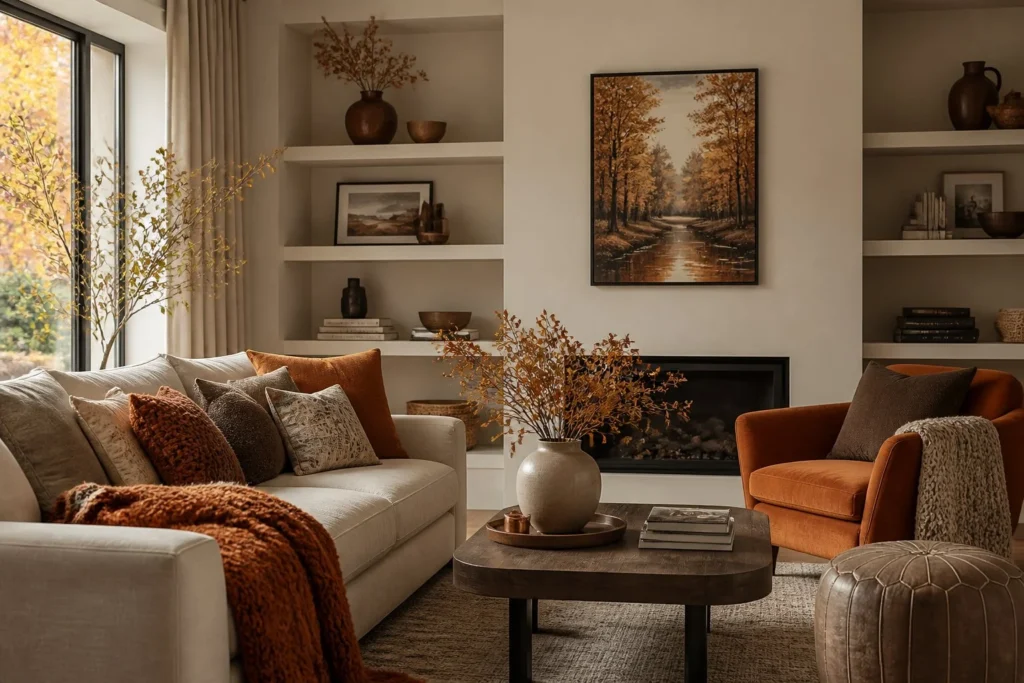
For fall, I swap lightweight textiles for heavier textures and add a few seasonal accents. During the holidays, I remove some everyday decor before bringing out seasonal pieces.
This method keeps the home balanced while still allowing it to feel festive.
An added benefit is that you do not need extra storage space. Seasonal items simply replace what is already displayed.
What I’d Do Differently
If I could start over, I would spend less time shopping and more time editing. I wasted hundreds of dollars on decorative items that never improved our home.
I would also prioritize storage solutions much earlier. Hidden storage creates a cleaner and calmer environment than almost any decorative purchase.
Most importantly, I would stop feeling pressure to fill every empty wall or corner. Empty space is not a problem that needs fixing. In many cases, it is what makes a room feel balanced, peaceful, and intentionally designed.
