
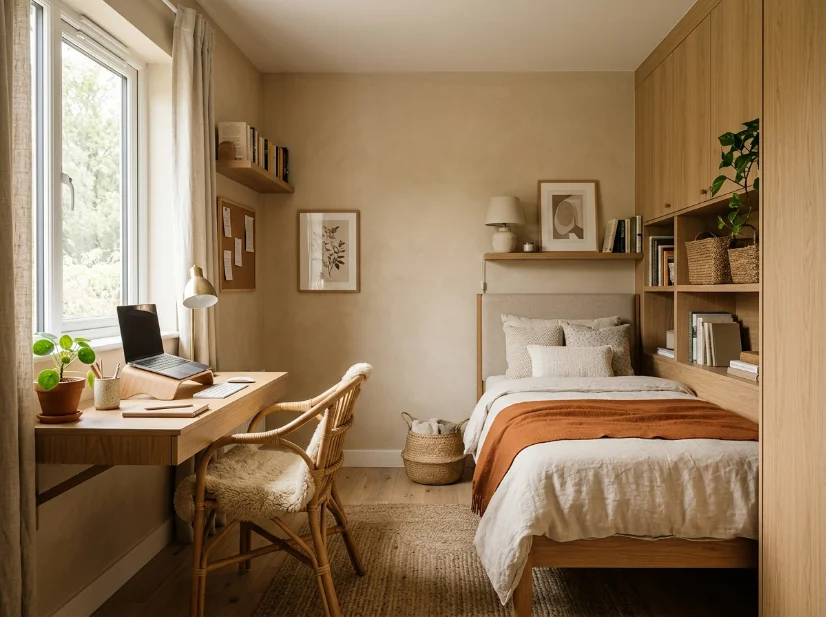
A small bedroom can become frustrating fast when it needs to serve more than one purpose. Ours had to work as a guest room, Mark’s home office, and overflow storage for my son’s outgrown toys. At barely 10×11 feet, it quickly became crowded with furniture that only had one job. Instead of adding more storage bins or squeezing in a larger desk, I started looking for furniture that could serve two useful purposes without making the room feel cramped.
After furnishing three rooms this way, I’ve learned which multipurpose pieces are genuinely practical and which ones only look clever in a product photo. In this guide, I’ll share the seven pieces that worked best for us, along with the space-saving benefits, drawbacks, and small details I wish I’d considered before buying them. If you’re trying to make a small bedroom work harder without filling every inch with furniture, these ideas are a good place to start.
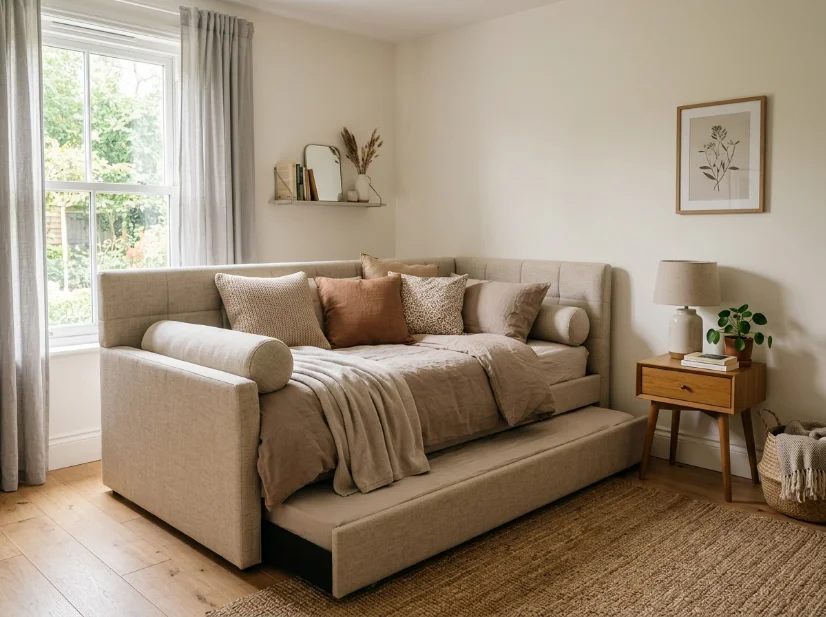
1. A Daybed With Trundle Storage Instead of a Regular Bed
This was the first swap we made, and it is still the one I recommend most. We replaced a queen bed frame with a daybed that has a pull-out trundle underneath. It freed up almost three feet of floor space along one wall. During the day, it works like a sofa with a few bolster pillows. At night, the trundle pulls out to create a second full-size sleeping space when guests stay over.
Ours cost about $299 for the frame, and we spent another $180 on a slim trundle mattress. If you want a cheaper option, look for a daybed with drawers built into the base. Those can provide similar storage without the extra sleeping space. Several options are also available for under $250. Just measure your doorway before ordering. Our daybed barely made it through the hallway turn, and I had a serious moment of panic on delivery day.
2. A Desk That Folds Flat Against the Wall
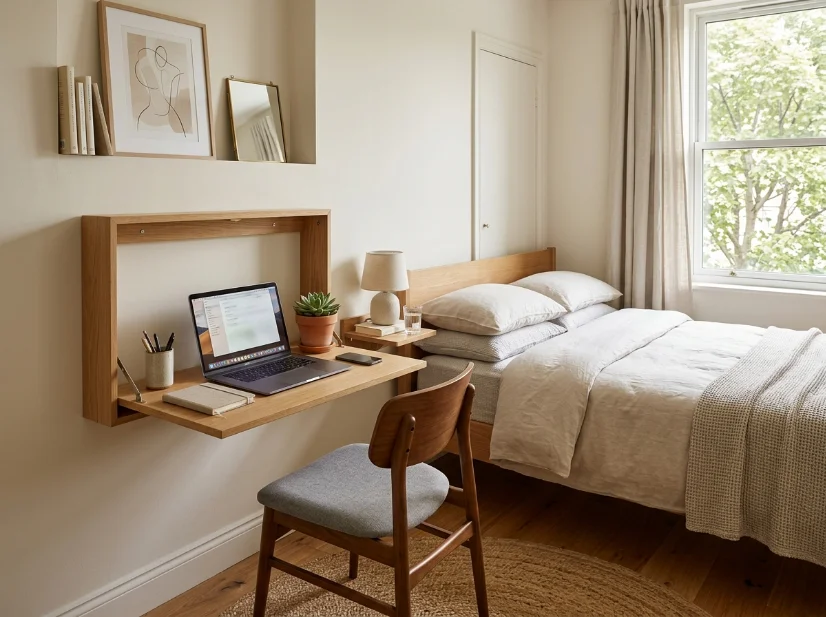
Mark works from this room most days, so a full-size desk would have taken up too much space. We installed a wall-mounted fold-down desk with hidden brackets for about $140, including the hardware. It stays open during work hours and folds flat against the wall when guests arrive. That simple change gives us almost two extra feet of walking space.
The installation took most of a Saturday afternoon because the studs in our late-90s walls are not perfectly consistent. I also had to patch two extra holes with spackle before we finally found solid wood. If you rent, you can avoid that problem by choosing a desk that clamps onto an existing dresser instead of mounting directly into the wall. The workspace is smaller, but you will not have to deal with a landlord or repair drywall later.
3. A Storage Bench at the Foot of the Bed
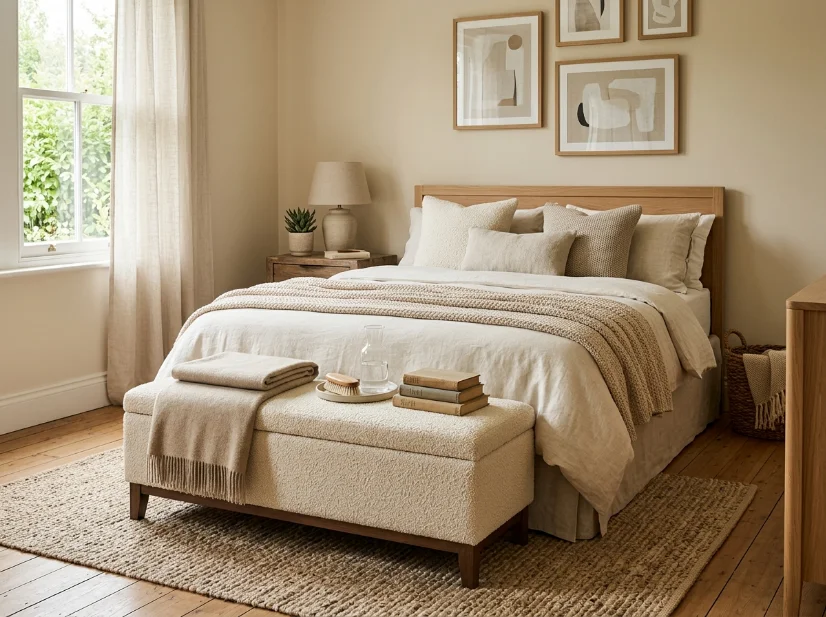
A storage bench at the foot of the bed gives you a comfortable place to sit while getting dressed and a hidden spot for extra bedding. We found ours at HomeGoods for $89. It has neutral boucle upholstery, which does a decent job of hiding Biscuit’s fur between vacuuming sessions.
The storage compartment is not enormous. Ours holds about two comforters and a stack of throw pillows. Still, that is enough to keep the closet from becoming overcrowded. If you need more storage, a larger storage ottoman can give you extra capacity. The trade-off is that you may lose the comfortable bench height that makes it easier to sit down and put on shoes.
4. A Nightstand With a Pull-Out Shelf for Laptop Use
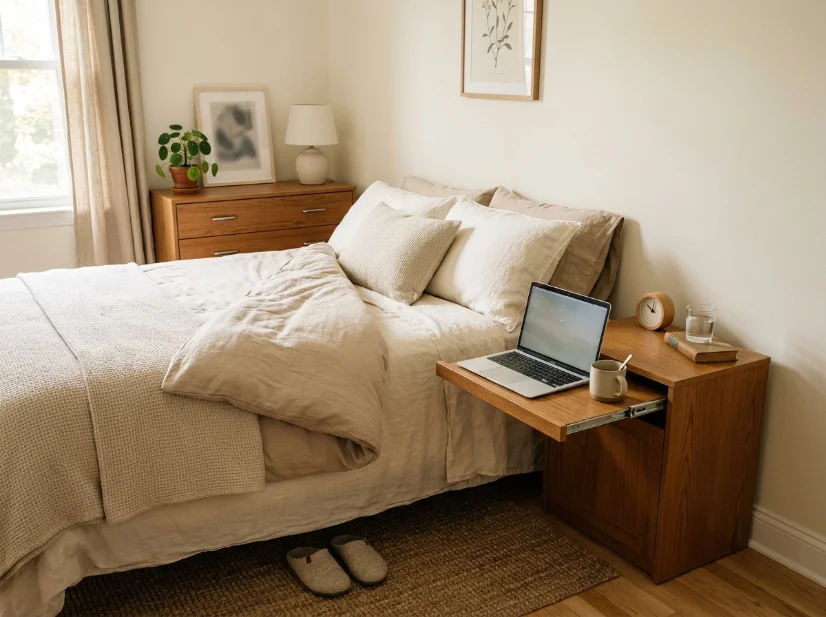
Small bedrooms often do not have enough room for both a nightstand and a proper desk extension. A nightstand with a pull-out shelf solves that problem without adding much floor space. Ours came from Article and cost about $165. The shelf pulls out far enough to hold a laptop or breakfast tray when needed.
It seemed like a small feature when we bought it, but I quickly realized how useful it was. I have used it for working, eating breakfast, and keeping a laptop nearby on mornings when I was stuck at home. The wood finish also matched our existing dresser surprisingly well, even though the pieces came from different stores several years apart.
The Trade-Off Worth Knowing
The main drawback is the clearance needed for the pull-out shelf. You need enough space beside the nightstand for it to extend properly. Measure the gap between your bed, wall, and nearby furniture before buying one. We had to move our bed about six inches to make ours work comfortably.
5. A Dresser That Doubles as a Changing or Wrapping Station
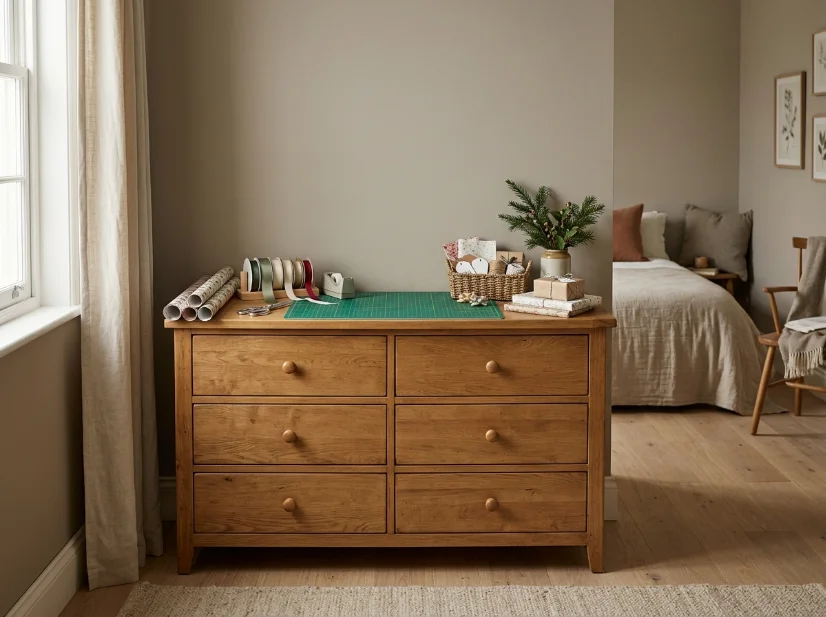
When my daughter was younger, we used a standard six-drawer dresser with a changing pad in this room. Years later, that same dresser became our gift-wrapping station every December. We simply removed the changing pad and added a cutting mat. One piece of furniture ended up serving two completely different purposes several years apart.
We bought ours secondhand through Facebook Marketplace for $60 and refinished the top ourselves. If you want a dresser that can adapt over time, look for one with a flat, sturdy surface and deep drawers. Those details make it easier to use the furniture for linens, clothes, crafts, wrapping supplies, or other storage later.
6. An Armoire With a Fold-Out Desk or Craft Station
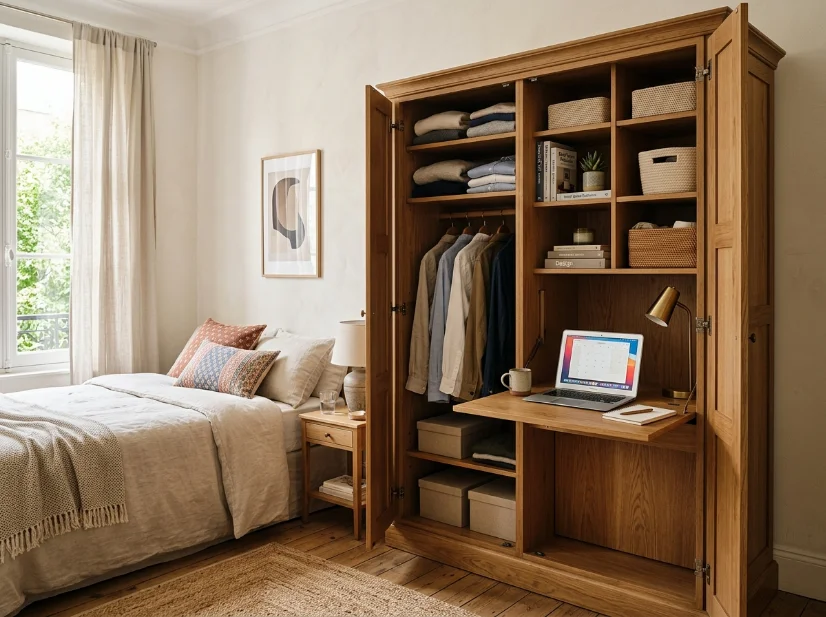
An armoire can be especially useful if your small bedroom has little closet space. Some designs include a fold-down desk or craft surface inside the cabinet. That means one piece can provide storage, workspace, and shelving without spreading furniture across the room.
We considered buying one after seeing a friend’s setup. In the end, we chose the wall-mounted desk because our ceiling height made a tall armoire feel too bulky. If your room has taller ceilings, an armoire could be a better option. Higher-end versions can cost several hundred dollars, but the right design can replace a separate storage cabinet, desk, and bookshelf while using the same floor footprint.
7. A Bed Frame With Built-In Bookshelf Headboard
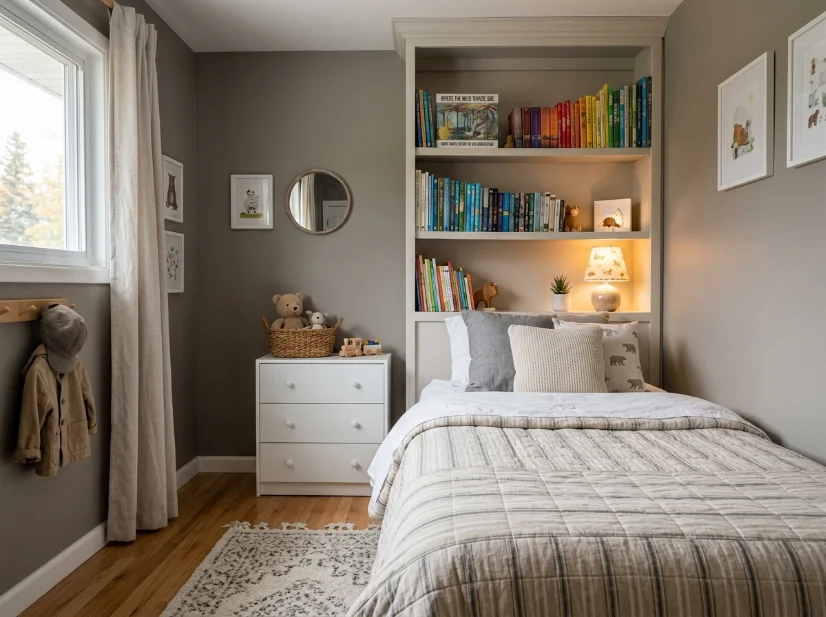
For my son’s room, we chose a bed frame with a low shelf built into the headboard. It holds his books and a small lamp, so we did not need to add a separate nightstand. That made a noticeable difference in a room that is closer to 8×10 feet.
The built-in shelf also keeps bedtime essentials within easy reach. When my son was younger, he could reach everything himself, which was convenient but also meant that books, toys, and the occasional random object could end up everywhere. Still, having the storage built into the bed saved enough space to make the trade-off worthwhile.
What I’d Do Differently
There are two things I would change if I were setting up this room again. First, I bought a storage ottoman before finding the bench and ended up returning it after two weeks. The fabric snagged on Biscuit’s claws almost immediately. If you have pets, check the upholstery material carefully before buying furniture. A fabric that looks great in the store may not hold up well in your house.
Second, I underestimated how much summer humidity can affect wooden drawers. Our secondhand dresser became difficult to open during the most humid weeks of summer. We eventually sanded the drawer edges slightly, which fixed the problem. If you live somewhere humid and buy real wood furniture, leave a little room for seasonal movement instead of assuming a sticking drawer automatically means something is wrong with the furniture.
Have you used a multipurpose furniture piece that made a small bedroom work better? Share your favorite idea in the comments. And if you enjoy practical small-space decorating tips, subscribe for more room-by-room ideas and save this post to Pinterest for your next bedroom project.
