
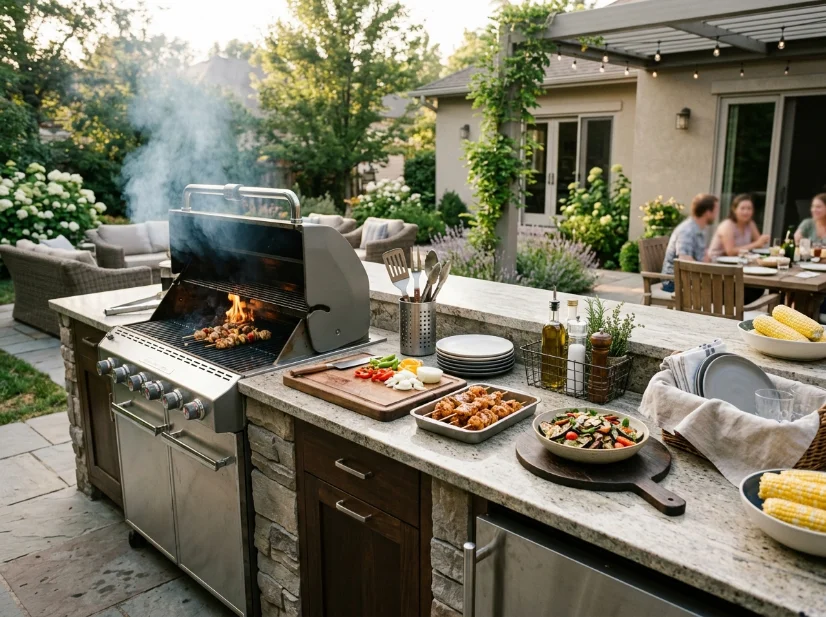
The first time I started planning an outdoor kitchen, I thought it was mostly about choosing a good grill and making the space look nice. I quickly realized there was a lot more to consider. The right amount of counter space, storage, shade, seating, lighting, and even the location can make a huge difference in how comfortable the kitchen feels. After trying different setups and figuring out what actually worked for us, I put together these outdoor kitchen ideas to help you plan a space that is practical, comfortable, and easy to enjoy. Whether you have a large backyard or a small patio, these ideas will help you focus on the features that matter most without making the project more complicated than it needs to be.
1. Start With the Grill
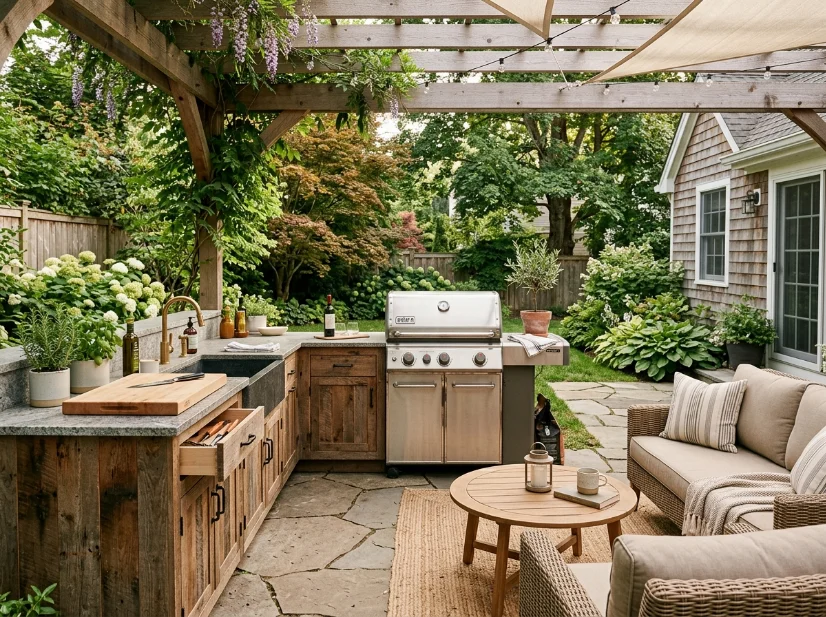
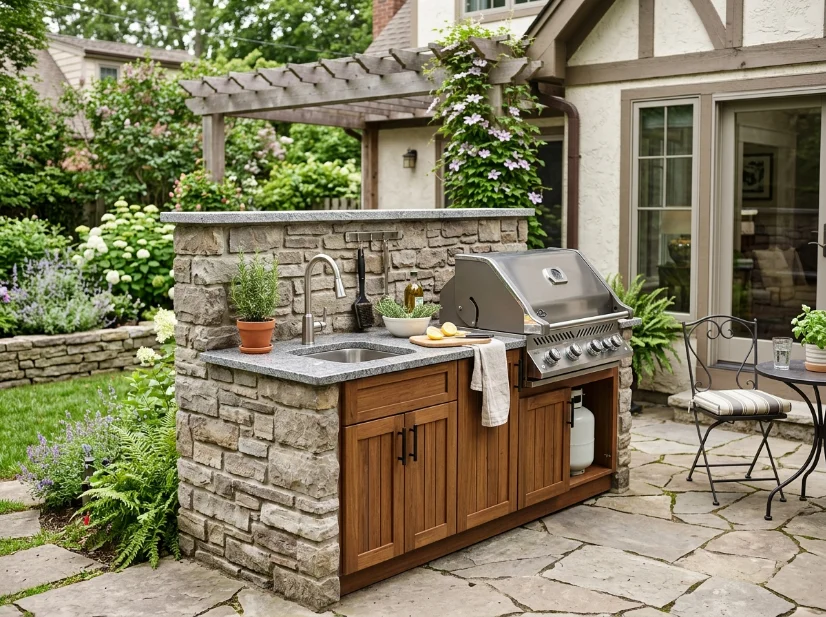
The grill should be the starting point for most outdoor kitchens because it’s usually the part you’ll use the most. I wouldn’t rush into planning a huge kitchen before figuring out where the grill should go. Our first setup was just a freestanding grill with a small table beside it, and even that taught me something important. I needed more space beside the grill than I expected. When you’re cooking, you need somewhere for trays, plates, sauces, utensils, and the food you’re about to serve. A simple grill station with a little counter space can solve most of that problem. If you have a small patio, don’t worry about building a complete kitchen. A good grill, a sturdy prep surface, and a little storage can be enough to make outdoor cooking much easier.
2. Add Plenty of Counter Space
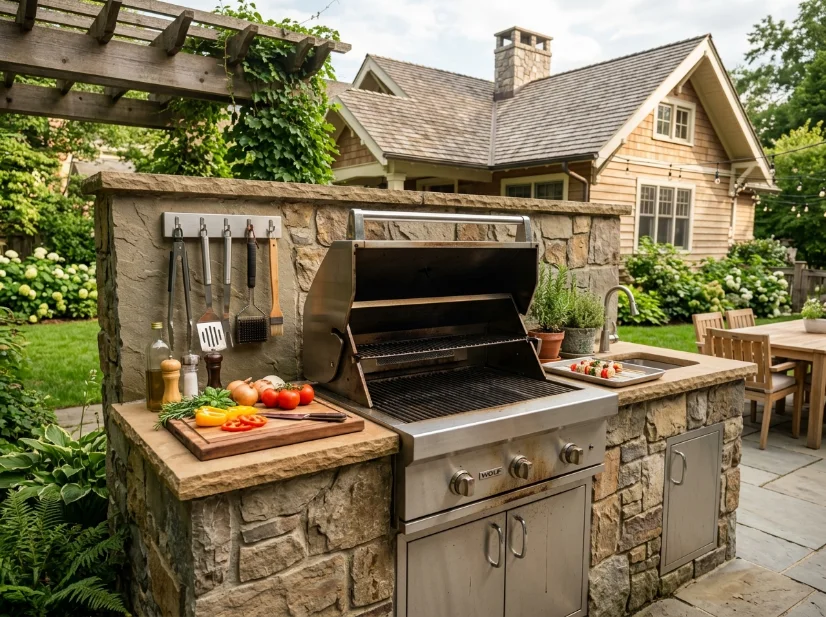
Counter space is one of those things that doesn’t seem important until you don’t have enough of it. I learned this while trying to prepare dinner outside with one tiny side table. It looked perfectly fine when the grill wasn’t being used, but once I started cooking, there was barely enough room for anything. If you’re designing an outdoor kitchen, give yourself a decent prep area beside the grill. You can use stone, concrete, tile, or another outdoor-rated surface that can handle the conditions in your area. I also prefer keeping the counter fairly clear instead of filling it with decorations. Outdoor kitchens already have plenty going on, and an open work surface makes the whole area feel more useful.
3. Don’t Forget Storage
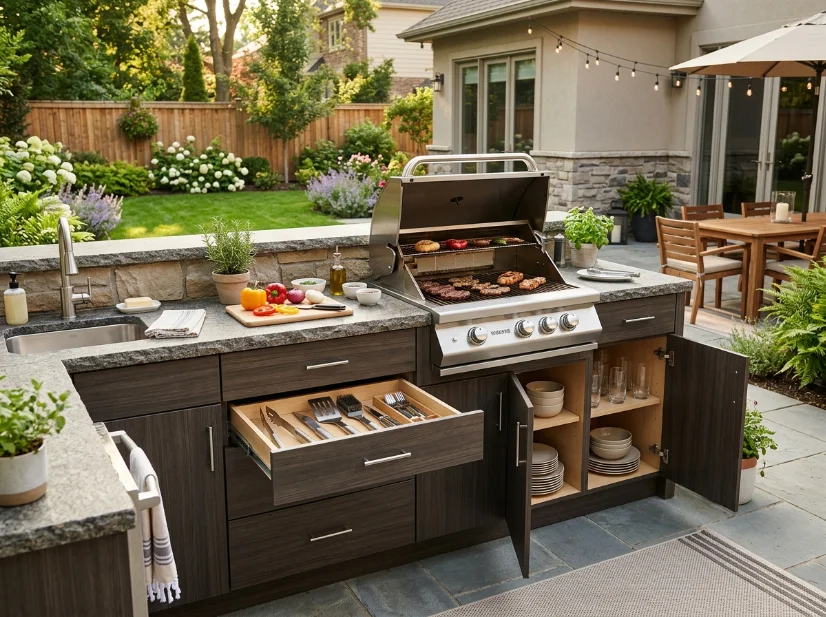
I didn’t think storage would matter much when we first started cooking outside, but I changed my mind pretty quickly. I got tired of carrying grilling tools, plates, napkins, and serving pieces from the indoor kitchen every time we ate outside. Weather-resistant cabinets can give you a place to keep the things you use regularly. You can store grilling tools, outdoor dishes, serving trays, cleaning supplies, and other small items there. If built-in cabinets aren’t in your budget, a weather-resistant storage cabinet or outdoor storage bench can work too. The main thing is choosing something designed to handle outdoor conditions. Having everything close to the grill makes the kitchen feel much more functional.
4. Consider a Small Outdoor Sink
An outdoor sink wasn’t high on my original list, but I understand the appeal now. When you’re cooking outside, there are plenty of little reasons to need water. You might want to wash your hands, rinse vegetables, fill a pitcher, or clean a small cooking tool. A sink can save you from constantly going back inside. You don’t need a huge sink either. A compact basin can be enough for basic outdoor cooking. Of course, plumbing an outdoor sink requires proper planning and installation, so it’s something I’d think about before construction rather than trying to add it later. If your outdoor kitchen gets used frequently, this can be one of those upgrades that makes the whole setup feel easier.
5. Create Some Shade
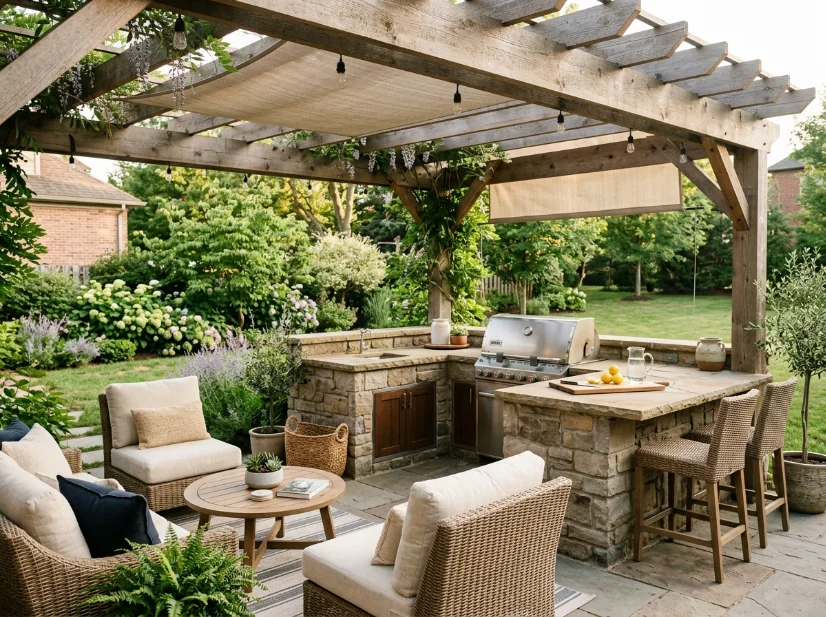
Cooking outside in direct afternoon sun is not nearly as enjoyable as it sounds. Our patio gets quite a bit of sun, and standing beside a hot grill when the temperature is already high made me appreciate shade very quickly. A covered patio, pergola, roof extension, or another suitable shade structure can make the kitchen much more comfortable. It can also help protect your cooking and dining areas from changing weather. I like a covered outdoor kitchen because it feels more connected to the house instead of looking like a grill placed randomly in the backyard. If you’re planning a permanent structure, make sure you check the local requirements before building.
6. Put the Dining Area Nearby
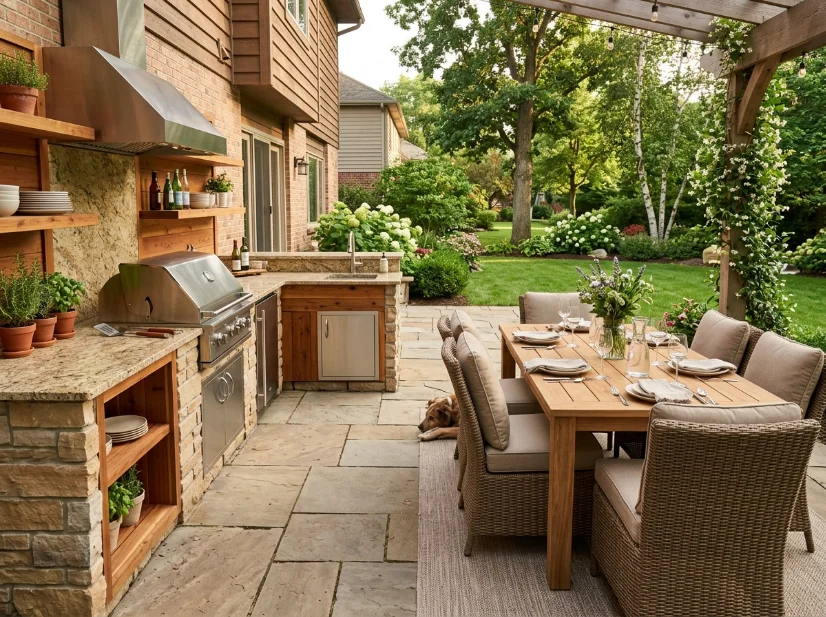
An outdoor kitchen should make eating outside easier too, so don’t plan the cooking area without thinking about seating. We made this mistake at first. We focused so much on the grill that we didn’t think about where everyone would sit once the food was ready. A dining table close to the kitchen makes serving much easier. If you have a large patio, you can use a full outdoor dining table. For smaller spaces, a compact table, built-in bench, or counter with stools can work well. Just leave enough room to walk comfortably around the cooking and dining areas. You don’t want people squeezing past the person who’s standing at a hot grill.
7. Add Lighting for Evening Cooking
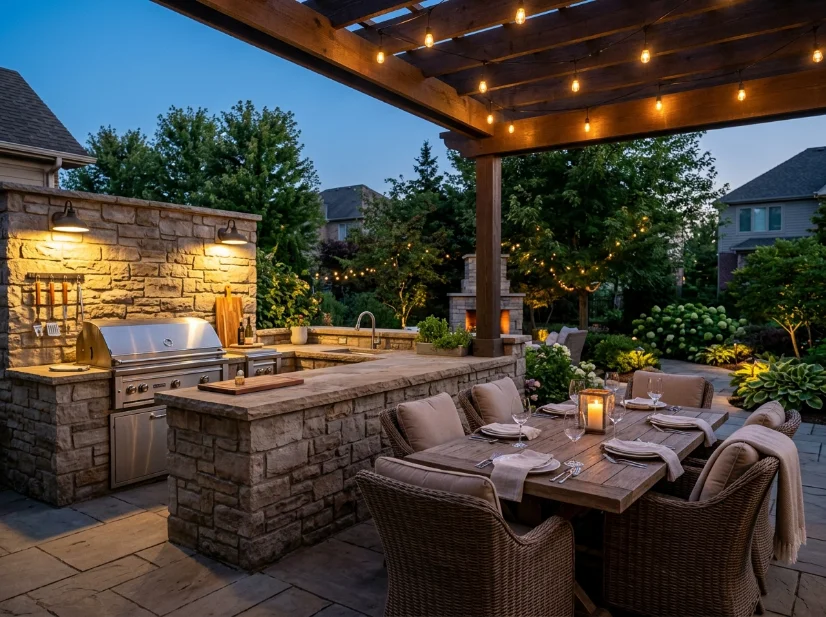
Outdoor kitchen lighting becomes much more important after the sun goes down. During the day, natural light is usually enough, but cooking becomes harder when you can’t clearly see the grill, counters, or food. I prefer using a few different types of lighting instead of one extremely bright fixture. Task lighting near the grill helps with cooking, while softer lights around the dining area make the space feel more comfortable. String lights can also add a relaxed backyard feel without making the space look overly formal. The goal is to have enough light to cook safely and comfortably while still keeping the outdoor area cozy.
What I Would Add First
If you’re working with a limited budget, you don’t have to build the entire outdoor kitchen at once. I’d start with the things that you’ll use every time you cook. For me, that means a reliable grill, enough counter space, and some practical storage. After that, I’d think about shade, seating, lighting, and extras such as a sink. Building the space gradually can actually be helpful because you get to use it and figure out what you’re missing. You might discover that you don’t need an expensive appliance but really do need another two feet of counter space. Those little discoveries are easier to make when you live with the space first.
Keep It Close to the House
The location of your outdoor kitchen can make a bigger difference than the decorations you choose. If the kitchen is too far from the house, you’ll probably spend a lot of time walking back and forth for ingredients, plates, drinks, and other things. When possible, placing the outdoor kitchen near the back door or an existing patio can make everything easier. Think about how you’ll move between the indoor and outdoor spaces while carrying a tray or a bowl of food. A beautiful kitchen isn’t very convenient if you have to cross the entire backyard every time you forget something.
Make It Feel Like Part of Your Home
I think the best outdoor kitchens are the ones that don’t feel completely separate from the rest of the house. You can bring in some of the same colors, materials, and textures that you already use indoors. A few comfortable cushions, simple outdoor rugs, potted plants, or wooden accents can make the cooking area feel more welcoming. I wouldn’t overdecorate it, though. An outdoor kitchen already needs room for cooking, serving, and moving around, so functionality should come first. Once the practical pieces are working, adding a few personal touches can make the space feel like somewhere you actually want to spend an evening.
Final Thoughts
The best outdoor kitchen doesn’t have to be huge or filled with expensive appliances. After using different setups, I’ve found that the features that matter most are usually the simple ones: a good grill, enough prep space, convenient storage, shade, comfortable seating, and useful lighting. If you’re planning your own outdoor kitchen, think about how you actually cook and how your family uses the backyard before choosing the design. Start with the features that will make everyday cooking easier, then add the extras as your budget allows. That approach can help you create an outdoor kitchen that looks good but, more importantly, actually gets used.
If you’re planning an outdoor kitchen this year, save these ideas for later and let me know which one you’d add first. And if you’re working on the rest of your backyard too, check out more outdoor decorating ideas for simple ways to make the space feel comfortable and lived-in.
