
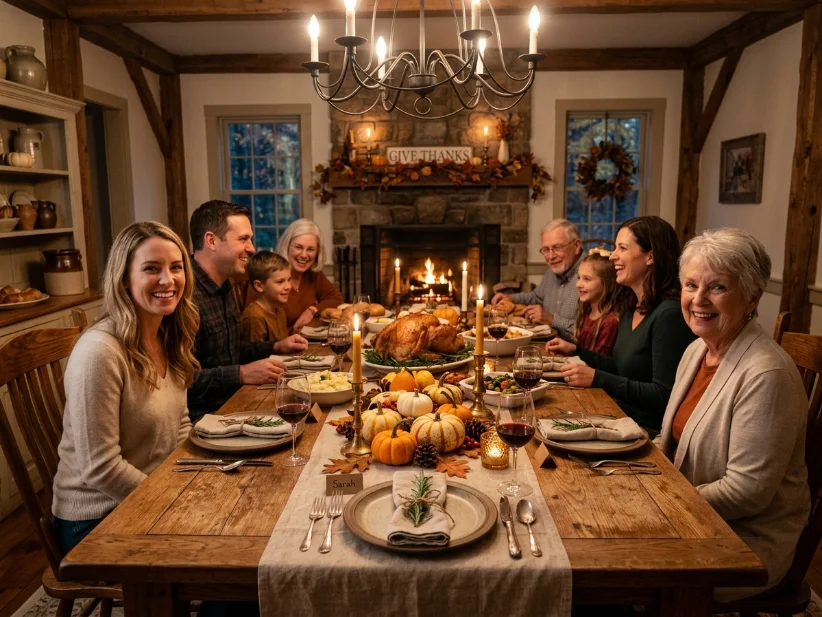
The first Thanksgiving we hosted in this house was back in 2021. I spread a runner across the table, added a few pumpkins, and thought I was finished. It looked fine in photos. In real life, it looked unfinished.
Since then, we’ve hosted four more Thanksgiving dinners. I’ve ruined one tablecloth with cranberry sauce, rearranged centerpieces at the last minute, and learned what actually works when eleven people, two kids, and our dog Biscuit gather around the table.
The ideas below don’t require expensive flowers or professional styling. Most came from Target, Goodwill, HomeGoods, and plenty of trial and error. These are the Thanksgiving tablescape ideas I still use every year.
1. Start With a Runner Instead of a Full Tablecloth
For years, I believed every holiday table needed a full tablecloth. Then I realized our wood dining table was too nice to cover completely.
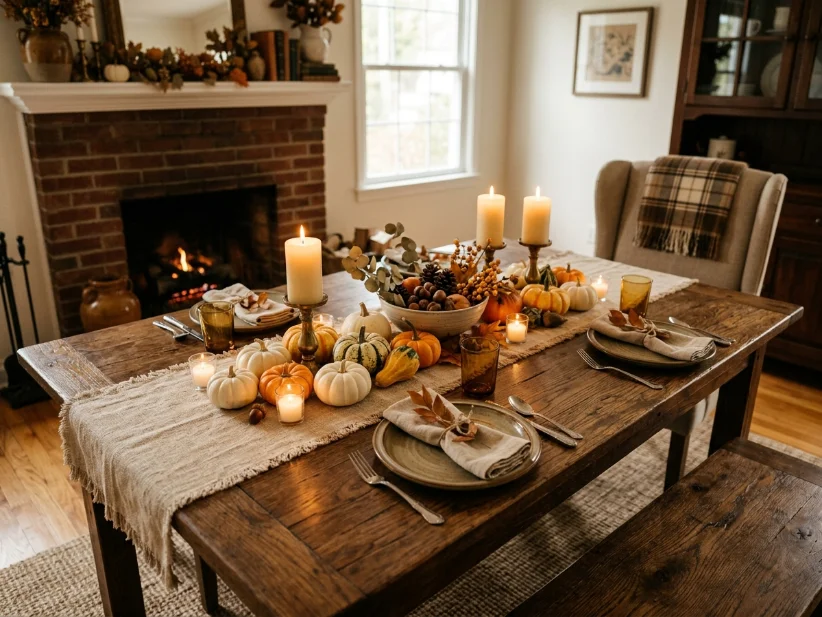
Now I use a simple linen-look runner instead. It highlights the wood while still making the table feel finished. It’s also much easier to wash after dinner.
A linen-style runner from Target usually costs around $20. Longer options from World Market are often between $30 and $35.
If your table has scratches or water stains, a full tablecloth still makes sense. Otherwise, letting the wood show creates a warmer and more natural look.
Budget tip: Buy a piece of burlap fabric from JoAnn and finish the edges with fabric tape. It costs less than $10 and requires no sewing.
2. Layer Real and Faux Pumpkins Instead of One Large Centerpiece
My first centerpiece was one large pumpkin sitting in the middle of the table. It looked empty.
Now I scatter several small pumpkins and gourds along the runner. Then I mix in a few taller candlesticks to create different heights.
The table immediately feels fuller without looking crowded.
I usually combine real mini pumpkins with faux pumpkins I’ve reused for several years. The faux ones came from Michaels. The real pumpkins come from Trader Joe’s or a local farm stand a few days before Thanksgiving because they soften after a couple of weeks.
Height Matters More Than Matching Colors
This was one of the biggest lessons I learned.
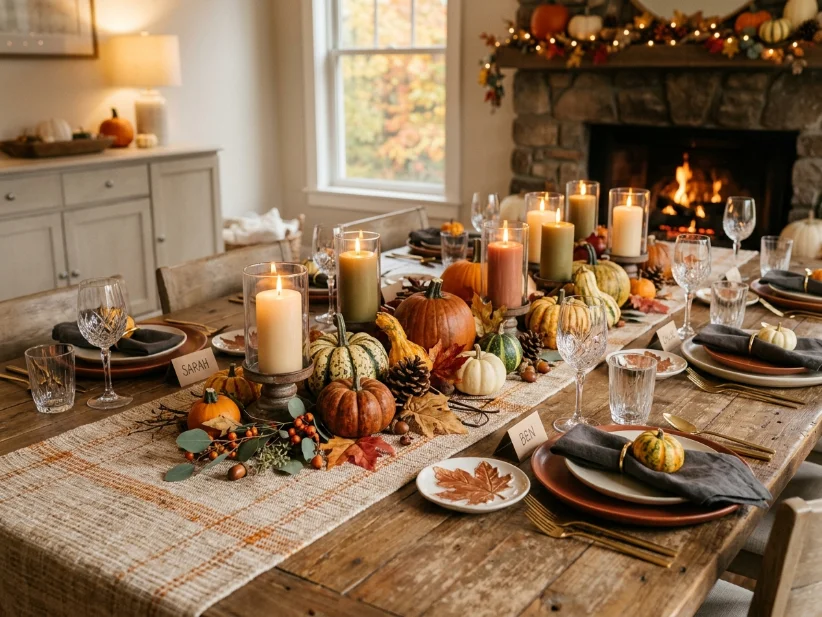
Different heights create much more interest than perfectly matching colors.
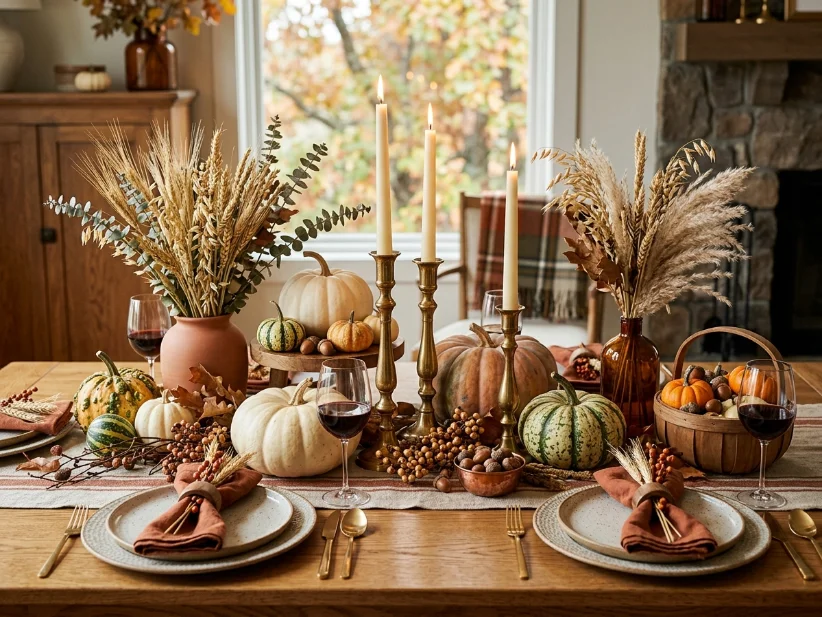
I mix short pumpkins, dried wheat stems, and a pair of brass candlesticks I found at Goodwill for only $6. None of them match exactly, but the changing heights make everything feel balanced.
3. Don’t Worry About Matching Every Charger
I once bought eight matching wood chargers because I thought everything needed to coordinate.
Later, we added secondhand dining chairs from Facebook Marketplace. Suddenly, nothing matched perfectly anymore.
It turned out that nobody noticed.
Now I mix wood chargers with woven rattan chargers from HomeGoods. They cost about $4 each and add more character than a perfectly matched set.
Budget tip: Skip chargers completely if needed. Fold a cloth napkin under each plate instead. It creates a similar layered look for much less money.
4. Use Cloth Napkins Without Stressing About Wrinkles
Cloth napkins instantly make the table feel more special.
I bought a set of ten cotton napkins from Target for around $24 several years ago. They’ve survived every Thanksgiving since.
Even cranberry stains usually come out after soaking in cold water with stain remover.
I never iron them.
Instead, I fold them neatly and tuck in a sprig of fresh rosemary or a slice of dried orange. The slight wrinkles make the table feel relaxed instead of overly formal.
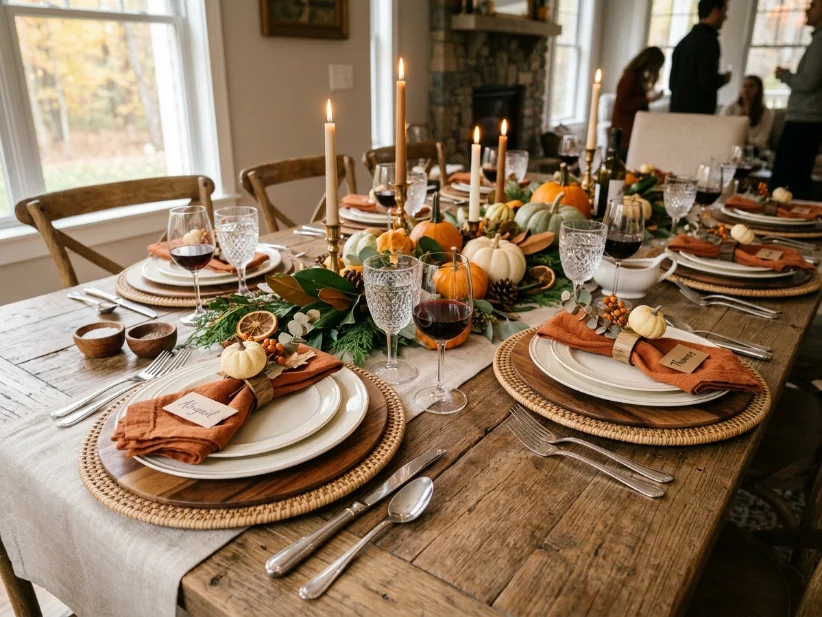
5. Let Candlelight Do Most of the Decorating
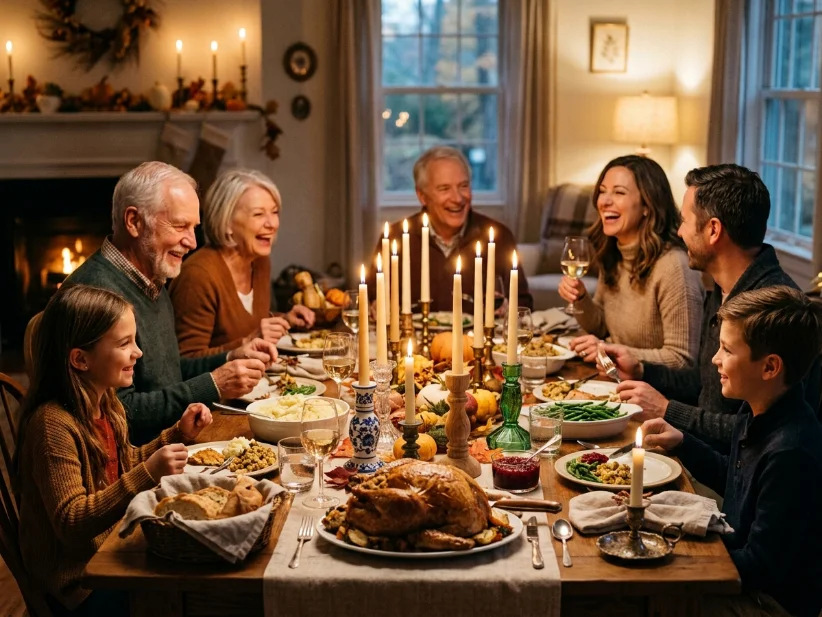
We usually eat Thanksgiving dinner around 3 or 4 in the afternoon. By dessert, it’s already dark outside.
That’s when candlelight completely changes the room.
Our dining room lights are fairly cool, so they make the warm fall colors look flat. A few taper candles create a much softer glow and instantly make the table feel cozy.
I always choose unscented candles so they don’t compete with the smell of dinner.
Since we have kids and Biscuit running around, I also make sure candles are never left unattended.
6. Add One Unexpected Texture
Most Thanksgiving tables use the same materials.
You’ll usually see wood, pumpkins, plaid, and leaves.
Adding one unexpected texture makes the whole table feel more interesting.
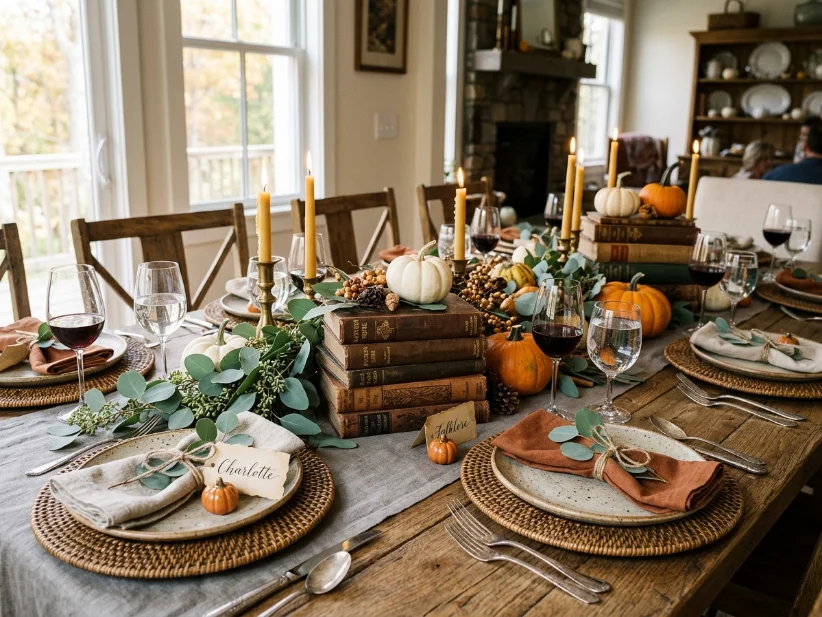
During the last two years, I’ve added woven rattan chargers, fresh eucalyptus, or even a stack of vintage books under a candlestick for extra height.
One bunch of eucalyptus from our local grocery store cost about $9. It dried beautifully and stayed on the table through the entire month of November.
7. Arrange the Table for Real Conversations
This is probably the biggest mistake I made.
I spent years building beautiful centerpieces that blocked everyone from seeing each other across the table.
One year, my mother-in-law actually had to lean sideways to talk to my son.
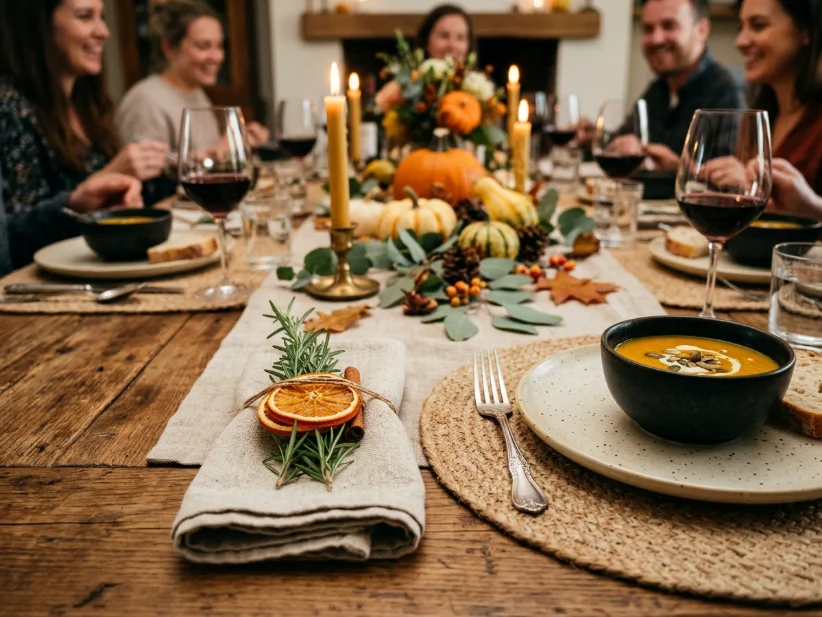
Now I keep anything taller than about 10 inches near the ends of the table.
The center stays low with pumpkins, greenery, or a shallow bowl of clementines.
Guests can easily make eye contact, pass dishes, and enjoy the conversation. The table still looks beautiful, but it works much better.
What I’d Do Differently
Looking back, I wish I hadn’t bought an entire matching collection of fall decorations all at once.
Most of those pieces only worked together. They never blended well with the decorations I already owned.
Today, I’d rather buy two or three quality pieces each season from places like Goodwill or HomeGoods. Over time, the collection feels more personal and much more interesting.
I’d also test the tablescape with the extension leaves already in place.
One Thanksgiving, I designed everything on the smaller table. On the holiday morning, I added the extension leaves and suddenly had several empty feet in the middle with nothing to decorate.
Now I always set up the full table first. Then I build the tablescape around its final size. It saves time, avoids last-minute stress, and helps everything look balanced when guests arrive.
