
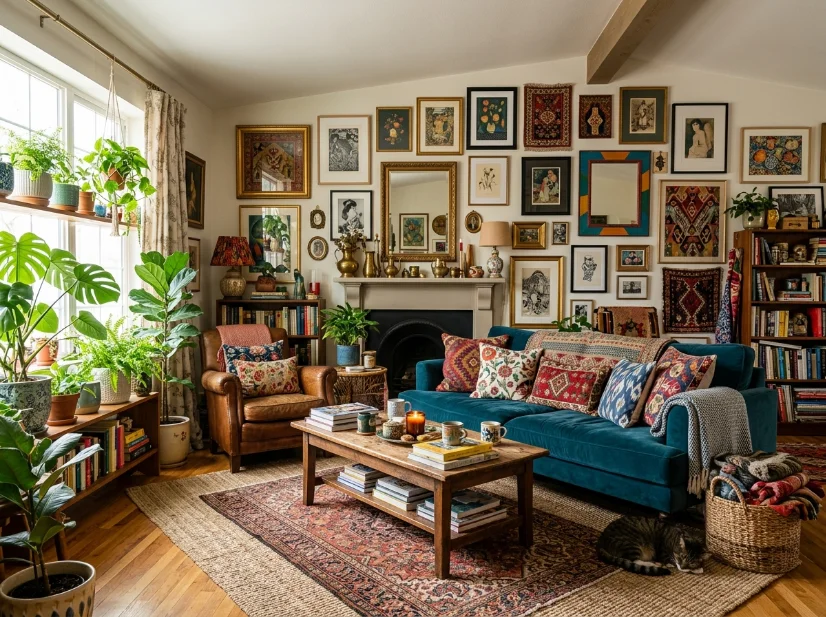
If you love layered rooms but worry that maximalism will make your small home feel crowded, you are not alone. I felt the same way in our 1,400-square-foot house. After years of keeping our rooms too bare, I slowly learned how to bring in more color, pattern, texture, and personality without creating visual chaos. In this post, I’m sharing the seven simple rules that helped me make maximalism work in our home. You’ll learn how I use repeating colors, layer textures, mix gallery wall pieces, shop secondhand, and edit our decor so the rooms still feel calm and livable.
Our house is 1,400 square feet. For the first two years, I decorated it like I was scared to make a mistake. We had bare walls, one lamp in each room, and a couch with almost nothing around it. Then last spring, I got tired of living in a house that looked like a rental listing. I started adding things back slowly and with a purpose. That is the difference between clutter and thoughtful maximalism decor. You can use pattern, color, and lots of objects without making a room feel chaotic. The key is making sure every piece has a reason to be there.
1. Pick One Color That Repeats Everywhere
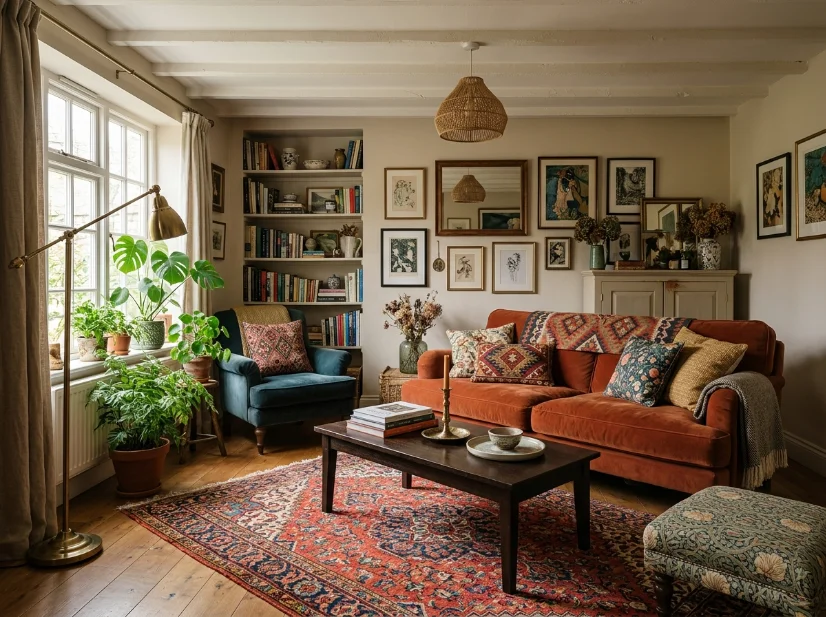
Maximalism can fall apart quickly when every room has a completely different color scheme. My anchor color is deep rust. I use it in our living room pillows, an entryway vase, and even the kids’ bathroom towels. It did not cost me much extra. I needed new towels anyway, so I chose rust ones from Target for around $19 instead of buying another set of gray towels.
The rule I keep in my head is simple. Whenever I buy something new, I ask if it can connect to a color that already exists in our home. This small habit has made a huge difference. It helps our rooms feel connected without making everything match.
Where I Went Wrong First
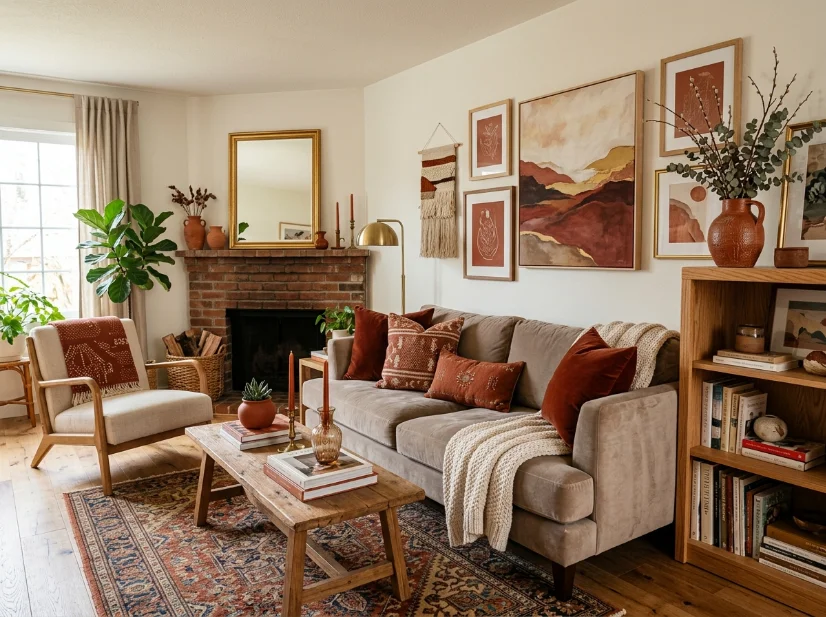
My first attempt at maximalism was a complete mess. I had five accent colors going at once. There was rust, sage, mustard, navy, and dusty pink from HomeGoods. Our den looked more like a fabric store than a living space.
I eventually removed most of the colors. I kept two dominant colors and one smaller accent. The room immediately felt calmer. I learned that maximalism does not mean using every color you love at the same time.
2. Layer Textures Before You Add More Objects
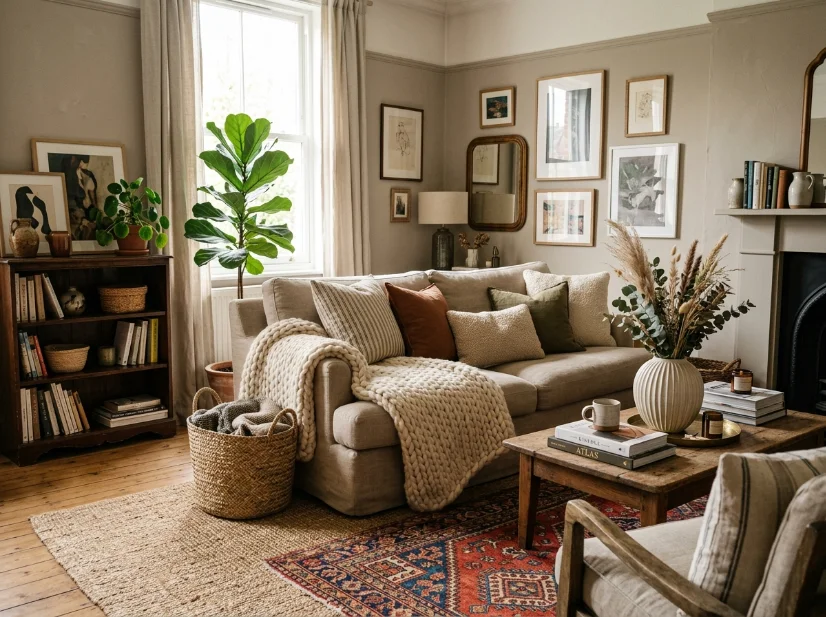
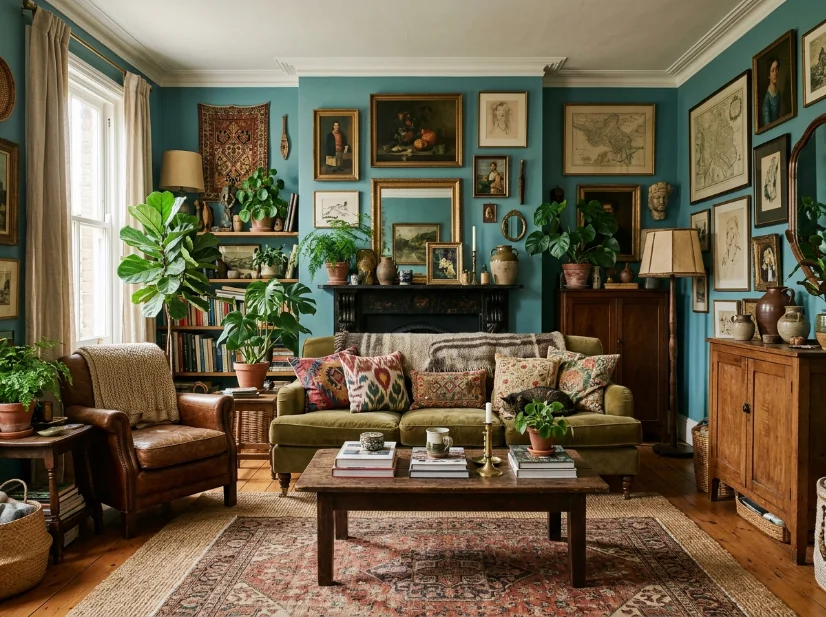
Before buying more decorations, I started adding texture. This was one of the easiest changes I made. I added a chunky wool throw from IKEA that cost about $35. I also layered a jute rug under our existing area rug. Instead of smooth vases, I started choosing ribbed ceramic pieces.
Texture makes a room feel interesting without adding dozens of objects. It also helps a busy room feel more intentional. Too many flat and matching surfaces can make maximalist decor look cheap. Different fabrics, finishes, and materials make the space feel more collected.
Our humid Charlotte summers also affect the materials I choose. I avoid fabrics that hold too much moisture around upholstered furniture. I usually choose woven cotton and linen instead. They work better for our home and feel lighter during warmer months.
3. Group Objects in Odd Numbers, Then Break the Rule Once
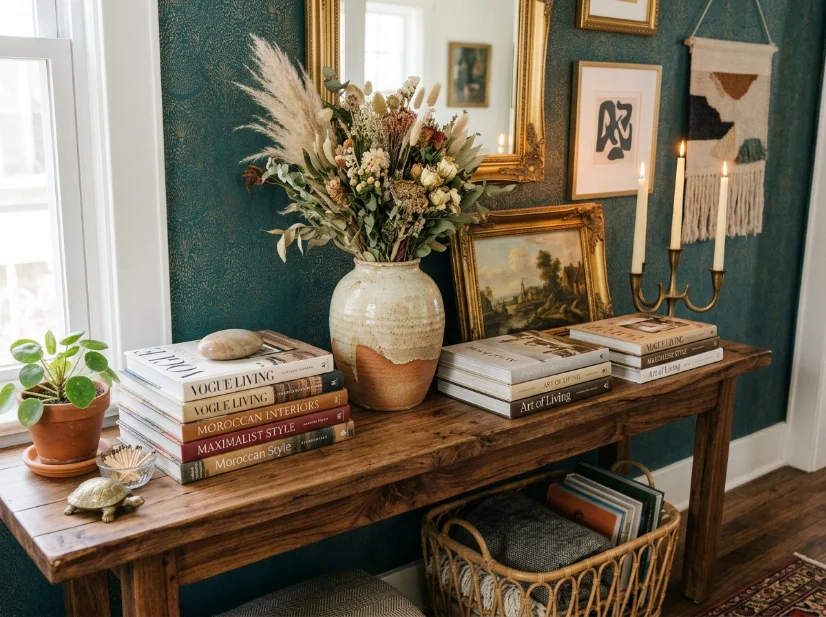
You’ve probably heard of the “rule of three.” It can be useful, especially when styling shelves and tables. I usually group objects in threes or fives. But I don’t follow the rule everywhere.
Our mantel is a good example. Instead of using three objects, I placed a tall brass candlestick next to a short stack of books. That’s it. The uneven arrangement feels more natural.
I think this is important with maximalism. If every surface follows the same decorating formula, the room can start looking like a showroom. A little imperfection makes the space feel personal. It reminds you that real people actually live there.
4. Build a Gallery Wall That Isn’t All Frames
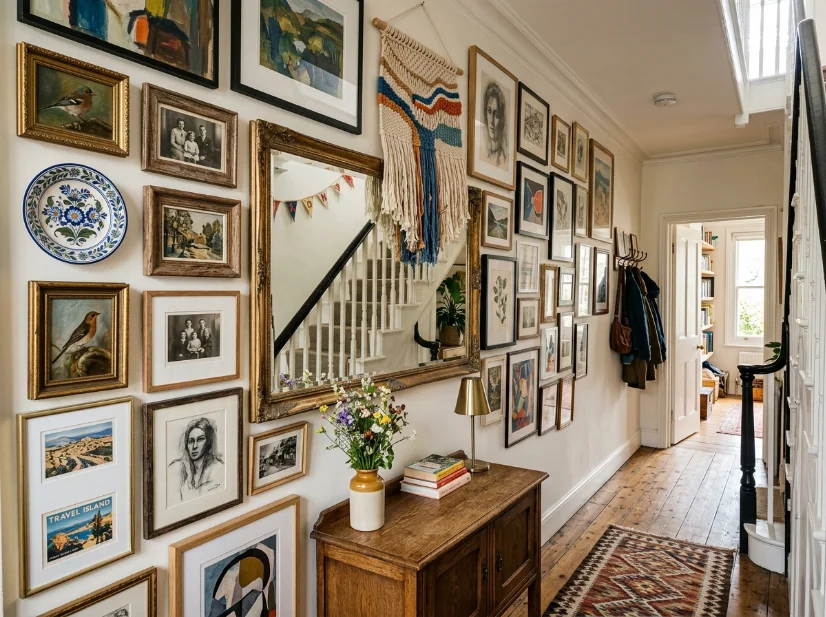
Our hallway gallery wall took four attempts. I also made two trips to Home Depot for a different picture-hanging kit. The first adhesive strips pulled paint off our wall. Our late-90s builder-grade drywall was not impressed.
The final version feels much more personal. I mixed framed prints with a woven wall hanging and a small vintage mirror from Facebook Marketplace. I also added a plate we brought home from a trip years ago. Those unexpected pieces are what make the wall feel collected.
Here are the simple rules that helped me:
- Let the frames vary in size so the wall feels interesting.
- Keep the mat color consistent to create some visual order.
- Leave around 2 inches between pieces so the wall does not feel too crowded.
- Hang the largest anchor piece first.
- Build outward from that main piece instead of placing everything randomly.
5. Let One Room Be the Loud One
I used to think I needed to maximalist-ify the entire house. That approach became expensive and exhausting very quickly. Now I let our living room be the loud room.
It has patterned pillows, a gallery wall, layered rugs, and plants on nearly every surface. There is plenty happening in that room, and I enjoy it.
Our bedroom is different. I keep it much quieter with mostly neutral bedding and one statement piece. That piece is a rattan headboard from Wayfair that cost us around $220.
Having one calm room has made a bigger difference than I expected. It gives me somewhere peaceful to retreat after spending time in the busier parts of the house. Maximalism feels much better when it is a choice instead of something happening everywhere.
6. Shop Secondhand for the Weird Pieces
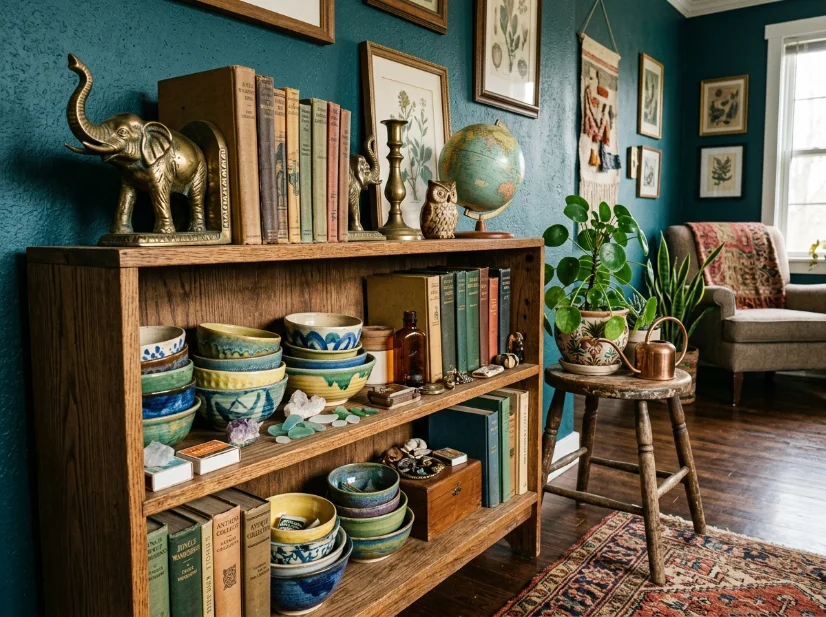
The pieces that make a maximalist room interesting are often the unusual ones. They are also the pieces I have had the most fun finding secondhand.
Our local Goodwill has been surprisingly good for this. I’ve found a brass elephant bookend, mismatched ceramic bowls, and an old wooden step stool. I now use the stool as a plant stand.
I usually budget around $40 a month for thrifting. I don’t go in with a strict shopping list. Instead, I treat it like a scavenger hunt. If I find something strange that works with our home, great. If I don’t find anything, I leave empty-handed.
Secondhand shopping also helps prevent the room from looking like everything came from the same store. A few unusual pieces can give the space much more personality.
7. Edit Ruthlessly Once a Season
This is the rule I skip most often. I also regret skipping it every time.
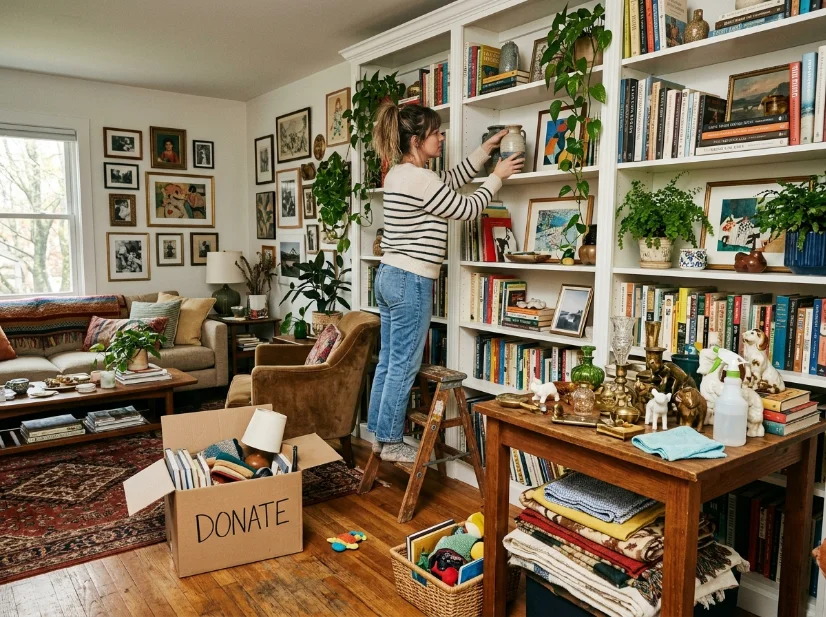
Maximalism can turn into clutter quickly. With two kids and a dog shedding on almost every textured surface, our house can get messy fast. Every few months, I choose one surface and remove everything from it.
Then I only put back the things I genuinely love. If something no longer works, I put it in a donation box near the garage door.
This small reset keeps our home from becoming overwhelmed with stuff. I don’t want every object I’ve ever bought to stay in the house forever. Maximalism works best for me when there is still room to see and enjoy the things I love.
What I’d Do Differently
If I started over, I would slow down. My first six months of decorating happened far too quickly. I placed three Wayfair orders, went on a Facebook Marketplace shopping spree, and made one very enthusiastic HomeGoods trip. Mark still brings that last one up.
The result looked staged instead of lived-in. I had bought too many things before I understood what the rooms actually needed.
Thoughtful maximalism needs time. Add one or two pieces, then live with them for a while. You may discover that the room needs something completely different. Waiting also makes it easier to notice which items truly belong.
I would also skip the mustard velvet armchair I bought on impulse for $180. I loved it in the store. A month later, it clashed with almost everything around it. It eventually sat in our garage for six months before I sold it on Facebook Marketplace for $60.
That chair taught me an important lesson. Give yourself time before buying something, even when the price seems good. I now try to picture a new piece in our home for at least a week before purchasing it. Sometimes I still buy the piece. Other times, I realize I only wanted it because it looked good in the moment.
For me, thoughtful maximalism is not about filling every corner. It is about choosing pieces that tell a story, repeating colors that connect the rooms, and leaving enough space for everything to breathe. When I follow those rules, our small home feels layered and interesting without feeling overwhelming.
