
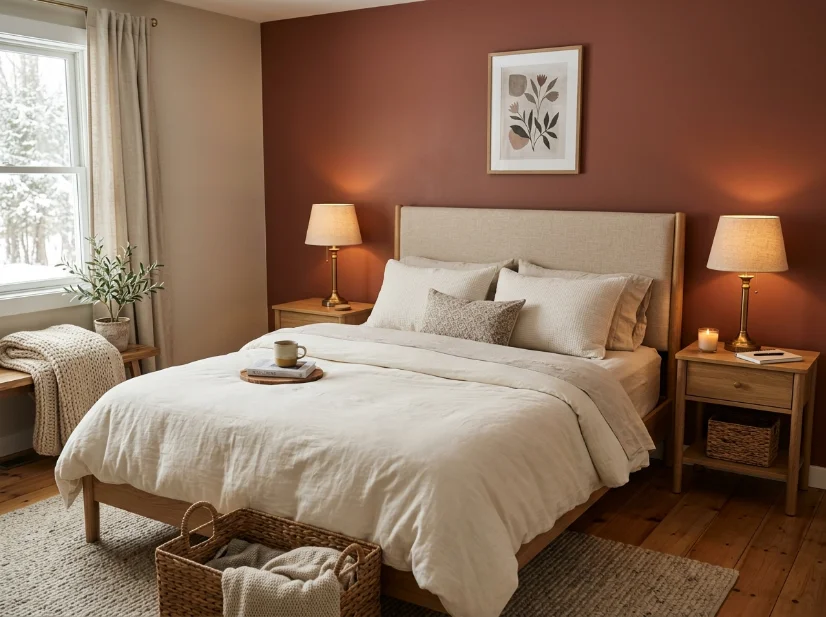
Winter can make a bedroom look completely different, even when you have not changed a single thing. Shorter daylight, darker evenings, and cool light bulbs can make warm colors look dull and turn cool colors even colder. If your bedroom feels flat or chilly after sunset, the problem may not be your furniture or decor. Your wall color and lighting could be working against you. In this guide, I’ll share seven winter bedroom color ideas that can make a room feel warmer and more inviting, from easy warm neutrals to deeper shades like forest green and burgundy. You’ll also learn how to test paint colors properly, choose shades based on your natural light, and avoid the lighting mistakes I made in my own bedroom.
Every November, I do the same thing. I stand in our bedroom doorway around 5 p.m., turn on the overhead light, and immediately question every color choice I have made since we bought this house in 2021. A color that looks warm and inviting in July daylight can look flat once winter arrives and the sun disappears before dinner. After three winters of testing colors, changing bulbs, and making a few mistakes, I have found seven winter bedroom color ideas that still feel warm when the lighting changes. This is not a designer’s guide. I am sharing what worked in my own home after repainting our bedroom more times than I would like to admit. I eventually realized that the problem was not always the paint. Our lighting played a huge role too.
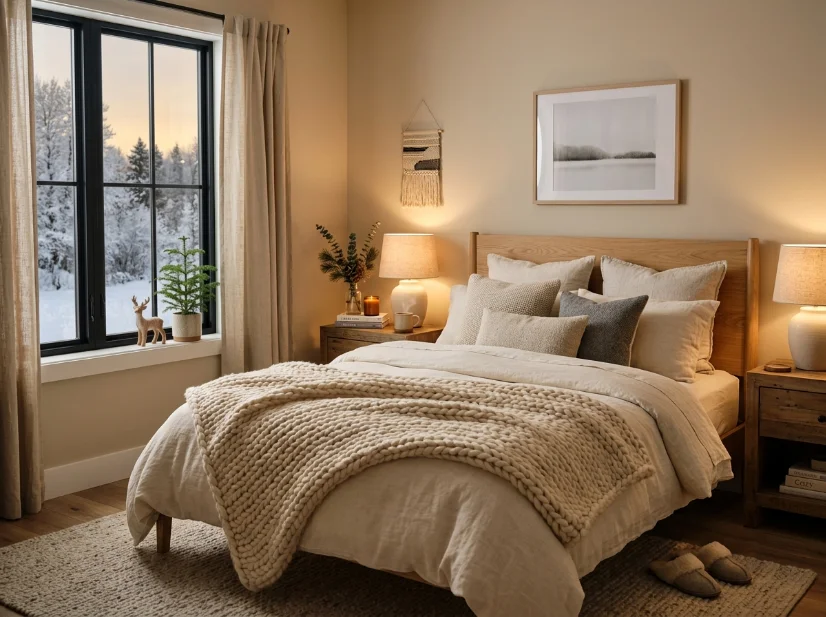
1. Warm Greige Instead of True Gray
Our bedroom started with a cool dove gray. It looked clean and modern in the paint store, but by January it felt surprisingly dull. Cool gray can have blue or green undertones, and those undertones become much more noticeable under weak winter light. They can look even cooler when you use bright 5000K bulbs. I eventually switched to a warm greige similar to Sherwin-Williams Accessible Beige, and the room immediately felt more comfortable in the evening. If you do not want to repaint the entire room, start with a sample. Paint the sample on a piece of poster board and place it against the wall you actually see from your bed. Check it in the morning, afternoon, and evening. This gives you a much better idea of how the color will behave throughout the day.
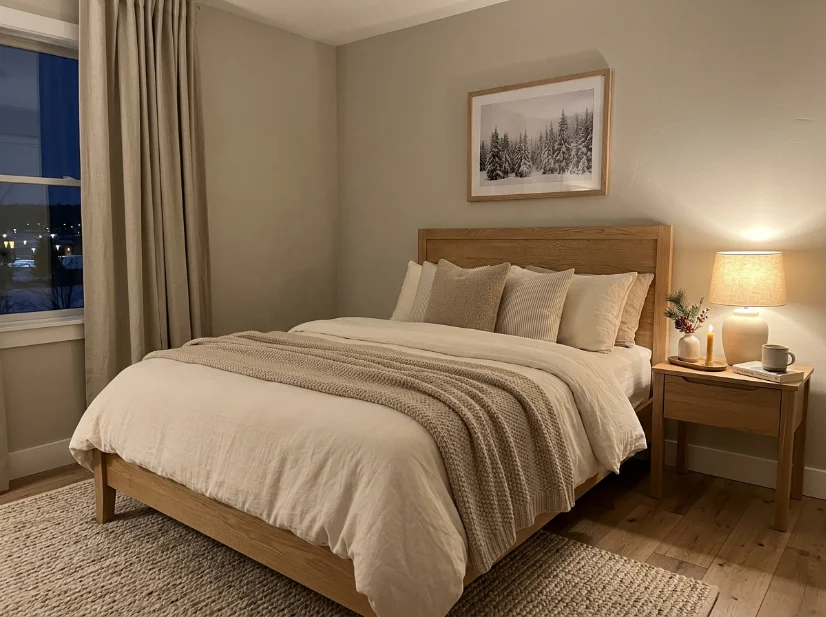
Why Undertones Matter More in Winter
Winter changes the way paint colors look inside a room. Daylight is available for fewer hours, and the lower winter sun can create very different shadows. A gray that looks neutral during the afternoon may suddenly show blue or purple undertones after sunset. I did not understand this until a contractor mentioned it while working on another room in our house. That small conversation finally explained why some of my paint samples looked completely different at night. Before choosing a winter bedroom color, always check the undertone and test the color under your actual bedroom lighting.
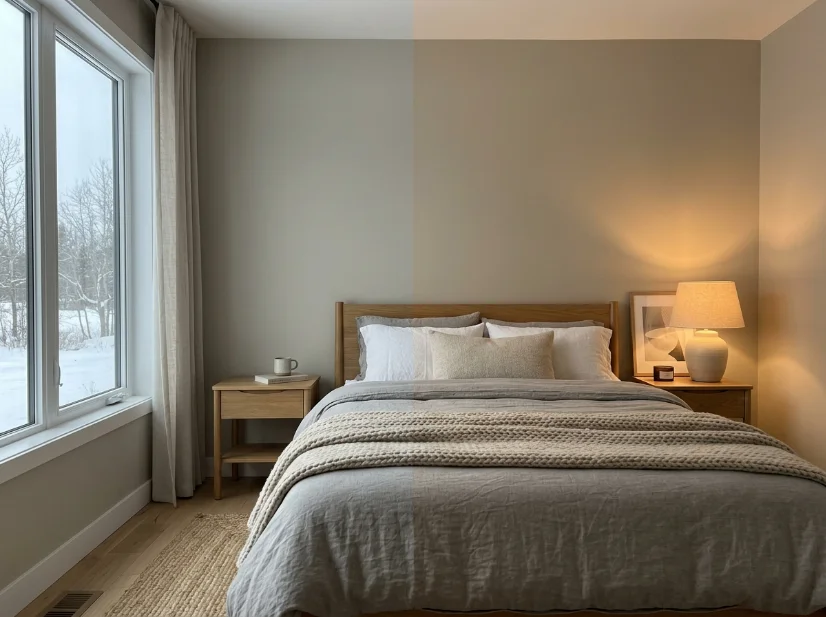
2. Deep Terracotta or Clay on One Wall
I was nervous about using terracotta because it felt like a color that might quickly go out of style. Instead of painting the entire bedroom, I used it on the wall behind the headboard. The result surprised me. A muted clay shade created warmth without making the whole room feel heavy. I used a color similar to Behr Cavern Clay and kept the other three walls in warm greige. Two winters later, the accent wall is still one of my favorite parts of the room. If you rent or do not want to commit to paint, removable wallpaper can create a similar effect. Look for a washable clay, terracotta, or muted rust pattern that works with your existing furniture. It gives you the warmth of the color without requiring a permanent change.
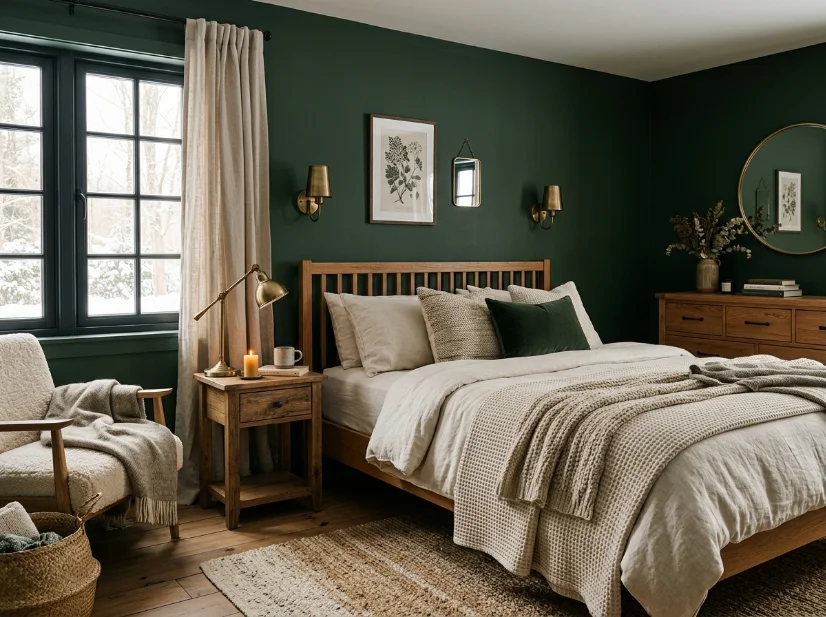
3. Deep Forest or Hunter Green
Deep green can make a bedroom feel cozy during winter because it connects the room with natural colors without looking overly bright. My sister-in-law used a shade similar to Benjamin Moore Essex Green in her guest room, and it became especially inviting during the colder months. Deep green works particularly well with warm wood, brass, cream, and black metal. It can also make simple furniture feel more intentional. The main thing to remember is natural light. A very dark green can make an already dark bedroom feel smaller and heavier. If your room receives good daylight, you have more flexibility. If it is naturally dim, consider using the green on one wall instead of covering the entire room.
4. Rich Chocolate Brown
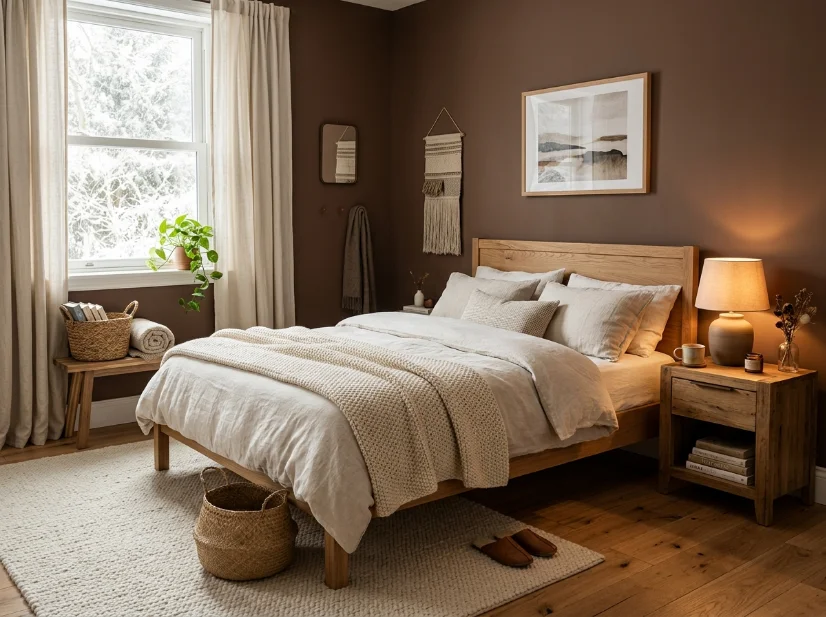
Brown had a rough reputation after the heavy chocolate-and-tan interiors of the 2000s, but today’s deeper browns can feel much more refined. I tried a lighter mushroom-brown shade in my son’s bedroom instead of our own room, and it has worked surprisingly well. The color hides everyday marks and pairs easily with wood furniture, cream bedding, and natural textures. You do not have to paint all four walls brown either. A rich brown can look great on doors and trim when you pair it with a lighter warm wall color. This is a useful option if you want more depth without making the entire bedroom dark. Brown also works nicely with woven baskets, wool rugs, linen bedding, and warm lighting.
5. Muted Burgundy or Wine
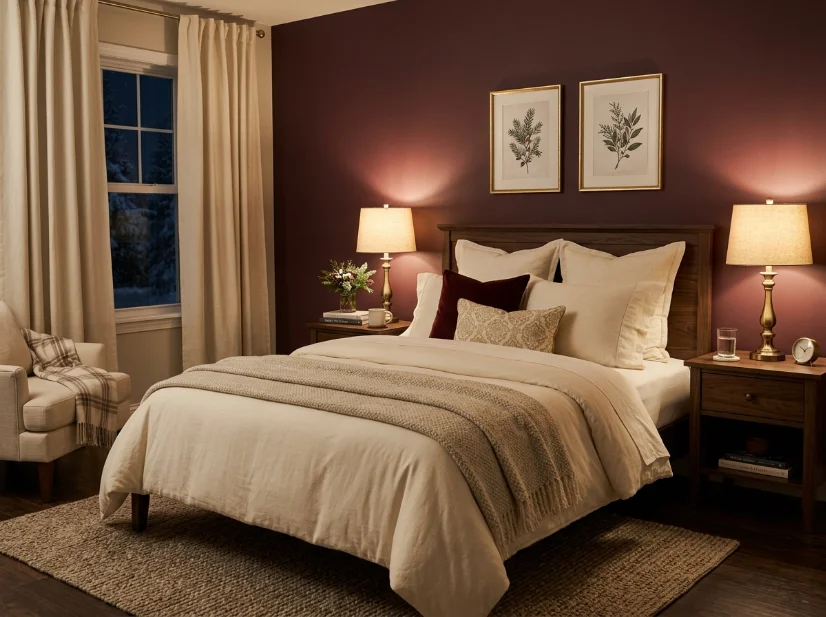
Burgundy can make a bedroom feel warm and dramatic, but it is one of the colors that needs careful testing. I learned that lesson the hard way after painting an entire 10-by-12 guest room in a wine shade similar to Sherwin-Williams Rookwood Red. I tested the color during the day but forgot to see how it looked under the lamps we actually used at night. Once the room was finished, the color looked much darker than expected. The room eventually grew on me, but I would approach the color differently now. Test burgundy under your evening lighting before committing to the whole room. If you want a safer option, use muted burgundy only on the wall behind the bed. It gives you the warmth and depth of the color without making the entire bedroom feel enclosed.
6. Warm Off-White With Layered Textures
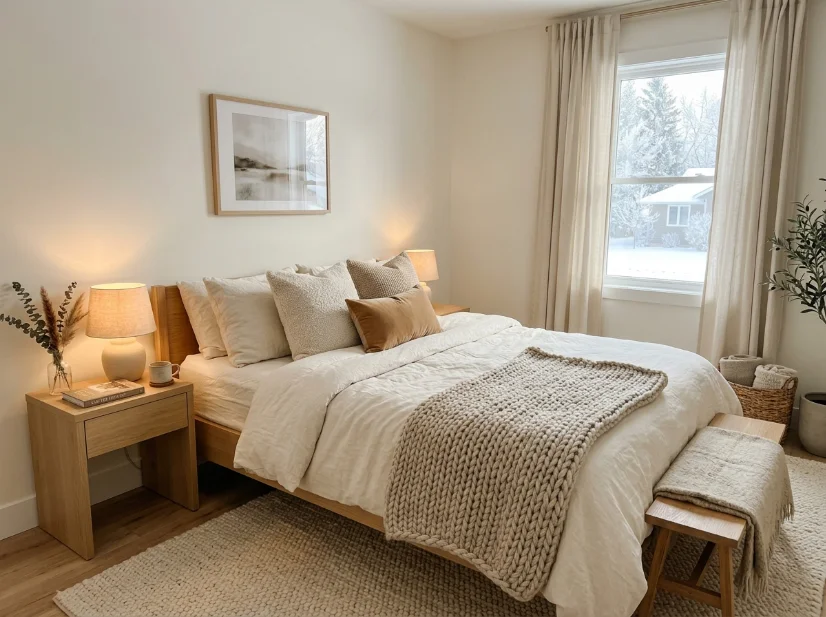
Not every winter bedroom needs a dark wall color. A warm off-white can feel just as cozy when you combine it with the right textures. A shade similar to Benjamin Moore White Dove is softer than a bright, stark white and works well with natural materials. Add a chunky knit throw, linen curtains, a wool rug, and textured bedding to keep the room from feeling flat. This is also the easiest option for renters or anyone who moves frequently. You can create a warmer bedroom without touching the paint at all. A simple throw blanket and linen-look curtains can make a noticeable difference while keeping everything completely reversible. The goal is not to make the room darker. The goal is to make it feel softer and more inviting.
7. Charcoal With Warm-Toned Wood
Charcoal walls may sound cold, but the right combination of materials can completely change the effect. Warm oak, walnut, rattan, brass, and natural fabrics can balance a deep charcoal wall and make the bedroom feel comfortable rather than stark. I considered this look for our own bedroom before settling on greige. If you want to try charcoal, pay attention to the amount of daylight your bedroom receives. A room with plenty of natural light can handle a deeper wall color more easily. A naturally dark or north-facing bedroom may feel much heavier with charcoal on every wall. In that situation, consider using charcoal on one accent wall and keeping the remaining walls in a warm neutral.
Mistakes I Made Getting Here
Two mistakes taught me more than any paint sample. First, I trusted paint chips under store lighting instead of testing the colors at home. That mistake contributed to the overly dark burgundy room. Second, I ignored our light bulbs for far too long. We had cool 5000K bulbs throughout the bedroom, so even a warm wall color struggled to create the feeling I wanted. Switching to warmer 2700K bulbs made almost as much difference as changing the paint. Before repainting your bedroom, look at your bulbs, furniture, curtains, flooring, and natural light together. If you live in a home built before 1978, also take precautions with old paint. Lead-based paint can be a serious hazard, so do not sand or scrape questionable old paint without proper testing or professional advice. A suitable test or licensed inspector can help you make a safer decision.
Final Thoughts
The best winter bedroom color is not necessarily the darkest or trendiest shade. It is the color that works with your room’s natural light, artificial lighting, furniture, and existing finishes. Warm greige is a great starting point if you want something flexible. Terracotta and burgundy add more personality, while deep green and charcoal create a moodier look. Warm off-white is the easiest choice when you want a lighter room, and chocolate brown adds depth without feeling overly dramatic. Whatever color you choose, test it at the time of day when you actually use your bedroom. That simple step can save you from buying another gallon of paint and wondering why the color looked completely different at night.
