
Indoor plants are one of the easiest ways to make a living room feel more welcoming, stylish, and connected to nature. However, decorating with plants can be challenging when you’re working with limited square footage, minimal storage, or a rental space where permanent changes aren’t possible. The good news is that you don’t need a large room or an expensive plant collection to create a beautiful green space. In this guide, you’ll discover eight practical indoor plant decor ideas for your living room that help maximize small spaces, add visual interest, and bring life to your home without creating clutter.
1. Use Trailing Plants to Add Height Without Using Floor Space
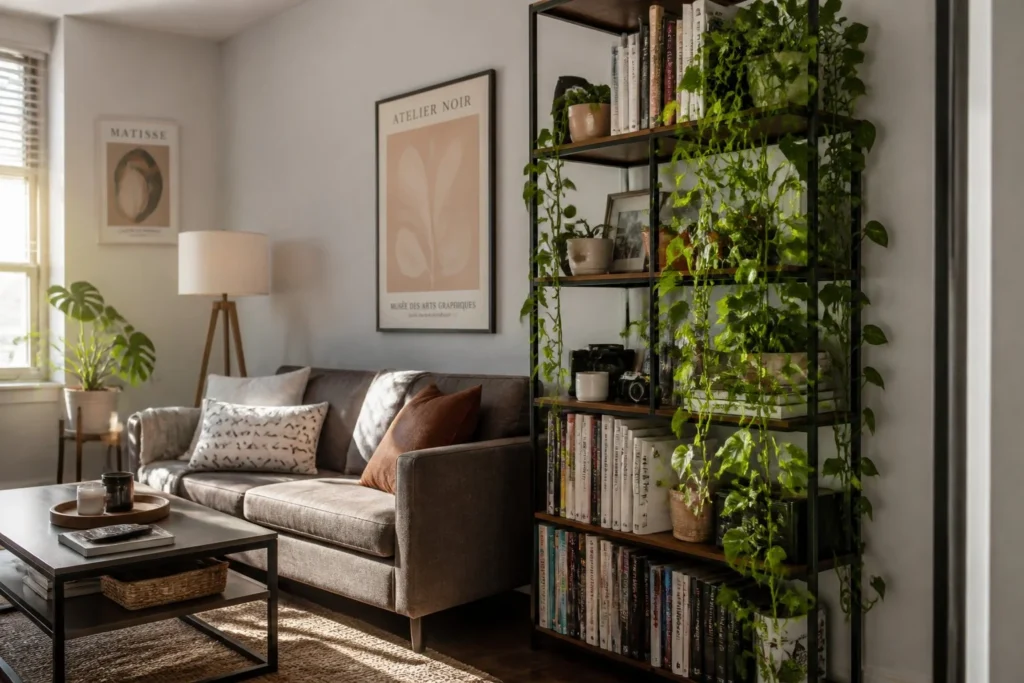
When decorating a small living room, vertical space is often more valuable than floor space. Trailing plants help draw the eye upward while keeping surfaces and walkways clear.
Plants such as pothos, heartleaf philodendron, and string of pearls naturally grow downward, making them perfect for shelves, bookcases, and entertainment units. As the vines grow, they create a layered look that adds texture and movement to the room.
Position trailing plants near a bright window where they can receive indirect sunlight. Even a single plant placed on a high shelf can make a living room feel more vibrant and styled.
For an affordable option, start with a small cutting or young plant and allow it to grow over time.
2. Create a Plant Cluster on a Decorative Tray
Many people place individual plants throughout a room and end up with a space that feels cluttered. A better approach is grouping several small plants together on a tray.
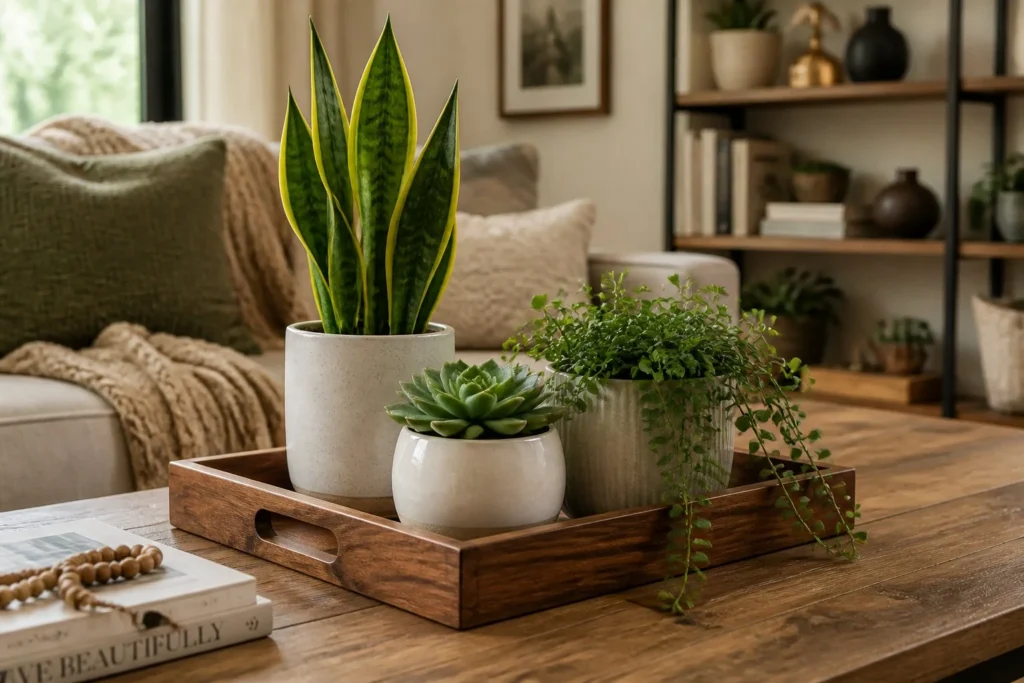
A plant cluster creates a focal point and helps multiple pots feel like one intentional design element. Place three to five plants of different heights on a wooden, metal, or woven tray and use it as a centerpiece on a coffee table or console table.
Mix plant shapes for visual interest. For example, combine a compact snake plant, a trailing vine, and a small succulent. The variety makes the arrangement look balanced and professionally styled.
Using a tray also keeps watering messes contained and makes it easier to move plants when needed.
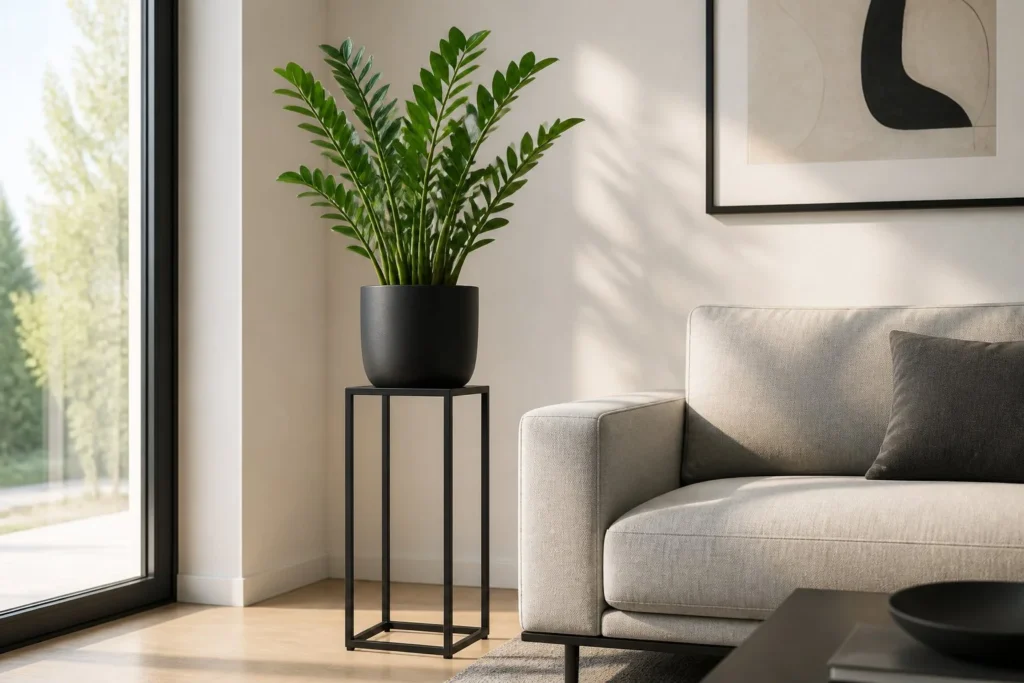
3. Replace a Side Table With a Plant Stand
One of the most overlooked indoor plant decor ideas for the living room is replacing unnecessary furniture with a decorative plant stand.
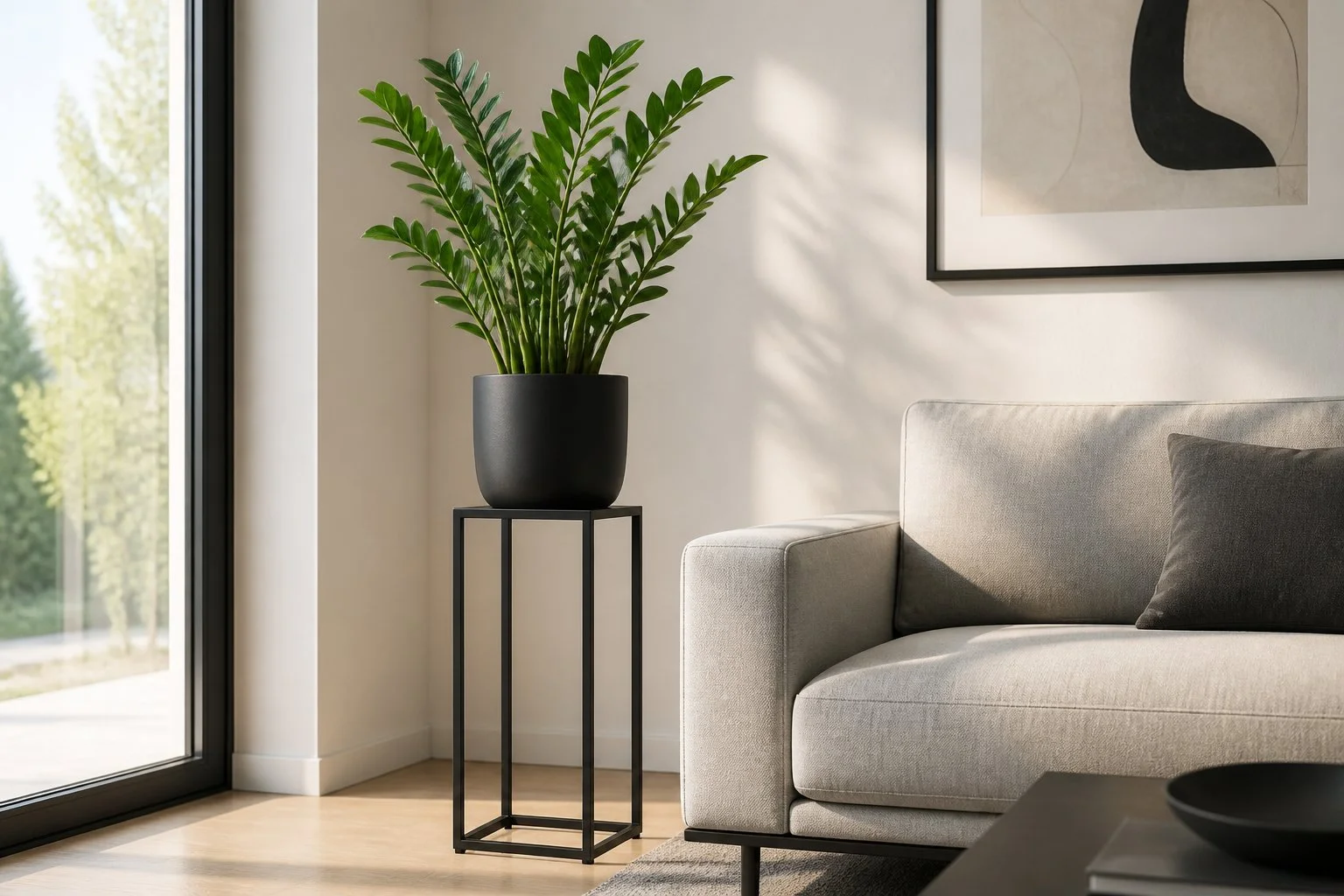
Many small living rooms contain side tables that are rarely used. Swapping one for a tall plant stand instantly creates a cleaner and more intentional look. A medium-sized plant elevated on a stand adds height without overwhelming the room.
Low-maintenance plants such as ZZ plants, snake plants, and rubber plants work particularly well because they maintain their shape and require minimal care.
Choose a stand that complements your existing furniture. Wood, black metal, and natural bamboo options all work well in modern living spaces.
4. Make Use of Your Windowsill
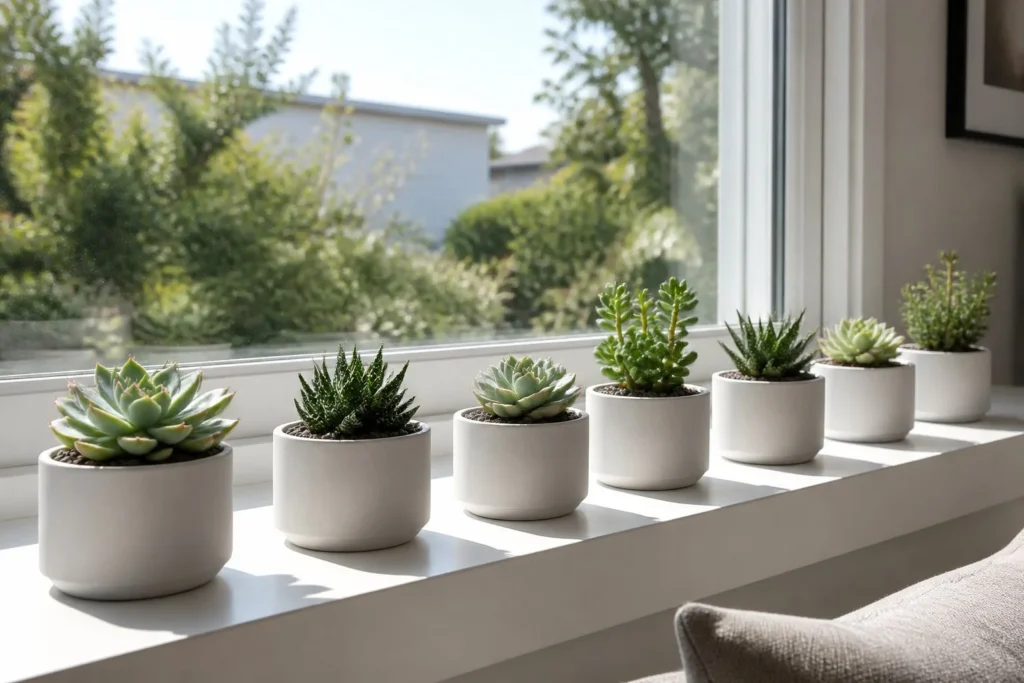
Windowsills are valuable decorating spaces that often go unused. If your living room has a wide windowsill, it can become the perfect home for several small plants.
Succulents, cacti, and other sun-loving varieties thrive in bright windows. If your room receives less direct sunlight, consider pothos, peace lilies, or philodendrons instead.
Using the windowsill allows you to introduce greenery without sacrificing floor space, shelf space, or table space. Matching pots can create a clean, cohesive appearance, while different plant shapes keep the display visually interesting.
Even a row of three small plants can dramatically improve the atmosphere of a room.
5. Use One Large Statement Plant
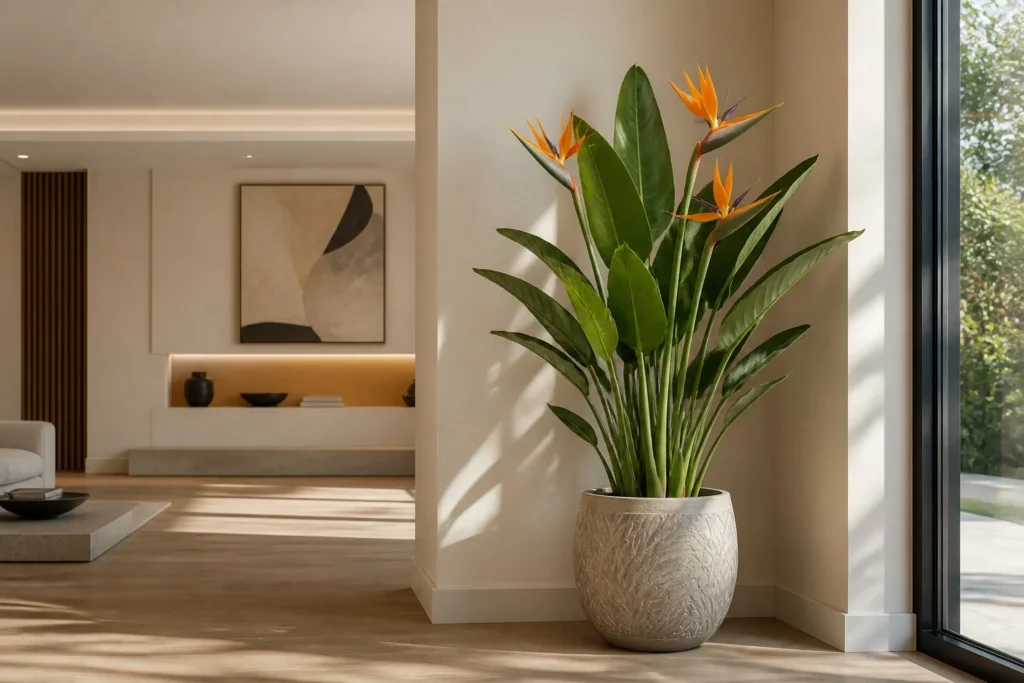
Many people assume that small spaces require only small plants. In reality, a single large plant can make a room feel more designed and sophisticated.
A statement plant works best when placed in an empty corner that would otherwise feel unused. Popular choices include bird of paradise, dracaena, rubber trees, and large snake plants.
The key is restraint. One substantial plant often has more impact than several medium-sized plants competing for attention. A large plant provides structure, fills awkward empty space, and creates a natural focal point.
Pair the plant with a stylish pot in a neutral color to help it blend with the rest of your decor.
6. Add Vertical Interest With Hanging Planters
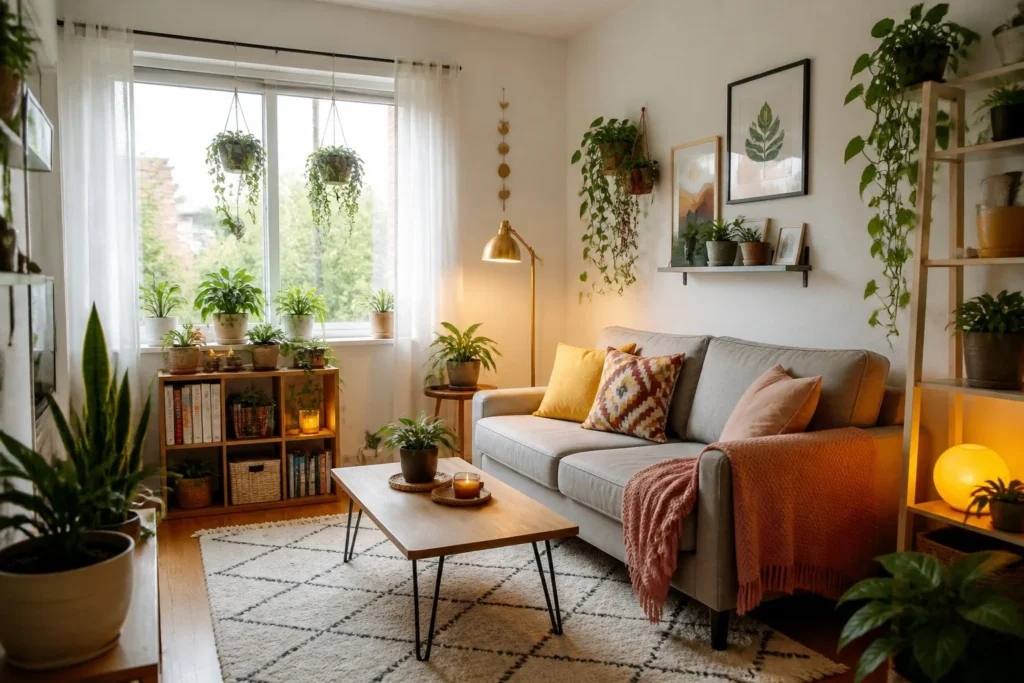
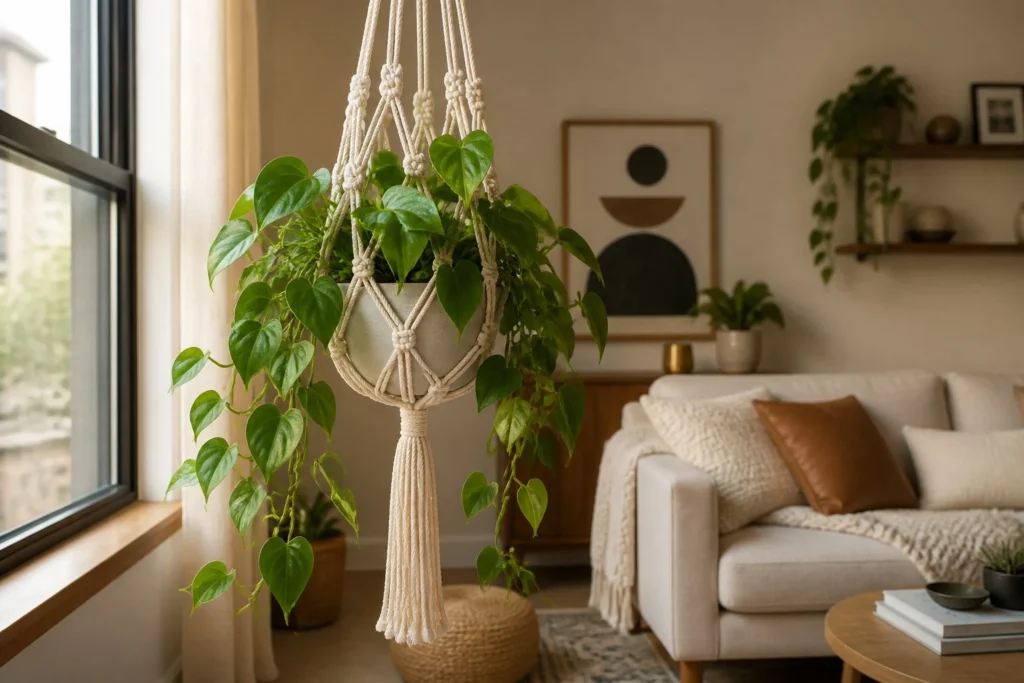
Hanging planters are ideal for renters and homeowners alike because they allow you to decorate upward rather than outward.
A lightweight hanging planter near a window can introduce greenery at eye level while preserving valuable floor space. Trailing plants are particularly effective because their vines create a dramatic cascading effect.
Macramé plant hangers are popular because they add texture and a relaxed, natural feel to a room. They also work well with many decorating styles, including modern, bohemian, farmhouse, and minimalist interiors.
Before installing any hanging planter, make sure it is secure and appropriate for the weight of the plant and container.
7. Mix Different Plant Textures
One of the secrets to creating beautiful plant displays is focusing on texture rather than color alone. Most indoor plants are green, but their leaf shapes and growth patterns vary significantly.
Combining plants with different textures creates depth and visual interest. Pair broad glossy leaves with narrow upright leaves, or combine architectural plants with soft trailing varieties.
For example, a rubber plant, snake plant, and string of hearts create much more contrast than three plants with similar leaf shapes.
This approach makes even a small collection appear carefully curated. It also prevents plant arrangements from looking flat or repetitive.
When choosing plants, think about how their shapes interact with one another instead of simply selecting the plants with the prettiest leaves.
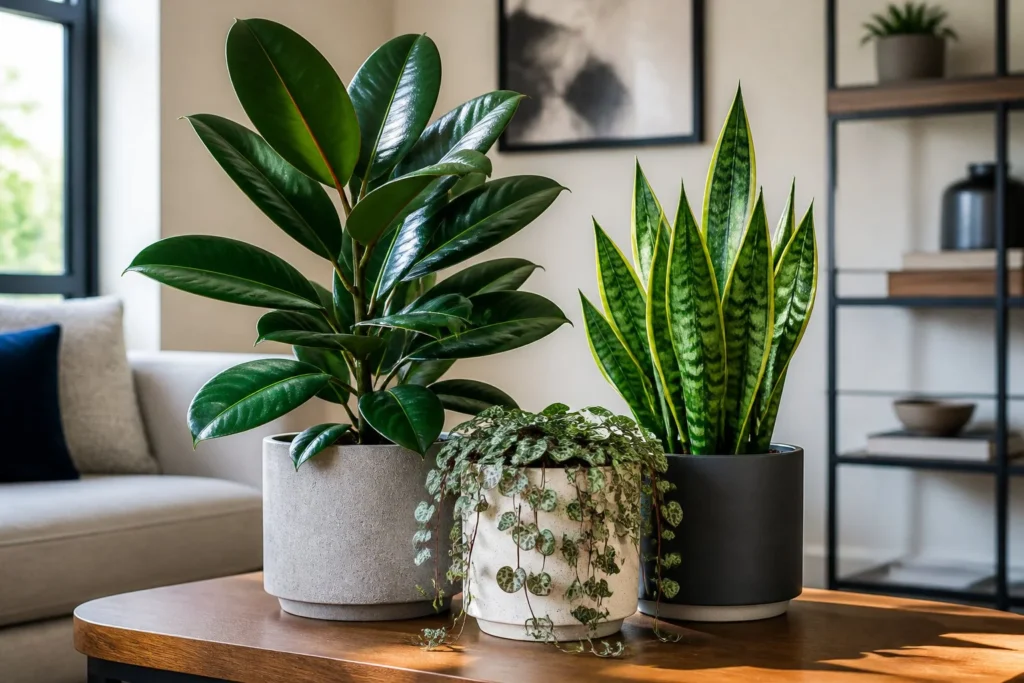
8. Treat Plant Pots as Part of Your Decor
The container is just as important as the plant itself. Even healthy plants can look unfinished when they remain in basic plastic nursery pots.
Choose containers that complement your living room’s overall design style. Neutral colors such as white, black, terracotta, and natural woven materials are versatile and easy to coordinate.
You do not need matching pots throughout the room. Instead, limit yourself to two or three finishes so the space feels cohesive without looking overly uniform.
Decorative baskets and woven sleeves are excellent options because they instantly upgrade a plant’s appearance without requiring repotting. They are also lightweight and easy to move when rearranging furniture.
Investing in a few attractive containers often has a greater visual impact than buying additional plants.
Enjoyed these indoor plant decor ideas for your living room? Share your favorite plant styling tip in the comments below. If you’re looking for more small-space decorating inspiration, explore our related home décor guides and save this article for future reference when you’re ready to refresh your living room with greenery.
Common Mistakes to Avoid
While decorating with plants is relatively simple, a few common mistakes can make the process frustrating.
The biggest mistake is choosing plants without considering the available light. Every plant has different requirements, and placing a sun-loving plant in a dark corner usually leads to disappointment.
Another common issue is overcrowding. Small living rooms benefit from carefully selected plants rather than large collections squeezed into every available space.
Finally, do not ignore the importance of containers. Attractive pots help plants feel like intentional design elements rather than afterthoughts.
Final Thoughts
Decorating with plants is one of the most affordable and effective ways to transform a small living room. Whether you choose a single statement plant, a collection of trailing vines, or a simple windowsill display, indoor greenery adds life, color, and personality to your space.
Start small and focus on plants that match your home’s lighting conditions. As your confidence grows, you can gradually expand your collection and experiment with different arrangements.
The best indoor plant decor ideas for your living room are the ones that fit your lifestyle, your available space, and the amount of care you can realistically provide. Even one well-placed plant can completely change how a room feels.
