
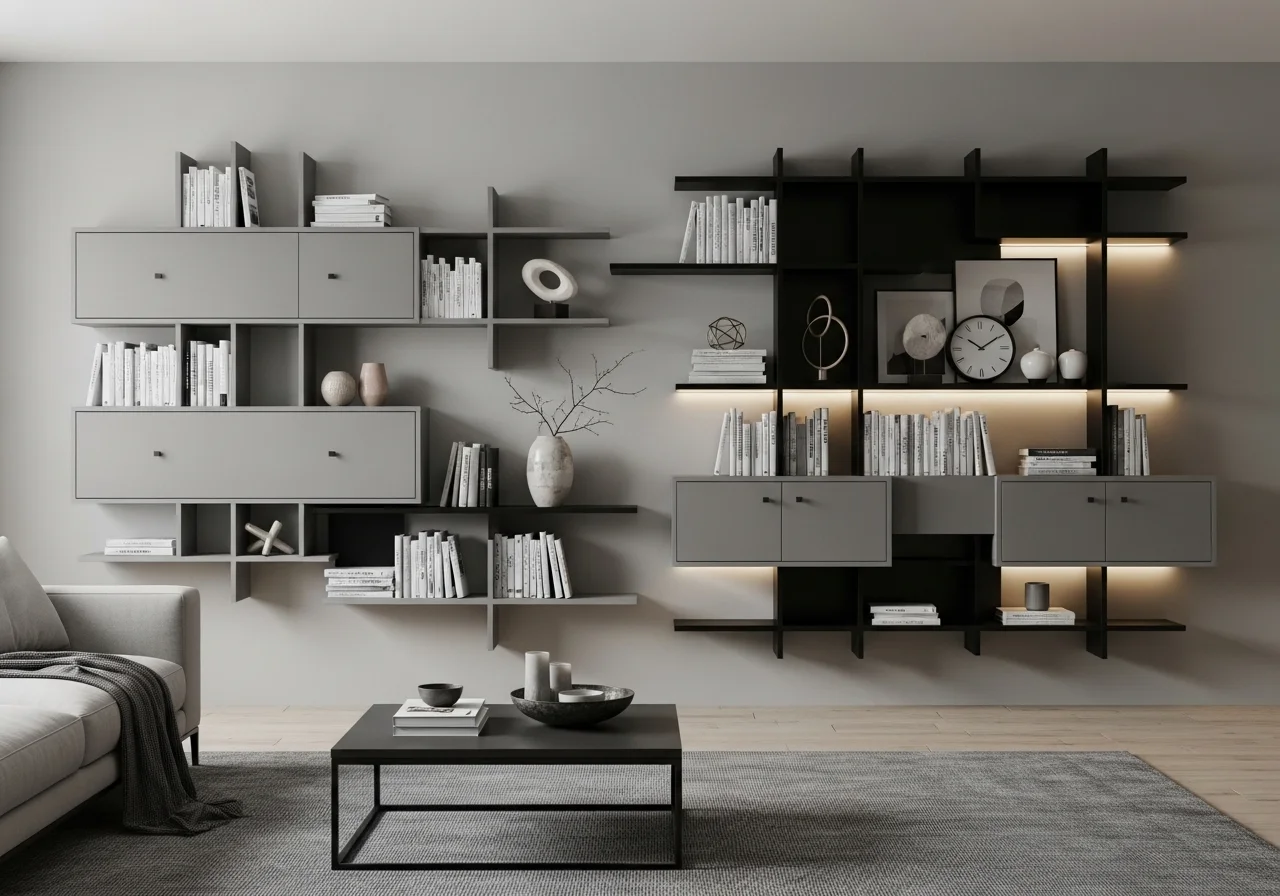
Wall shelves do two jobs at once. They store your belongings and decorate your space at the same time. That combination makes them one of the smartest upgrades for any home.
Floor space is valuable. Wall space is often wasted. Wall shelves ideas help you use vertical space that most people ignore. A few well-placed shelves can replace a bulky bookcase or eliminate a cluttered side table.
The options are wide. Floating shelves look clean and modern. Wooden wall shelves add warmth and texture. Corner shelves make use of awkward spaces. Minimalist wall shelves keep rooms feeling open and uncluttered.
This guide covers practical wall shelves ideas for every room in your home. You will find options for living rooms, bedrooms, and small spaces. You will get a clear installation process and honest styling tips.
Good shelving makes a home feel organized, intentional, and polished. One well-installed shelf can change how an entire room feels. Let’s explore your best options.
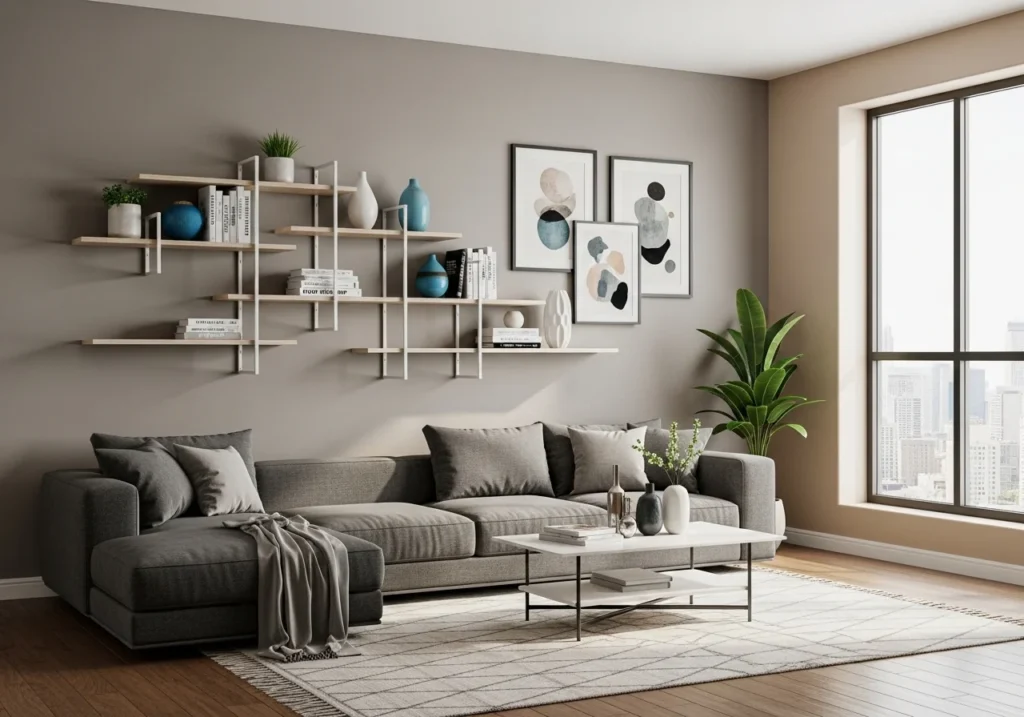
Why Wall Shelves Ideas Matter
Saves Floor Space
Furniture takes up floor area. Wall shelves take up none. In small apartments and compact rooms, this difference is significant. You free up walking space, reduce visual clutter, and make the room feel larger without removing a single piece of furniture.
Keeps Home Organized
Loose items on countertops and floors create chaos. Wall storage ideas give every object a fixed home. Books, plants, candles, and kitchen essentials all stay accessible without creating mess. Organization becomes easier when surfaces stay clear.
Adds Style to Walls
Bare walls feel unfinished. A well-styled shelf arrangement acts like living wall art. Decorative wall shelves filled with curated objects, plants, and books transform a plain surface into a design feature. The shelf itself becomes part of the room’s identity.
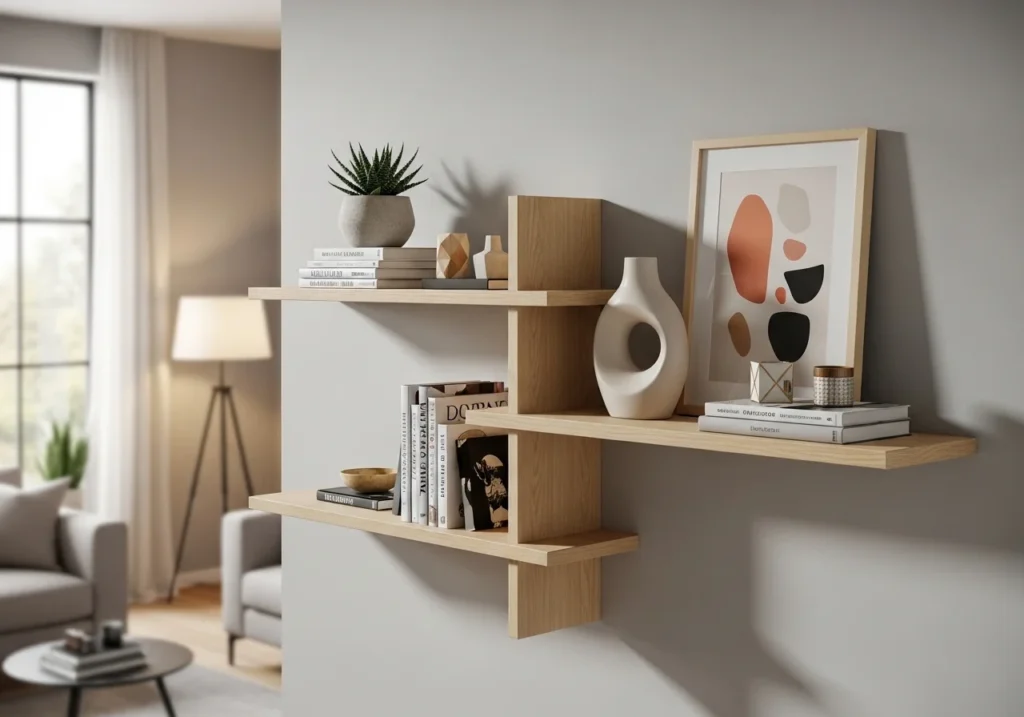
Popular Types of Wall Shelves
Floating Shelves
Floating shelves are the most popular wall shelf design today. They attach directly to the wall with hidden brackets and appear to float without visible support. The result is clean, minimal, and modern. They work in every room and suit almost every interior style.
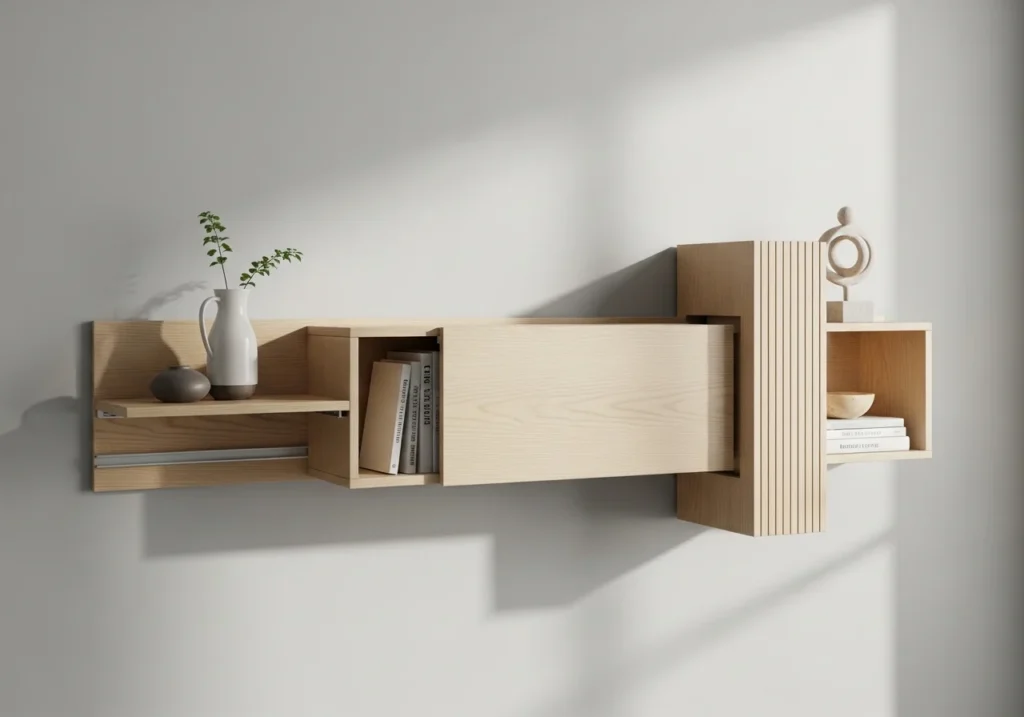
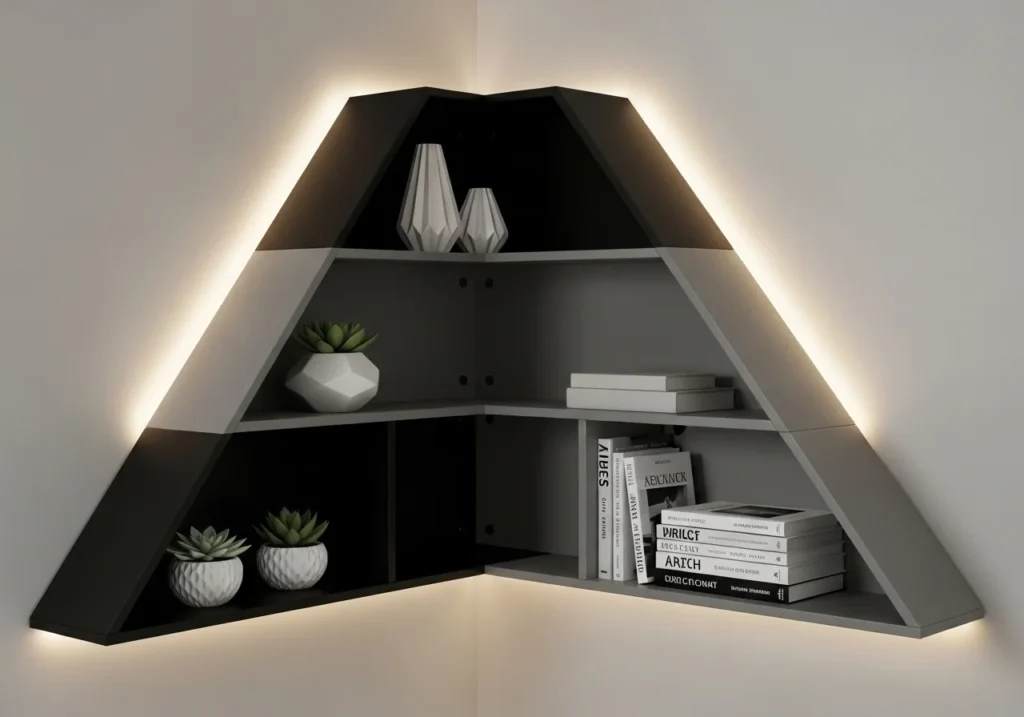
Corner Shelves
Corner shelves solve a common problem. Most rooms have corners that serve no purpose. A corner shelf turns that dead space into functional storage. Triangular or curved corner shelves fit neatly and hold plants, small books, or display items without intruding on the room.
Box Shelves
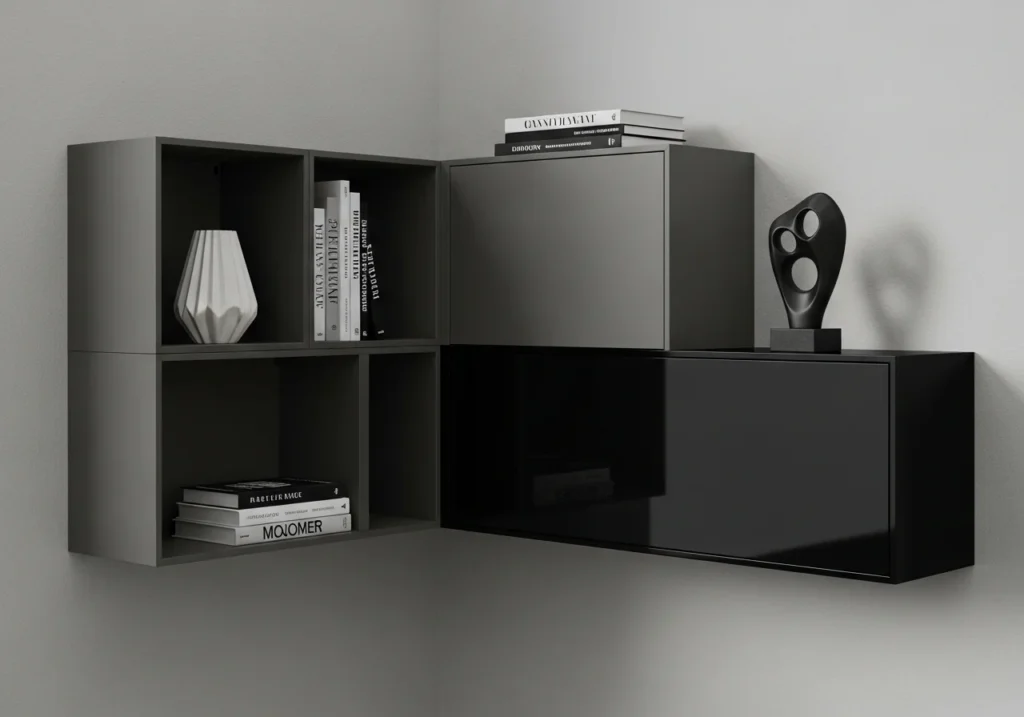
Box shelves are enclosed on three sides. They create defined compartments for displaying objects. You can arrange multiple box shelves in a grid or staggered pattern. The structure adds visual interest and keeps items framed rather than spread loosely on an open plank.
Ladder Shelves
Ladder shelves lean against the wall at a slight angle. They provide multiple tiers of storage in a vertical format. They require no drilling and suit renters perfectly. The open design keeps the room feeling light while offering significant storage across four or five levels.
Wall Shelves Ideas for Living Room
TV Wall Shelves
Build around your television with purpose. Install floating shelves on either side of the TV for a balanced, built-in look. Use the shelves for speakers, books, plants, and decorative objects. This approach turns a plain screen wall into a styled focal point.
Display Shelves for Decor
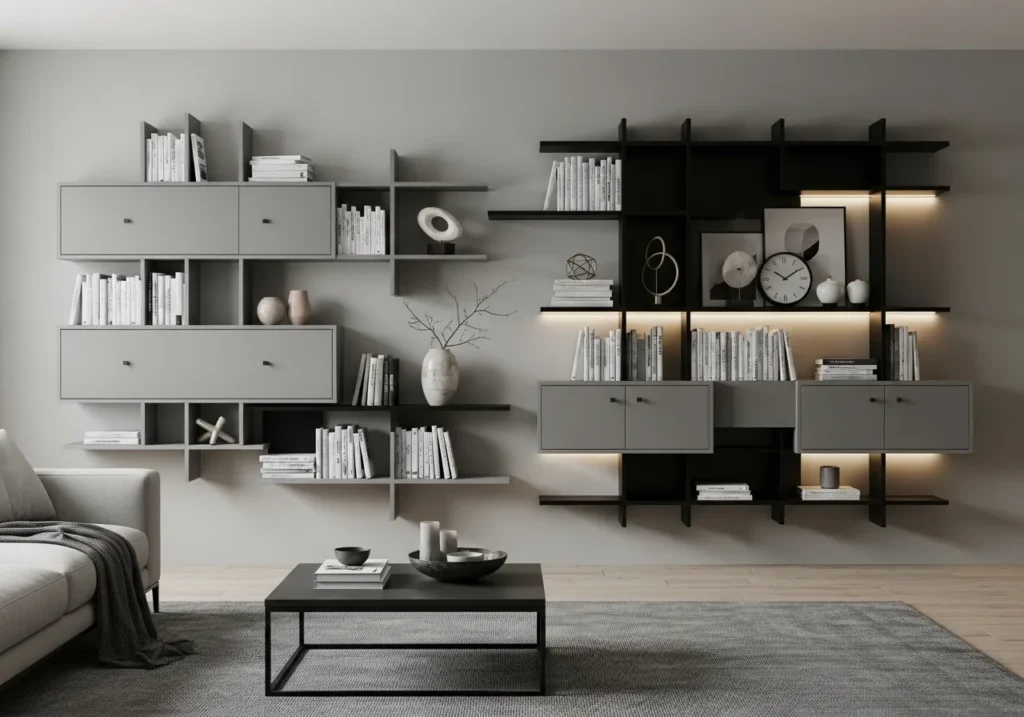
A living room deserves curated display space. Install two or three floating shelves at eye level on a feature wall. Arrange a mix of art objects, framed photos, candles, and small sculptures. Vary the height of objects on each shelf to keep the display dynamic.
Minimal Floating Shelves
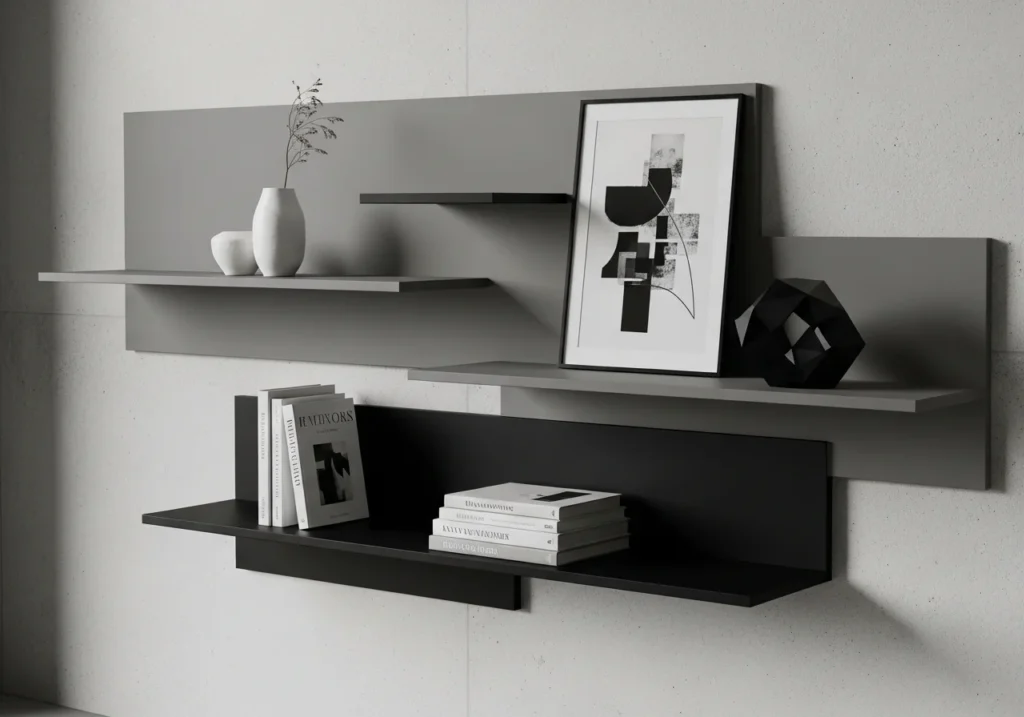
Less is more in a modern living room. Two long floating shelves with generous spacing between them create a strong visual statement. Limit objects on each shelf to three or four items. Open space between objects makes each piece feel intentional and important.
Book Display Shelves
Books add color, texture, and personality to a living room. Install several shelves at different heights and use them exclusively for books. Mix horizontal and vertical stacking. Add one small plant or object between sections to break the visual monotony.
Wall Shelves Ideas for Bedroom
Bedside Wall Shelves
Replace bedside tables with wall-mounted shelves. Install one shelf on each side of the bed at mattress height. Each shelf holds a lamp, a glass of water, a book, and your phone. The result is cleaner, more spacious, and easier to clean beneath.
Small Storage Shelves
A bedroom benefits from small, targeted storage. Install a short shelf near the wardrobe for accessories, perfumes, or folded scarves. Keep it narrow and clutter-free. A small shelf in the right spot eliminates the need for an extra dresser or storage unit.
Decorative Shelves Above Bed
The wall above the bed is prime display space. Install one long shelf or two staggered shelves above the headboard. Use them for framed art, trailing plants, soft-toned candles, and minimal decorative objects. This approach replaces the need for wall art and adds dimension to the room.
Minimal Shelf Layout
Minimalist wall shelves suit a calm bedroom perfectly. Choose one or two shelves in a natural wood tone. Keep only what you use daily on those shelves. A minimal shelf layout reduces visual noise and makes the bedroom feel restful and deliberate.
Wall Shelves Ideas for Small Spaces
Vertical Shelves
In a small room, go up instead of out. Install a column of shelves from low to high on a single wall. Vertical shelves draw the eye upward and make ceilings feel taller. They provide substantial storage without eating into your limited floor or horizontal wall space.
Corner Shelf Use
Corners are the most underused areas in small rooms. A set of corner shelves stacked vertically transforms a tight corner into a functional storage column. Use each level for a different category: books on one, plants on another, and small objects on the third.
Narrow Floating Shelves
Small space storage shelves work best when they stay narrow. A shelf between six and ten inches deep holds most everyday items without projecting too far into the room. Narrow shelves feel light and unobtrusive. They add storage without making a small room feel cramped.
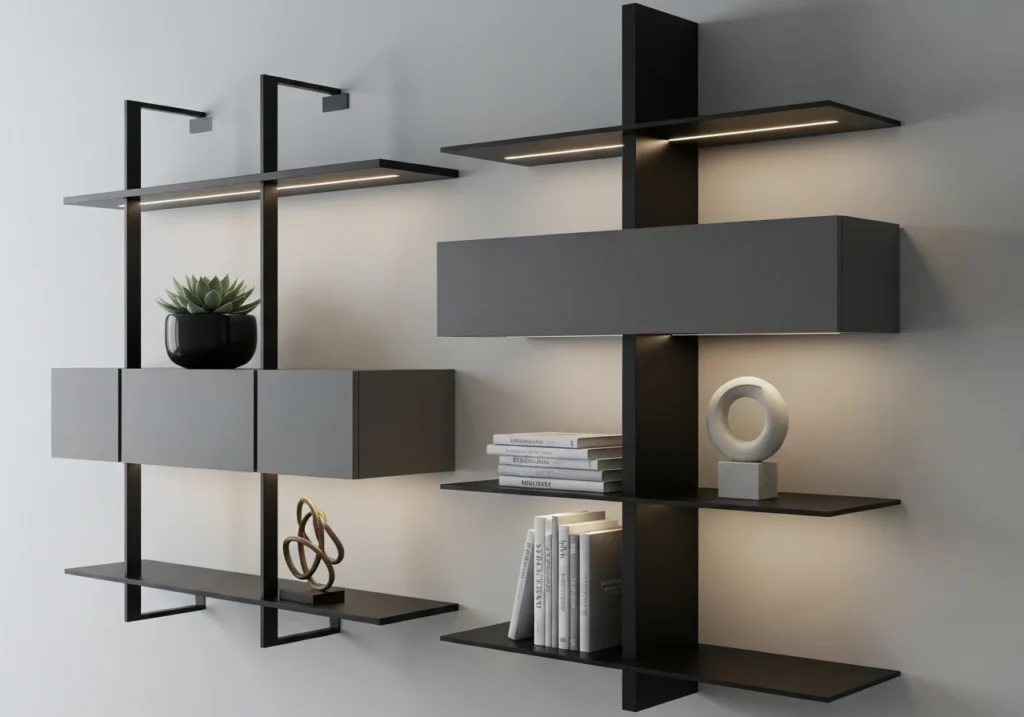
Multi-Level Shelf Design
A multi-level arrangement uses staggered shelves at different heights across a single wall. The varied layout creates visual interest and breaks the wall into organized zones. Each level holds different items. The staggered placement makes the storage feel styled rather than utilitarian.
Step-by-Step Guide to Install Wall Shelves
Step 1: Choose the Right Wall Select a wall with enough clear space and good visibility. Avoid walls with too many outlets, switches, or pipes. The wall behind a sofa, bed, or desk works well for most shelf arrangements.
Step 2: Measure Your Space Use a tape measure to mark the total width and height available. Decide how many shelves you need and how far apart each one should sit. Write down all measurements before purchasing materials.
Step 3: Mark Drill Points Use a pencil and a level to mark where brackets or wall mounts will go. Check each mark with a spirit level. Uneven marks result in crooked shelves. Take your time at this stage to avoid mistakes later.
Step 4: Install Brackets or Mounts Drill pilot holes at each marked point. Insert wall anchors for drywall or drill directly into studs for maximum strength. Attach your brackets or hidden mounts firmly. Check each one for stability before adding the shelf.
Step 5: Fix Shelves Properly Place the shelf onto the brackets or mounts. Secure it with screws if the design requires it. For hidden bracket systems, slide the shelf onto the bracket rods until flush against the wall.
Step 6: Check Balance and Strength Apply gentle pressure downward and sideways to test stability. Place items on the shelf gradually rather than loading it all at once. Check the level one final time before styling.
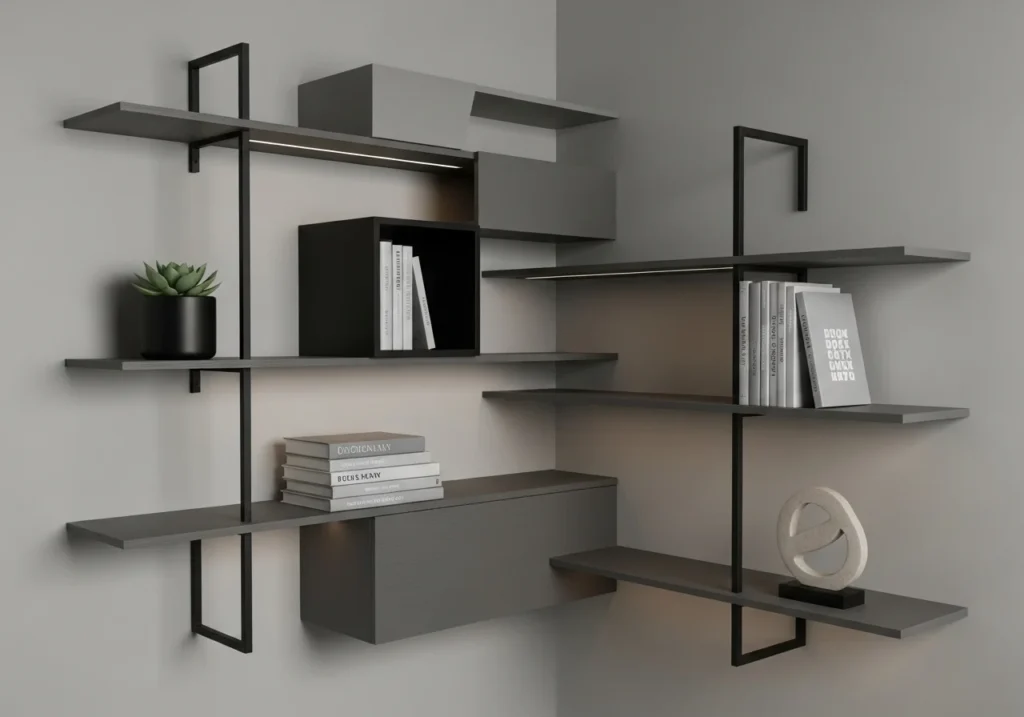
Tips to Style Your Wall Shelves
Use a Mix of Decor Items Combine objects of different heights, shapes, and textures. A book, a plant, a candle, and a small framed print together create visual balance. Avoid rows of identical items variety keeps the eye moving.
Keep Spacing Clean Overcrowded shelves look messy. Leave visible space between objects. Empty space on a shelf is not wasted it gives your display room to breathe and makes each item easier to appreciate.
Add Small Plants A trailing plant or a small succulent adds life and color to any shelf. Plants break the static quality of displayed objects and introduce an organic element that softens the overall look.
Use Books for Layering Stack a few books horizontally and lean others vertically against them. Books add height variation and color contrast. Use them as bases for smaller objects to create layered, dimensional shelf displays.
Stick to a Color Theme Choose two or three main colors for your shelf display. Keep all objects within that palette. A consistent color theme creates cohesion and makes even a busy shelf arrangement feel intentional.
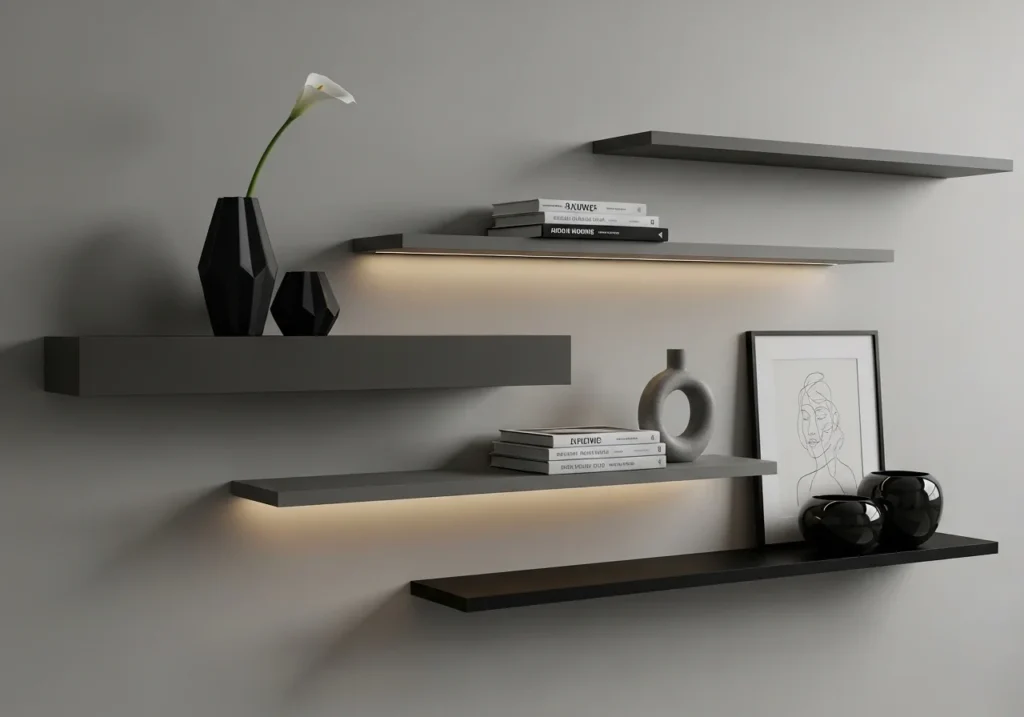
Avoid Overcrowding One too many objects ruins a good shelf display. Edit ruthlessly. If adding one more item makes the shelf feel full, stop. A shelf with room to spare always looks better than one that is packed tight.
Common Mistakes to Avoid
Overloading Shelves Every shelf has a weight limit. Exceeding it causes brackets to fail and shelves to bow. Check the manufacturer’s weight rating before loading heavy books or dense objects. Distribute weight evenly across the shelf surface.
Poor Placement A shelf placed too high becomes impractical. A shelf placed too low becomes a hazard. Place shelves at heights you can reach comfortably and that make sense for the objects they will hold.
Weak Installation Anchoring into drywall without hitting a stud or using proper wall anchors creates an unstable shelf. A falling shelf damages walls and breaks everything on it. Always use the correct fixings for your wall type.
Ignoring Design Balance A single heavy shelf on one side of a wall looks awkward. Balance your shelf arrangement across the full wall. Stagger heights, vary widths, and distribute visual weight so the wall feels composed rather than accidental.
Conclusion
Wall shelves ideas offer one of the most practical and affordable upgrades for any home. They solve storage problems, reduce clutter, and improve how your rooms look without major renovation.
The best shelf arrangements are clean, intentional, and balanced. Choose a style that fits your room, install it correctly, and style it with discipline. Remove anything that does not belong and let each object on the shelf earn its place.
Smart storage is not about filling walls. It is about using vertical space wisely. One well-placed shelf can change how your entire room feels. Start with one wall and build from there.
FAQs
1. What type of wall shelves are best for small rooms?
Narrow floating shelves and vertical corner shelves work best in small rooms. They use minimal wall projection and maximize vertical storage without claiming floor space. Choose shelves under ten inches deep to keep the room feeling open.
2. How much weight can wall shelves hold?
Weight capacity varies by shelf type and installation method. A shelf anchored into wall studs typically holds between 50 and 100 pounds. Shelves anchored only into drywall with standard anchors hold between 20 and 50 pounds. Always check the product specifications before loading heavy items.
3. Are floating shelves strong?
Yes, when installed correctly. The strength of a floating shelf depends entirely on the quality of the brackets and the wall anchors used. Brackets mounted into studs support heavy loads with no movement. Correct installation makes floating shelves as strong as any traditional bracket shelf.
4. What materials work best for shelves?
Solid wood and MDF with a hardwood veneer are the most reliable shelf materials. Solid wood handles heavy loads and lasts longer. MDF is more affordable and paints well. Metal shelves suit industrial and modern interiors and carry heavy weight without bowing.
5. How do I style wall shelves?
Group objects in odd numbers sets of three work well visually. Vary heights and textures across the shelf. Include at least one plant, one book stack, and one decorative object per shelf section. Leave visible gaps between items and stick to a consistent color palette across all shelves.
6. Where should I place wall shelves?
Place shelves where they solve a real storage problem or fill a blank wall that needs visual interest. Above a desk, beside a bed, flanking a television, or in a bare hallway are all strong placements. Always choose a wall that is visible from the room’s main seating or standing position.
