
Empty corners are one of those small home design problems that quietly make a space feel incomplete, no matter how nice everything else looks. In this article, I’m sharing the corner decoration ideas that actually worked in our real home after years of trial and error in a 1,400-square-foot house outside Charlotte. These are not staged showroom setups they’re practical solutions that fit tight spaces, low light areas, and everyday family life with kids, a dog, and constant clutter. From awkward dead zones to fully functional and stylish corners, you’ll see exactly how simple changes can turn unused space into something useful and beautiful.
Why Decorating Empty Corners Actually Matters
Empty corners drag a room down in a way that’s hard to put your finger on until you fix one. The space feels unfinished even when everything else is styled well. Once I started filling our corners with purpose, every room felt more grounded.
The underrated reason to bother is function. We squeezed a reading spot, a small desk, and a plant cluster into corners that used to hold nothing but dust and dog hair. In a smaller home, corners are basically free real estate. Rooms with all the furniture lined up against one wall feel lopsided. Rooms where corners get a little love feel calm and intentional.
This matters even more in builder grade houses from the 90s like ours, where the floor plans give you weird angles and useless nooks the original layout never accounted for.
Living Room Corner Decoration Ideas
Our living room corner became the experiment that taught me everything else. The first attempt was a wingback chair from HomeGoods that ran us about $220. Looked great in the store, felt like a wall in our actual space. I returned it, barely making the window, and went smaller.
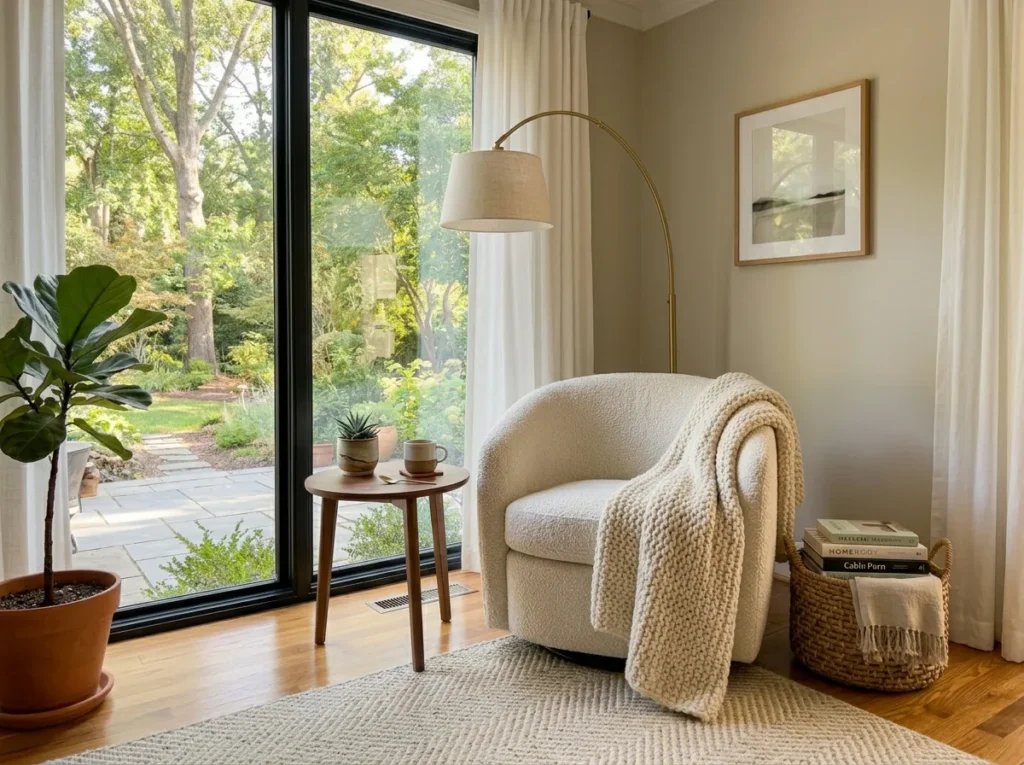
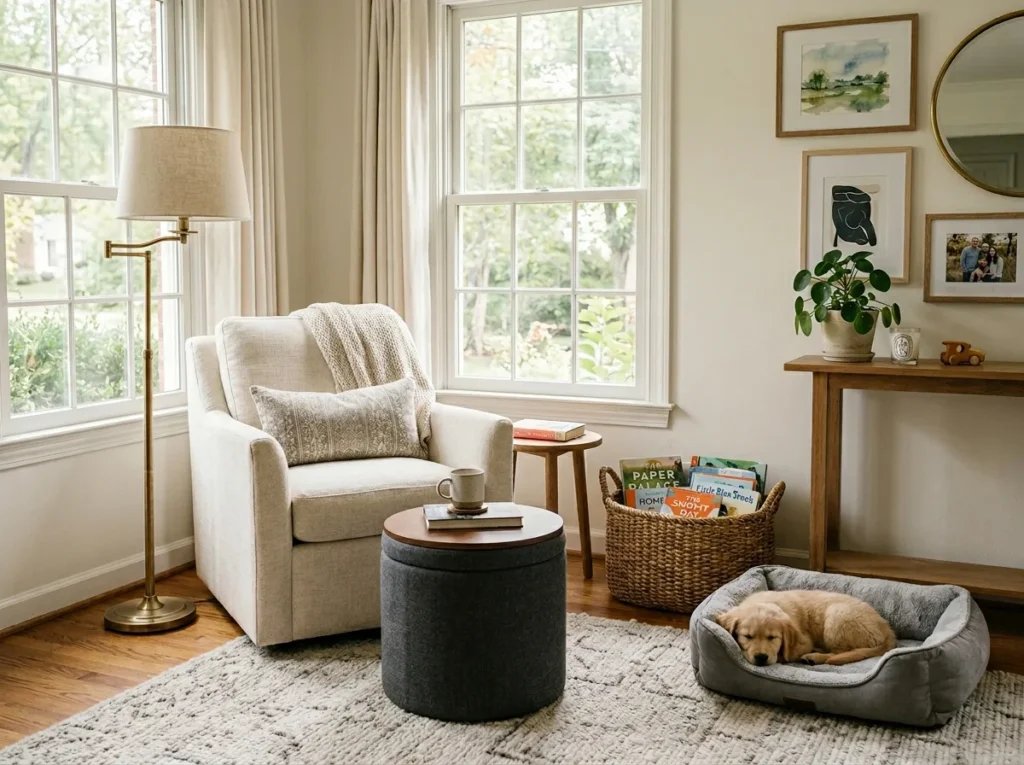
Now we have a swivel accent chair from Wayfair that was around $310, a small drum side table for $42 from Target, and a brass arc floor lamp I found at our local Goodwill for $18. The lamp needed a new shade and a quick rewire job, which a friend’s husband handled for $30 in parts. A folded throw blanket lives on the arm of the chair, and one small basket on the floor holds whatever library books the kids are working through.
For a different living room corner, I went with an indoor plant grouping instead. A snake plant in a terracotta pot from Home Depot at around $24, a ZZ plant in a black ceramic from IKEA for about $35, and a small pothos trailing off a thrifted plant stand that cost me $12. Total under $80, and everything has stayed alive for almost two years because I finally matched plants to the actual light in the room.
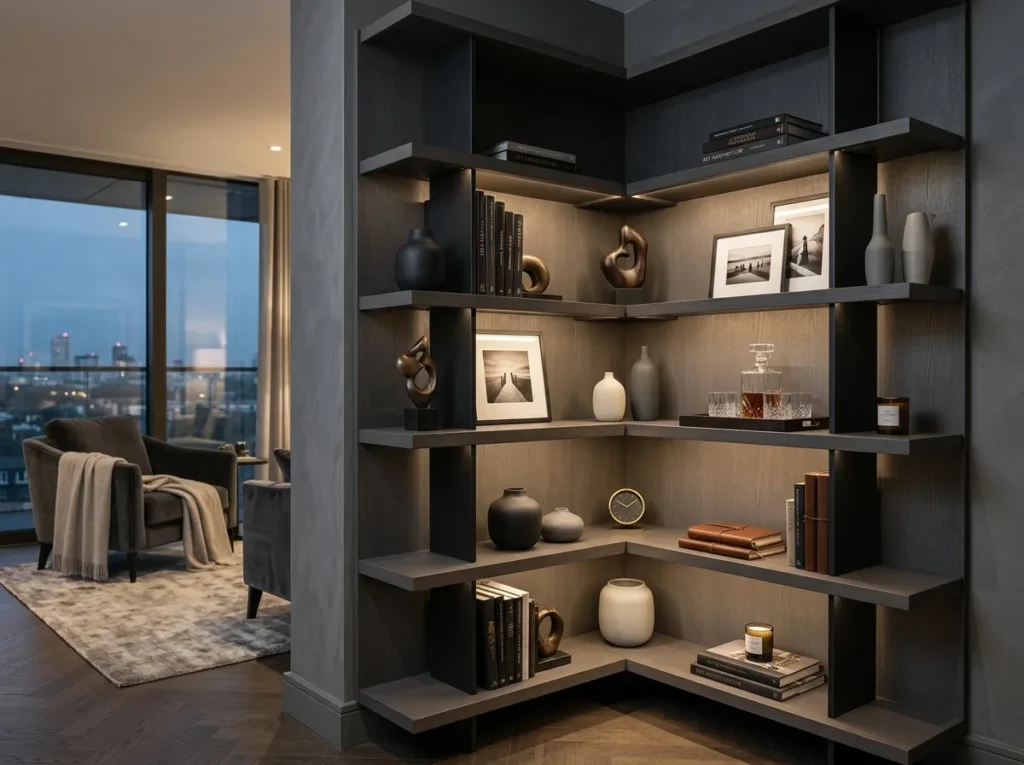
Corner shelves work too if you want something simpler. We have three floating walnut shelves from Amazon (around $48 for the set) in another spot, holding a few books, one ceramic vase, a small frame, and one trailing plant. Negative space is what makes corner shelves look intentional, not how much you cram on them.
Bedroom Corner Decoration Ideas
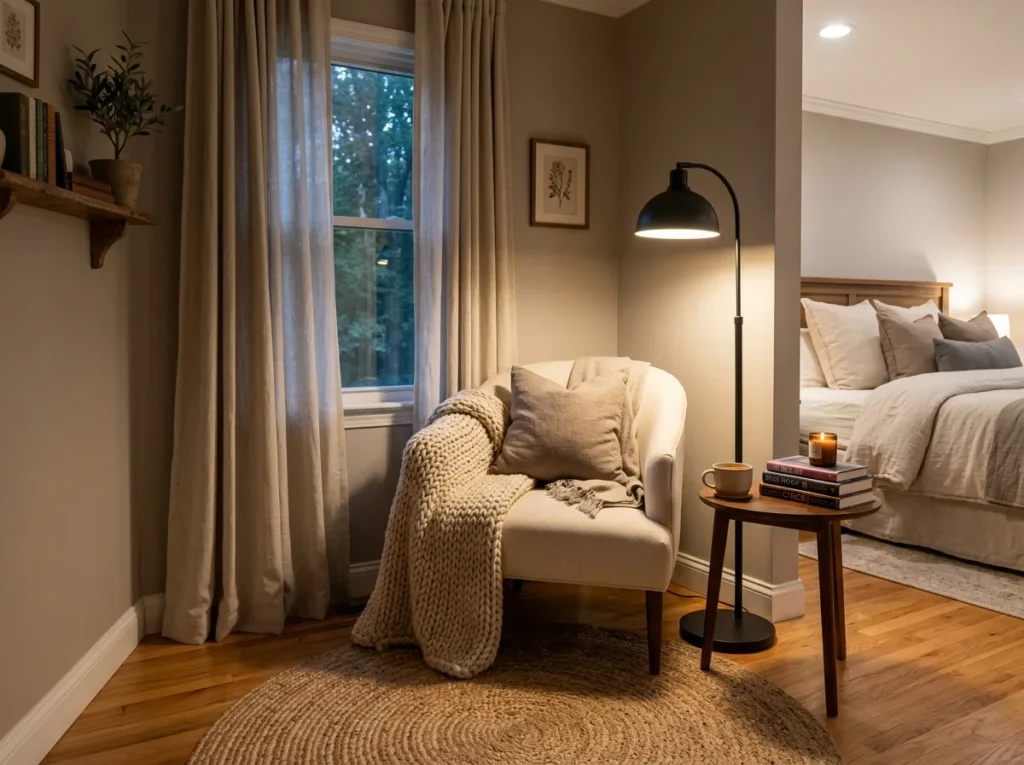
Our primary bedroom has two corners I treated very differently. The first one was the obvious spot for a reading chair and lamp. We put a slim upholstered armchair from Article in there (around $599 on sale, which was the splurge) and a simple black metal floor lamp from Target for $89. No side table. No rug. The chair holds whatever needs to be moved off the bed at night, and the lamp gives me softer reading light than the overhead.
If a $599 chair isn’t in the cards, IKEA’s POÄNG runs around $129 and holds up surprisingly well. I had one in our first apartment that survived a decade of moves.
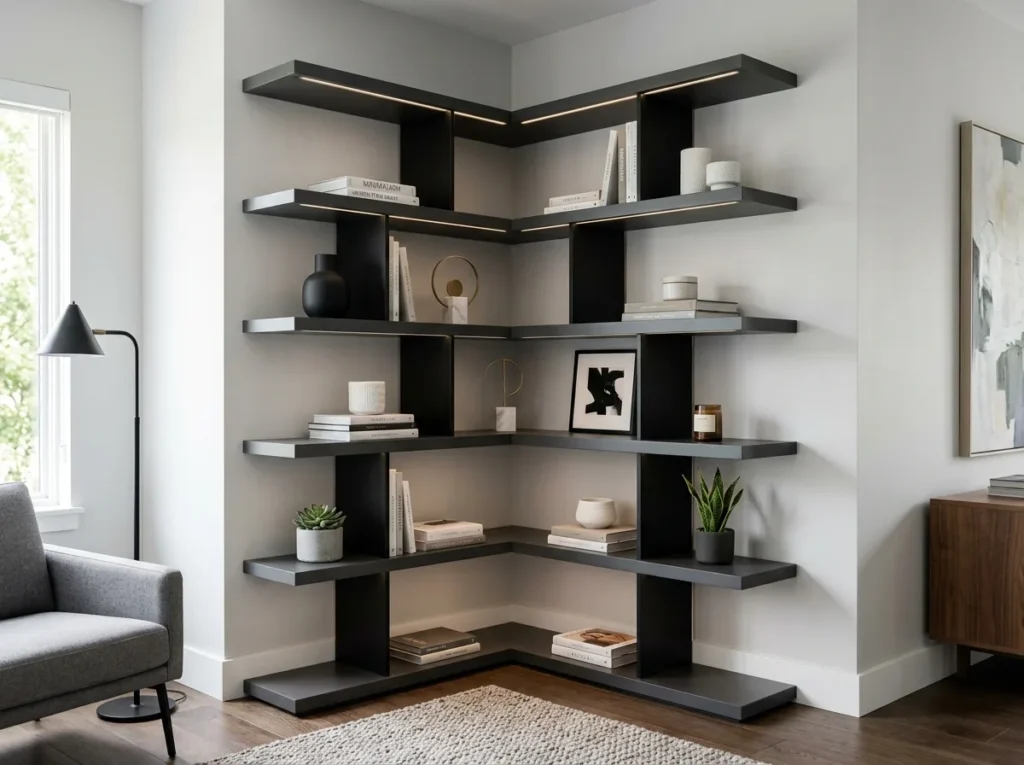
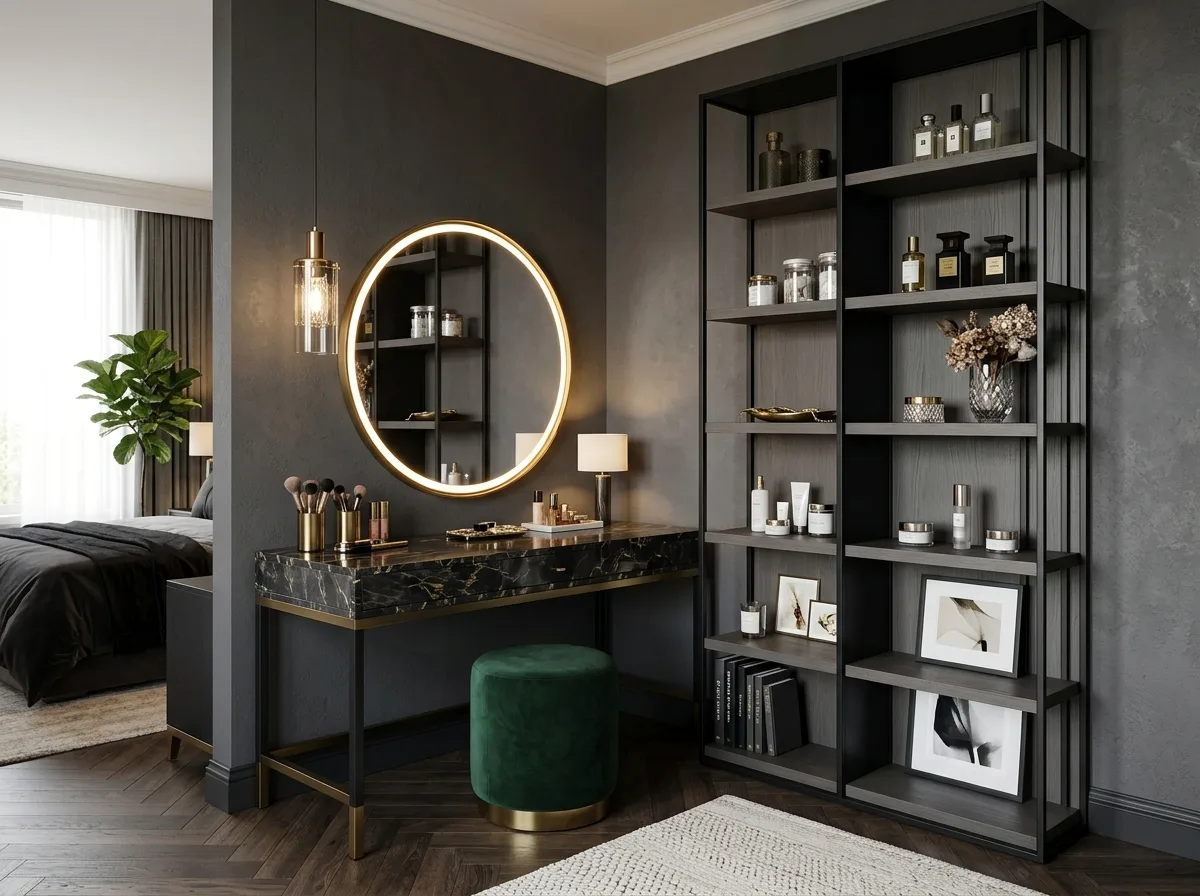
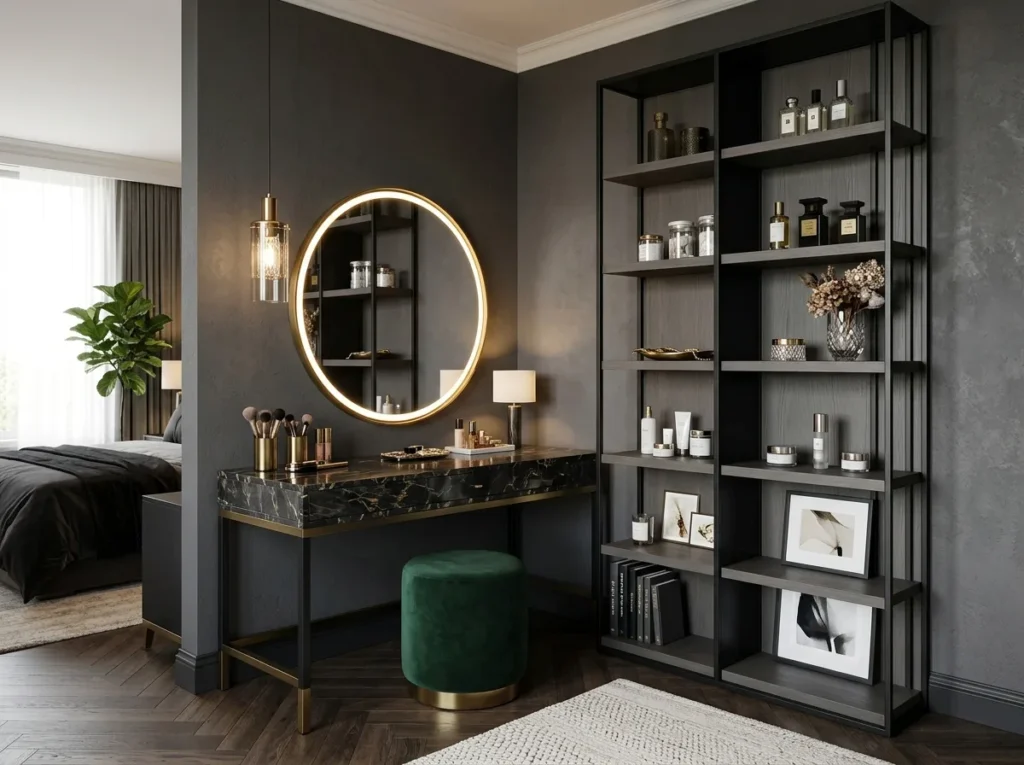
The other bedroom corner became a vanity by accident. I dragged an old dresser in from the guest room, added a $34 round mirror from Target above it, and used a small lamp I already had. A tray on top holds the things I actually use every day. Everything else gets put away in the drawers.
For bedroom corners with no real square footage to work with, a tall slim mirror leaned against the wall does more than you’d expect. It bounces light around and opens the corner visually without taking up any floor space worth mentioning.
Small Corner Ideas for Compact Homes
Apartments and small homes have to work harder per square foot. The trick is choosing furniture that does two jobs and going vertical instead of wide.
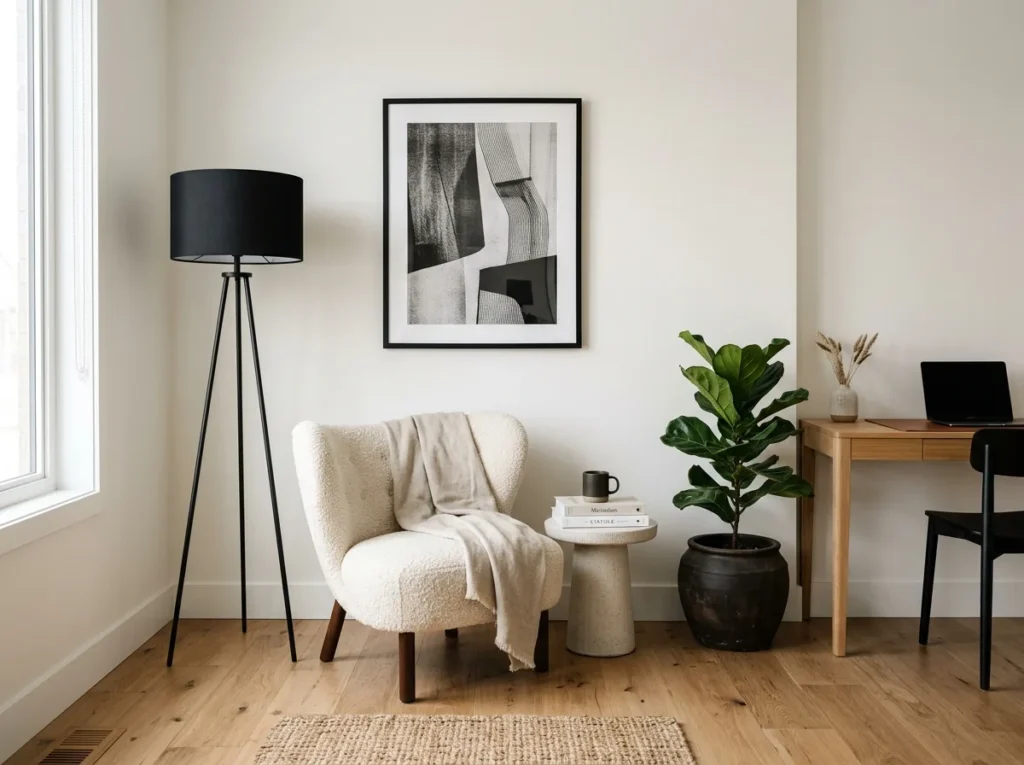
Floating shelves are the obvious starting point. Stack three of them in a corner, stagger the placement, and you’ve added storage and display space without losing floor space. Mounting them took longer than it should have for me. I drilled the first shelf two inches off center on a Saturday afternoon, made a second Home Depot run for wall anchors that actually fit our drywall, and spent another hour patching the original holes with spackle. The second attempt went fine.
Multi functional furniture pays off in small corners too. A storage ottoman gives you a footrest, extra seating when guests come over, and a place to hide blankets all in one piece. World Market has versions in the $80 to $120 range that look more expensive than they cost.
Lighter colors also help small corners feel bigger. A pale rug, soft cream walls, and one mid tone wood piece will always make a corner feel airier than dark woods and heavy fabrics in the same square footage.
Modern and Minimalist Corner Styling
If your style leans modern, the rules shift slightly. Less is more here, and the pieces you do choose carry more weight. A single sculptural floor lamp in a bare corner can be the whole look. Pair it with a low profile chair in a neutral fabric and one piece of contemporary art on the wall above, and the corner reads as deliberate rather than empty.
Neutral color styling does the heavy lifting in modern corners. Stick to a palette of three or four tones, usually whites, warm grays, soft blacks, and one wood tone. Avoid mixing too many metal finishes. If your lamp base is brass, keep the rest of the corner brass or matte black instead of throwing chrome into the mix.
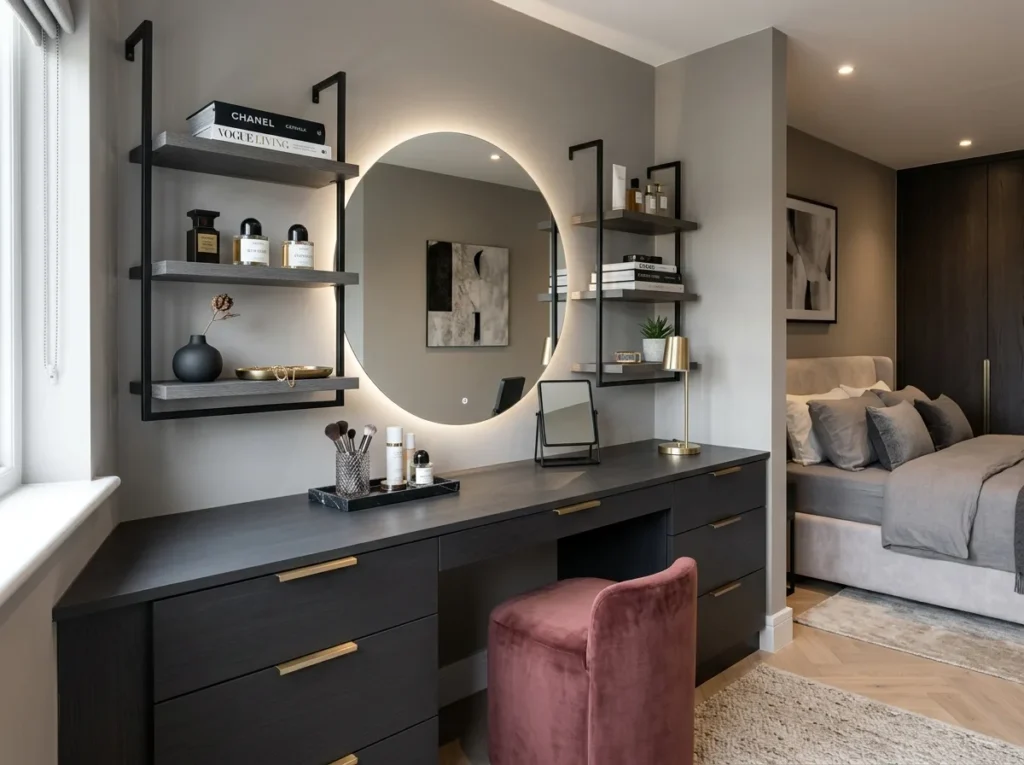
A clean lined modern corner I’m proud of in our office has just three things in it: a tall black tripod lamp from Amazon for around $95, a small bouclé accent chair I found on sale at Target for $179, and a single framed black and white photo above the chair. The negative space around those pieces is what makes the corner feel polished instead of bare.
Making a Corner Feel Warm and Inviting
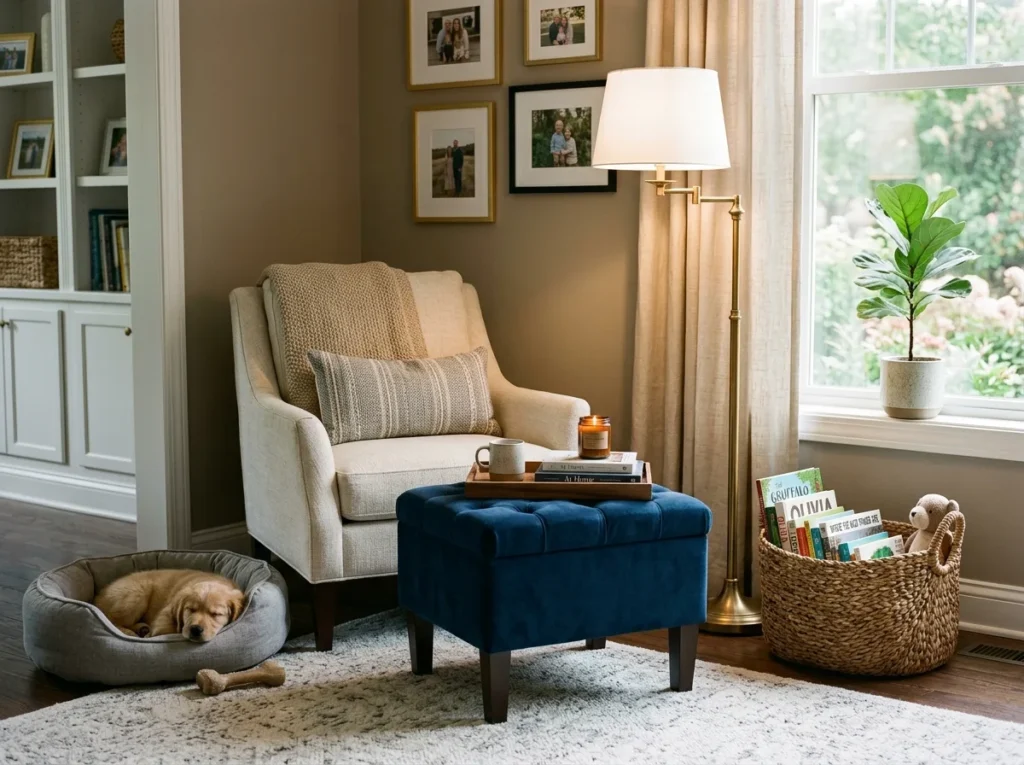
Some corners want the opposite of modern minimalism. They want soft, warm, and a little layered. The bedroom reading chair corner I mentioned earlier is one of those spots, and the layering is what makes it work.
A small jute rug under the chair gives the area boundaries. A chunkier knit throw lives over the arm from October through April, and a lighter cotton one fills its spot the rest of the year. A small ceramic lamp on a side table gives off warmer light than an overhead fixture ever would. Bulbs around 2700K are the trick. Anything brighter and the corner starts to feel like a dentist’s office.
Layered textures matter more than people give them credit for. A wool throw on top of a linen pillow on top of an upholstered chair, with a jute rug below, gives the eye four different textures in a tiny footprint. That layering is what makes a corner feel inviting instead of staged.
A Simple Step by Step Guide to Decorating Any Corner
If you’re staring at an empty corner and not sure where to start, here’s the order I follow now.
First, decide what the corner is for. Reading, plants, storage, lighting, or just visual filler. The purpose changes everything that comes after.
Second, measure the actual space, including how far the corner sits from doorways, vents, and windows. I’ve returned three pieces of furniture because I didn’t measure properly the first time.
Third, choose one functional piece as the anchor. A chair, a small desk, a shelving unit, or a plant stand. Buy this piece before adding anything else.
Fourth, add lighting. Almost every corner benefits from a dedicated light source separate from the overhead.
Fifth, layer in accessories slowly. One pillow, one throw, one piece of art at a time. Live with each addition for a few days before adding the next.
Sixth, bring in something living. A real plant, even a small one, makes a corner feel lived in rather than staged.
Seventh, step back across the room and squint at the whole setup. If anything feels off, take one thing away rather than adding more.
Mistakes I Made So You Don’t Have To
The biggest one was buying too much too fast. Most of what I returned in our first two years was bought on a weekend when an empty corner was bothering me and I wanted it solved immediately. Patience would have saved me $500 easily.
I also ignored light for a long time. A corner in north facing light needs different colors and finishes than a corner that gets afternoon sun. I painted a small accent wall the wrong shade of warm white because I didn’t test it in the actual room, and we lived with it for eight months before I repainted.
Oversized furniture in small corners is another classic. That HomeGoods wingback was beautiful and completely wrong for the space.
One safety note worth mentioning: anchor tall corner furniture to the wall, especially if you have kids or pets. We learned this when Biscuit knocked over a bookcase chasing a squirrel through the window. Nothing got hurt this time, but it could have been bad. Anti tip kits run about $10 at Home Depot and take ten minutes to install. For anything involving electrical work near corner outlets or wall sconces, call a licensed electrician rather than guessing your way through it.
Tips That Make Corner Decor Look More Polished
A few small choices separate a corner that looks thrown together from one that looks intentional.
Stick to matching tones across the pieces in a corner. If your throw blanket leans warm, your lamp base and rug should lean warm too.
Layer your lighting. One floor lamp plus one accent lamp at a different height adds depth that a single bulb can’t match.
Keep accessories minimal. The rule I follow now is one large item, one medium item, and one or two small accents per corner.
Add a decorative mirror to corners that feel dim. A 30 inch round mirror with a thin black frame from Target (around $78) above a small console can change a dark corner more than any lamp.
Bring in greenery, real or faux. Real plants do more work, but quality faux plants from Pottery Barn or Crate and Barrel look convincing if you’re not great with houseplants.
Pay attention to texture and balance. Mixing wood, ceramic, fabric, and metal in small doses in a single corner gives the eye somewhere to land.
Where to Start With Your Own Empty Corners
These corner decoration ideas didn’t come together overnight. Most of them took a few tries, a few returns, and at least one trip back to the store for the right size anchor or bulb. But our house feels completely different now than it did three years ago, and almost all of that change happened in spaces I used to walk past without seeing. Pick the corner that bothers you most, give yourself permission to mess it up a couple of times, and resist the urge to fill it all in one weekend. I’d love to hear which corner you tackle first, drop a comment and tell me what you’re working with at home.
