
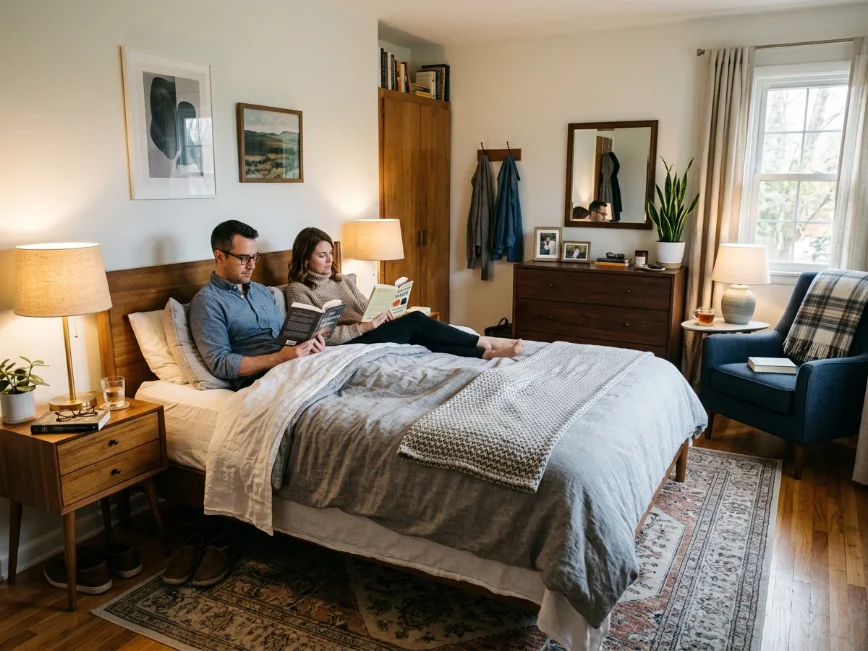
A couple bedroom should feel like the one space in the house where both people can actually relax. But in real life, shared bedrooms often become a mix of mismatched furniture, laundry piles, tangled chargers, and decor choices that never fully come together. One person wants a calm minimal look, the other wants comfort and extra storage, and somehow the room has to balance both styles without feeling crowded or unfinished.\n\nWe ran into this exact problem after moving into our house a few years ago. Our bedroom technically had everything we needed a bed, nightstands, lamps, dressers but the space still felt stressful instead of restful. The lighting felt harsh, clutter kept building up on every surface, and nothing about the room felt cohesive or relaxing after a long day.\n\nWhat finally changed the room was focusing less on trends and more on how we actually used the space every day. Better lighting, calmer colors, practical storage, softer bedding, and small layout changes made a bigger difference than any expensive furniture upgrade ever could.\n\nIn this article, I am sharing couple bedroom ideas that feel cozy, stylish, and realistic for everyday life. These ideas focus on creating a bedroom that feels warm, functional, comfortable, and personal without requiring a luxury renovation or a perfectly staged designer space.
These couple bedroom ideas focus on creating a space that feels warm, practical, stylish, and comfortable for real everyday life. None of these ideas require a luxury renovation or a giant bedroom. Most come down to thoughtful choices that make the room work better for both people sharing it.
1. Choose Colors That Feel Calm for Both People
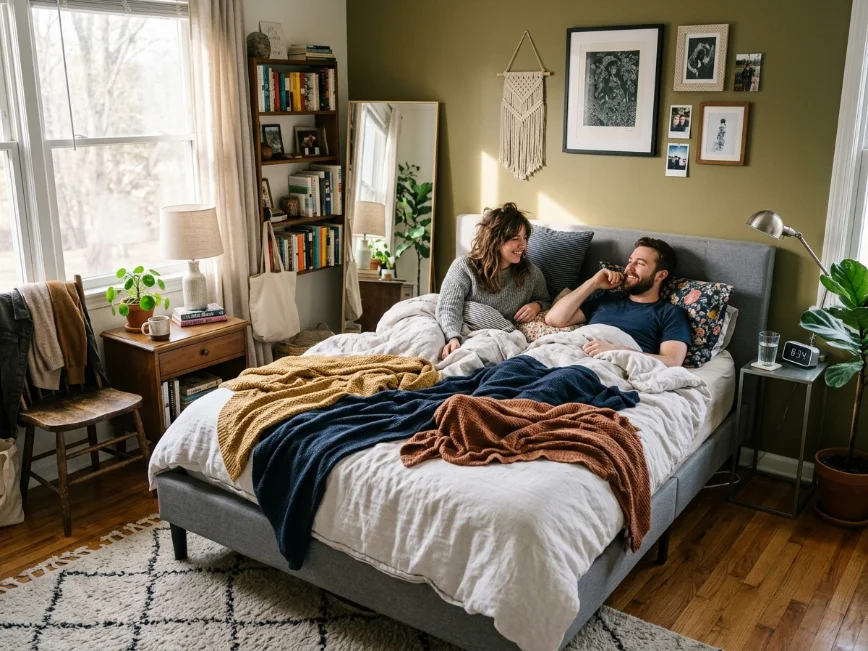
One of the easiest ways to make a shared bedroom feel cohesive is by choosing a calm color palette that both people genuinely like.
That does not mean the room has to feel boring or completely neutral. It simply helps when the larger surfaces walls, bedding, rugs, and curtains create a relaxing foundation instead of competing for attention.
Soft warm whites, earthy beige tones, muted greens, dusty blues, charcoal accents, and warm gray shades tend to work especially well in couple bedrooms because they feel cozy without becoming overwhelming.
When we repainted our own room, we originally tested a much darker color because it looked dramatic online. In reality, the room felt smaller and heavier almost immediately. Switching to a warmer neutral instantly made the bedroom feel brighter during the day and calmer at night.
A softer color palette also makes it easier to combine different furniture styles or decor preferences without the room feeling chaotic.
The goal is not designing a showroom-perfect bedroom. The goal is creating a space where both people can actually relax.
2. Upgrade the Bedding Before Buying More Decor
A surprising number of bedrooms try to compensate for uncomfortable bedding with extra decorations.
In reality, the bed itself affects the entire feeling of the room more than almost anything else.
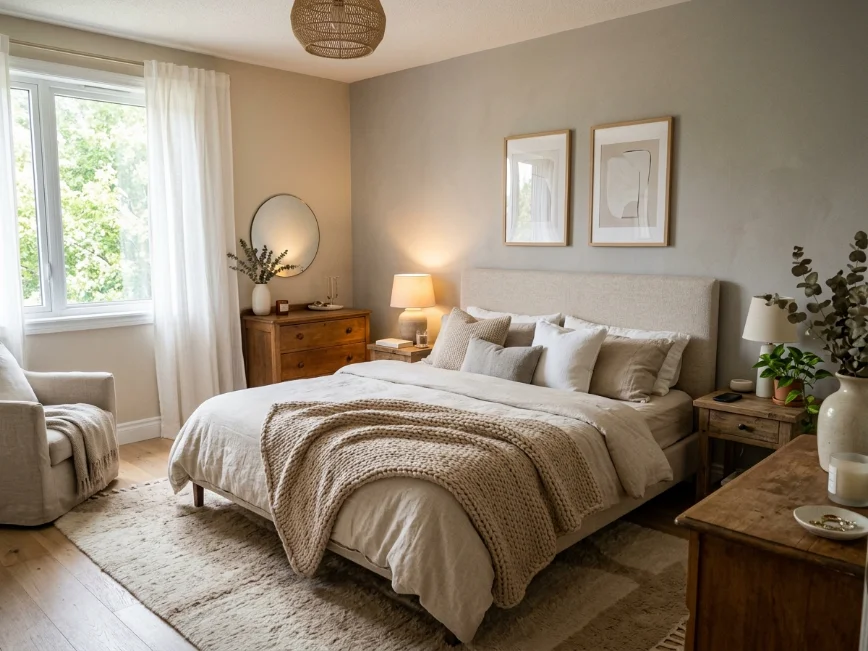
Layered bedding instantly makes a bedroom feel softer, warmer, and more finished. A comfortable duvet, breathable sheets, textured blankets, and a few supportive pillows create a cozy atmosphere without needing excessive styling.
One thing we learned quickly is that practical comfort matters more than decorative perfection. Too many throw pillows look nice for photos but usually end up piled onto a chair every night anyway.
Instead of overcrowding the bed, focus on quality textures and materials. Linen bedding, soft cotton sheets, chunky knit throws, and upholstered headboards all make the room feel more inviting without requiring dramatic changes.
Neutral bedding also gives flexibility throughout the year. Small seasonal updates through blankets or accent pillows can refresh the room without replacing everything.
Because the bed naturally becomes the center of attention in the room, improving it creates the biggest visual and functional difference.
3. Use Lighting That Feels Warm Instead of Harsh
Bedroom lighting changes the entire mood of a space.
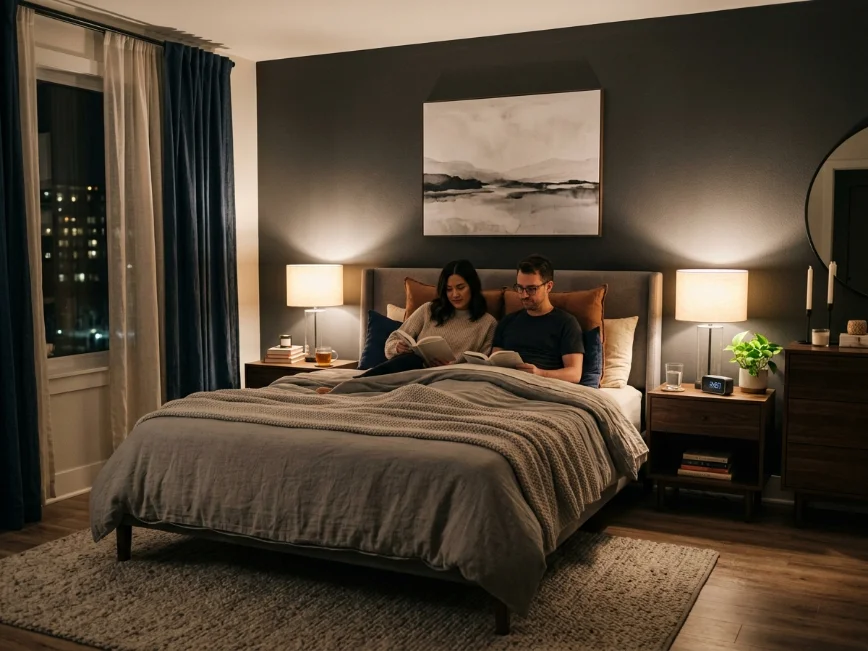
Many bedrooms rely on one bright ceiling light that makes the room feel cold and uncomfortable at night. Softer layered lighting creates a much more relaxing atmosphere.
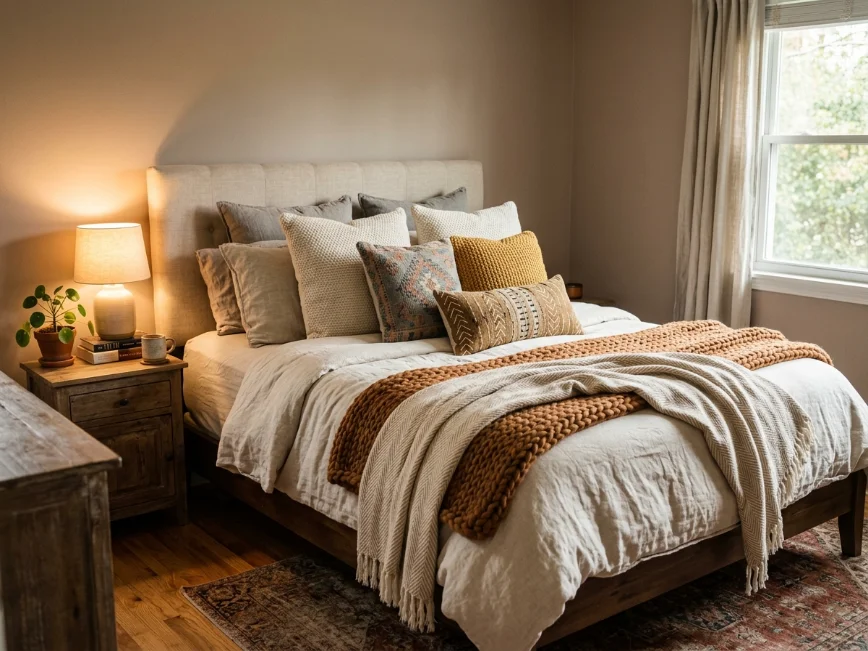
Adding bedside lamps immediately improves both comfort and function. Each person gets individual lighting for reading, working, or relaxing without disturbing the other person.
Warm-toned bulbs also matter more than people realize. Cool white lighting often feels sterile in bedrooms, while warmer bulbs create a softer environment that naturally feels calmer in the evening.
In our room, replacing the overhead bulb and adding two small bedside lamps completely changed the atmosphere. The room instantly felt more relaxing even though almost nothing else changed.
Wall sconces, dimmable lamps, soft LED lighting behind headboards, or small accent lamps on dressers can all help create layered lighting that feels more comfortable than one harsh overhead fixture.
Lighting affects not only how a bedroom looks, but how it feels at the end of a long day.
4. Add Storage That Reduces Visual Clutter
Nothing makes a bedroom feel stressful faster than constant visible clutter.
Shared bedrooms collect double the amount of everyday items clothes, chargers, books, bags, shoes, laundry, water bottles, and random things that somehow migrate onto every surface.
The best couple bedrooms usually include storage solutions that quietly hide everyday mess instead of displaying everything openly.
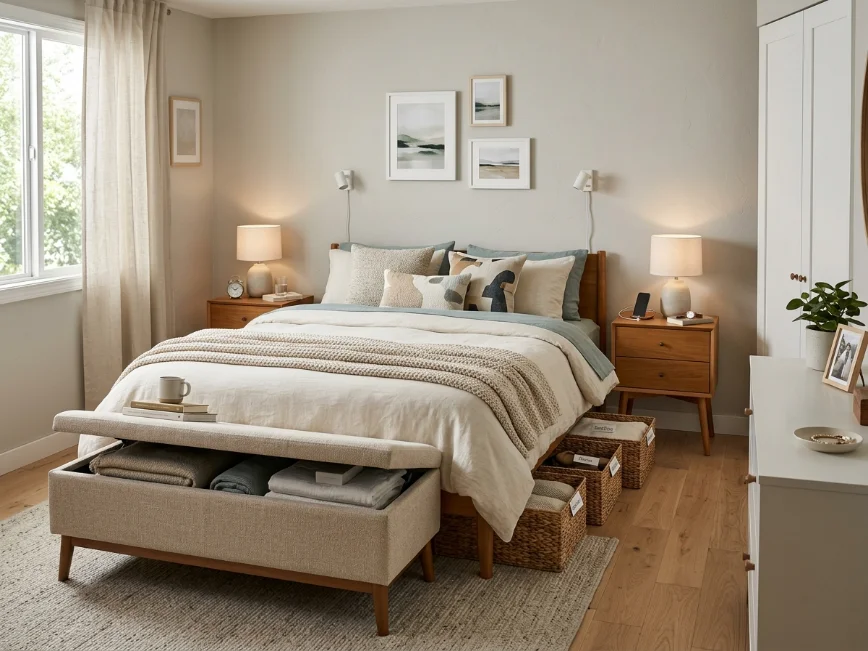
Under-bed storage works especially well for extra bedding, seasonal clothes, or shoes. Storage benches at the foot of the bed provide seating while also hiding clutter. Nightstands with drawers keep chargers and personal items from taking over the room visually.
One of the biggest improvements we made was reducing open storage. Open shelving looked beautiful online, but in real life it quickly turned into a collection of tangled cords, unread books, receipts, and random objects.
Adding more closed storage immediately made the room feel calmer without requiring us to own less stuff.
Even simple habits help. A laundry basket that actually fits the room aesthetically encourages clothes to stay off the floor. Hooks behind doors give hoodies and bags a designated place instead of ending up on chairs.
Good storage does not make a bedroom feel less stylish. It usually makes the stylish parts stand out more clearly.
5. Create Balance Instead of Perfect Matching Furniture
One mistake many couples make is trying to force everything in the bedroom to match perfectly.
Perfect matching furniture sets often end up making bedrooms feel flat or overly staged. Rooms usually feel warmer and more personal when different textures, finishes, and styles balance each other naturally.
Our bedroom improved significantly once we stopped worrying about matching every wood tone exactly. Mixing warmer wood finishes with black metal accents and softer fabrics actually gave the room more depth.
Nightstands also do not need to match perfectly. Similar proportions or colors often create enough balance without making the room feel overly coordinated.
Layering textures helps too. Upholstered headboards, linen curtains, woven baskets, soft rugs, wood furniture, and textured blankets make the room feel more relaxed and lived in.
The goal is creating harmony, not perfection.
Bedrooms tend to feel more inviting when they reflect real personalities instead of looking copied directly from a furniture showroom.
6. Make Space for Both People’s Habits
A bedroom works better when it supports both people’s routines instead of forcing one shared setup for everything.
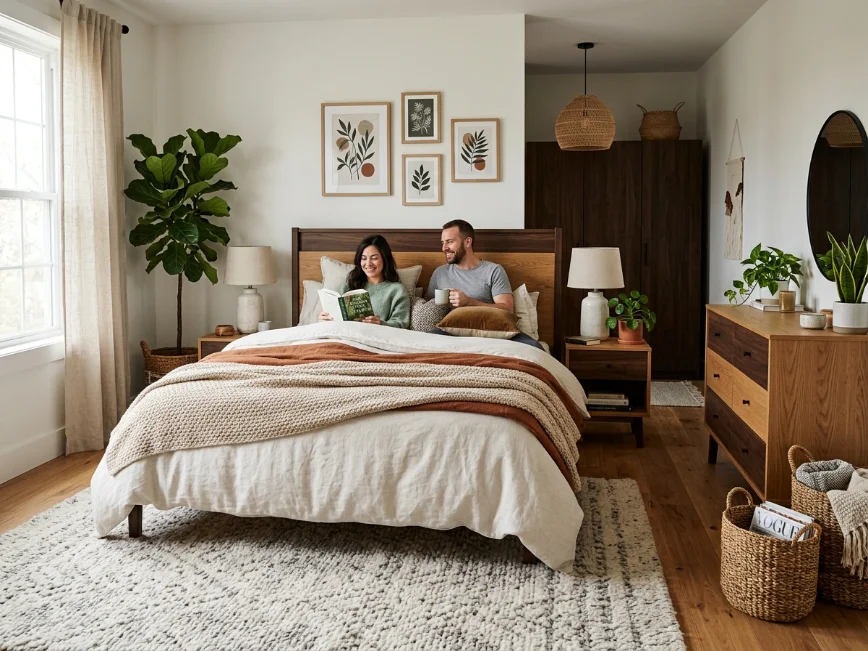
One person may like reading before bed while the other prefers complete darkness. One person may wake up earlier and need better lighting or easier storage access. Small adjustments can make shared bedrooms feel much more functional.
Separate bedside storage helps prevent clutter from spreading across every surface. Individual reading lamps reduce frustration at night. Even something as simple as extra charging outlets on both sides of the bed makes daily routines easier.
In our room, we eventually rearranged furniture specifically around how we actually moved through the space every morning. That small change improved the room far more than buying new decor ever did.
If space allows, adding a small chair, bench, or corner for reading can also help the bedroom feel more comfortable and flexible.
The best shared bedrooms support real routines instead of focusing only on appearance.
7. Keep the Bedroom Feeling Personal, Not Overdecorated
A lot of bedroom inspiration online focuses heavily on styling every corner perfectly. In real homes, too much decor often creates stress instead of comfort.
Bedrooms usually feel best when they include a few meaningful personal details instead of endless decorative objects.
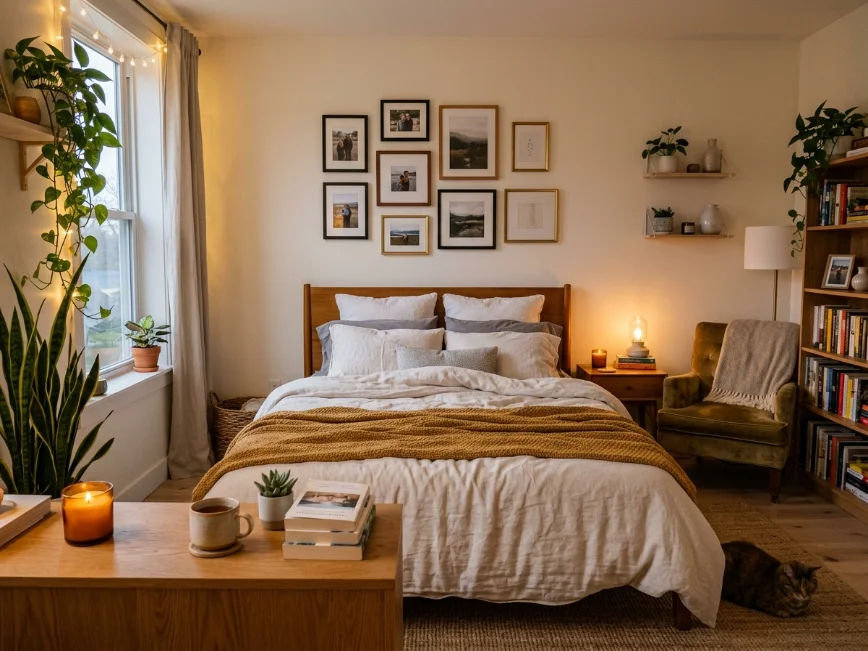
Framed photos, favorite books, travel souvenirs, soft artwork, candles, plants, or sentimental pieces make the room feel connected to the people living there.
At the same time, leaving some visual breathing room matters too. Empty space helps bedrooms feel calmer and more relaxing.
One thing I noticed while redesigning our room is that removing unnecessary decor often improved the space more than adding new things.
A comfortable bedroom does not need dozens of trendy accessories. It simply needs warmth, personality, and enough simplicity to feel restful.
The rooms people enjoy most usually feel collected gradually over time rather than decorated all at once.
Final Thoughts
The best couple bedrooms are not necessarily the most expensive or trendiest ones online. They are the bedrooms that feel comfortable, functional, and calming for the people who use them every day.
Small changes often create the biggest improvements. Softer lighting, better bedding, practical storage, calming colors, and thoughtful layouts can completely change how a bedroom feels without requiring a major renovation.
Most importantly, a shared bedroom should support real life. It should feel relaxing after stressful days, practical during busy mornings, and personal enough to reflect both people living there.
And if you are planning a bedroom refresh soon, save this article for inspiration and focus on creating a room that feels comfortable for everyday living instead of simply trying to copy trends online.
