
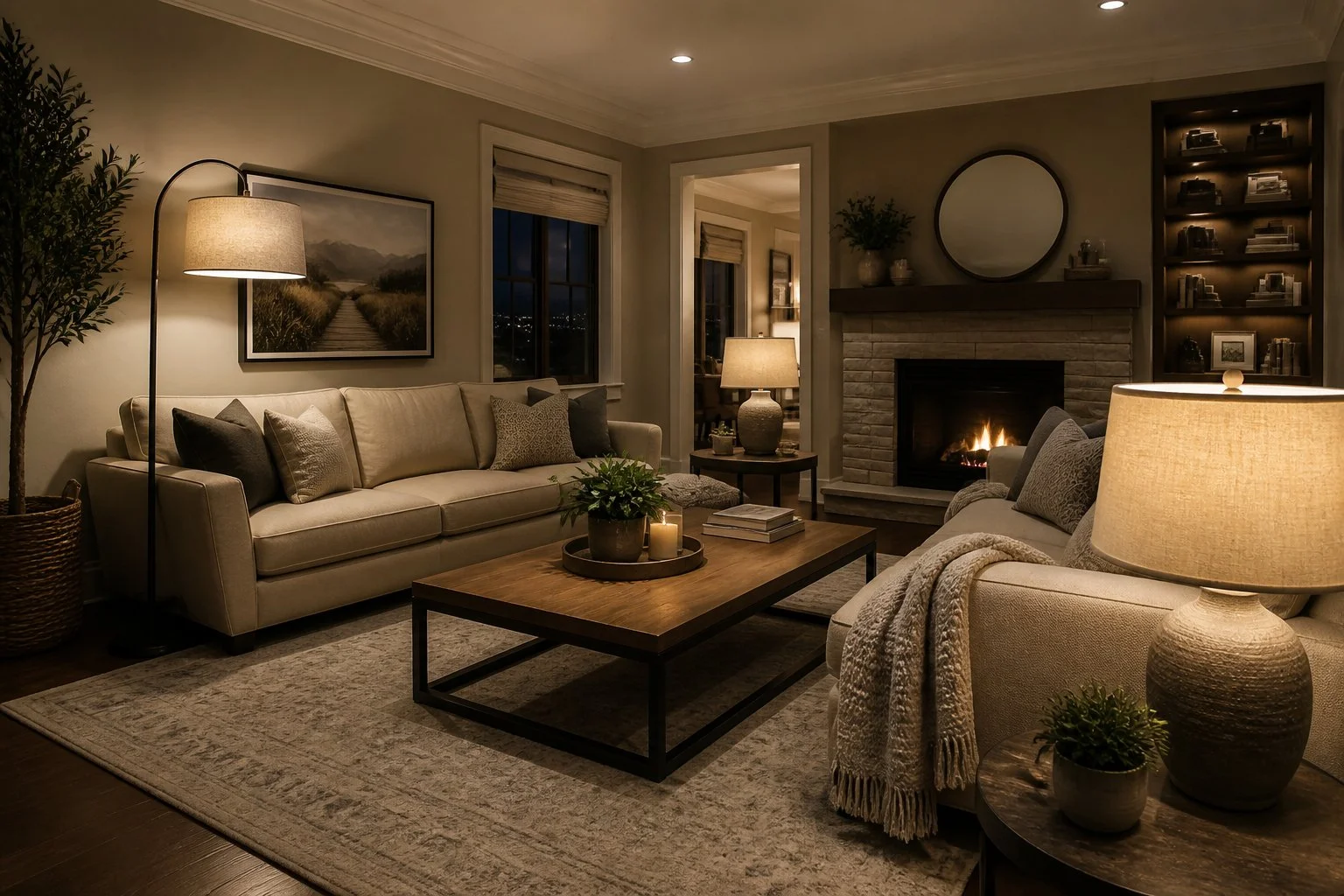
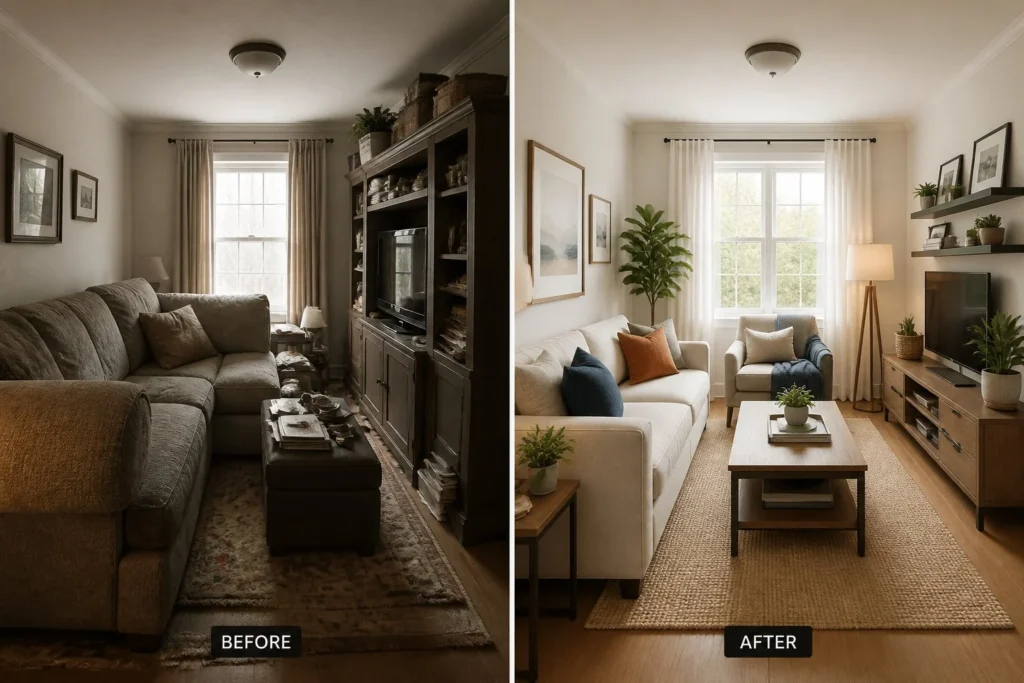
Decorating a small living room can be tricky. Too much furniture and decor can make the space feel crowded, while too little can make it feel cold and uninviting. After two years of experimenting in our 1,400-square-foot home, I found simple ways to create a cozy, functional living room without making it feel cramped. In this guide, I’ll share the tips that worked best for us.
What You’ll Need
- A measuring tape
- A notebook or phone for room measurements
- A properly sized area rug
- Warm lighting with 2700K bulbs
- Throws and pillow covers in two or three textures
- One furniture piece that serves as the focal point
- Approximately $150–400, depending on what you already own
Step 1: Clear the Room and Measure Everything
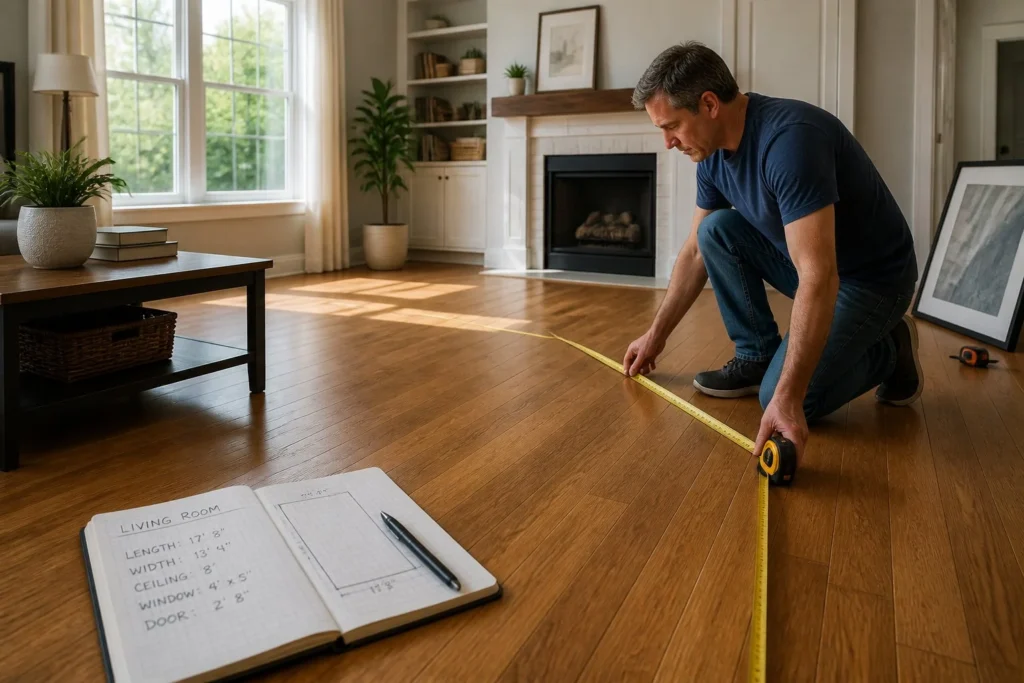
Before buying anything, clear the room as much as possible and measure the entire space. Write down the dimensions and note any doors, windows, or walkways that affect furniture placement.
Our living room measures about 14 by 16 feet. That sounds reasonable until you account for the hallway opening and sliding door that reduce usable space.
This step prevents costly mistakes. Many decorating problems begin when furniture is purchased without checking measurements. We once ordered a sectional that looked perfect online. When it arrived, it blocked part of a doorway and made the room feel crowded. Missing the return window turned it into an expensive lesson.
Create a simple floor plan before shopping. A rough sketch on paper or a notes app works fine. Decide where the sofa will sit before choosing a rug because rug size depends on furniture placement.
The One Furniture Rule
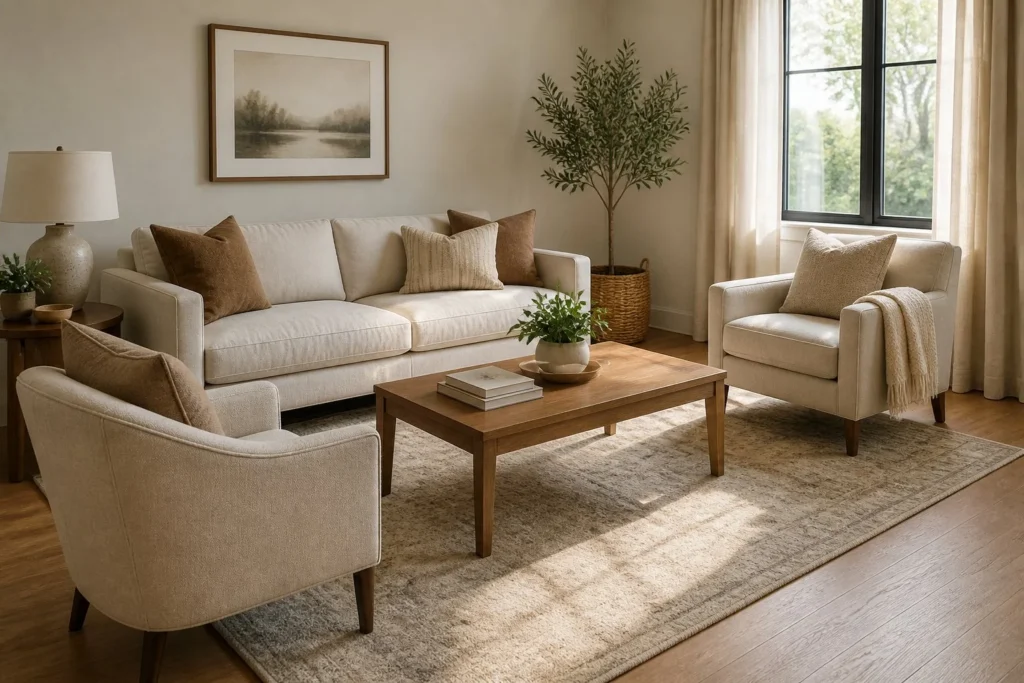
Choose one statement piece and let everything else support it.
For us, that piece is the sofa. Everything around it has a lighter visual footprint. We use compact armchairs, an open-base coffee table, and a slim media console. The room feels open because only one piece serves as the focal point.
Step 2: Choose the Right Rug Size
A rug that is too small can make the entire room feel disconnected.
My first rug measured 5×8 feet and looked too small for the seating area. The second rug was a 6×9, which improved the look but still didn’t anchor the furniture.
For most small living rooms, an 8×10 rug works much better. At minimum, the front legs of the sofa and chairs should sit on the rug. This creates a unified seating area and makes the room feel more intentional.
Our current rug is an 8×10 washable rug in warm ivory and tan tones. It works especially well because we have children and a dog. Easy cleaning reduces stress and helps the room stay presentable.
If you’re decorating on a budget, many home stores offer large rugs at affordable prices. Focus on getting the correct size first. Color and pattern matter less than proper scale.
Step 3: Layer Your Lighting
Lighting has a huge impact on how cozy a room feels.
Many homes rely on a single overhead fixture that produces harsh, flat light. Our living room had a ceiling fan with bright bulbs that made the space feel cold and uninviting.
The solution is to create layers of light. Aim for at least three light sources:
- An overhead light
- A floor lamp
- A table lamp or wall sconce
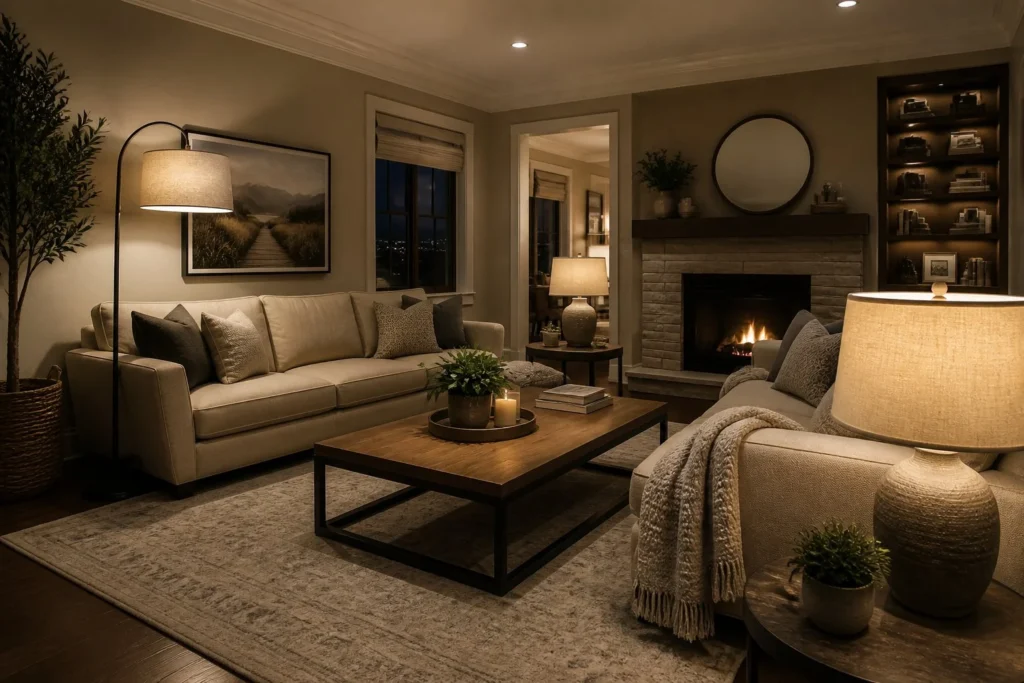
Using light at different heights creates depth and warmth. Instead of feeling brightly lit from one direction, the room feels comfortable and lived in.
We replaced our bulbs with warm 2700K LEDs, added a floor lamp in one corner, and placed two table lamps behind the sofa. In the evening, the combination creates a soft and welcoming atmosphere.
Renters can achieve a similar effect with plug-in sconces or pendant lights that require no electrical work.
Step 4: Add Texture in Layers
Texture makes a small living room feel comfortable and inviting.
A room filled with smooth surfaces often feels flat. At the same time, too many textures can make a small space look busy.
The easiest approach is to choose three textures and repeat them throughout the room:
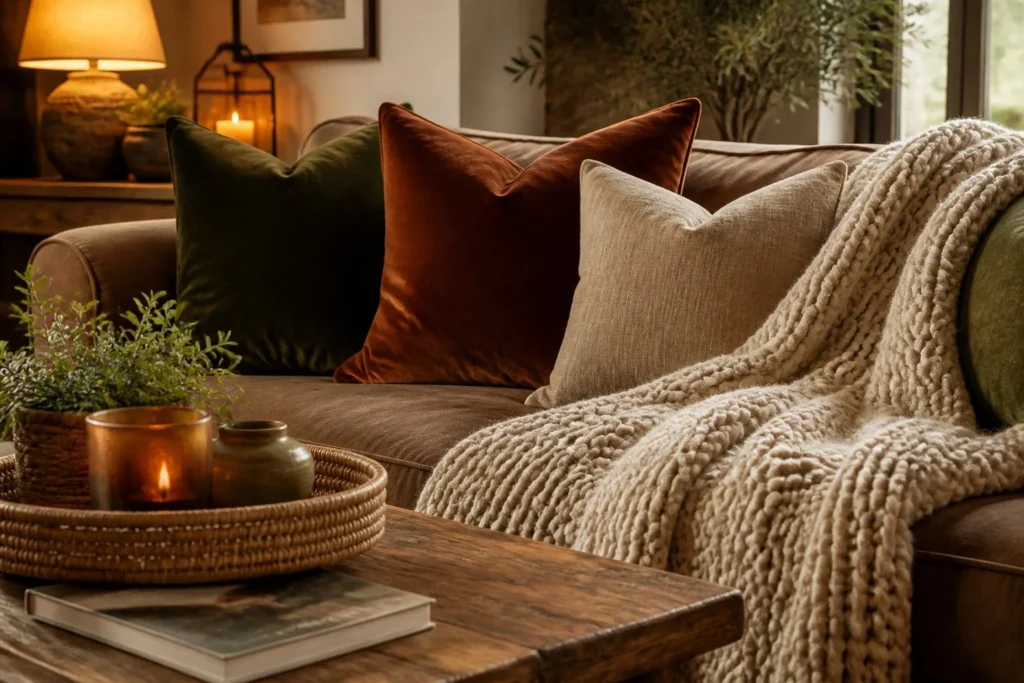
- A woven or knitted texture
- A soft texture such as velvet or faux fur
- A natural texture such as linen, wood, or rattan
Our living room includes a chunky knit throw, linen and velvet pillow covers, and a small rattan tray on the coffee table. These simple additions create warmth without adding clutter.
Keep throw pillows under control. Four pillows on a standard sofa are usually enough for a balanced look.
Step 5: Use Warm Colors Strategically
Strong color contrasts can make a small room feel smaller.
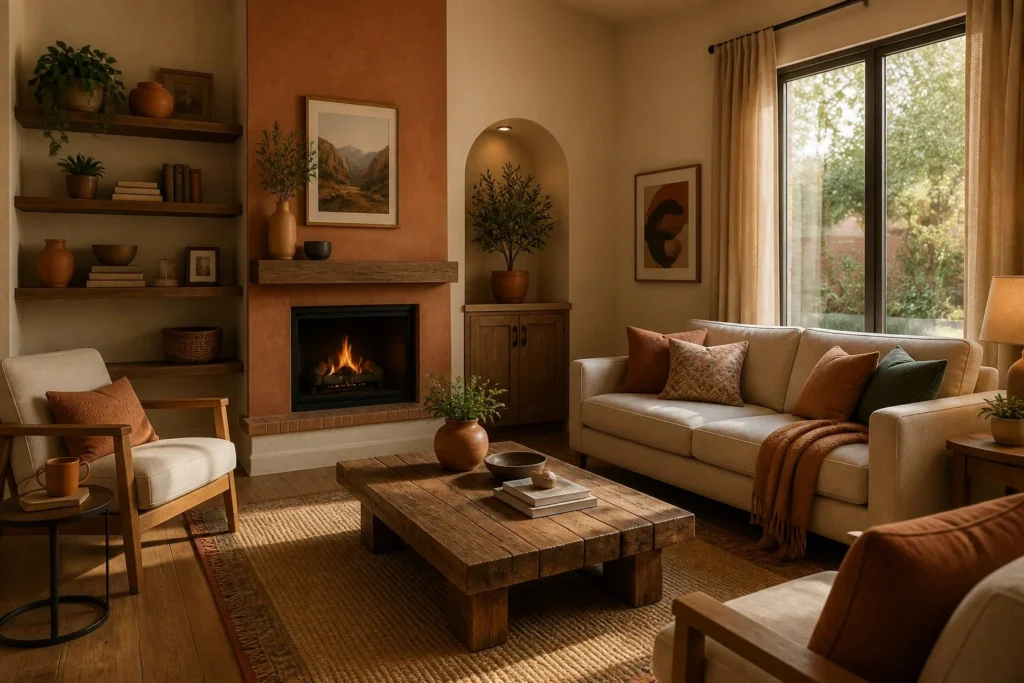
Warm neutrals often work better than cool tones in compact spaces. When we replaced a cool gray wall color with a warmer beige, the room immediately felt brighter and more spacious.
If you already like your wall color, introduce warmth through accessories instead. Rust-colored pillows, terracotta planters, wooden accents, and warm-toned artwork can add personality without overwhelming the room.
Should You Add an Accent Wall?
Accent walls can work in small living rooms, but placement matters.
The best location is usually behind the sofa or around a fireplace. A dark accent wall on the side of a narrow room can make the space feel tighter.
Step 6: Edit Ruthlessly
This is the most important step, and it costs nothing.
After arranging your furniture and decor, take a photo of the room. Viewing the space in a photo often reveals clutter you no longer notice in person.
I discovered this with a gallery wall above our console table. It originally contained eleven frames. In photos, it looked crowded and overwhelming. Removing six frames immediately improved the room.
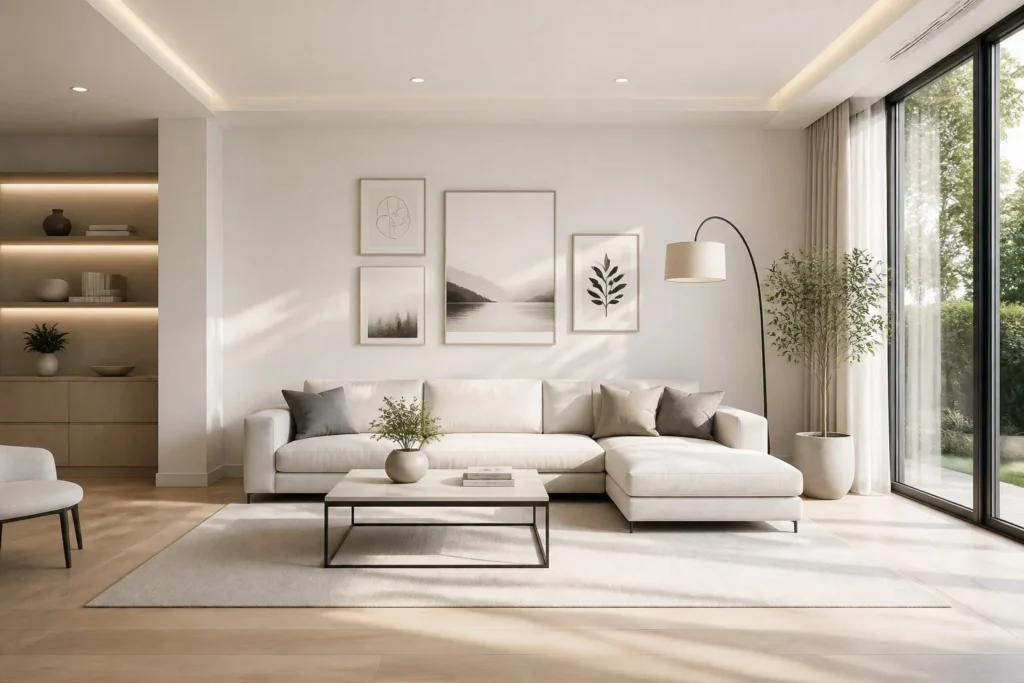
Every decorative item should serve a purpose. It should add warmth, function, or personal meaning. If it only fills empty space, consider removing it.
Small living rooms almost always look better with fewer decorative items.
Common Mistakes to Avoid
Buying Furniture Before Measuring
This mistake can waste money and create layout problems. Always measure the room before purchasing furniture.
Choosing Furniture That’s Too Dark
Dark furniture can absorb light and make a small room feel heavy. We learned this after trying oversized dark velvet chairs. Replacing them with lighter chairs made the room feel much larger.
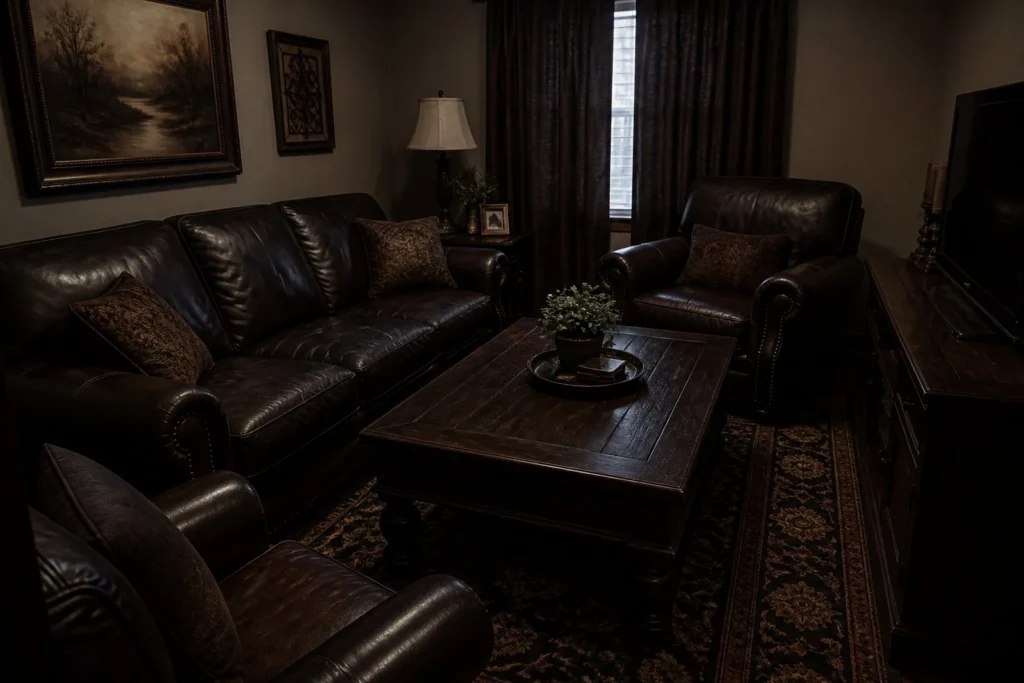
Adding More Decor Instead of Better Lighting
When a room feels flat, many people buy more accessories. In most cases, the problem is lighting, not decor. Improve the lighting first before adding extra decorative items.
Final Thoughts
Creating cozy living room decor in a small space doesn’t require a large budget or a complete renovation. Focus on proper furniture sizing, layered lighting, warm textures, and thoughtful editing.
Small rooms feel their best when every item has a purpose. Measure carefully, choose one focal point, and resist the urge to fill every empty corner. A cozy living room isn’t about having more. It’s about using the space well.
