
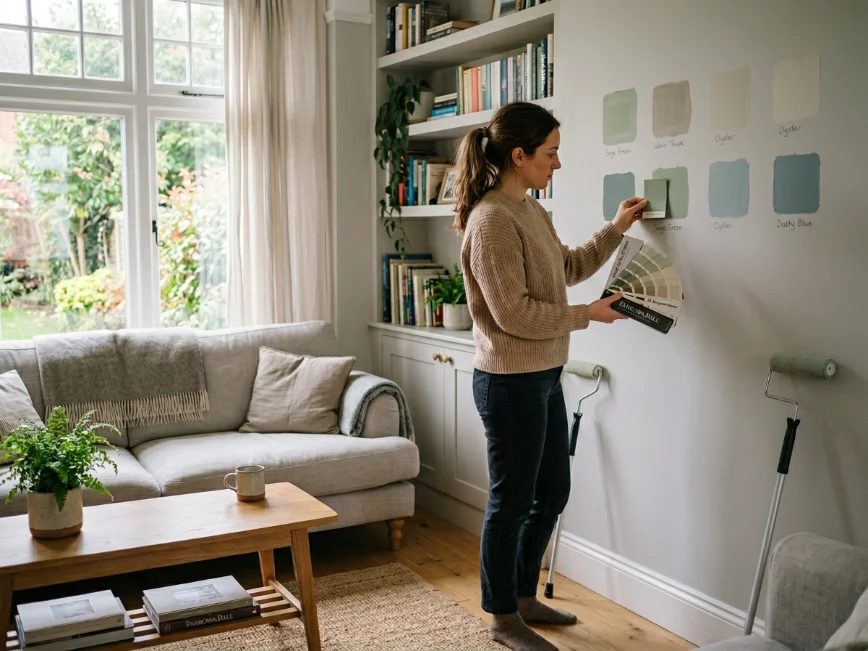
Choosing a color for the living room sounds easy until you actually start looking at paint swatches. Suddenly every shade of white looks slightly different, beige starts having names like “oat milk” and “sand dune,” and somehow one tiny paint sample determines whether the entire room feels cozy or cold.
We went through this exact situation when we updated our living room a couple of years ago. The room itself had good natural light and decent furniture, but the original wall color made everything feel flat and slightly gloomy no matter how much we cleaned or rearranged the space. I spent weeks saving inspiration photos, testing paint samples, and second-guessing every decision because colors look completely different online than they do in a real house.
What I eventually realized is that the best living room colors are not always the boldest or trendiest ones. The colors that work best are usually the ones that make the room feel comfortable at different times of the day and actually fit the way people live in the space.
In this article, I am sharing living room color ideas that feel warm, stylish, and realistic for everyday homes. These ideas focus on creating a space that feels inviting and easy to live with long after the trends change.
1. Warm White Creates a Bright but Comfortable Space
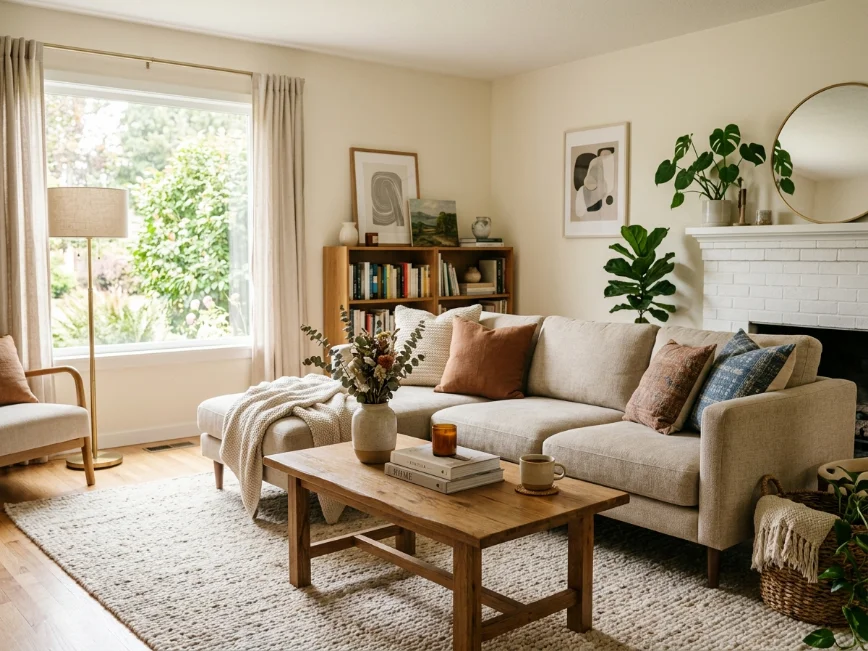
A lot of people hear “white walls” and immediately picture something cold or sterile. But warm whites feel completely different from the bright stark whites often used in modern showrooms.
Warm white walls reflect natural light beautifully while still making the room feel soft and welcoming. They also work with almost every decorating style, whether your furniture leans modern, farmhouse, traditional, or slightly eclectic.
When we repainted our living room, switching from a cool gray-beige color to a warmer white instantly changed how the room felt. The space looked brighter during the day but somehow cozier in the evenings too.
The key is choosing a white with warm undertones instead of icy blue or pure gray undertones. Shades with hints of cream, beige, or soft taupe usually feel more inviting in real homes.
Warm white also gives flexibility. You can easily change pillows, rugs, artwork, or furniture later without needing to repaint the entire room.
2. Soft Greige Adds Warmth Without Feeling Too Beige
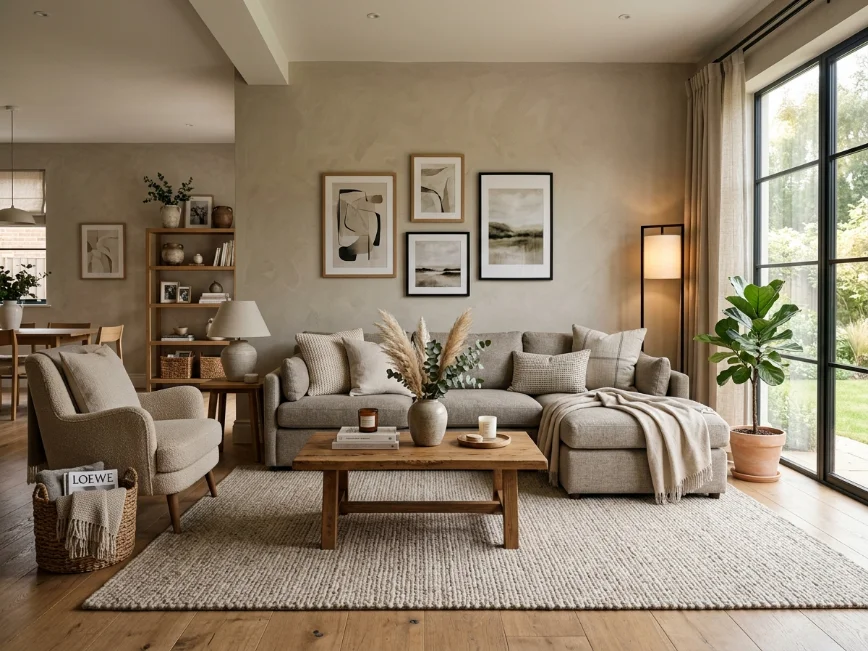
Greige the mix between gray and beige became popular for a reason. When done well, it creates a balanced neutral that feels modern without becoming cold.
The problem is that some greige shades lean too gray and end up making living rooms feel lifeless, especially in spaces with limited natural light.
Softer warm greige tones work much better in everyday homes because they add warmth while still feeling clean and calm. They also hide minor scuffs and dust more effectively than very light paint colors, which matters a lot in busy family spaces.
One of my friends recently painted her living room a warm mushroom-toned greige, and it completely transformed the room. The walls looked cozy in the evening light and still felt airy during the day.
Greige also pairs beautifully with wood furniture, black accents, textured fabrics, and natural decor elements like linen curtains or woven baskets.
If you want a neutral living room that still feels warm and layered, soft greige is one of the safest choices.
3. Sage Green Makes a Living Room Feel Relaxed
Sage green has stayed popular because it creates a calm atmosphere without overpowering the room.
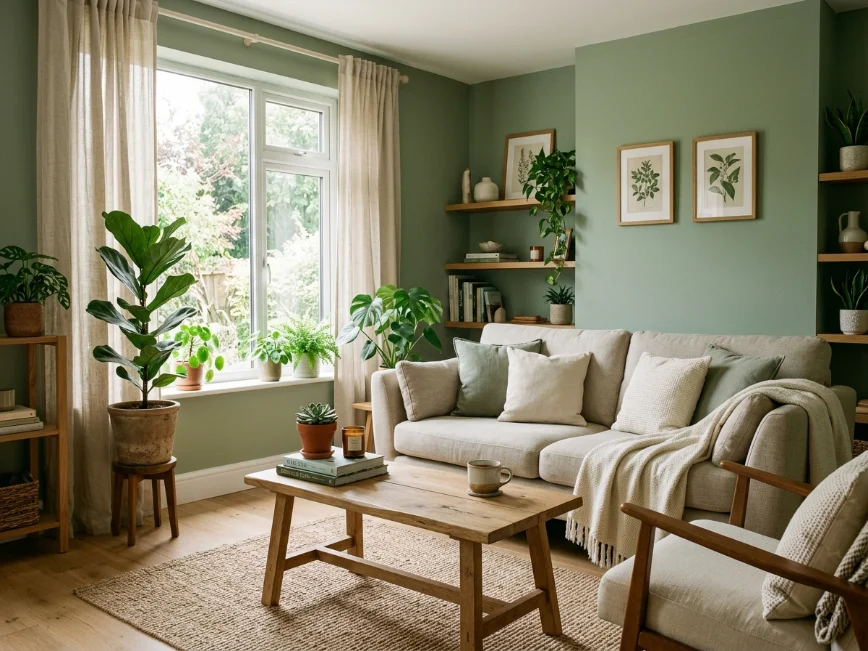
Unlike darker greens that can sometimes feel dramatic or heavy, muted sage tones bring softness and warmth while still adding color. They work especially well in living rooms that receive plenty of natural sunlight.
We tested a muted sage sample in our own living room at one point, and I immediately understood why people love it. The room felt calmer almost instantly. The color connected beautifully with wood furniture, plants, and neutral fabrics without demanding too much attention.
Sage green also works surprisingly well as both a full-room color and an accent wall.
If painting the entire living room green feels intimidating, try using sage on built-in shelves, a fireplace wall, or smaller architectural details first.
Because the color comes from nature-inspired tones, it usually feels timeless rather than overly trendy.
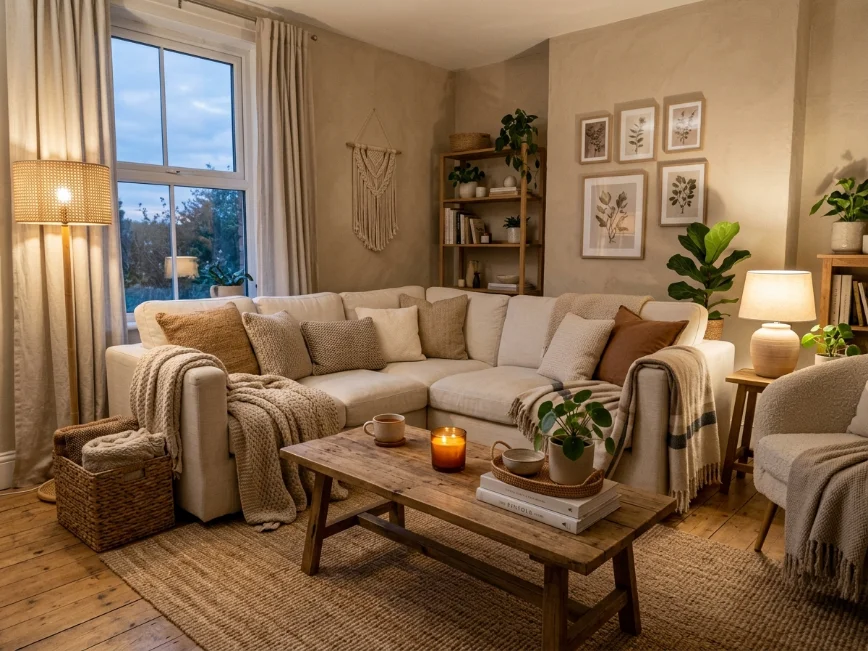
4. Earthy Beige Feels Softer Than Plain Gray
For years, cool gray dominated almost every living room trend online. And while gray can still work in some spaces, many people now realize those cooler shades often make rooms feel colder and less inviting than expected.
Earthy beige tones bring back warmth without making the room feel outdated.
Modern beige is not the yellow-toned beige from older homes. Today’s warmer neutrals lean softer, creamier, and more natural. They create a comfortable backdrop that feels relaxed instead of overly formal.
One reason earthy beige works so well is because it complements so many textures naturally. Linen sofas, wooden coffee tables, chunky knit blankets, woven lighting, and soft rugs all look richer against warm beige walls.
The color also changes beautifully throughout the day depending on the lighting. Morning sunlight often makes beige feel bright and creamy, while evening lamps create a much cozier atmosphere.
If your living room currently feels cold or flat, switching to a warmer beige can completely soften the entire space.
5. Dusty Blue Adds Color Without Overwhelming the Room
Blue living rooms can either feel timeless or extremely overpowering depending on the shade.
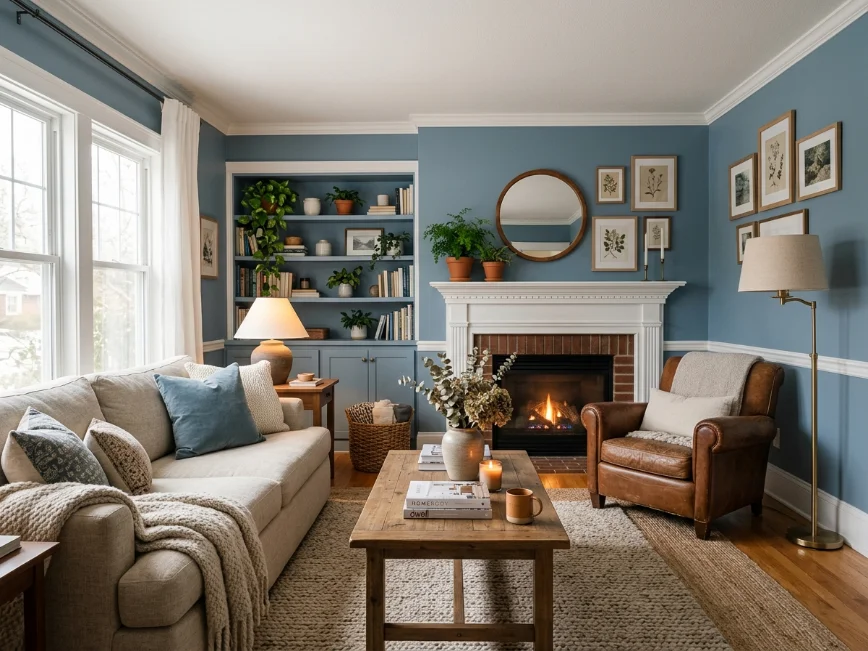
Bright bold blues often dominate the room too much, especially in smaller spaces. Dusty muted blues work much better because they feel softer and more balanced.
A dusty blue-gray shade creates color while still functioning almost like a neutral. It pairs beautifully with white trim, warm wood tones, brass accents, and cozy fabrics.
I helped a family member repaint a small apartment living room in a muted blue tone last year, and the color completely changed how spacious the room felt. Instead of feeling dark, the room felt calm and layered.
Blue also tends to create a naturally relaxing atmosphere, which works well in spaces meant for watching movies, reading, or spending time with family.
If you want a little more personality than beige or white but still want something easy to live with long term, dusty blue is a strong option.
6. Deep Charcoal Works Best as an Accent
Dark paint colors can look incredibly dramatic online, but covering an entire living room in deep charcoal or black often feels overwhelming in real life unless the room gets exceptional natural light.
That does not mean you need to avoid dark colors completely.
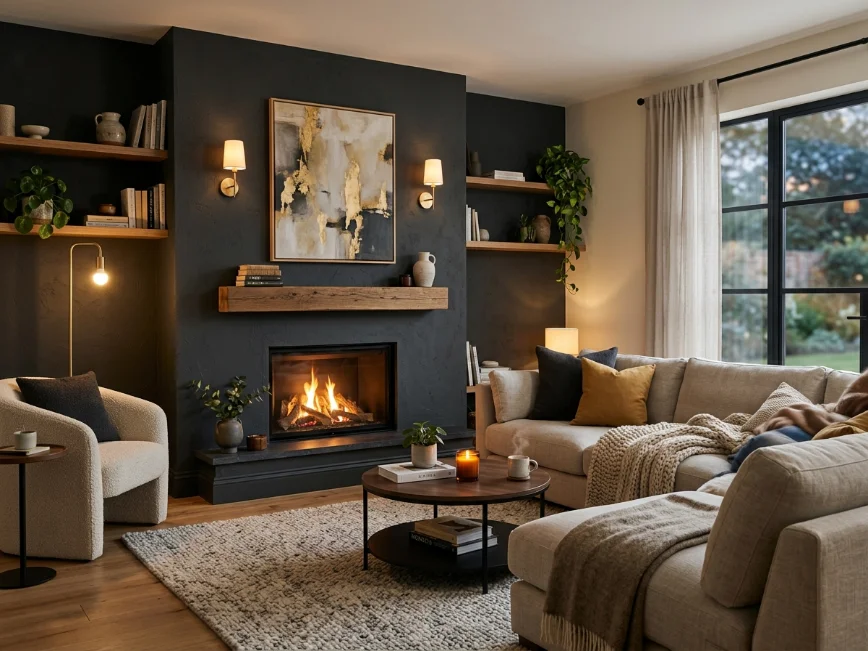
Using charcoal as an accent color often creates a much more balanced result. Fireplace walls, built-in shelving, entertainment centers, or one feature wall can handle darker tones beautifully without making the room feel closed in.
A dark charcoal accent wall also helps lighter furniture and decor stand out more clearly.
One thing I noticed while testing darker paint samples is that lighting changes everything. A charcoal wall that looks cozy during the evening can sometimes feel almost black during cloudy afternoons. Testing samples at different times of day matters more with dark colors than almost any other shade.
When paired with warm lighting, wood textures, and softer fabrics, charcoal accents can make a living room feel sophisticated and cozy at the same time.
7. Layer Colors Instead of Depending on One Shade
One of the biggest mistakes people make when choosing living room colors is expecting the paint alone to carry the entire room.
In reality, the most inviting living rooms usually layer multiple tones together.
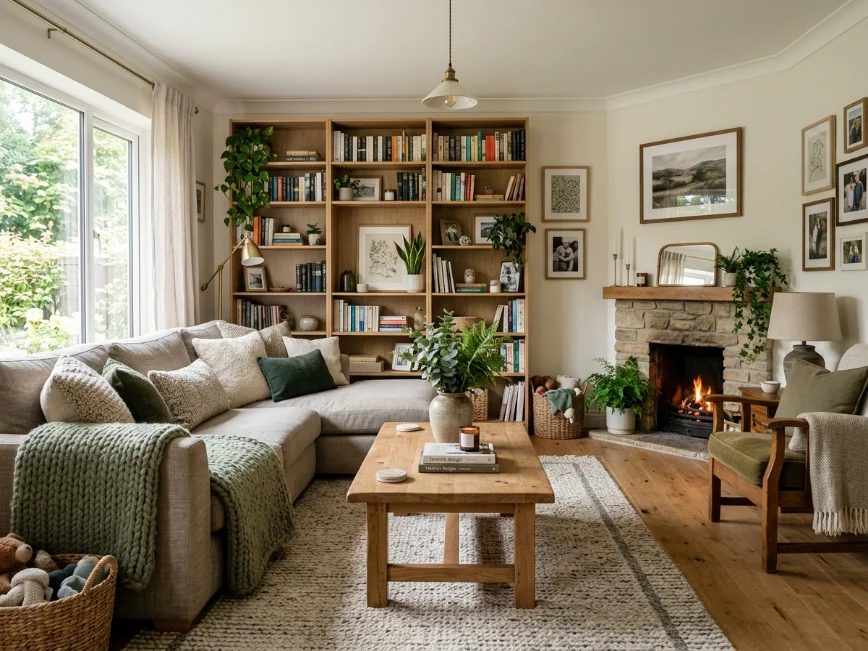
The wall color creates the foundation, but the warmth and personality come from combining it with rugs, curtains, pillows, furniture, artwork, wood tones, and lighting.
Our own living room finally started feeling finished when we stopped obsessing over the “perfect” wall color and focused more on layering textures and complementary shades throughout the space.
Warm whites paired with tan leather, soft green accents, natural wood, black metal details, and cream fabrics created far more depth than the paint color alone ever could.
Living rooms feel more natural when the colors work together gradually instead of competing for attention.
That layered approach also makes decorating easier over time because you can update smaller pieces seasonally without redesigning the whole room.
Final Thoughts
The best living room colors are not necessarily the trendiest ones online. They are the colors that make the space feel warm, comfortable, and easy to live in every day.
Before choosing a paint color, pay attention to how much natural light your room gets, how the room feels during different times of day, and what kind of atmosphere you actually want to create. A color that looks beautiful in a showroom or social media photo may feel completely different in a real home.
Most importantly, remember that paint is only one part of the room. Comfortable lighting, layered textures, personal decor, and functional furniture often matter just as much when creating a living room that truly feels inviting.
And if you are planning a living room refresh soon, save this article for inspiration and start with colors that make your home feel calmer and more welcoming instead of simply following the latest trend.
