
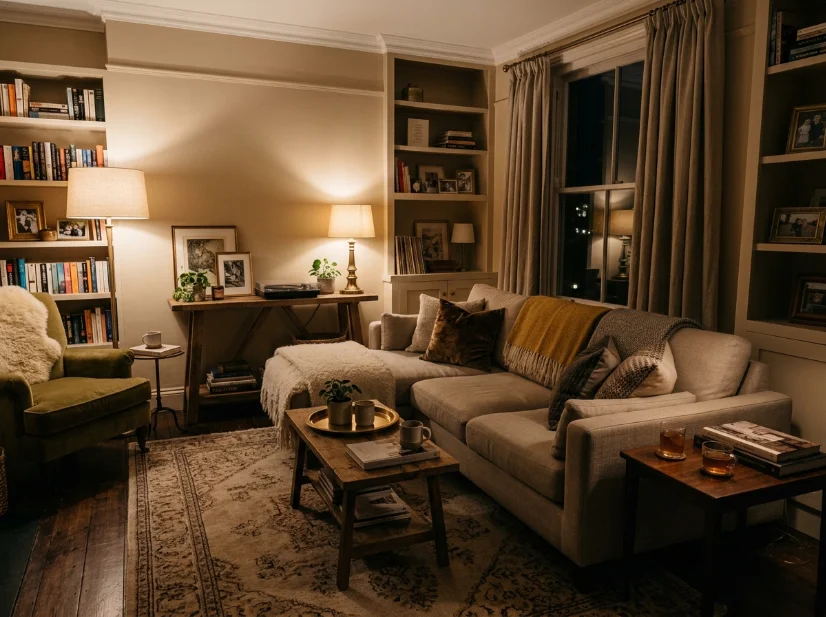
I spent years thinking a luxury-looking home required expensive furniture, custom finishes, and a much bigger budget than ours. It turns out, the biggest difference came from smaller choices that made our rooms feel intentional rather than overly decorated. In this post, I’m sharing the seven changes that actually worked for us from mixing furniture and improving lighting to repeating finishes, creating breathing room, and choosing where to spend a little more. If you want a polished, comfortable home without making everything feel precious or expensive, these are the ideas I’d start with.
1. I Stopped Buying Matching Sets
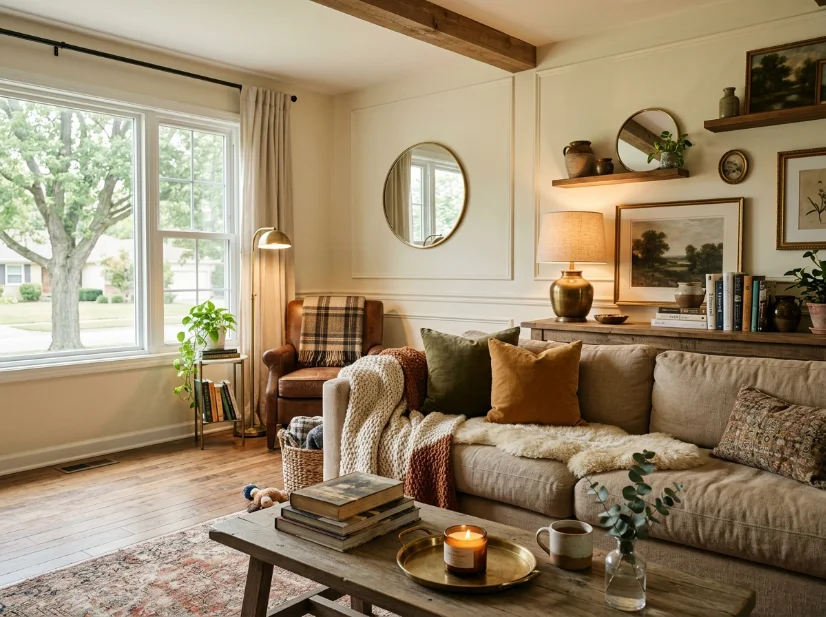
The fastest way to make a room look like a hotel lobby, and not in a good way, is to buy the whole living room set from one store in one trip. Our old sofa-loveseat-ottoman combo from a big box store looked fine on delivery day and forgettable by week three. Once I started mixing a West Elm sofa with a HomeGoods coffee table and a thrifted brass lamp from Facebook Marketplace, the room finally had some personality. Budget version: even within one store, buy pieces from different collections instead of the bundled set. It’s usually cheaper anyway.
2. I Got Serious About Lamp Light
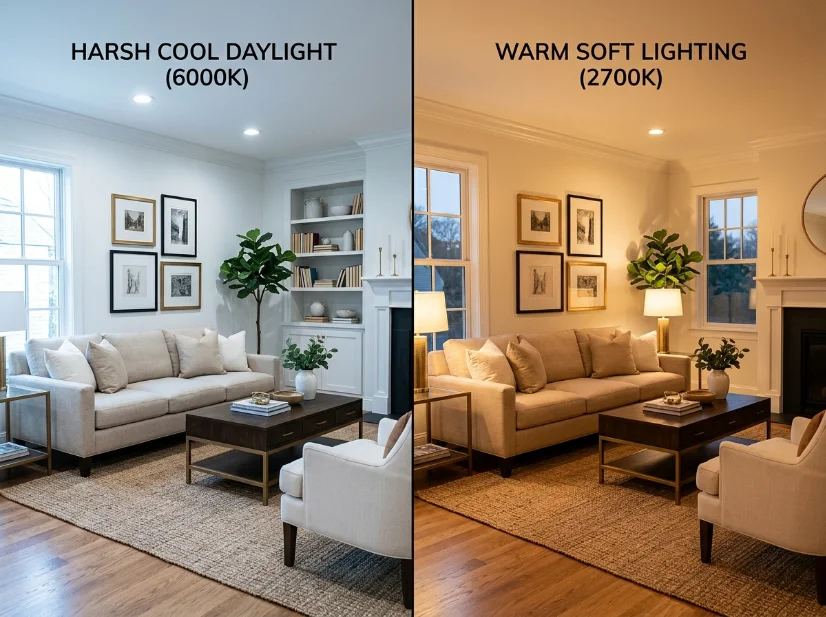
This one felt silly until I tried it. Overhead lighting alone made our whole house feel like a dentist’s waiting room. I added three lamps to the living room, all around 2700K bulbs, which read warm instead of that harsh blue-white 5000K office glow. Two were $24 finds from Target, one was a $68 splurge from World Market that I still think about fondly. Turning off the overhead light at 6 p.m. and just using lamps changed the whole mood of the room for around $80 total.
The Bulb Mistake
I didn’t know about the Kelvin thing at first. I bought a pack of daylight bulbs because they were on sale, and the room looked like an interrogation scene for two straight weeks before I figured out why everything felt off.
3. I Layered Textiles Instead of Buying New Furniture
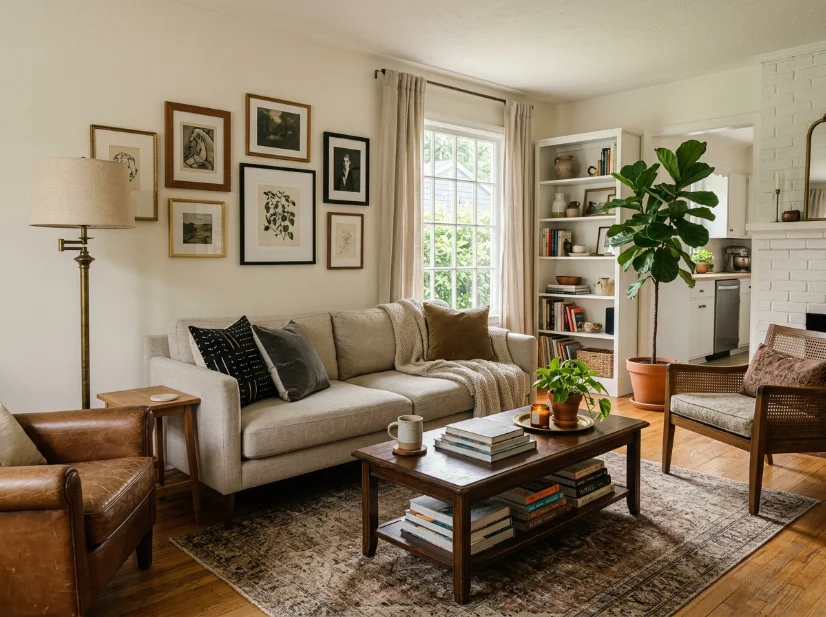
A chunky knit throw, a couple of linen pillow covers, a vintage-style rug layered over our builder-grade carpet in the family room. None of it was expensive on its own, maybe $140 total across a season, but stacked together it did more for the “expensive” feeling than any single piece of furniture we’ve bought. If you can’t swing real linen, Target’s cotton blends read almost identical from a few feet away.
4. I Started Repeating One Metal Finish
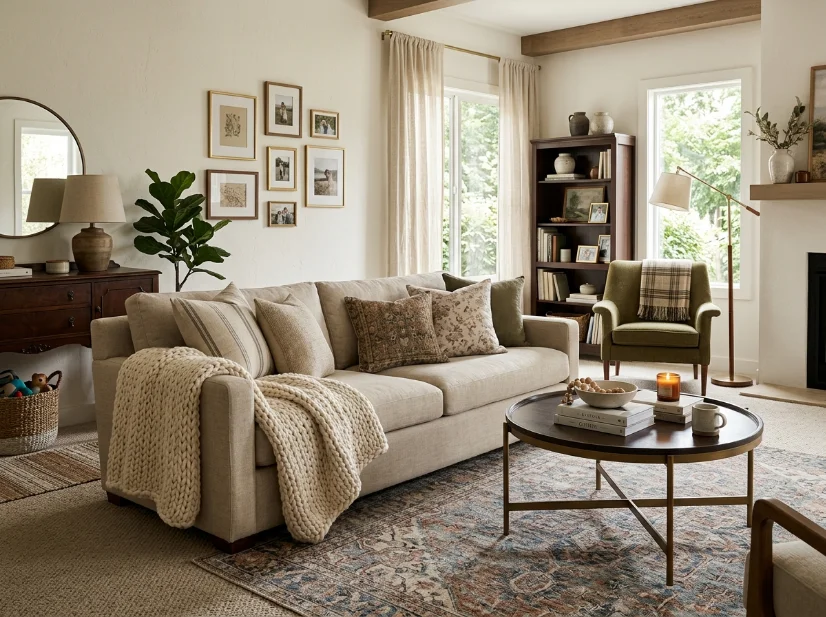
Our brass doorknobs, brass drawer pulls, and a brass mirror frame all happened somewhat by accident, but once I noticed it, I leaned in on purpose. Repeating one metal tone through a room, even a cheap one, tricks the eye into thinking everything was chosen together. We’re team brass. My sister swears by matte black. Either works, just pick one and stick with it room to room.
5. I Let Furniture Breathe
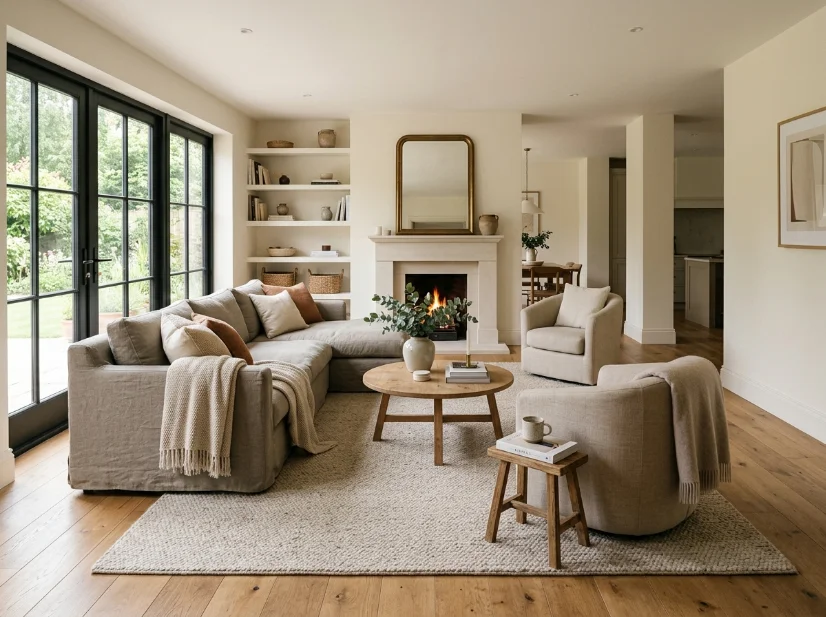
For two years our living room had too much stuff pushed against every wall, because that’s what felt “safe” with two kids and a dog running through it. Pulling furniture away from the walls even six inches, and leaving one corner genuinely empty, made the whole space read calmer and pricier. It took me embarrassingly long to believe that emptiness could be a design choice.
6. I Bought One Real Splurge Piece Per Room
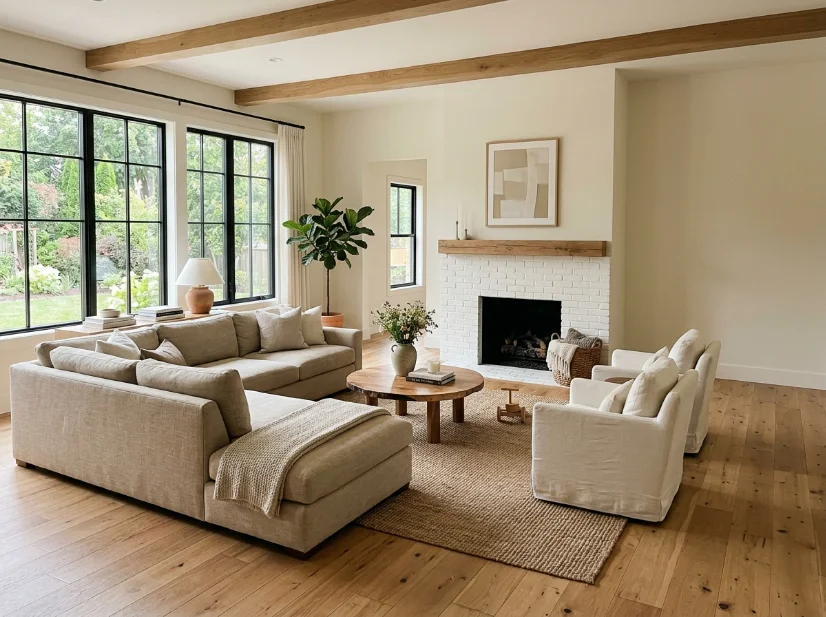
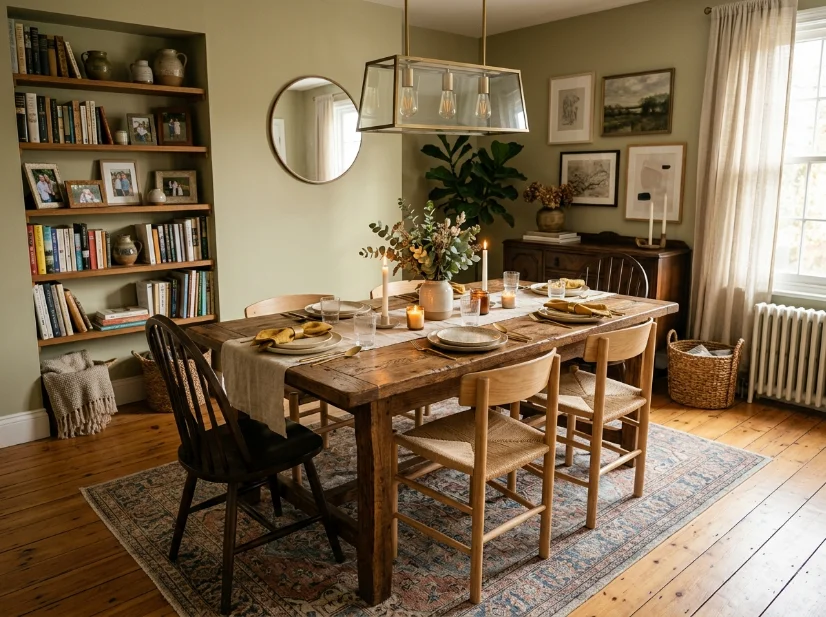
Instead of spreading $600 evenly across a dozen small items, I put it into one piece that does the heavy lifting, a solid wood console table, a real leather ottoman from Article, a decent area rug. Everything else around it stays budget. The eye lands on the good piece and assumes the rest matches its quality. Our dining room runs on one $310 table and everything else is Marshalls and Amazon.
7. I Finally Fixed the Trim
This is the DIY project that humbled me. I decided to paint the baseboards a crisp white to match freshly painted walls, figuring it would take an afternoon. It took three weekends, one trip back to Home Depot because I bought the wrong sheen the first time, and a very short piece of quarter-round trim that I cut twice and still had to patch with caulk because I measured wrong both times. It looks great now. Nobody but Mark knows about the caulk.
If you’re working on your own lived-in luxury look, I’d love to know what you’ve tried so far. Leave a comment with the one affordable change that made the biggest difference in your home, and save or pin this post so you can come back to these ideas when you’re ready for your next room refresh.
Start With the Room’s Biggest Problem
Before buying anything, I started asking what each room was actually missing. Sometimes it needed better lighting, sometimes less furniture, and sometimes just one piece with enough visual weight to anchor everything else. That small shift stopped me from buying random decor simply because I liked it in the store. I started shopping with a purpose, which saved money and made the rooms feel much more cohesive.
Don’t Confuse Luxury With Perfection
The more I looked at beautiful homes online, the more I realized that the rooms I actually loved weren’t perfectly styled. They had books on the coffee table, slightly rumpled pillows, a blanket tossed over a chair, and pieces that clearly had a story behind them. That’s what made them feel inviting. For us, the goal became polished but still comfortable enough for everyday life with kids, a dog, and actual people using the house.
Shop Your House First
One of the cheapest changes I made was simply moving things around. A lamp from the bedroom looked surprisingly good on the living room console, while a small side table we’d nearly donated worked perfectly beside the sofa. I started pulling pieces from other rooms before buying replacements, and sometimes that was enough to make a space feel completely different. It also helped me figure out what I genuinely needed before spending another dollar.
Give Yourself Time to Finish a Room
I used to think an unfinished room meant I needed to go shopping. Now I’m much more comfortable letting a space sit for a few weeks while I figure out what it actually needs. That pause has saved us from plenty of impulse purchases. A room usually looks more collected when pieces arrive gradually instead of appearing all at once in matching bags from the same store.
What I’d Do Differently
Looking back, I would’ve slowed down and bought fewer, better pieces from the start instead of filling rooms with cheap filler I later had to replace anyway. That “starter furniture” phase cost us more in the long run than if we’d just saved another month or two for something solid. I also regret an early West Elm rug that looked stunning online and pilled within a season, a lesson in reading return policies before checkout. And I fell hard for the all-white kitchen trend in 2021, which in our humid North Carolina summers means constant fingerprints and a September of yellow pollen dust showing up on every surface.
