
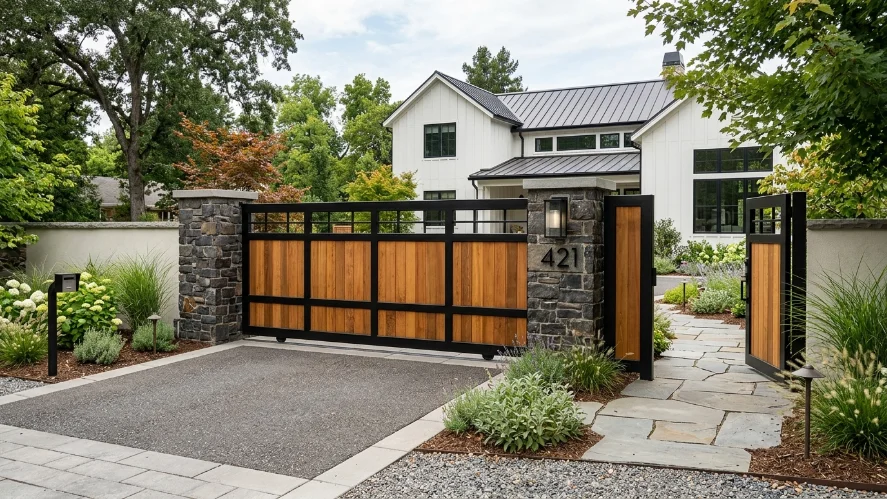
A front yard gate can do far more than define a boundary it can completely shape your home’s curb appeal. But finding a modern farmhouse gate that actually works for a real front yard, realistic budget, and everyday use can feel overwhelming. In this guide, I’m sharing seven practical modern farmhouse gate ideas that combine style, durability, and function, along with real-world lessons, budget tips, and design mistakes to avoid so you can confidently choose the right option for your home.
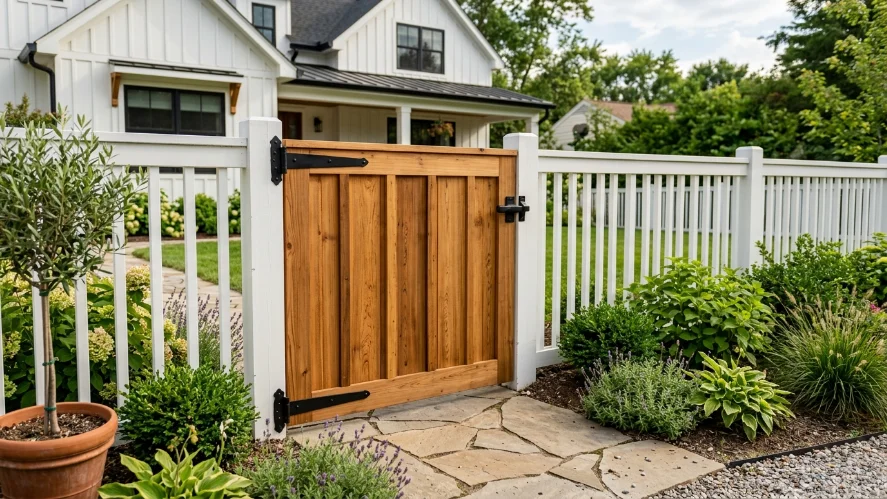
1. Board-and-Batten Wood With Black Hardware
This is the style I keep coming back to as the starting point for modern farmhouse gates. Vertical wood boards cedar or pine with a horizontal batten across the middle or in a Z-pattern on the back. Simple. But the whole look depends on one thing: the hardware.
Matte black hinges and a matte black latch do more visual work than any decorative detail. They pull the gate into that modern farmhouse lane without requiring custom woodworking skills. I found a solid set of exterior black hinges at Home Depot for around $22 a pair, and the difference versus the silver builder hinges on our old gate was immediate.
For the wood itself, cedar holds up better in humid Southern climates. We learned that the hard way with a pine section Mark built for the side yard by summer’s second month, the boards had already started to cup slightly from the heat and moisture. If you’re anywhere with real humidity, pay the extra few dollars per board for cedar.
Budget alternative: If custom-built cedar is outside your range right now, look for pre-built wood gate panels at Lowe’s or Home Depot. They run roughly $80–140 depending on width, and swapping out the hardware to matte black takes the look up a full notch.
2. Steel or Iron Frame With Wood Fill
This one surprised me. A steel or wrought iron outer frame with wood planks filled inside reads more modern than either material alone. The metal adds structure and a slight industrial edge; the wood keeps it warm. Together they hit that transitional sweet spot that modern farmhouse actually lives in.
Finding the Right Frame
Pre-fabricated steel gate frames exist check local fencing companies or search Etsy for custom metal fabricators near you. Prices vary a lot by region, but a 4-foot wide steel frame typically runs $150–300 before the wood fill. Some homeowners weld these themselves; I am not one of those people.
The Wood Fill Part
Cedar pickets slide into the frame and get secured with screws. Leave a small gap (about half an inch) between boards rather than packing them flush it prevents warping, allows airflow, and looks intentional rather than accidental.
One thing that went wrong for us: we attached the first test board before checking that the frame was perfectly plumb. Had to redo the spacing on three boards because the gap grew uneven toward the top. Check plumb before you commit to any screws.
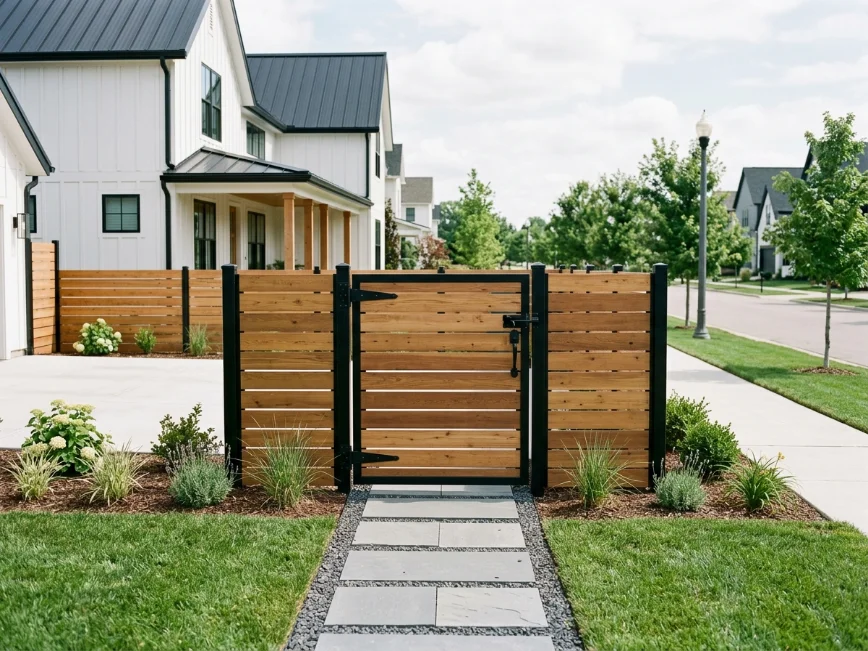
3. Horizontal Slat Gates
Horizontal slats are everywhere in modern exterior design right now, and they translate well to gates. Instead of vertical boards, the planks run side to side, which reads cleaner and a little more contemporary than traditional vertical board gates.
The trick with horizontal slats is keeping the spacing consistent. Uneven gaps between boards is the number-one thing that makes this style look DIY in a bad way. Use a scrap piece of wood as a spacer while you attach each board it takes five extra minutes and saves a lot of regret.
Cedar or composite material both work here. Composite holds its shape better over time and doesn’t need staining, which matters in a climate where spring pollen means you’re already cleaning everything constantly. A composite horizontal gate panel from a fencing supplier will run more upfront expect $200–400 for a standard garden gate width but you won’t be re-staining it every two years.
Budget alternative: Standard cedar fence boards from Home Depot cost around $4–7 each, and you can build a basic horizontal slat gate frame yourself for well under $100 in materials. Look up a basic 2×4 frame tutorial and take your time with the spacing.
4. Arched Top Wood Gates
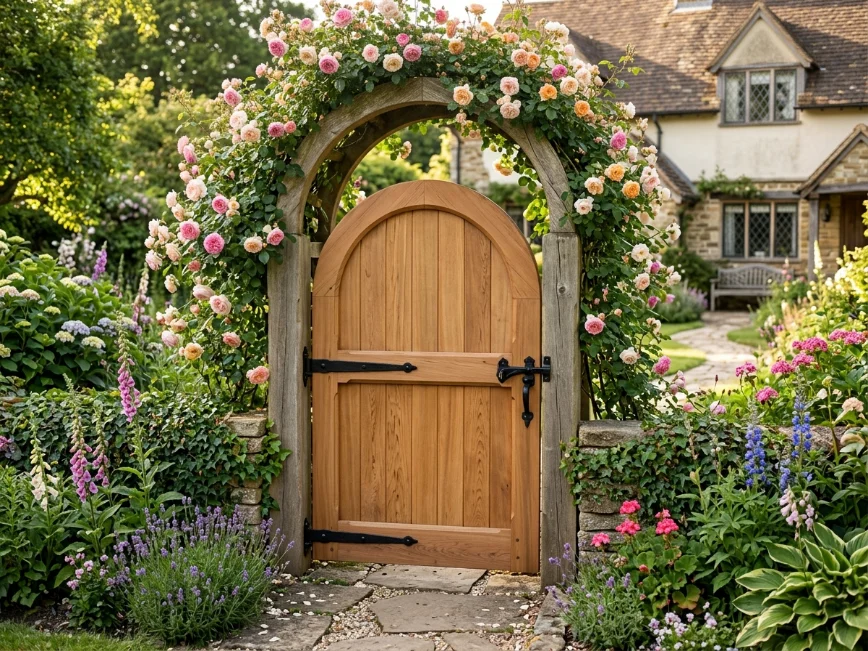
An arched top gate is one of those details that reads custom even when it isn’t. The curve at the top of the gate softens the whole entry without abandoning the clean farmhouse structure underneath.
Cutting the arch yourself requires a jigsaw and some patience. Mark the curve with a piece of string tied to a nail old trick, works great. But I’ll be honest: Mark attempted this on our side gate and the first attempt came out lopsided. The string-and-nail method works best when your radius is consistent and you mark the cut line before touching the saw. We made a second trip to Home Depot for replacement boards.
If cutting a curve sounds like too much, some pre-built wood gates already come with a slight arch. World Market occasionally carries decorative garden gate styles with arched tops for around $120–180, though stock changes often.
Pair an arched gate with climbing plants clematis or a simple climbing rose and you get that cottage-meets-farmhouse look that photographs beautifully and actually grows better here in the Southeast than people expect.
5. Painted Gates in Muted Tones
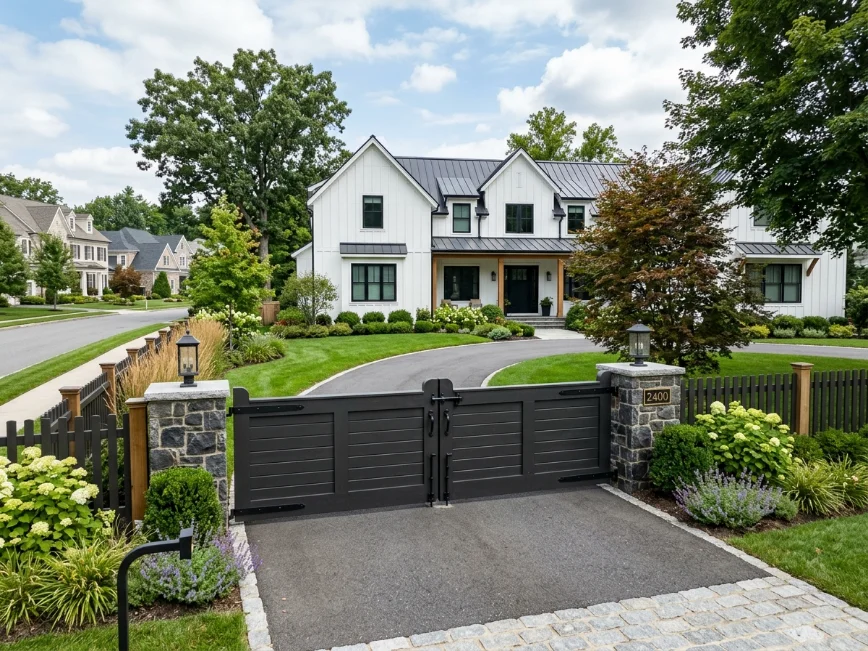
Color is underrated in gate design. Most people default to stained wood or raw metal, but a painted gate in the right shade can anchor your whole front yard palette.
For modern farmhouse, the colors that actually work (not just look good on Instagram) are:
- Muted black (Sherwin-Williams Iron Ore or similar)
- Aged white or creamy off-white
- Warm sage green
- Deep navy
I painted our side yard gate Iron Ore two summers ago. Two coats of exterior paint, a foam roller for the flat sections, and a brush for the edges. Total cost was around $28 for the paint, and it’s held up through two humid North Carolina summers with zero peeling so far. The key is using exterior-grade paint rated for wood standard interior paint fails fast out there.
What went wrong: I skipped primer on the first coat because I was impatient. The coverage was uneven and I ended up doing a third coat, which ate up most of a Saturday afternoon. Prime the wood first. Every time.
Budget alternative: Behr exterior paint from Home Depot is a solid mid-range option at roughly $35–45 per gallon. One gallon covers a standard gate with room to spare.
6. Gates With Integrated Planter Boxes
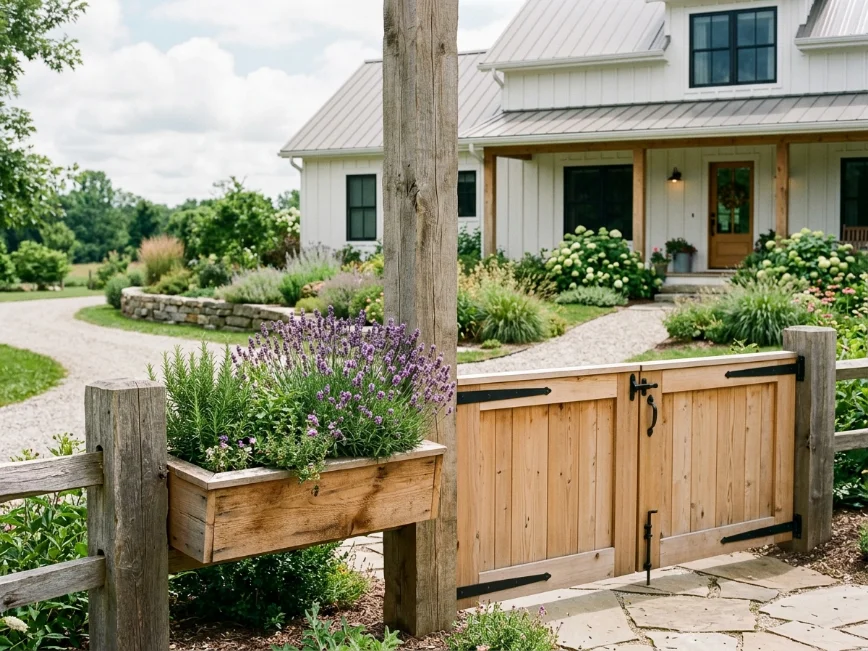
This is more of a statement move, but it’s one of my favorites for front yard gates that need to do double duty as a focal point. Building or attaching a small planter box to the gate post or the gate frame itself brings the landscaping and the architecture together in one spot.
The planter doesn’t have to be big a 12-inch cedar box mounted on the post beside the gate is enough. Fill it with trailing rosemary, lavender, or seasonal flowers and suddenly your gate looks like it belongs on a magazine cover. Rosemary survives Charlotte summers well; lavender is hit or miss depending on drainage.
One practical note: don’t attach the planter to the gate itself, only to the fixed post. A heavy planter on a swinging gate puts stress on the hinges and the frame over time. I’ve seen this mistake in a few Facebook Marketplace “farmhouse gate” listings the gate sags noticeably within a season.
7. Double Gates for Driveways and Wider Openings
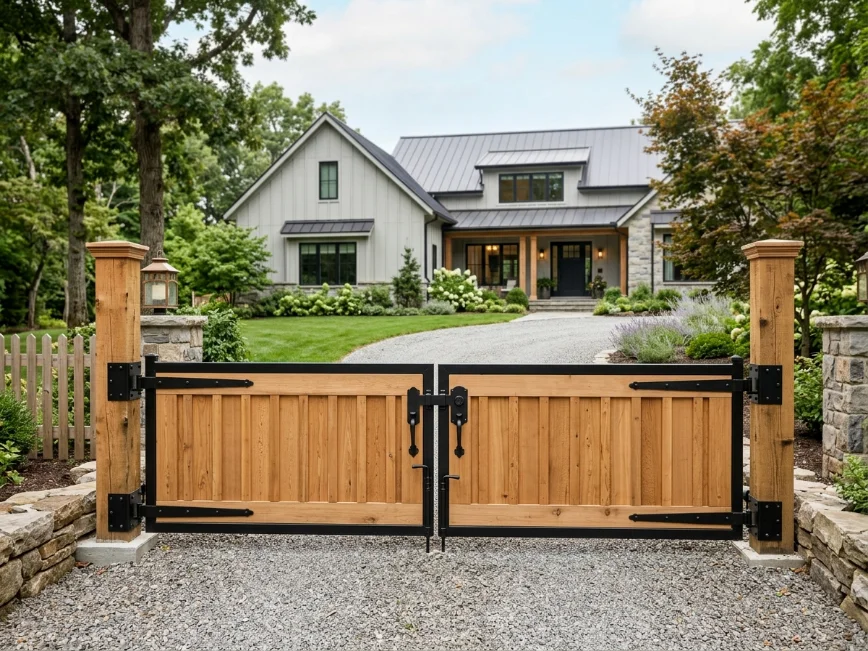
If your project is a driveway gate rather than a garden entry, a double-swing design gives you flexibility and presence. Two matching panels that swing inward or outward, meeting in the center. Modern farmhouse double gates typically stick to the same materials as single gates board-and-batten cedar, horizontal slats, or steel frame with wood fill just mirrored.
The thing most tutorials skip: you need a strong gate post, not just a fence post, to support double panels. We had a contractor look at our existing post situation before we committed to a double gate plan, and he pointed out the posts were only 4×4 pressure-treated. For double driveway gates, he recommended 6×6 posts set in concrete at least 36 inches deep. That’s not a weekend DIY project for most people budget for professional post installation if the gate matters to you.
Pre-built double gate kits exist on Wayfair and Amazon in the $300–700 range, but quality varies a lot. Read reviews specifically about the hardware and the weight distribution before buying.
CTA
Before you choose your gate style, measure your space, think through function, and save yourself the costly mistakes I almost made. And if you’ve already upgraded your front yard gate or you’re planning one soon share your favorite style in the comments, save this post for later, and explore more exterior makeover ideas to keep your curb appeal transformation going.
What I’d Do Differently
The biggest mistake I made through all of this gate research and testing: I focused on aesthetics before function. I picked the gate style I liked the look of and then figured out if it fit the space. That’s backwards.
Measure your opening first. Decide on swing direction based on your walkway and landscaping. Figure out whether you need latching from both sides. Then pick your style within those constraints.
The arched gate I loved most didn’t work for our side yard opening because the arch height would have been too short for Mark to walk through comfortably. We found that out after sketching it out to scale, not before. Start with function, then layer in the farmhouse aesthetic.
Also: don’t skip a sealer coat on raw wood gates, even cedar. One coat of an exterior wood sealer (around $20–35 at Lowe’s) before painting or staining extends the life of the wood significantly in humid climates.
