
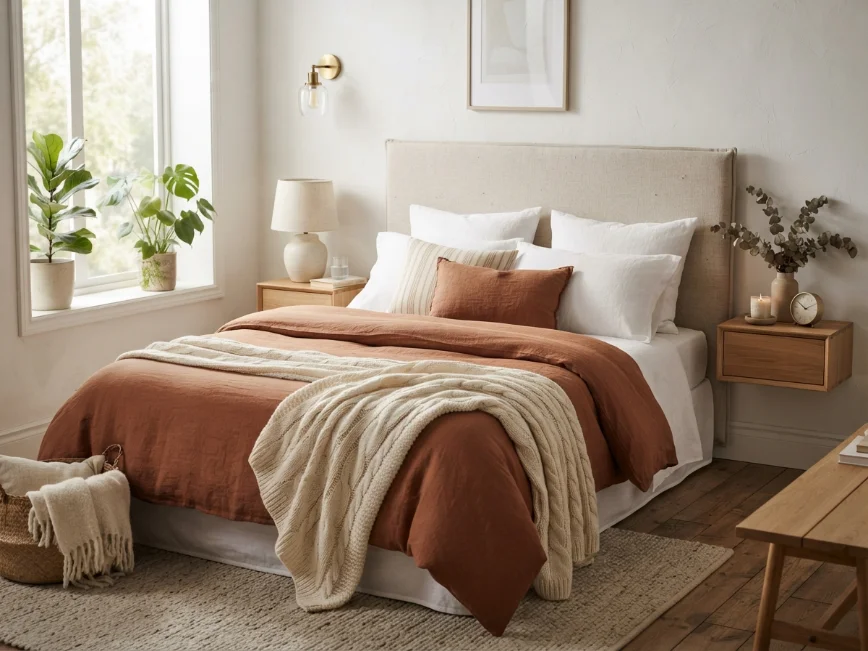
Refreshing your bedroom doesn’t have to mean spending thousands of dollars on new furniture or hiring a designer. With a thoughtful plan and a realistic budget, you can create a space that feels cozy, stylish, and personal using affordable updates that make the biggest visual impact.
In this guide, you’ll learn practical, budget-friendly bedroom refresh ideas that actually work. From upgrading your bedding and lighting to shopping secondhand, adding meaningful decor, and avoiding common decorating mistakes, these simple steps will help you transform your bedroom without overspending. Whether your budget is $100 or $400, you’ll find realistic ideas that are easy to pull off over a single weekend
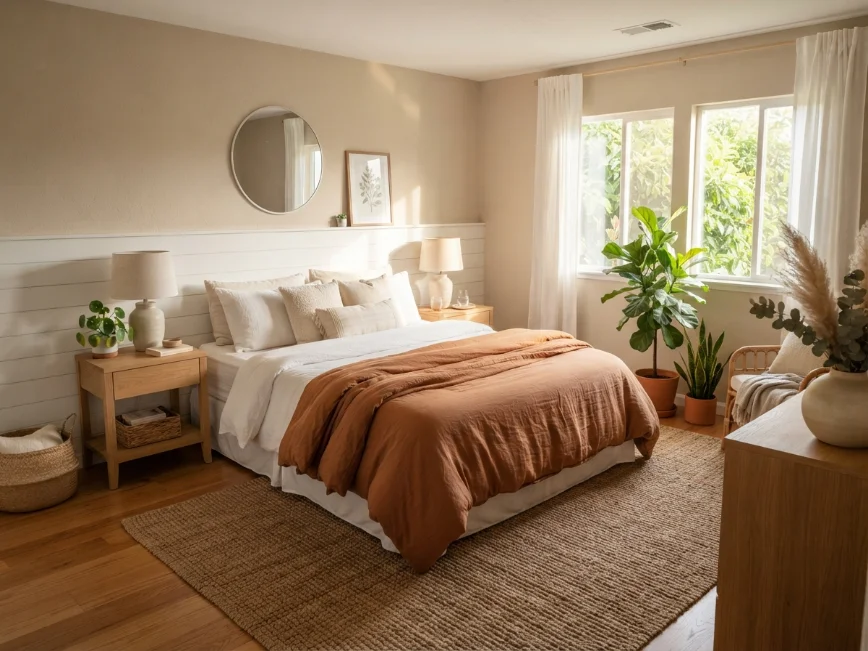
You Don’t Need a Big Budget for a Beautiful Bedroom
What You’ll Need
- A few hours on a weekend
- Basic tools (screwdriver, hammer, level)
- A rough budget in mind ($100–400 works for most of this)
- Willingness to shop secondhand before buying new
Step 1: Start With the Bed, Not the Walls
Everyone wants to paint first. Don’t. Your bed takes up most of the visual space in the room, so it’s where budget-friendly changes show up the most.
New bedding from Target or a Quince linen set runs $60–120 and instantly changes the whole mood. I swapped my flat white duvet for a rust-colored one from Target ($54) and it did more for the room than the $400 headboard I’d been eyeing on West Elm’s site.
If your headboard is boring or nonexistent, try a fabric-wrapped DIY panel. I made mine with plywood, batting, and a yard of linen fabric from JoAnn, total cost around $45. Fair warning: my first cut of plywood was two inches too short, and I had to make a second Home Depot run for a full new sheet. Measure twice.
Budget Alternative
Can’t swing new bedding right now? A duvet cover alone (often $30–40) over your existing comforter gets you 80% of the effect for a third of the price.
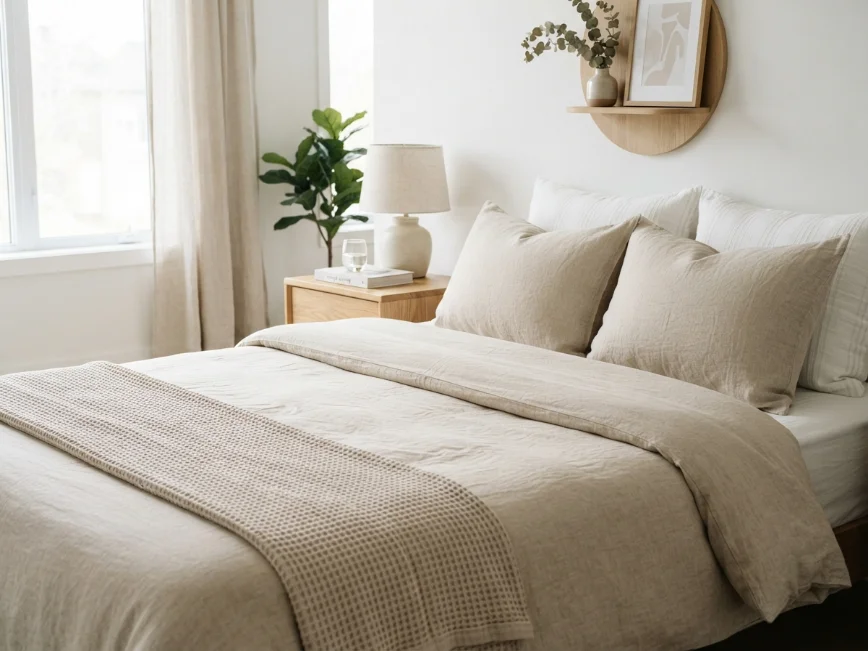
Step 2: Fix the Lighting Before Anything Else Visual
Overhead lighting in most builder-grade homes is harsh and unflattering, ours included, since our house is a late-90s build with the classic single ceiling fixture. Swapping to layered lighting is one of the cheapest ways to change how a room feels.
I added a $28 table lamp from HomeGoods and a plug-in wall sconce ($22 on Amazon) with a warm 2700K bulb instead of the cold 5000K one that came standard. That warmer temperature makes a huge difference at night. It sounds small until you sit in the room after 8 p.m. and realize how much softer everything looks.
- Swap bulbs to 2700K warm white
- Add one lamp near the bed
- Consider a plug-in sconce if you’re renting and can’t hardwire
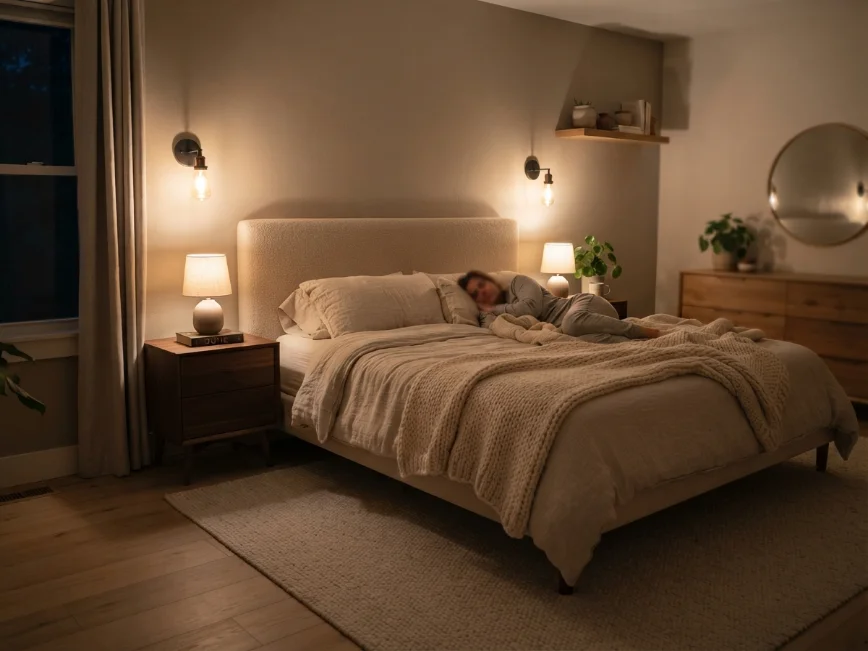
Step 3: Use Textiles Instead of New Furniture
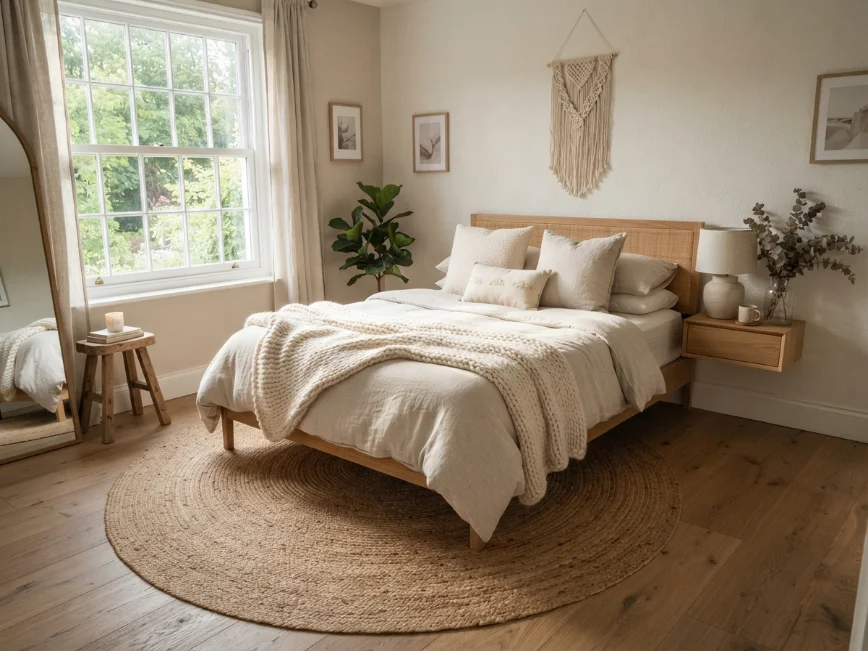
Textiles are the fastest, cheapest transformation available. A $25 rug from Ross under the bed, a $18 throw blanket, and two new pillow covers can shift a room from “meh” to “mine” without buying a single piece of furniture.
I found a jute rug at our local Goodwill for $12 that just needed a good vacuum and an afternoon outside to air out (NC humidity means secondhand textiles sometimes need a day in the sun before they come inside). Worth checking thrift first before ordering new.
Step 4: Add Personal Touches That Aren’t Generic Wall Art
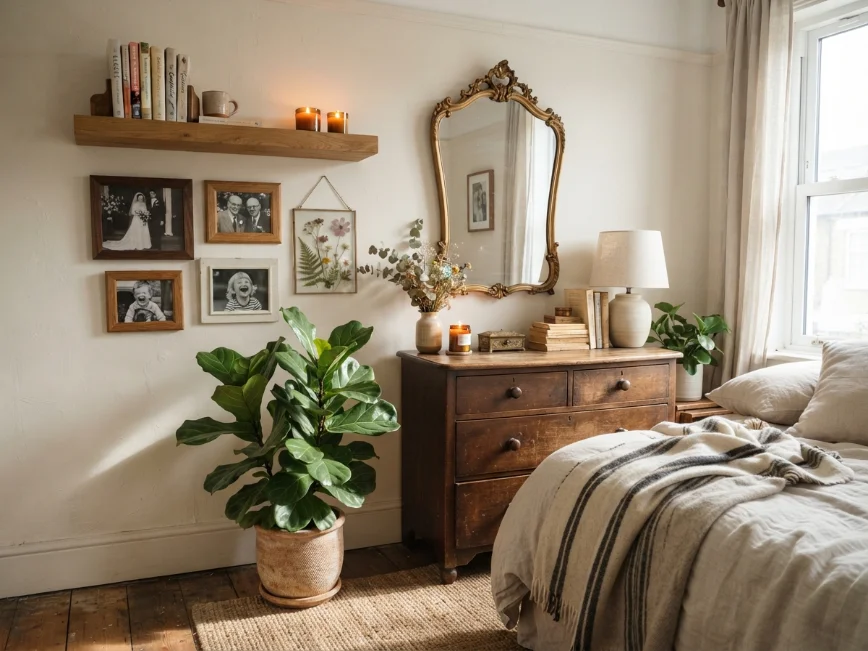
This is the step a lot of budget guides skip. Generic “Live Laugh Love” prints don’t make a room feel like it’s yours. What does: a gallery of photos in mismatched thrifted frames, a small shelf with items collected over time, or a vintage mirror you found on Facebook Marketplace for $15.
I hung three thrifted frames with mixed photos and pressed flowers from our yard. It cost about $9 total in frame paint and glass cleaner, since the frames themselves were already sitting in a Goodwill bin.
Step 5: Handle Storage Before You Buy More Decor
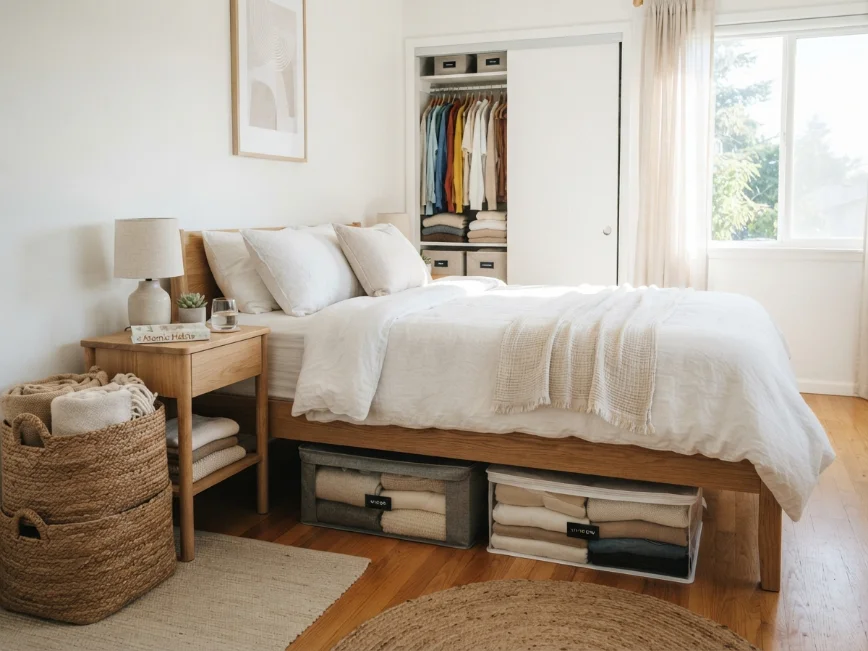
Clutter undoes decor fast. Before adding anything new, clear a drawer, add an under-bed storage bin ($15–20 at IKEA), or use closet organizers you already own differently. A tidy nightstand does more visual work than a $60 decorative object sitting next to a pile of chargers.
Common Pitfalls
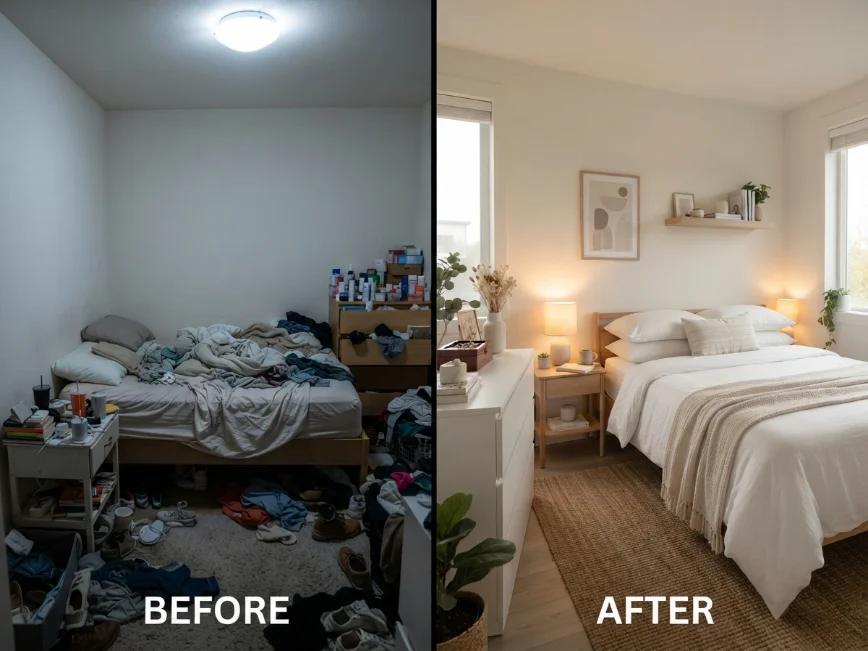
The biggest mistake I made early on was buying decor before fixing the bones of the room, meaning lighting and storage. Pretty objects in a cluttered, harshly lit room still look cluttered and harshly lit.
Second mistake: matching everything too perfectly. My first attempt had a matched three-piece HomeGoods set that ended up looking like a hotel room instead of a bedroom. Mixing a thrifted piece with something new usually reads more personal.
One more thing worth knowing: if your home was built before 1978 and you’re planning any wall repairs before repainting, check for lead paint first. It’s a quick test kit from Home Depot, and it’s worth the ten minutes before sanding anything.
