
Small homes have a way of collecting clutter faster than you expect. Before we realized it, our 1,400-square-foot house felt packed with backpacks, dog toys, papers, and all the little things that never seemed to have a proper place. I spent months trying different storage fixes, and honestly, not all of them worked. In this post, I’m sharing the small space storage ideas that actually made our tight rooms feel bigger, calmer, and much easier to live in every day.
Why Clutter Hits Small Homes So Much Harder
In a big house, you can close a door and forget about a messy room. In a smaller space, there’s no hiding it. Everything is visible, everything shares walls, and one messy corner can make the entire home feel chaotic.
What I’ve noticed after a few years of experimenting: the problem is rarely a lack of storage. Most of us have enough space. The problem is we’re not using the right kind of storage in the right spots. A giant bookcase might actually shrink a room visually. A single well-placed floating shelf might open it up.
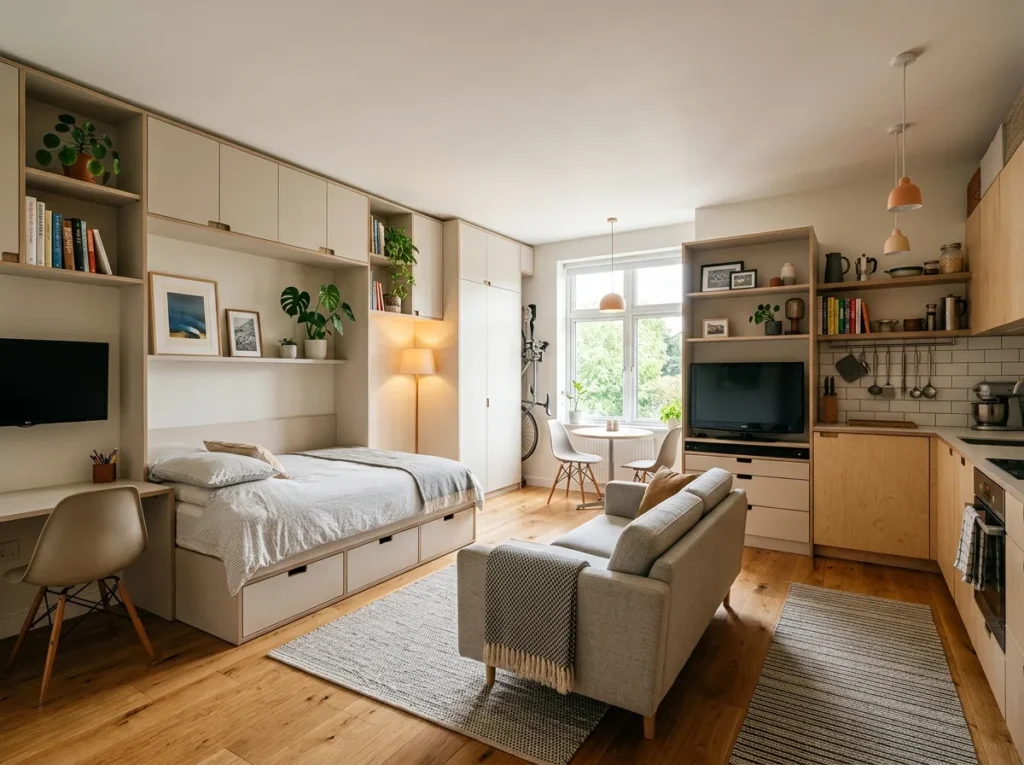
Multifunctional furniture changed everything for us. Once I stopped buying pieces that did only one thing, we got so much breathing room back.
1. Use the Space Under Your Bed
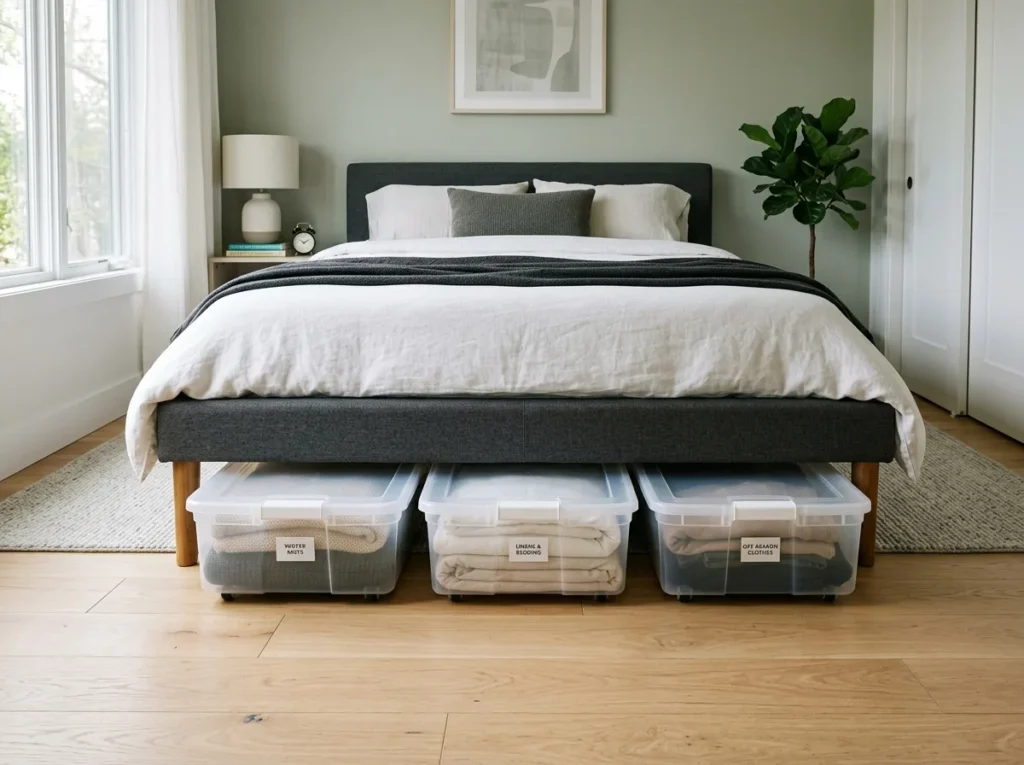
This was the first real win I had. Our bedroom is about 10 by 12 feet, which doesn’t leave much floor space for extra dressers or bins. But the area under the bed? Completely empty for the first year we lived here.
I picked up a set of flat rolling storage containers from Target around $24 for a set of two and started keeping off-season clothes in them. Mark keeps his extra running gear under his side. It’s not glamorous, but it freed up an entire shelf in our closet.
What to Store Under There
Seasonal bedding, extra blankets, shoes you don’t wear daily, gift wrap supplies. Keep it to items you only need a few times a year. If you’re pulling things out every week, find them a more accessible home.
The one thing that went wrong: I bought cheap fabric bins first. They collapsed under the weight of winter sweaters and were a pain to slide out. Went back to Home Depot and swapped to the hard-sided plastic ones with lids. The second trip was worth it.
2. Go Vertical with Floating Shelves
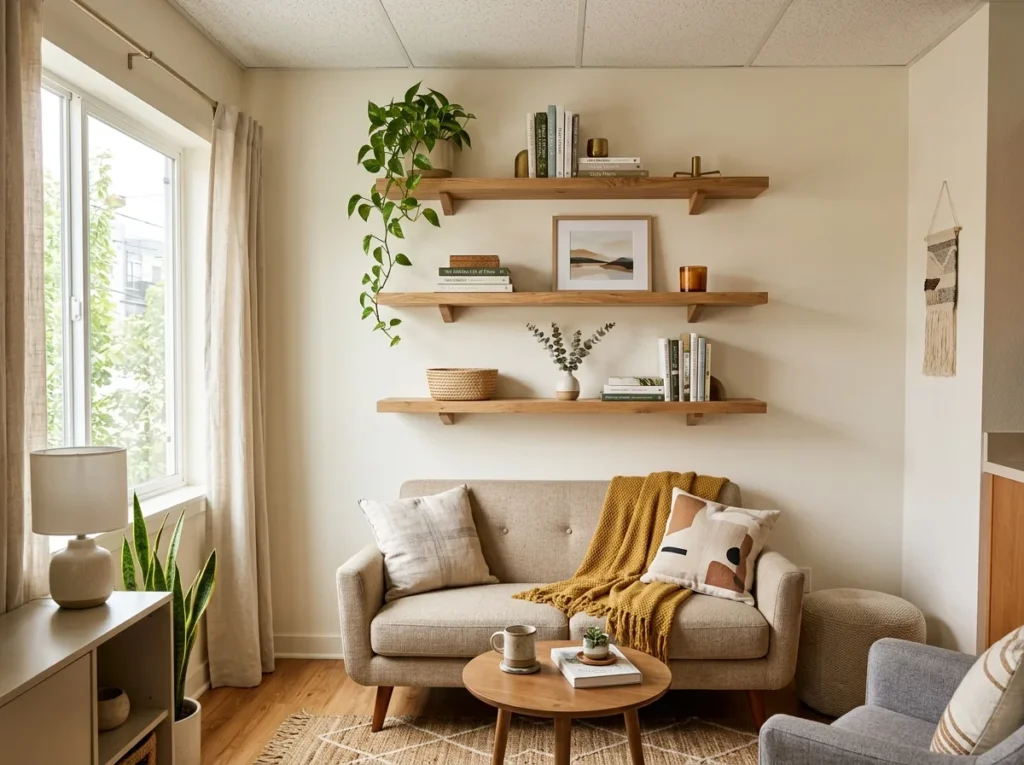
Floor space is limited. Wall space usually isn’t. This took me an embarrassingly long time to figure out.
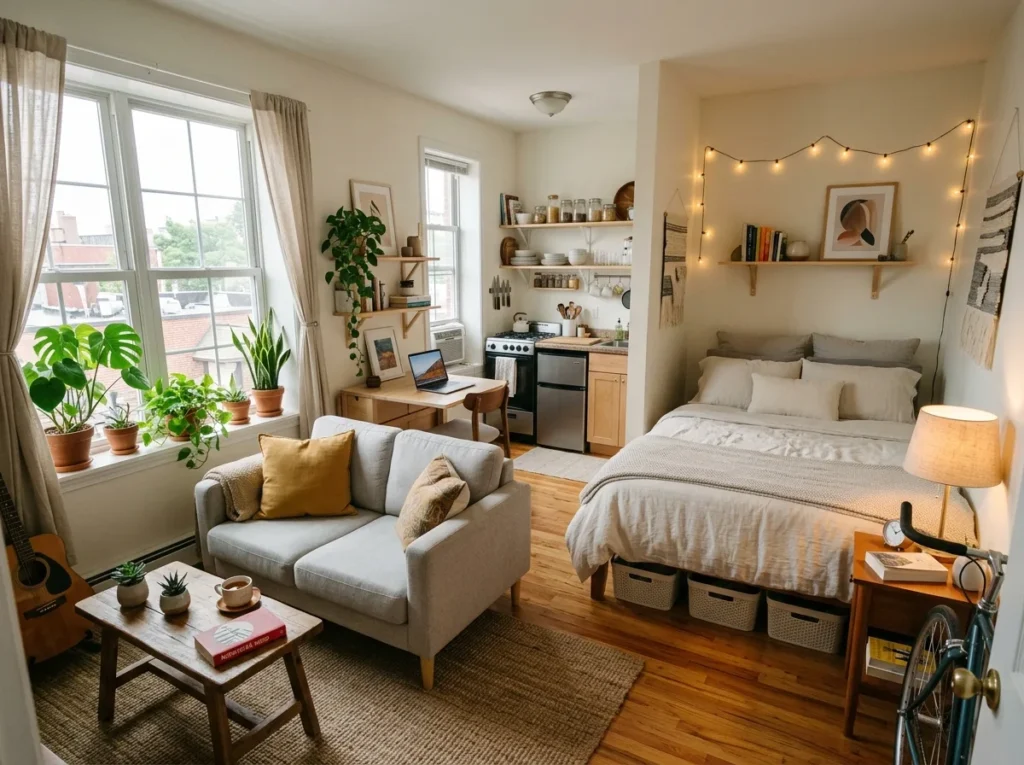
We put up three floating shelves in our small hallway using a kit from Ikea about $35 total and it completely solved our book overflow problem. The kids’ art books, my decor magazines, a few small plants. All off counters, all visible, all within reach.
In the living room, I ran shelves all the way up to the ceiling on one wall. Not just two or three at eye level I went all the way to the top, using the lower shelves for everyday items and the upper shelves for storage baskets that aren’t touched often.
One honest note: patching the old holes when I rearranged cost me an afternoon and a $9 tube of spackle. Measure twice, commit once.
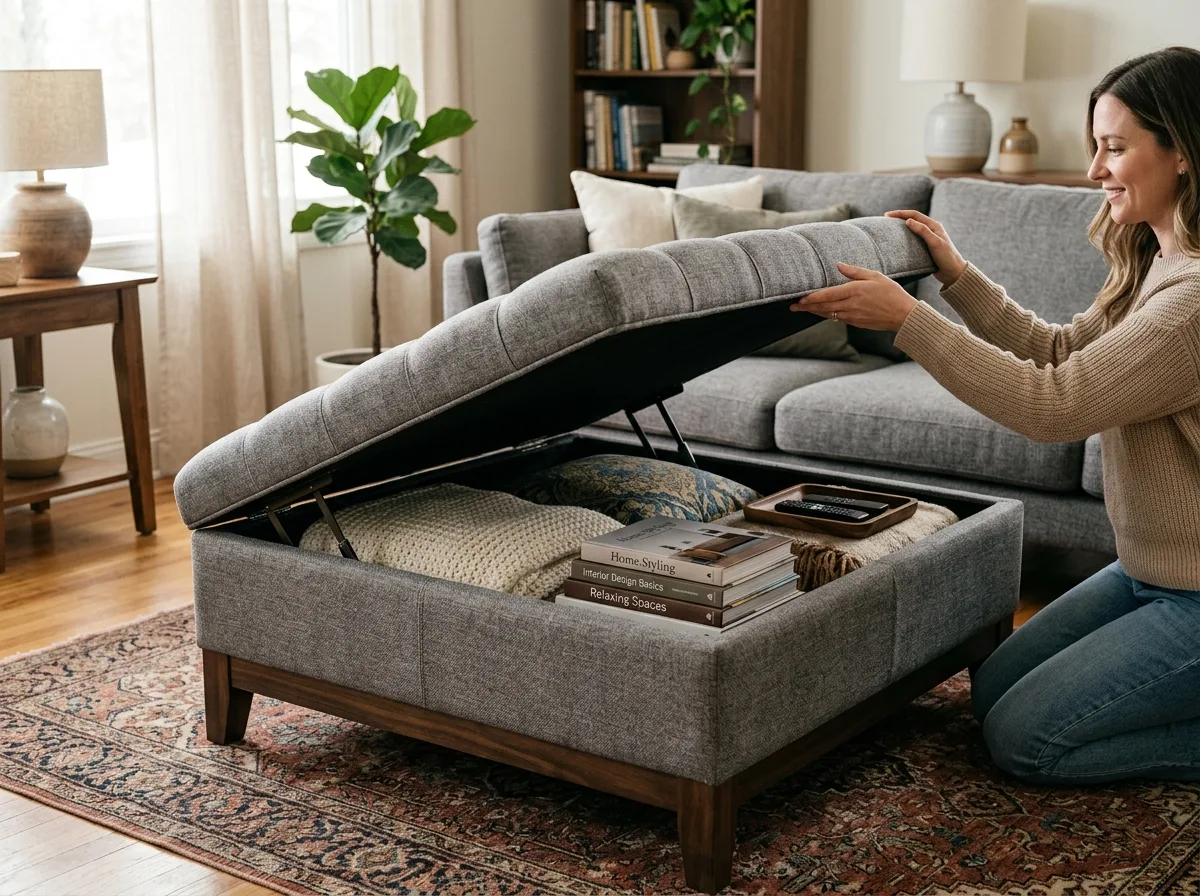
3. Replace Your Coffee Table with a Storage Ottoman
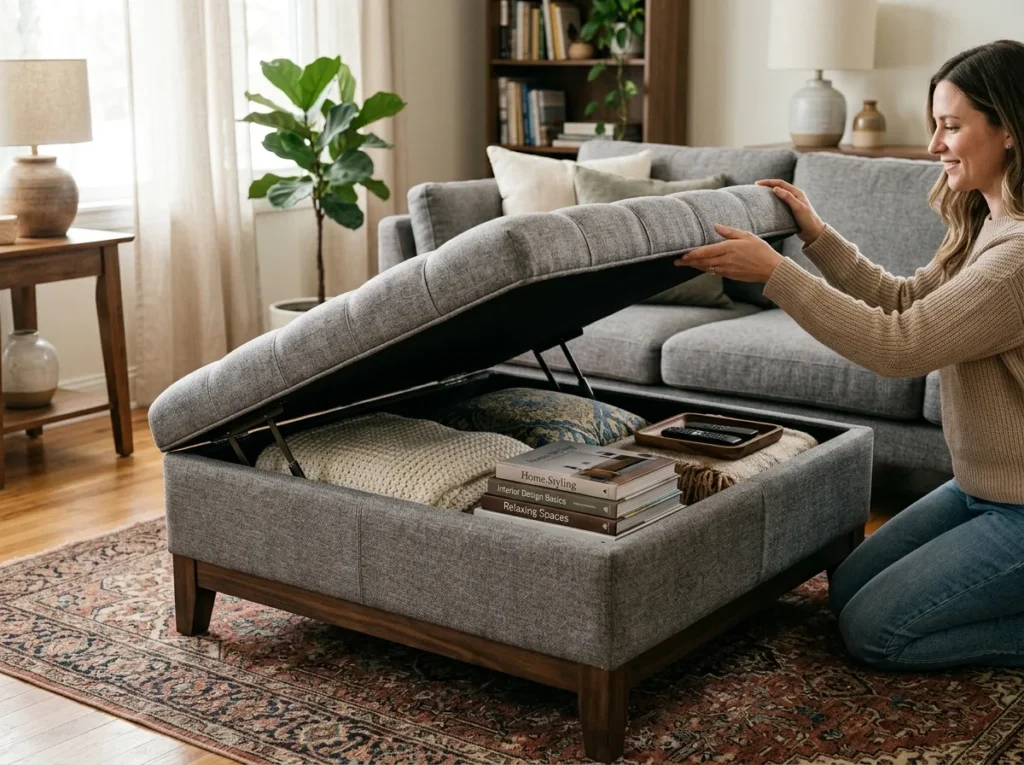
Our old coffee table was beautiful and completely useless from a storage standpoint. We swapped it for an upholstered storage ottoman from HomeGoods paid around $89 and I have not looked back.
Throw blankets, the kids’ coloring books, Biscuit’s smaller toys it all lives in there now. It also doubles as extra seating when people come over, which matters in a house our size.
If the ottoman alone isn’t enough surface area, add a small tray on top. Suddenly you’ve got a functional coffee table surface and hidden storage in the same footprint.
4. Put the Back of Every Door to Work
Over-the-door organizers are one of those things that look a little utilitarian but make a massive practical difference. I resisted them for a while because they didn’t fit my style. Then I ran out of bathroom cabinet space and caved.
The one behind our bathroom door holds hair tools, travel-size products, and kid bath stuff. The one behind the pantry door holds foil, plastic wrap, and snack bags that used to fall off the shelf constantly.
You can find neutral options at Target or Amazon for $15 to $30 that don’t look like garage organization gear. Clear pockets especially they keep things visible so you actually use them.
5. Buy Furniture That Does Two Things
This is the principle I wish I’d applied from day one. Every piece of furniture in a small home should ideally do more than one job.
Our entryway bench has a flip-top lid with a hollow inside it holds the kids’ soccer cleats and extra leashes for Biscuit. A small dresser in our hallway doubles as a printer stand with the printer sitting on top and paper stored inside. Our dining bench (bought from World Market for around $180) has a storage shelf underneath that holds extra placemats and table linens.
None of these are fancy pieces. But every one of them replaced a separate item that was taking up floor space.
6. Hang a Pegboard in the Kitchen or Office
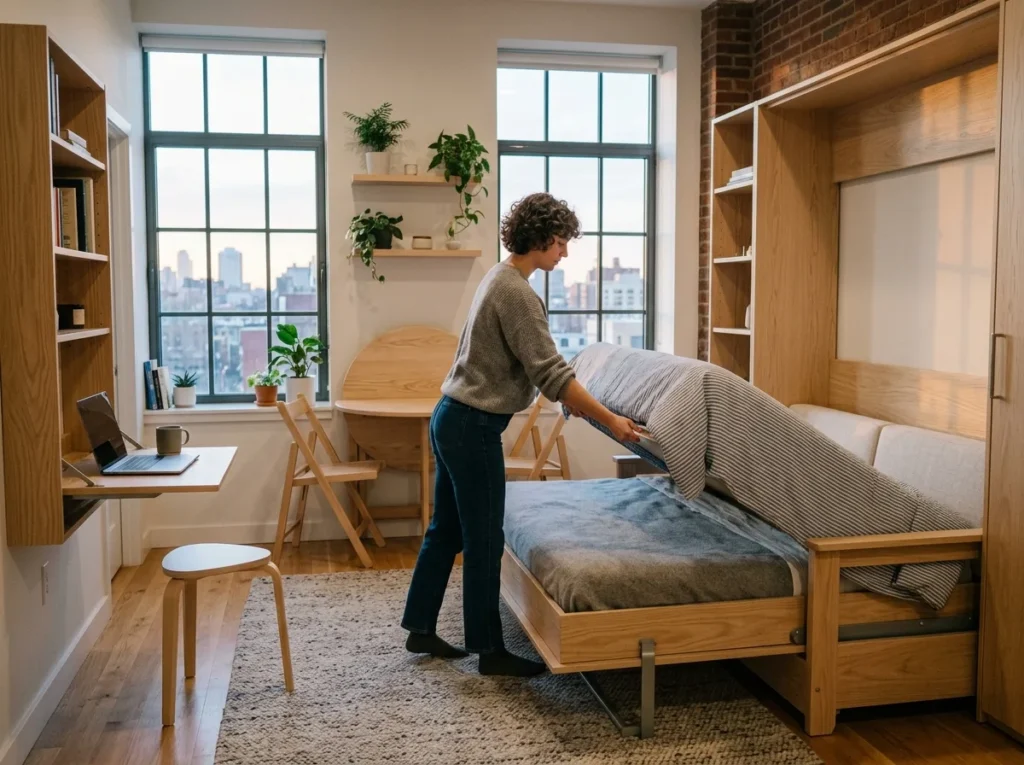
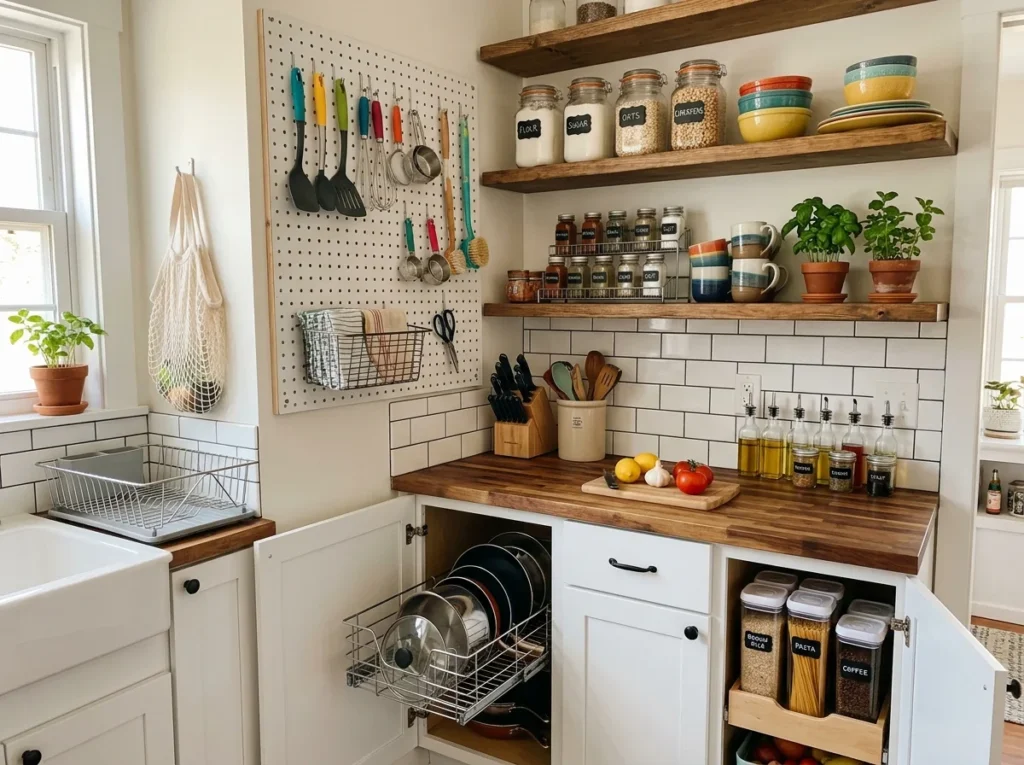
This was Mark’s idea, and he was right. We put a pegboard on the wall beside our refrigerator a blank wall that was doing nothing. For about $28 in supplies from Home Depot plus an afternoon of drilling, we had a full system for pots, lids, and cooking tools.
It wasn’t a flawless install. I miscalculated the spacing on the bottom row and had to re-drill two holes. The patch job is hidden behind a hanging pan, but I know it’s there. Still the functional result was worth the minor cosmetic imperfection.
In a small office, pegboards work just as well for cords, headphones, small supply bins, and notes. They keep desk surfaces clear without burying things in drawers.
7. Use Corner Space Intentionally
Corner units are a solution I underused for years. Corners are awkward, so most people ignore them. But in a small home, ignoring corners is just leaving square footage on the table.
A small corner shelf unit in our bathroom picked up on Facebook Marketplace for $14 holds towels, extra soap, and a few small plants. A corner floor lamp in the living room replaced a side table entirely, keeping a lamp and a small charging spot in the same footprint.
If you have an awkward corner in the kitchen, a lazy Susan cabinet insert runs about $20 to $40 and transforms dead space into usable storage.
8. Stack and Label Your Storage Baskets
Once I started using baskets consistently, the real issue became finding things quickly. Open a closet with six identical baskets and you’re back to digging through everything.
Labels changed that. Simple kraft paper tags, washi tape with a marker, even small chalkboard stickers whatever matches your space. We stack baskets in the kids’ closet with labels like “art supplies,” “car toys,” and “games.” Even the five-year-old can find things now (most of the time).
Stackable fabric bins from IKEA run about $4 to $8 each. Clear stackable bins from Target or The Container Store are a bit more $10 to $18 but you can see what’s inside without opening them.
9. Add Storage to Your Kitchen Walls and Doors
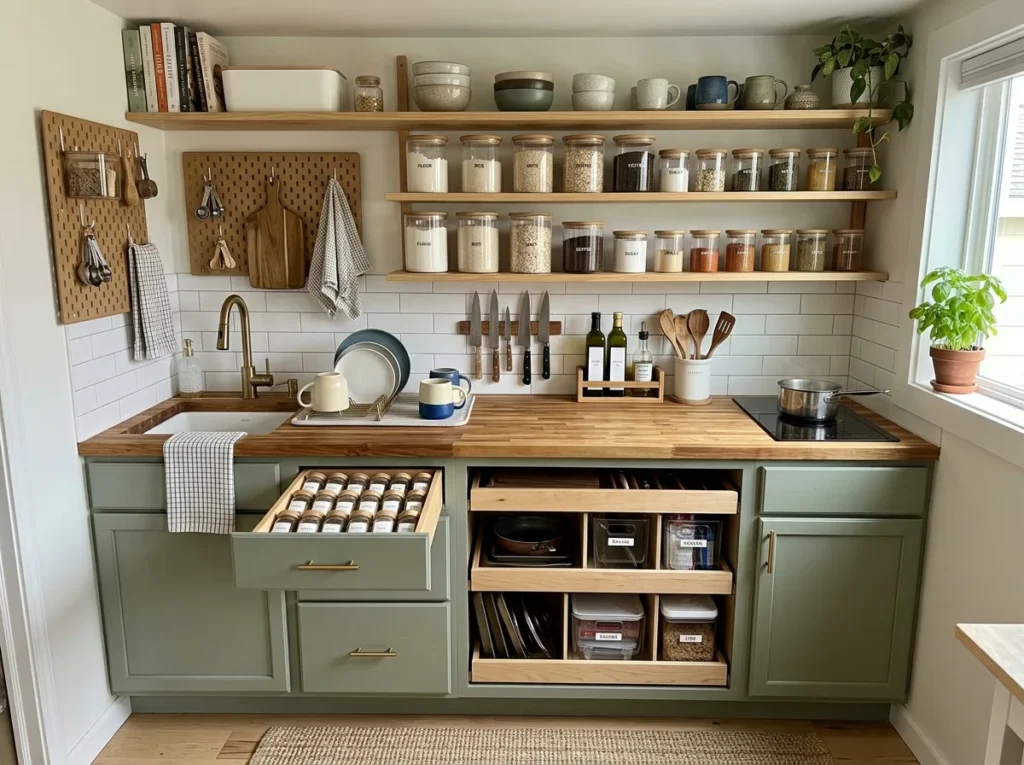
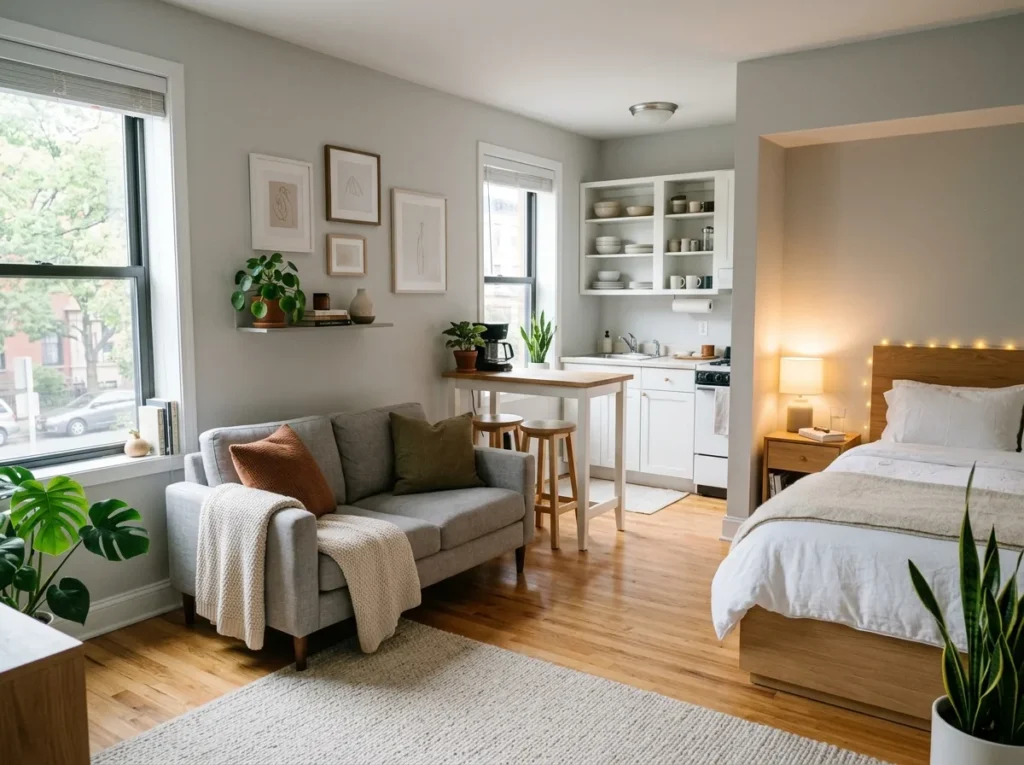
Small kitchens almost always have at least one underused wall. A magnetic strip for knives frees up a full knife block’s worth of counter space. A mounted spice rack on the wall beside the stove keeps spices reachable without cramming them into a cabinet.
We also added a tension rod inside one of our lower cabinets to hang spray bottles vertically instead of laying them flat. That one change gave us back most of a cabinet shelf.
The inside of cabinet doors is worth using too. Small adhesive hooks hold measuring spoons, and a mounted rack can hold pot lids flat against the door so they stop clattering around.
10. Use Bathroom Wall Space Aggressively
Our master bathroom is small, and the vanity cabinet fills up fast with four people using it. What saved us was treating the walls like storage, not just decoration.
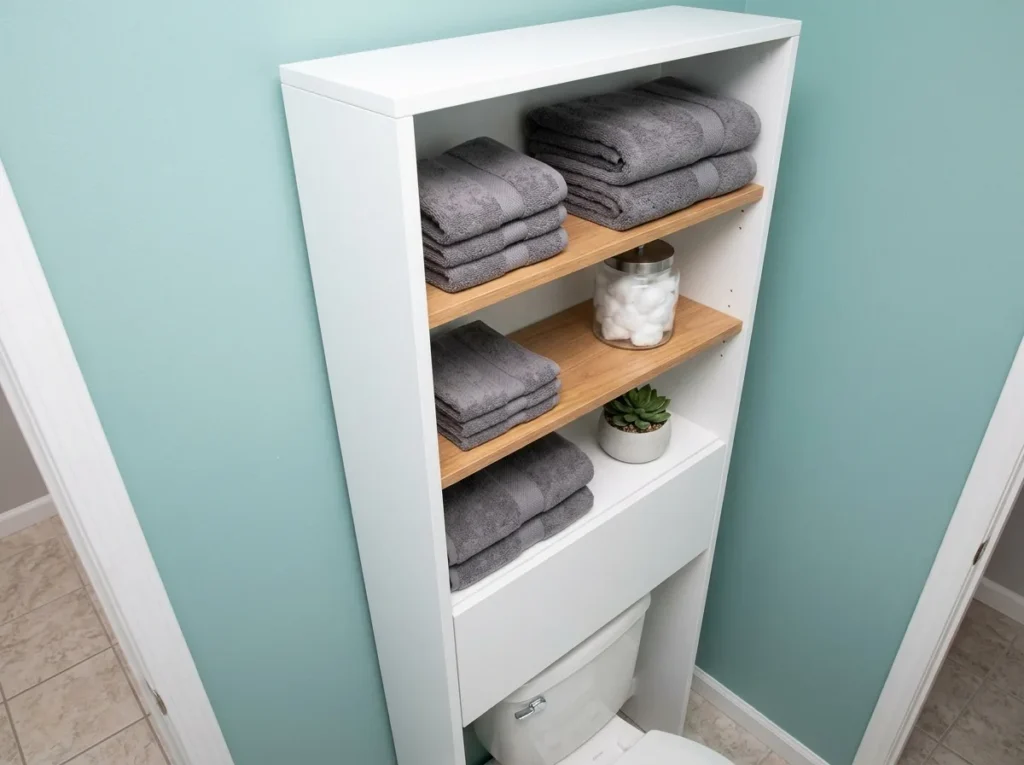
A simple wall-mounted shelf above the toilet (sometimes called an “over-toilet unit”) runs $35 to $70 at places like IKEA or Wayfair. It holds extra toilet paper, towels, and a small basket for hair products. We don’t need a linen closet for that stuff anymore.
Suction-cup shower caddies work short-term but tend to fall off walls especially in humid summers here in North Carolina where everything is a little damp from June through September. Tension-rod shower caddies that stand between the floor and ceiling are more stable and hold up much better.
Storage Mistakes I Made (So You Don’t Have To)
The biggest mistake was buying oversized furniture early on. We got a large sectional and a huge bookcase thinking they’d serve a family well. They dominated every room they were in and made the spaces feel smaller, not bigger.
I also ignored vertical storage for too long. We had 9-foot ceilings and were only using the first 6 feet of wall height. That’s wasted potential.
Keeping things “just in case” also cost us. I held onto boxes of stuff for the first two years in this house. Finally donated three carloads to our local Goodwill in early 2023 and felt immediate relief both visually and mentally.
And the bulky dark storage units: a big dark brown cube bookcase we bought on clearance looked heavy and closed-off. Swapped it for lighter wood tones and open shelving, and the whole corner of the room opened up.
Step-by-Step: How to Tackle a Small Space in a Weekend
If you want to actually do this rather than just read about it, here’s a simple starting sequence:
- Declutter first. Before buying anything, remove everything that doesn’t belong in the space. Donate it, store it elsewhere, or toss it.
- Map your vertical walls. Look at every wall and identify what’s currently below eye level only.
- Pick one multifunctional furniture upgrade. Just one to start an ottoman, a storage bench, a bed with drawers.
- Store seasonal items separately. Anything you only need a few months a year should live in the least-accessible storage you have.
- Add baskets, bins, and labels. Group like items, then label so the organization sticks.
- Keep surfaces clear. Once you’ve created storage, protect your surfaces. A clear surface always makes a room feel larger.
Easy Tricks That Make Small Rooms Feel Bigger
Beyond storage specifically, a few things made a real difference in how our rooms feel:
- Mirrors. We added a large leaning mirror to the bedroom and it doubled the visual depth of the room.
- Light colors on walls. Our small entryway in a medium tan felt closed-in. Repainted in a soft warm white and it feels noticeably more open.
- Clear storage containers. Visible chaos (open baskets of jumbled stuff) reads as clutter. Clear bins with tidy contents read as organized.
- Open floor space. Even one visible path of clear floor makes a room breathe.
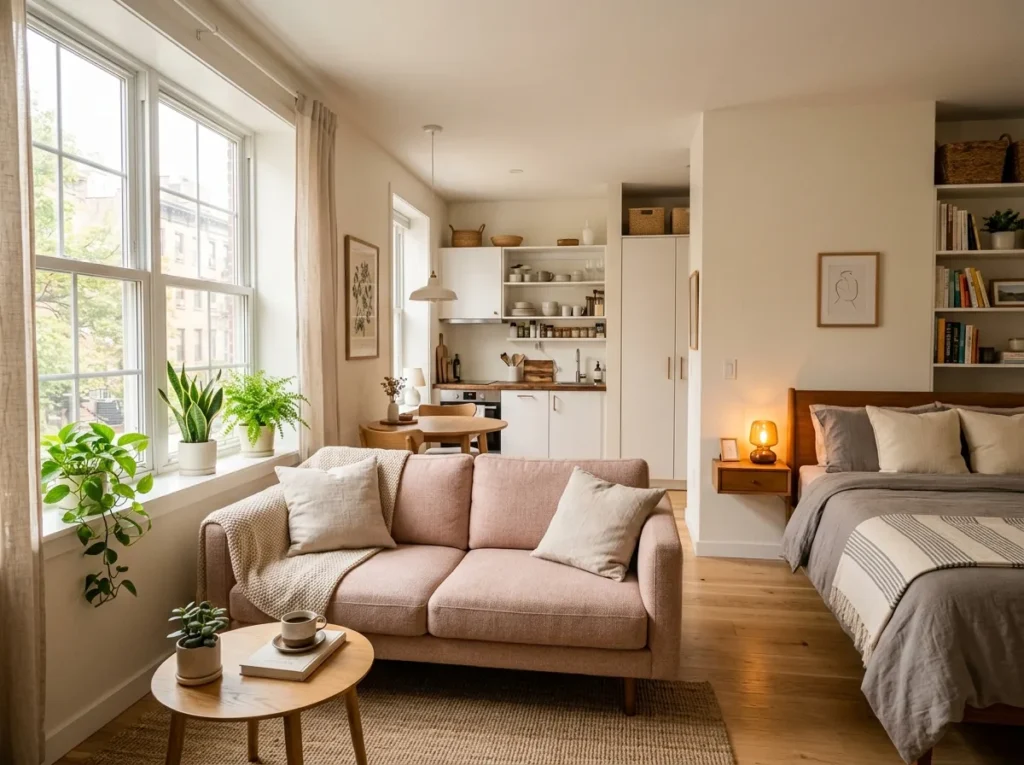
- Natural light. We stopped blocking the windows with furniture. Pulled the sofa away from the window wall and the living room immediately felt less cramped.
Start Small and Build From There
You don’t have to overhaul your whole place this weekend. Pick one room, one corner, or even one drawer. A good storage solution that you actually use will do more than an elaborate system you set up once and abandon.
After a few years of figuring this out in our own home, the thing I keep coming back to is this: organized space isn’t about having less it’s about knowing where things live. Once everything has a home, the whole house starts to feel calmer. Give one or two of these ideas a try and see what clicks for your space.

Written by