
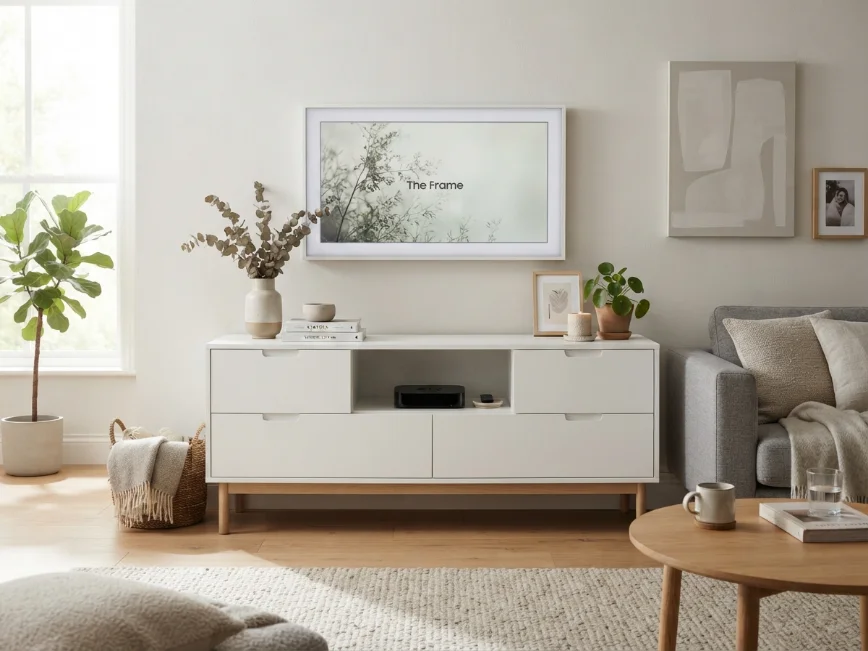
Finding the right TV unit sounds simple until you’re working with an awkward wall, limited storage, or a room that doesn’t follow the layout shown in decorating magazines. After spending almost two years living with a TV stand that never really fit our space, I finally realized that choosing the right TV unit is about more than style. The size, storage, cable management, and overall layout all make a huge difference in how a living room looks and functions.
In this article, I’ll share the TV unit design ideas that actually worked in our home outside Charlotte, along with the mistakes we made, the solutions that made the biggest impact, and practical tips you can use whether your living room is large, small, symmetrical, or full of awkward corners. If you’re planning a living room makeover, these ideas can help you avoid costly mistakes and create a space that feels both organized and inviting.
When we moved into our home outside Charlotte, I thought decorating the living room would be easy. Instead, one wall became the biggest challenge in the house.
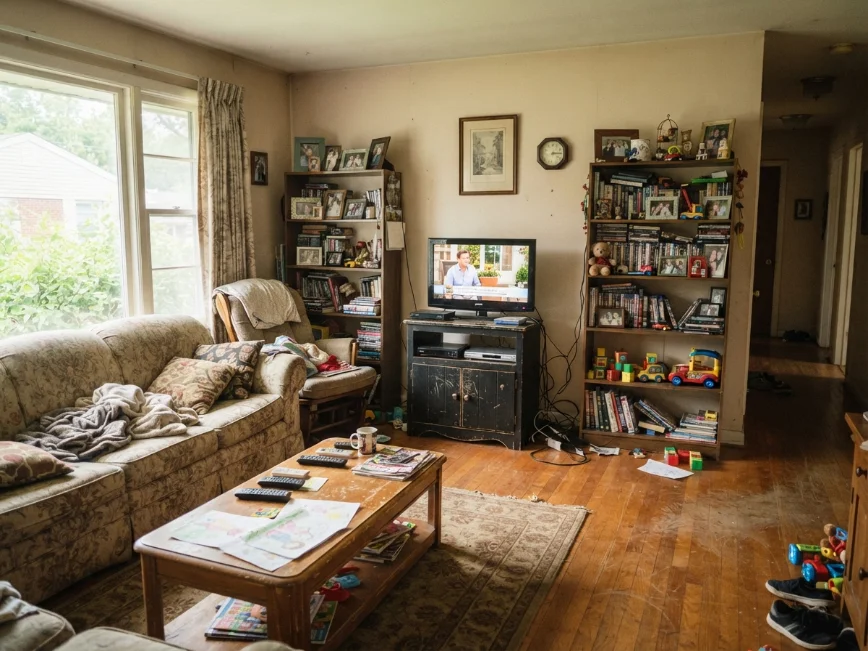
Start by Measuring Everything
For almost two years, I thought our wall was around nine feet wide. I was wrong.
Once I measured it properly, I realized it was actually 11 feet across. That small mistake completely changed which TV units would fit the room.
A console designed for a smaller wall would have left an awkward empty space. On the other hand, choosing something too large would have blocked the doorway.
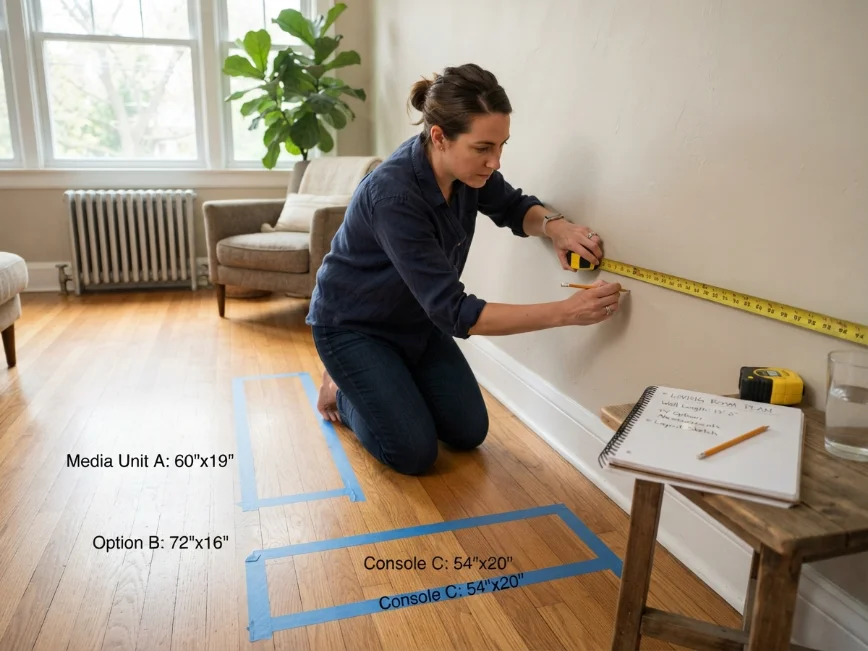
Before shopping, I measured:
- The total wall width.
- The distance between the window trim and the doorway.
- The available depth so cabinet doors and drawers could open fully.
- The height of nearby window trim.
- The viewing distance from our sofa.
I also used painter’s tape to outline different console sizes on the floor. Walking around those outlines helped me understand how each option would affect traffic flow. It felt like extra work, but it prevented an expensive mistake later.
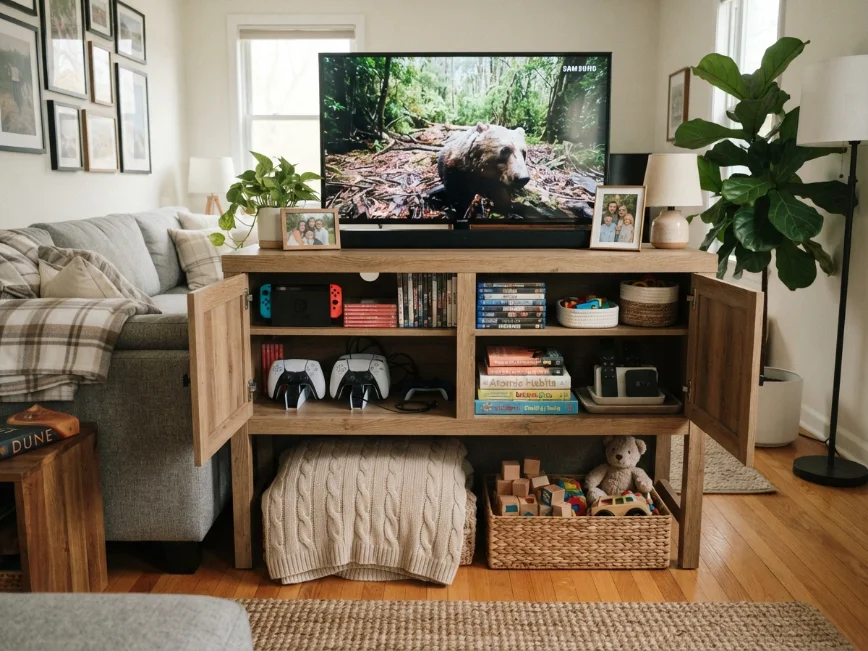
Think About How You Actually Use the Space
Beautiful furniture doesn’t always work for everyday life.
Our living room is where we watch movies, play board games, help with homework, and occasionally build blanket forts. The TV unit needed to handle more than electronics.
I wanted storage for:
- Game controllers
- Streaming devices
- HDMI cables
- Board games
- Extra blankets
- Charging cords
- Kids’ toys
- Everyday remotes
Looking beyond appearance helped narrow the choices much faster. Instead of buying something that only looked stylish, I focused on pieces that solved real problems.
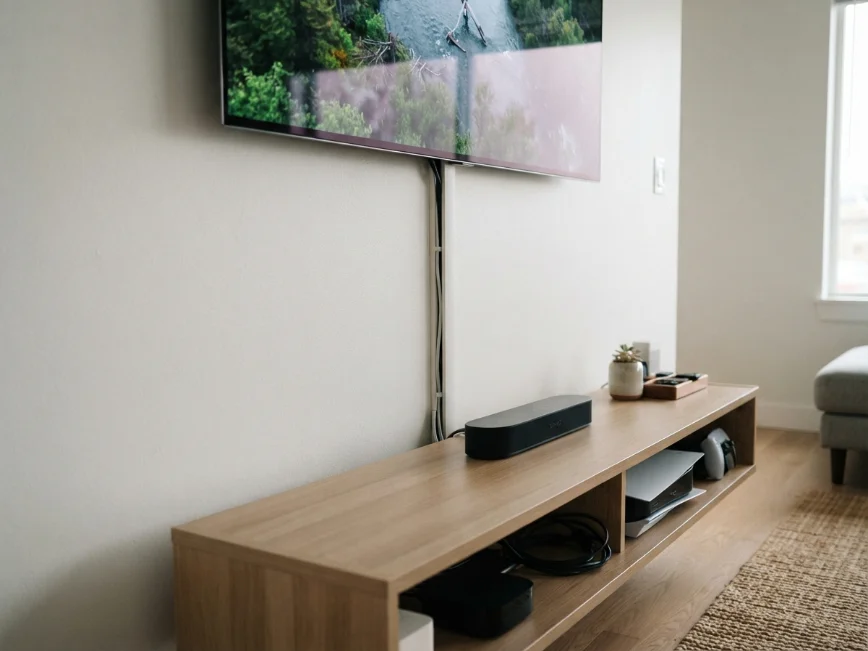
Don’t Ignore Cable Management
One issue I underestimated was cable management.
Our late-1990s home doesn’t have recessed outlets behind the television. Every wire had to travel down the wall, creating a messy look.
Installing an in-wall cable kit would have required cutting drywall, which wasn’t something I wanted to tackle.
Instead, I purchased an inexpensive cord raceway kit and painted it to match the wall color. Once installed, the cables blended in much better and the room instantly looked cleaner.
Even if you choose a beautiful TV console, exposed cords can distract from the entire design. Planning for cable management before buying furniture is well worth the effort.
My First TV Console Didn’t Last
The first console I ordered looked perfect online.
It featured a modern mid-century design with tapered wooden legs and open shelves. The photos made it look clean, airy, and stylish.
Reality looked very different.
Every remote, toy, charging cable, and random household item ended up sitting on those open shelves. Instead of creating a modern look, the unit became a display case for everyday clutter.
The raised legs created another unexpected issue. Our dog quickly claimed the space underneath as his favorite sleeping spot. Within days, dog hair collected under the console, making cleaning more difficult.
After only a few weeks, I decided to return it before the return window expired.
That experience taught me an important lesson.
Furniture that looks beautiful in a staged showroom may not suit a busy family home.
Closed Storage Changed Everything
The second console was a completely different approach.
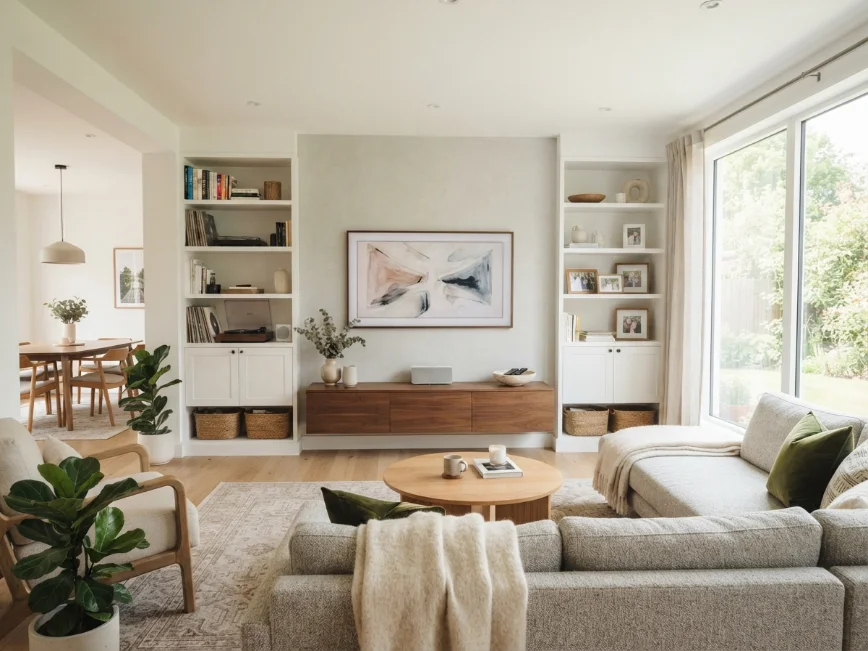
Instead of open shelving, I chose an IKEA Besta storage system with mostly closed drawers and a single open compartment for the cable box.
The difference was immediate.
Most of our everyday clutter disappeared behind cabinet doors.
Now we store:
- Video game accessories
- Extra HDMI cords
- Chargers
- Family board games
- Coasters
- Instruction manuals
- Seasonal decorations
- Small electronic accessories
Only the cable box remains visible.
The room feels calmer because everything has a dedicated place.
Closed storage may not seem exciting while shopping, but after living with it for a year, I wouldn’t go back to open shelves.
Decorating the Wall Above the TV
Many living rooms feature one oversized piece of artwork above the television.
That style looked too formal for our home.
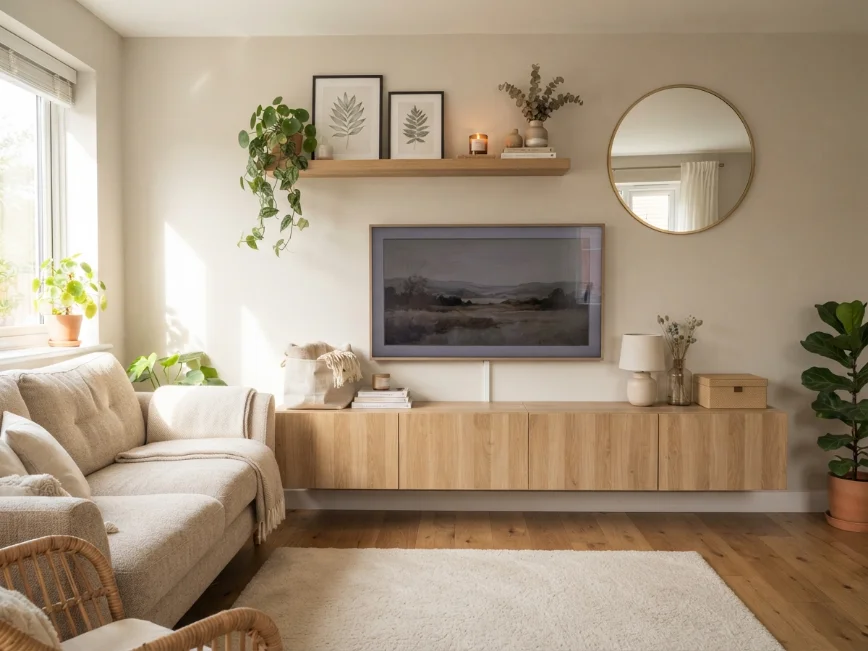
Instead, I created a layered arrangement using several smaller pieces.
I added:
- A medium-sized mirror.
- Two framed art prints.
- A floating shelf.
- A few seasonal decorative items.
The mirror became my favorite addition.
Our living room faces north, so natural light is softer during most of the day. The mirror reflects afternoon light back across the room, making the space feel brighter without adding more lamps.
The floating shelf also lets me change decorations throughout the year without redesigning the entire wall.
Balance an Uneven Wall Instead of Fighting It
The biggest challenge wasn’t the TV console itself.
It was the wall.
With a window on one side and a doorway on the other, nothing felt centered.
For weeks I tried finding a console that would somehow make the wall appear symmetrical.
Eventually I realized that wasn’t necessary.
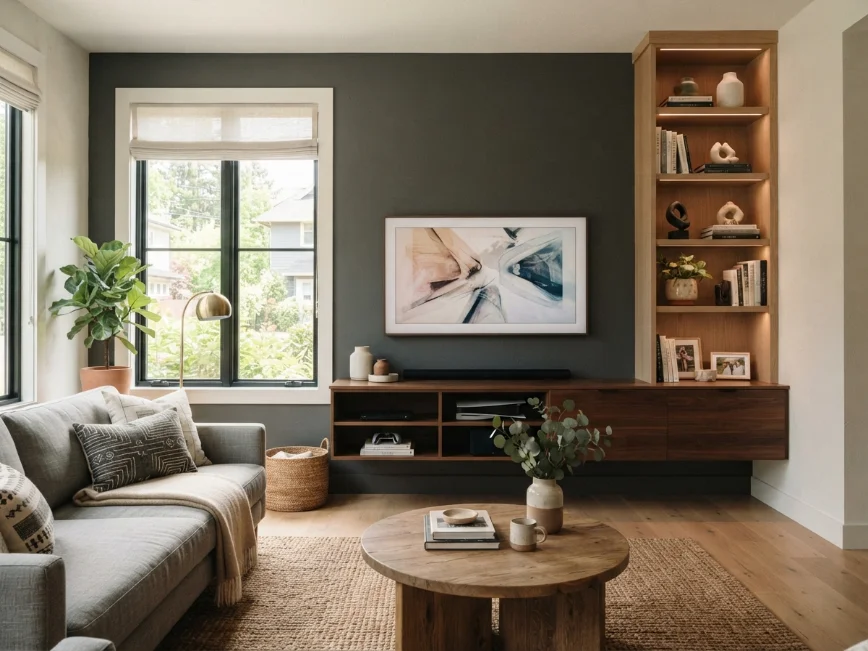
Instead of forcing symmetry, I added a tall, narrow bookshelf beside the window.
The bookshelf visually filled the empty area while keeping the window as the natural focal point.
Once it was in place, the entire wall felt balanced without custom-built furniture.
A contractor had previously quoted us nearly $900 for a custom media wall.
Thankfully, this simple solution achieved a similar visual effect for a fraction of the price.
Choose the Right Size for Future Upgrades
One mistake I still regret is buying based only on our current television.
The console fits perfectly today, but we’re already considering upgrading to a larger TV.
A slightly longer cabinet would have given us more flexibility later.
When choosing a TV unit, think about where you’ll be in a few years rather than only today.
If there’s any chance you’ll buy a larger television, select a console that’s a little wider now.
It saves replacing furniture later.
Keep Daily Maintenance in Mind
Decorating isn’t only about installation day.
Living with the design matters just as much.
One thing I never expected was how much pollen collects on our floating shelf each spring.
Charlotte’s pollen season covers nearly everything with a fine yellow dust.
Instead of constantly searching for cleaning supplies, I keep a microfiber cloth inside one of the console drawers.
Small habits like this make maintenance much easier throughout the year.
Storage Makes Family Life Easier
The biggest improvement wasn’t visual.
It was organizational.
Before replacing the TV stand, our living room constantly looked messy.
Today everything has a designated location.
Game controllers go into one drawer.
Charging cables stay in another.
Blankets fold neatly into the larger compartment.
Cleaning takes less time because there are fewer items sitting out.
Sometimes the best decorating decisions aren’t the most noticeable ones.
They’re the ones that quietly make everyday life easier.
Budget-Friendly TV Unit Ideas
You don’t need to spend hundreds of dollars to improve your living room.
Several affordable options create a similar polished appearance.
Wall-Mounted TV With Floating Shelves
Mounting the television and installing two floating shelves underneath creates a clean, modern design.
This setup works especially well in small living rooms because it keeps the floor clear.
Repurpose Existing Furniture
A sturdy sideboard, buffet cabinet, or dresser can often serve as an excellent TV console.
This approach saves money while giving older furniture a new purpose.
Mix Open and Closed Storage
If your budget only allows a basic cabinet, choose one with at least a couple of closed compartments.
Visible shelves are useful for decorative items, while hidden storage keeps everyday clutter out of sight.
Add Decorative Baskets
Simple woven baskets fit inside many shelving units and instantly hide toys, blankets, and electronic accessories.
They also add warmth and texture to the room.
Mistakes I’d Avoid Next Time
Looking back, several lessons stand out.
First, always measure carefully before shopping.
Second, prioritize storage over appearance if your living room sees daily family use.
Third, think about cable management before installing the television.
Fourth, leave room for future upgrades instead of buying furniture that only fits your current TV.
Finally, don’t chase perfect symmetry.
Real homes often include windows, doors, fireplaces, and other architectural features that naturally create uneven layouts. Working with those elements usually produces a more comfortable and realistic design than trying to hide them.
Final Thoughts
Finding the right TV unit took far longer than I expected, but the process taught me that practical choices usually outperform trendy ones.
Our living room isn’t perfectly symmetrical, professionally designed, or magazine-ready. It has kids, a dog, busy schedules, and the everyday mess that comes with real family life.
The combination of closed storage, thoughtful cable management, balanced furniture placement, and flexible wall decor transformed the space without requiring a custom renovation.
If your living room has awkward dimensions or challenging layouts, don’t assume you need expensive built-in cabinetry. Measure carefully, focus on how your family actually uses the room, and choose storage solutions that make daily life easier.
Sometimes the best TV unit design isn’t the one with the most dramatic photos online. It’s the one that quietly keeps your living room organized, comfortable, and enjoyable every single day.
