
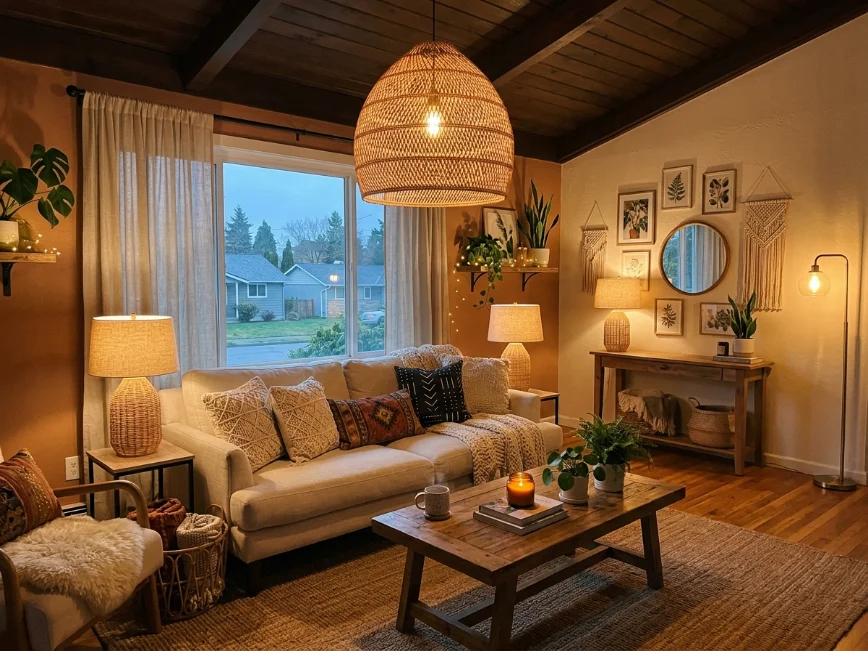
Boho decor can look effortlessly beautiful in magazines and on Pinterest layered rugs, earthy tones, woven textures, and plants everywhere but creating that same cozy, curated style in a real home is often much harder than it seems. When I first started experimenting with boho home decor in our suburban house, I quickly learned that without the right balance, it can easily feel cluttered instead of collected. Over the past few years, through plenty of trial and error, budget-friendly swaps, thrifting wins, and a few decorating mistakes, I discovered which boho design ideas actually make a space feel warm, stylish, and functional. In this guide, I’m sharing the practical boho home decor strategies that truly worked in our home, including how to layer textures, choose statement pieces, use lighting effectively, and avoid the common pitfalls that can make bohemian style feel overwhelming.
1. Start With a Neutral Base and Layer From There
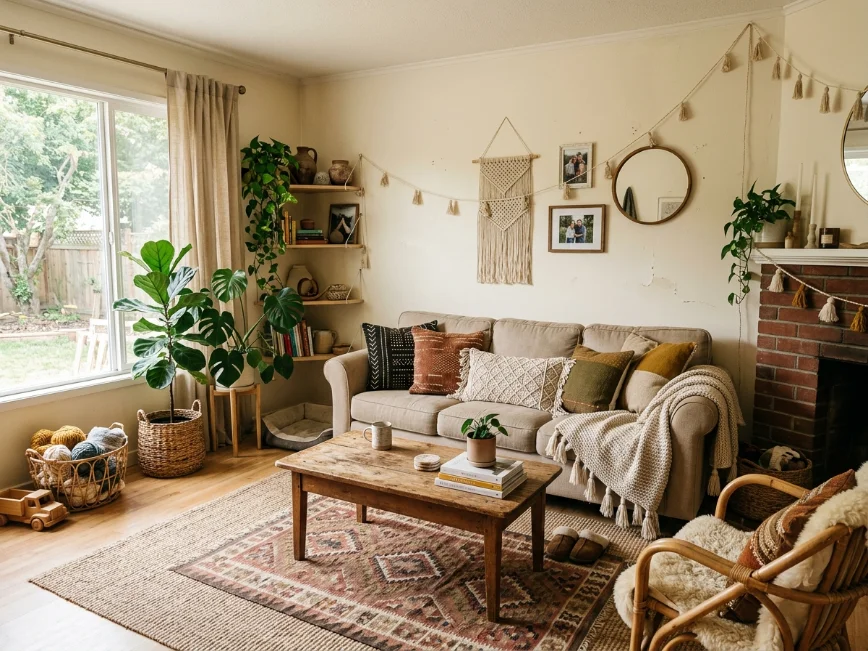
The biggest mistake I made early on was starting with color. I painted an accent wall in a rust-orange terracotta shade (it was all over Pinterest that year) and then couldn’t figure out why nothing else looked right next to it.
Boho home decor ideas work best when your walls and larger furniture pieces stay relatively calm. Think warm whites, creamy beiges, soft greiges. The visual interest comes from what you layer on top textiles, plants, baskets, wood tones not from the walls themselves.
We have an older IKEA KIVIK sofa in oatmeal-colored fabric that I bought secondhand off Facebook Marketplace for $120. It’s been the anchor of our living room for three years now, and it goes with literally everything I’ve tried around it. That sofa has survived Biscuit jumping on it, our five-year-old’s juice boxes, and at least four complete seasonal restyle attempts.
If you’re renting and can’t paint, this approach is even more important your neutral backdrop is already built in, so work with it.
2. Use Natural Textures Instead of Buying More Stuff
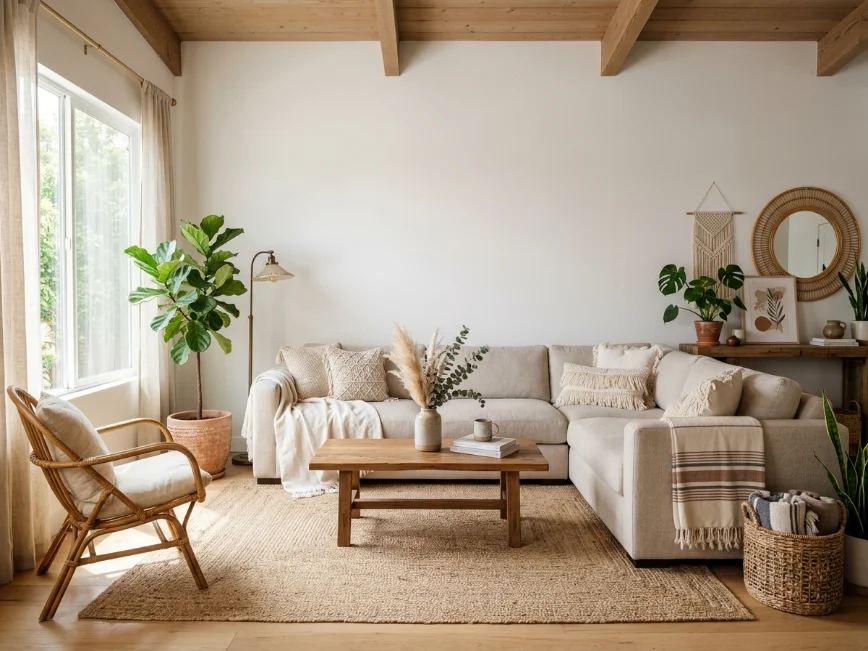
Boho style is really a textures game. Jute, rattan, linen, woven cotton, raw wood, terracotta these materials do the heavy lifting. Once I understood that, I stopped buying decor items and started replacing what I had with textured versions of the same things.
Old plastic planter from Target? Swapped for a $14 woven seagrass basket. Generic white ceramic vase? Traded for a $22 terracotta pot from HomeGoods. Polyester throw that looked fine but felt slippery? Replaced with a chunky cotton knit blanket, about $38 from a Marshalls run.
None of those swaps were expensive. But the difference in how the room felt was real.
What to Avoid
Synthetic versions of natural textures almost always look cheap faux rattan plastic trays, printed-to-look-like-linen fabric that’s actually polyester. You can feel the difference, and honestly you can see it too in photographs. If budget is tight, one real jute rug beats three fake-texture accent pieces.
3. The Layered Rug Situation Is Worth Trying
I resisted layered rugs for a long time because it seemed like one of those Instagram things that doesn’t work in real life. Then I tried it and I’ve kept it ever since.
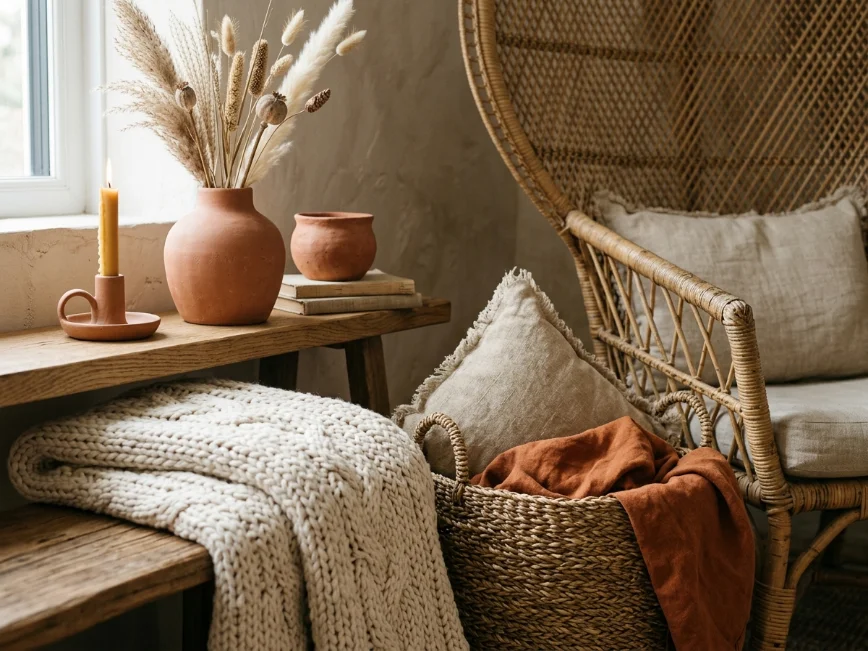
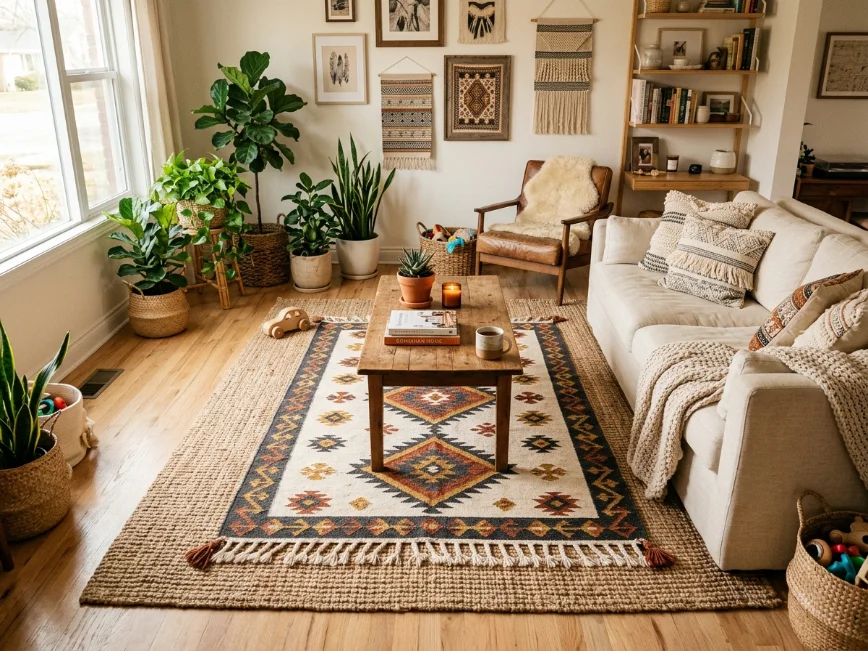
The base rug in our living room is a 8×10 natural jute from Wayfair, around $95. On top of it I layered a smaller, more patterned Moroccan-style flatweave I found at our local Goodwill for $18. The combination adds warmth and a lot of visual interest without making the room feel busy.
One practical note for anyone with dogs or kids: jute sheds like crazy for the first few months. Biscuit was tracking fibers all over the house. If you’re in a heavily-used room, look for a tighter-weave jute or a seagrass alternative they hold up better and the shedding is far less dramatic.
Budget-friendly alternative: At Home stores usually carry large jute rugs in the $60–80 range. World Market is also worth checking for patterned flatweaves that photograph well and don’t cost West Elm prices.
4. Plants Do More Work Than Any Decor Item You Can Buy
This one sounds obvious but I underestimated it for almost two years. Our home felt unfinished and I couldn’t figure out why. I kept buying more throw pillows and small decor pieces. What it actually needed was greenery.
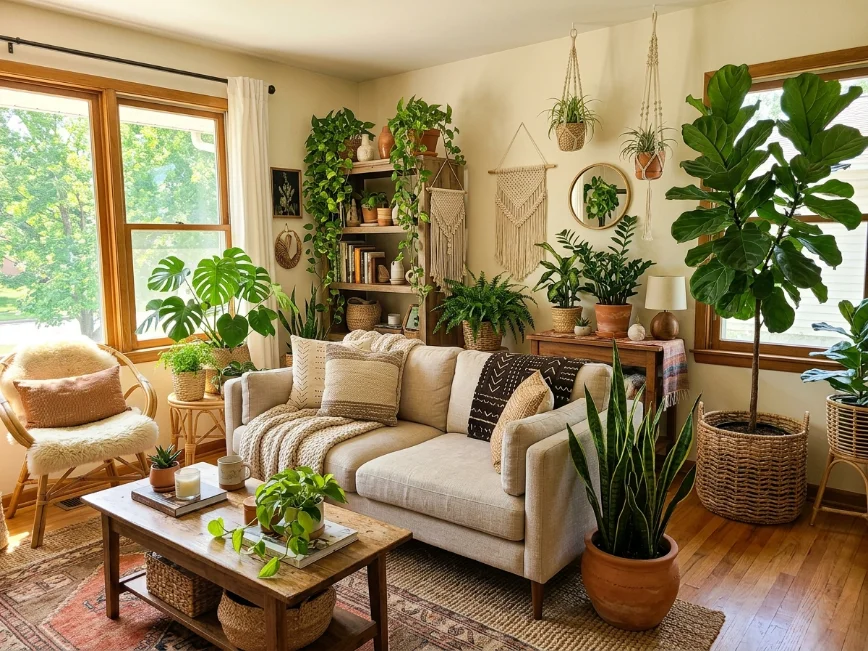
A few larger plants not a dozen small ones changed the feel of the room more than anything else I’d tried. We have a fiddle leaf fig in the corner of our living room that’s about four feet tall now, a trailing pothos on the bookshelf, and a large snake plant in our bedroom. Combined, they cost me around $65 total from a local nursery and a Home Depot garden section run.
Here in the Charlotte area, summers are brutal for anything on a south-facing windowsill the heat and humidity combination is relentless from June through August. But our north-facing living room windows are actually ideal for lower-light plants like pothos and ZZ plants. If you’re not sure what will survive your light situation, snake plants are almost impossible to kill and they look genuinely good in a boho-leaning space.
5. Macramé and Woven Wall Art Aren’t Overdone If You’re Selective
Yes, macramé had a moment. It’s still having a moment, honestly, and I think it works as long as you’re not hanging three pieces in the same room.
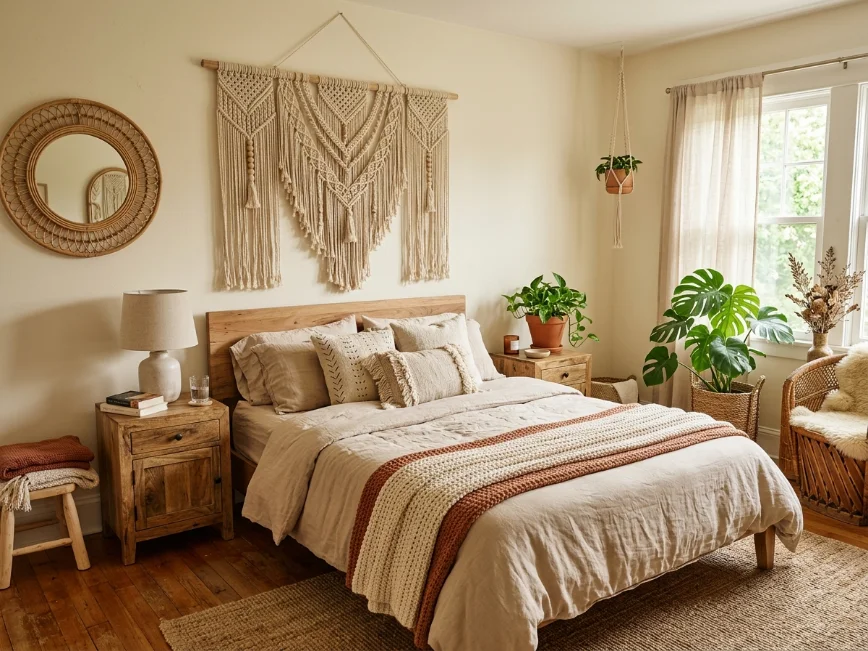
We have one large woven wall hanging above our bed I found it on Etsy for around $55 from a small maker, and it’s the first thing people notice when they walk into that room. The texture and the warm cream color tie together the linen bedding, the rattan mirror, and the wooden nightstands without feeling forced.
What doesn’t work is buying the small, cheap versions from mass retailers and clustering them together. I tried that in our hallway in 2022. It looked cluttered within a week and I took everything down by month two.
One piece, good quality, right scale for the wall. That’s the formula.
6. Thrifting Is the Actual Secret to Bohemian Style
Boho home decor ideas have always had a secondhand, collected-over-time quality to them and that’s not just an aesthetic choice, it’s a budget strategy that genuinely works.
Some of my favorite pieces in our home came from our local Goodwill and Facebook Marketplace:
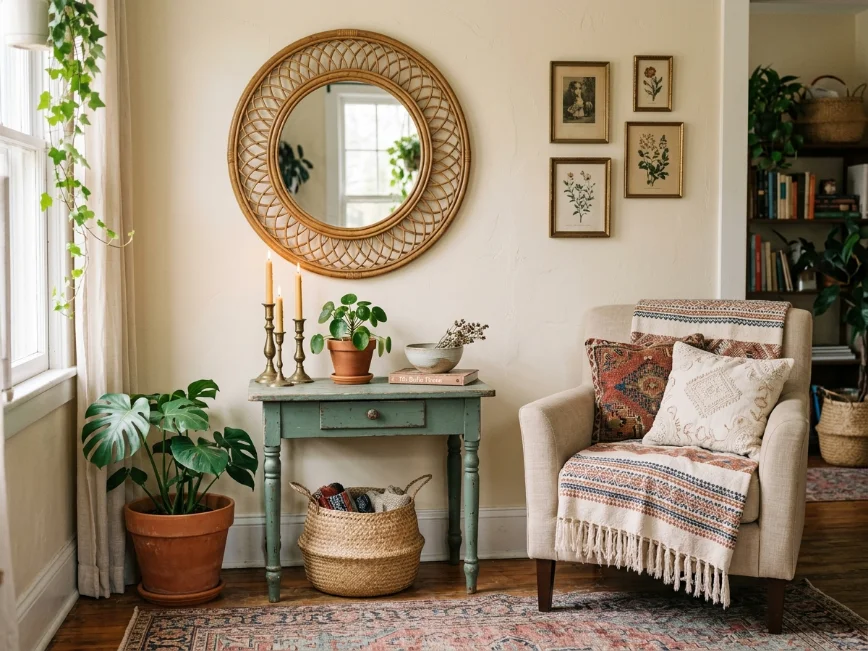
- A solid wood side table with good bones, repainted in a matte clay color $12
- A large rattan mirror, minor crack on one edge, easily hidden $25
- A set of brass candlestick holders that looked dated in the listing photo but work perfectly in our living room $8 for three
The trick with thrifting for boho decor is knowing what to look for: natural materials, interesting shapes, solid construction. Ignore the finish most things can be painted, stained, or cleaned up. Ignore the color terracotta spray paint costs $6 at Lowe’s and transforms almost anything ceramic.
My one rule is that I don’t buy upholstered thrift pieces for the main living areas. With Biscuit and two kids, I can’t take the fabric risk. But hard goods, wooden pieces, and anything ceramic or rattan are always fair game.
7. Lighting Changes Everything and Nobody Talks About It Enough
Overhead lighting in builder-grade homes is harsh, flat, and the opposite of what bohemian style needs. Our late-90s home came with standard 5000K recessed lights that made every room feel like a waiting room.
Switching to 2700K bulbs was a $22 fix that changed the feel of the whole house. That warmer color temperature makes earthy tones actually read the way they’re supposed to the jute looks golden instead of gray, the terracotta reads warm instead of orange-brown, the linen pillows look soft instead of flat.
Beyond bulbs, we added a woven pendant light in our dining area (about $68 from Target) and a couple of rattan table lamps I found at HomeGoods for $42 each. The layered lighting ceiling, table, and the occasional string light on the bookshelf reads cozy in a way that overhead-only lighting just can’t touch.
8. Edit Ruthlessly or It Becomes Clutter
This is the lesson that took me longest to learn. Boho style looks layered and full, but there’s a difference between intentional layering and just having too many things on a surface.
After about a year of adding pieces, our living room had tipped into clutter. Every flat surface had something on it. Shelves were packed. Even Mark said something, which meant it had gotten genuinely bad.
I spent an afternoon pulling everything off the shelves and starting from scratch. Anything that went back had to earn its spot. I ended up donating two full bags of stuff small baskets, excess candles, a ceramic bowl collection that had multiplied somehow and the room immediately felt more intentional.
The ratio I try to keep now is roughly one-third empty space on any shelf or surface. It feels counterintuitive for a style that’s known for abundance, but it’s what makes the good pieces actually read.
What I’d Do Differently
If I were starting over with boho home decor ideas from scratch, I’d skip the terracotta accent wall entirely. It locked me into a specific color story and I spent a year trying to make everything work with it. Neutral walls first, color through textiles second that’s the order that actually works.
I’d also stop buying small filler pieces and put that money toward one or two larger items that have real presence. A good-sized rattan mirror, a substantial plant, a quality throw blanket those matter more than twelve little things arranged on a shelf.
And honestly, I’d thrift more aggressively from the start. Some of the best pieces in our home cost less than $25. The secondhand market is where boho style actually lives.
