
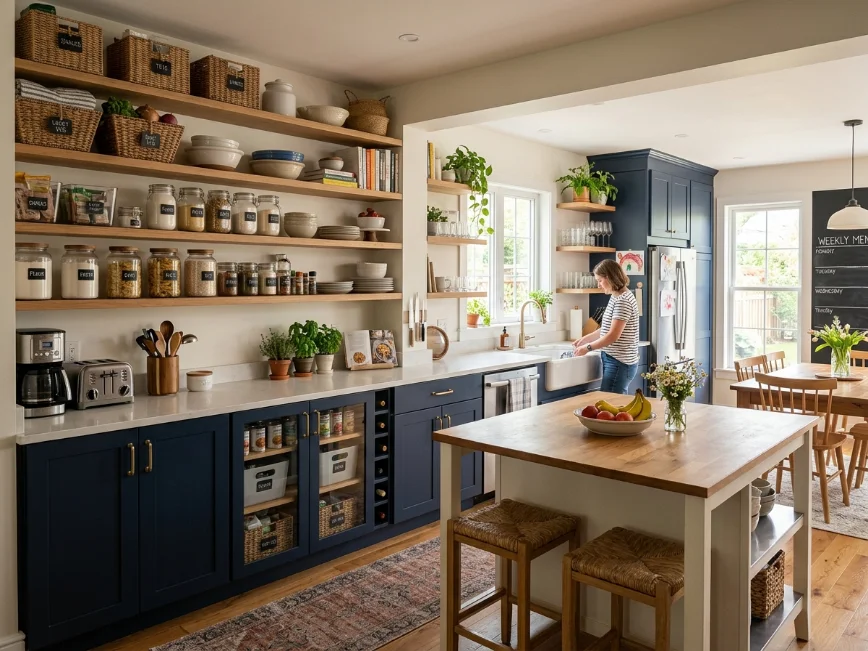
Our kitchen used to feel cramped no matter how clean it was. Between dark cabinets, awkward layout choices, and constant family traffic, the whole space felt disconnected from the rest of the house. After living here outside Charlotte for a few years, I realized open kitchen design isn’t just about removing walls. The right lighting, better storage, lighter finishes, and smarter layouts can completely change how a kitchen feels without requiring a huge renovation budget.\n\nIn this article, I’m sharing the open kitchen design ideas that made the biggest difference in our home, including affordable upgrades, layout tips, storage solutions, and a few mistakes I’d avoid if I started over today.
1. Replace Heavy Upper Cabinets With Open Shelving Carefully
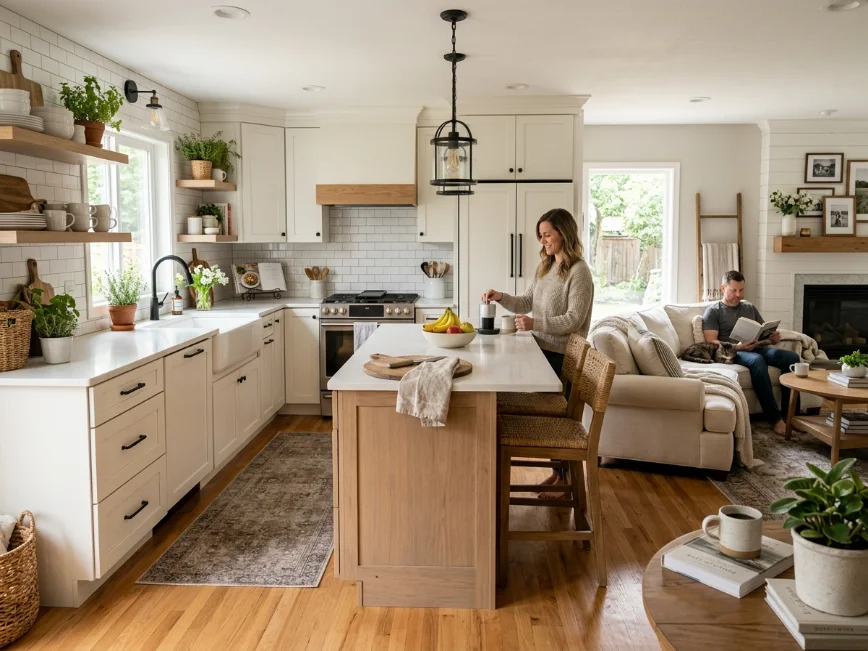
The first thing that made our kitchen feel more open was removing one small section of upper cabinets above the counter near the dining area.
Not all of them. Just enough to visually lighten the room.
At first, I worried open shelving would end up looking cluttered, especially because we actually use our kitchen every day instead of treating it like a showroom. But once we styled it with everyday dishes, a few neutral bowls, and one small plant, the entire kitchen immediately felt less boxed in.
The DIY part did not go smoothly.
One shelf bracket went in crooked because our wall studs weren’t exactly where I expected. Then I cut one shelf board slightly too short during a rushed Lowe’s trip and had to go back the next morning for replacement wood. That second trip alone probably cost me two hours and my patience.
Still worth it.
What helped the shelves feel organized
- Matching dishware
- Neutral containers
- Limited decor pieces
- Warm wood tones
- Spacing items out instead of filling every inch
If custom shelving isn’t in budget, Home Depot and Lowe’s both carry simple floating shelf kits around $35–80.
2. Add An Island Even If You Think Your Kitchen Is Too Small
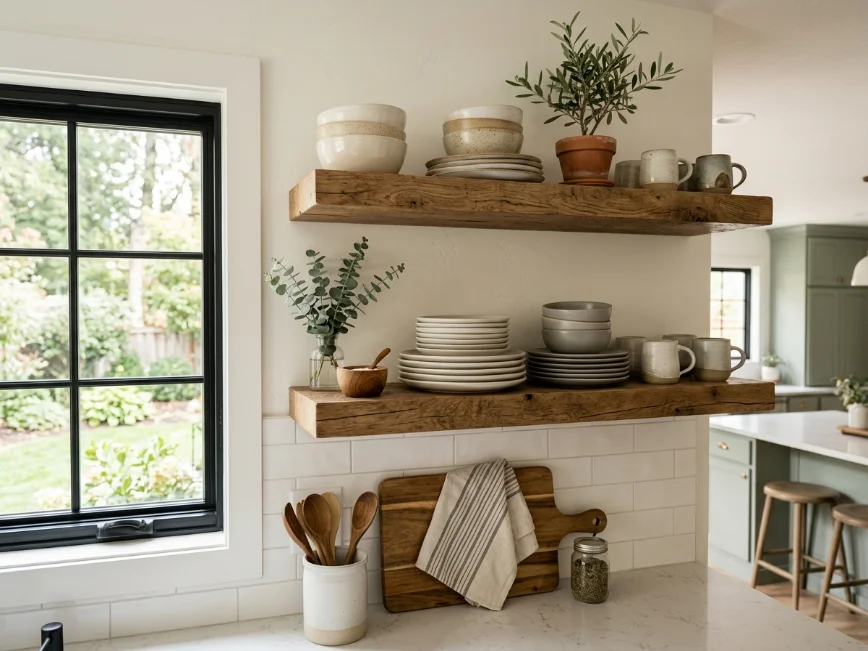
I used to assume kitchen islands only belonged in giant suburban homes. Then I realized smaller movable islands can work surprisingly well too.
Our kitchen layout couldn’t fit one of those massive waterfall islands you see online, but we found a narrow rolling island from Wayfair for around $240 that changed how the entire room functioned.
Suddenly we had:
- Extra prep space
- Hidden storage
- Casual seating
- A visual connection between rooms
And because it wasn’t permanently installed, we could shift it slightly when needed.
One thing I regret
We originally bought bar stools with light cream fabric seats from Target. Bad decision with two kids and a dog.
Within months, Biscuit’s hair and snack crumbs had completely taken over.
If I could redo it, I’d pick wipeable wood or faux leather instead.
3. Keep Colors Consistent Across Connected Spaces
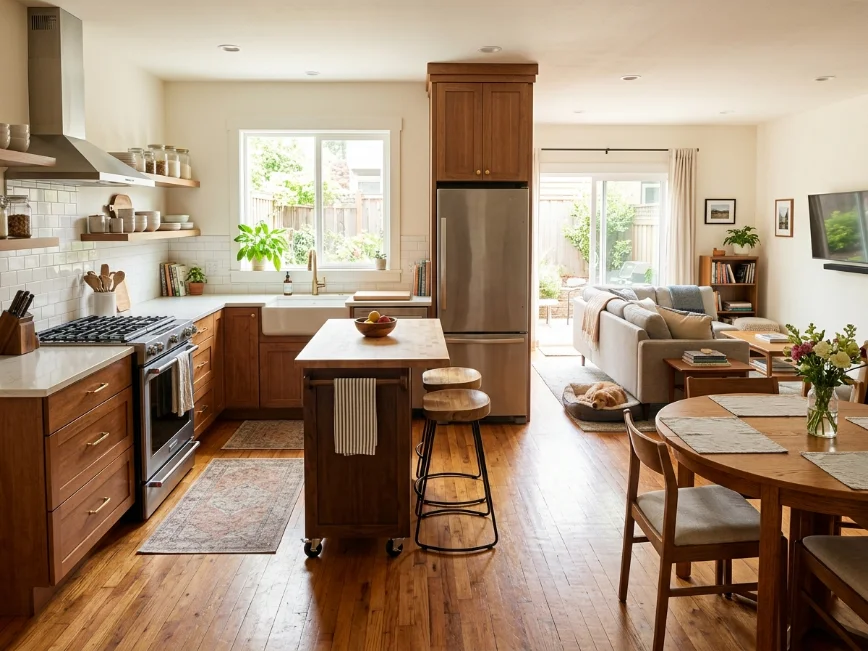
Open kitchen design works best when adjoining rooms feel connected instead of competing with each other.
That doesn’t mean everything needs to match exactly. But the transitions should feel intentional.
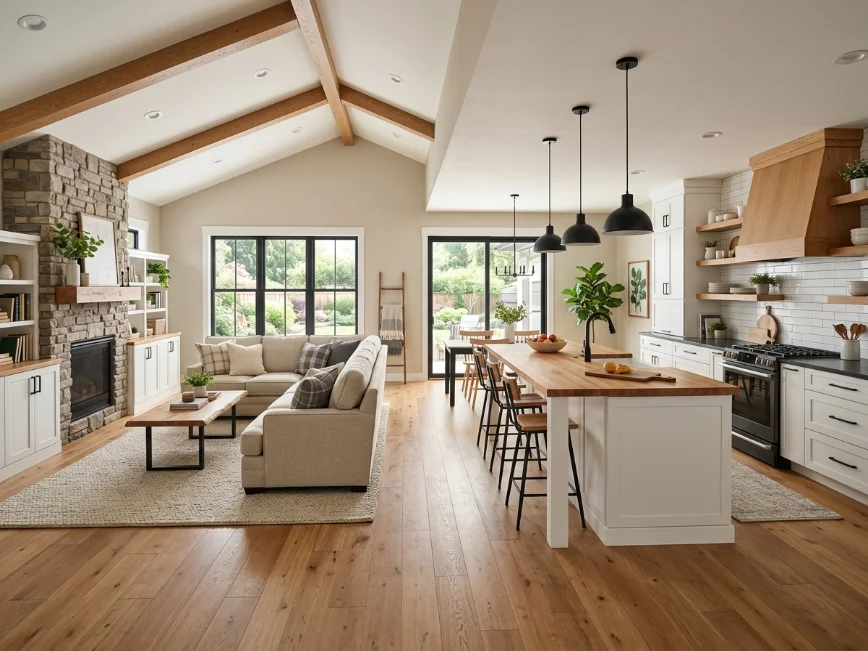
In our house, the kitchen opens toward the living room, so we repeated similar warm tones throughout both spaces:
- Matte black hardware
- Soft white paint
- Warm oak accents
- Cream textiles
- Mixed metal lighting
One mistake I made early on was testing a cool gray paint in the kitchen while the living room stayed warmer beige. It clashed constantly depending on daylight.
North Carolina sunlight can be tricky like that. Morning light made the kitchen look icy blue while evening light turned the living room yellow.
After repainting the kitchen twice, we finally landed on a softer neutral that blended much better.
Sherwin-Williams and Benjamin Moore both have good warm white options if you’re trying to avoid that sterile all-gray look from a few years ago.
4. Use Lighting To Define Different Zones
Open layouts can start feeling visually flat without layered lighting.
Our original builder-grade ceiling fixture basically blasted bright light across the whole room equally. Nothing felt separate or inviting.
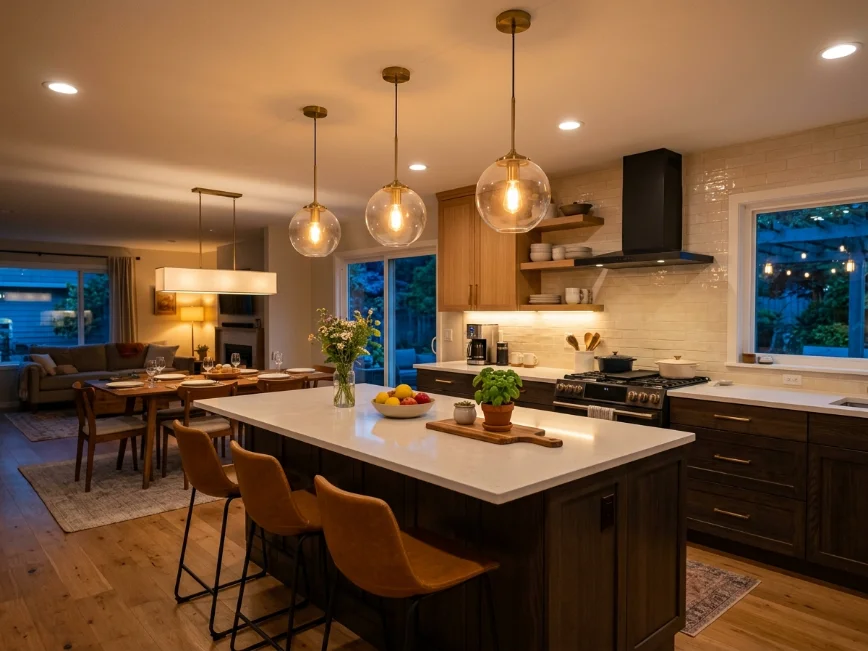
Adding multiple light sources helped define the kitchen area without adding walls back in.
Lighting updates that helped most
- Pendant lights over the island
- Under-cabinet lighting
- A warmer dining fixture
- Small lamp on open shelving
- Dimmer switches
The under-cabinet lights were one of the cheapest upgrades too. I found rechargeable puck lights online for under $30, and they made nighttime cleanup so much easier.
One thing to watch for: cooler bulbs around 5000K can make kitchens feel harsh fast. We switched to warmer 2700K lighting and immediately noticed the room felt softer.
5. Mix Closed Storage With Display Areas
Too much open storage can become stressful in real homes.
That’s something social media rarely mentions.
Open kitchen design still needs hidden storage for the random stuff nobody wants visible, like plastic lunch containers, mismatched water bottles, or the drawer full of charging cords that somehow migrated into the kitchen.
We balanced things by combining:
- Closed lower cabinets
- One open shelf section
- Decorative baskets
- Glass-front cabinet doors
- Pantry storage bins
HomeGoods ended up being surprisingly useful here. I found woven baskets around $18 each that made snack storage look far more organized than it really was.
Small kitchen trick that helped
Matching containers instantly reduce visual clutter.
Even inexpensive clear bins from Target made our pantry feel more intentional.
6. Make Seating Feel Part Of The Kitchen
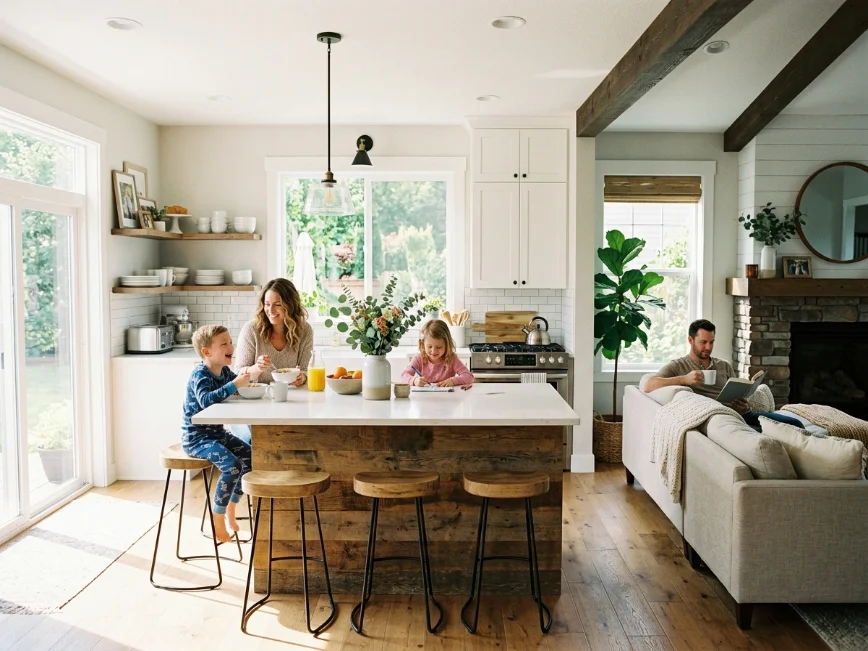
One thing I love about open kitchen design is how much easier it is to interact while cooking.
Before, whoever was in the kitchen felt separated from everything happening in the living room. Now the space feels more social without needing extra square footage.
If your layout allows it, try incorporating:
- Counter stools
- A breakfast nook
- Bench seating
- Small café table
- Built-in banquette seating
We didn’t have room for a full dining expansion, so we added two stools at the island instead. It became the default breakfast spot almost immediately.
And honestly, it also helps during homework time because somebody can sit nearby while dinner gets started.
What I’d Do Differently Next Time
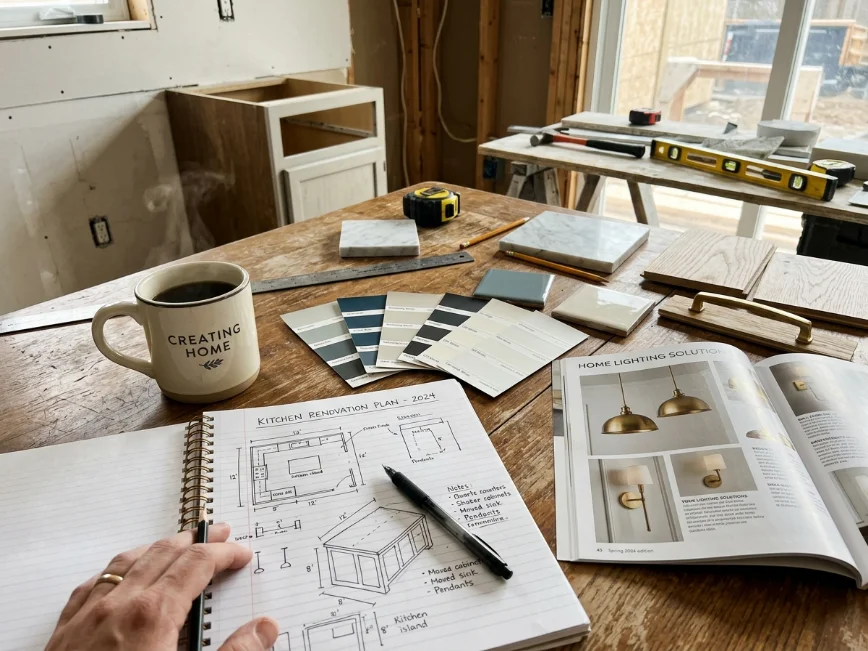
Looking back, I would’ve planned the lighting earlier instead of treating it like an afterthought. Lighting affects open kitchens more than almost anything else.
I also rushed some decorative decisions too quickly because I was impatient to make the kitchen feel “finished.” A few trendy pieces I bought in 2022 already feel dated now.
If I were starting over, I’d focus first on:
- Functional layout
- Storage
- Lighting
- Seating
- Neutral foundational finishes
Then I’d layer personality in slowly over time.
And I definitely would’ve measured every shelf twice before cutting wood in the garage during August humidity.
Why Open Kitchens Work Better For Real Life
After living with both layouts, I honestly prefer a kitchen that feels connected to the rest of the house. It’s easier for everyday routines, family time, and even simple things like keeping an eye on homework while making dinner. Open kitchen design doesn’t need to mean expensive renovations or giant custom spaces either. Sometimes a few thoughtful updates, better lighting, and smarter storage can completely change how a home feels. If you’re planning a kitchen refresh soon, start with the changes that improve function first because those are usually the upgrades you’ll appreciate years later.
